wellnessfitpro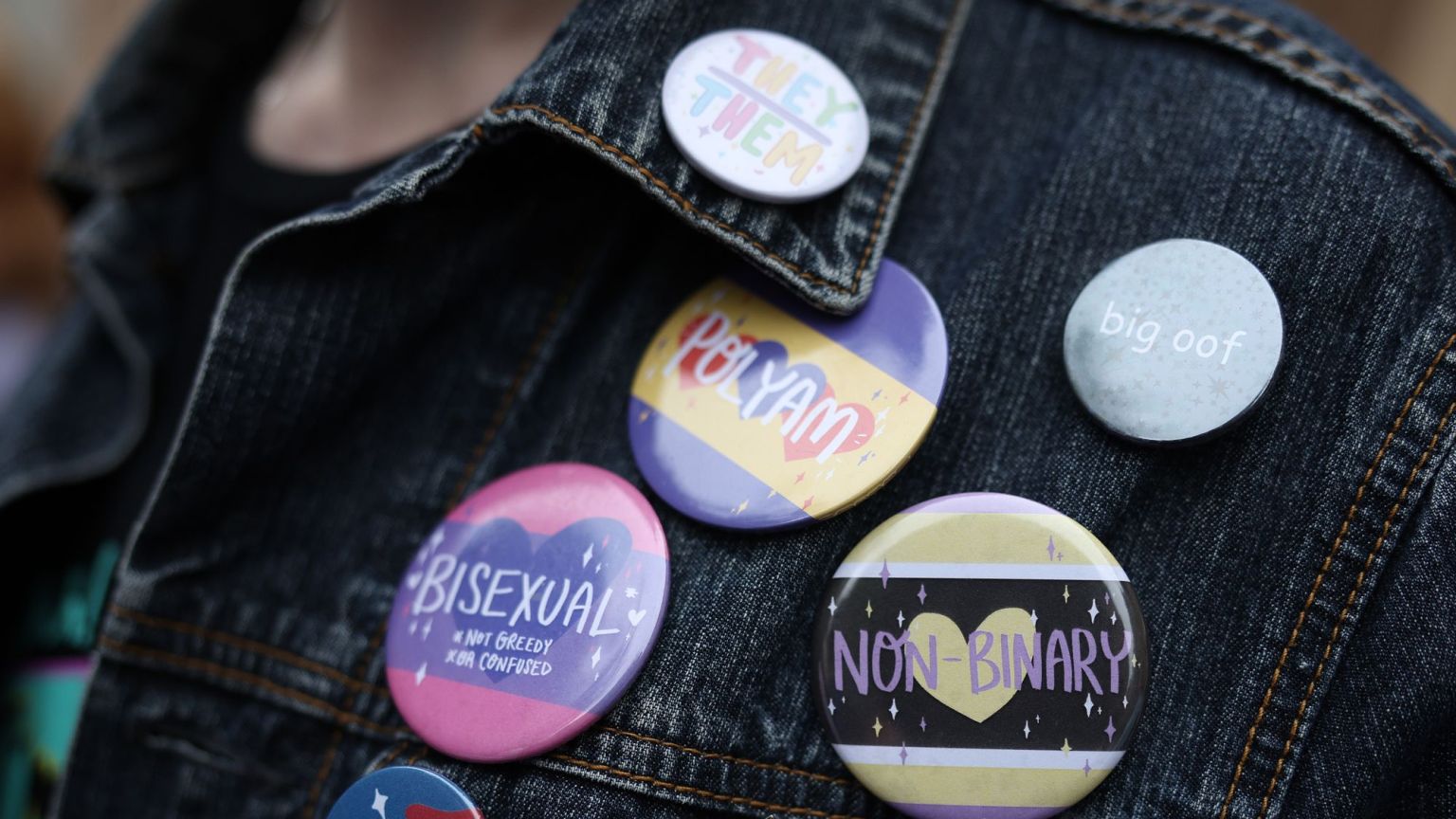
In recent decades, and especially in recent weeks, we have heard much about the plight of victimised, marginalised minorities, and the belief that they ought to be afforded special treatment and extra privileges by way of recompense. The Jason Arday debacle is a reminder of this chronic state of affairs.
Many white people without mental-health issues will have looked on with envy and resentment at the attention lavished on this black, autistic sociology professor. And with marginalised status seeming to bequeath myriad advantages, such as elevated social standing, it’s no wonder others might want to get a piece of the action by believing, proclaiming or pretending that they too are disabled and disadvantaged.
That is plausibly one reason for our mental-health crisis. Many causes have been advanced for the exponential rise in people suffering from mental-health issues in recent years, such as the rise of social media and smartphones, better diagnosis and wider acceptance of neurodiverse conditions or the Covid-19 lockdowns. But one statistic published last week seems to confirm what many have long suspected: that it represents a hysterical epidemic, one spread through social contagion, legitimised by our culture and medical establishment, and turbocharged by identity politics.
According to an essay by Uta Frith published in Psychological Medicine, primary-care diagnoses of autism increased ninefold from 1998 to 2018. That trend, which began before smartphones or lockdowns, correlates with the dual ascendancy of our therapy culture and identity politics. The trend has continued to this day, to such a degree, says Frith, that autism has become an inflated ‘catch-all diagnosis’ that risks becoming useless.
This is no idle claim by Dame Uta Frith, emeritus professor at the Institute of Cognitive Neuroscience at University College London, the person who pioneered much modern-day research into autism. As she elaborated in an interview in The Times on Monday, for many people, such a diagnosis ‘does give some kind of privileges. They can tell other people to “jolly well take account of my disability”, except they don’t want to call it a disability. It’s “my difference, and you should be nice to me”.’
The idea that mass delusions can have a political catalyst is not new. In her 1997 book, Hystories: Hysterical Epidemics and Modern Culture, Elaine Showalter not only noted that ‘hysterical epidemics require at least three ingredients: physician-enthusiasts and theorists; unhappy, vulnerable patients; and supportive cultural environments’, but also that ‘syndromes multiply as they interact with social forces’ such as religious beliefs or political agendas.
In our case, that political agenda is a quest for minority status and victimhood; those forces are an Instagram culture of narcissistic exhibitionism; and there is an even longer-standing pressure felt by young people to dwell on their problems, believe themselves to be fragile and vulnerable, and seek sympathy from strangers for their predicament. This would explain why referrals for ADHD have risen by more than 400 per cent in the past five years. It would also account for an associated new fashion, highlighted by Kathleen Stock last week, for ostensibly healthy young women now to use walking sticks.
Our ‘mental-health crisis’ should be seen in the context of the trans hysteria of the past decade, another part-political fashion transmitted through social contagion and enabled by those in positions of authority. Claiming mental ill-health now provides an opportunity for many people to become honorary disabled or metaphorically black.
In praise of doubt
It has become common these days to deride the New Atheism that was all the rage in the Noughties. One frequently hears it dismissed as a facile episode typified by juvenile invectives that themselves had a whiff of religious fervour. New Atheism – so often directed against poor old, harmless, hopeless Christianity – did nothing to confront the Islamic fanaticism that only worsened in the 2010s, critics say. And was clueless in foreseeing or gainsaying the new wave of irrationalism then insidiously corroding the West from within: woke hyperliberalism.
There was an unmistakable air of bellicosity about the New Atheists, it is true, and this was easily mistaken for dogma. And the death last week of the philosopher Anthony Kenny, at the age of 95, is a reminder of the value of employing and demonstrating another, more amenable, sentiment: doubt.
Kenny’s 1979 book, The God of the Philosophers, re-examined the conflict between free will and divine omniscience, revisiting the quandary first attributed to Epicurus: how can an all-loving, all-powerful God let evil happen? God can be one or the other – all-loving but impotent, or all-powerful but indifferent – but He cannot be both. As Kenny argued:
‘If God is to be omniscient, and to have infallible knowledge of future human actions, then determinism must be true. If God is to escape responsibility for human wickedness, then determinism must be false. Hence in the notion of a God who foresees all sins but is the author of none, there lurks a contradiction.’
As he concluded: ‘There cannot, if our argument has been sound, be a timeless, immutable, omniscient, omnipotent, all-good being.’
It was through such patient logic that Kenny, who had been a Catholic priest, lost his faith. At the same time, he preferred to call himself an agnostic rather than an atheist, as the former label was more appropriate to his doubting method. In a world full of too much certitude, it was an admirable stance.
Why we miss Rod Liddle
Many people who don’t pay close attention to politics may have been surprised at the abundance of tributes to the late Rod Liddle. I dare say even he might have found the outpouring of grief ‘mawkish’, or ‘a moronic inferno’. But he was loved by many because he was that rare combination in a columnist: he dared to tell the truth, he wrote beautifully and he made people laugh.
In my lifetime I can count only two other columnists who met those three criteria: Auberon Waugh and Michael Wharton (aka ‘Peter Simple’), both of the Daily Telegraph. Like Rod, they could be vituperative and unpredictable, could goad and enrage exactly the right type of sanctimonious prigs, and could make the reader feel that he or she was not alone in a world seemingly gone mad. Rod belonged to that elite who could be simultaneously flippant and earnest.
Whereas Wharton railed against the Hampstead socialists, Liddle similarly became my friend in print – and I dare say many of yours – for inveighing against our asinine, faux-left, north London bien pensants. In that respect, he represented a strange sort of continuity.
While Rod was a rarity, he wasn’t a one-off. Here’s hoping we’ll see his type again soon.
#marginalised