wellnessfitpro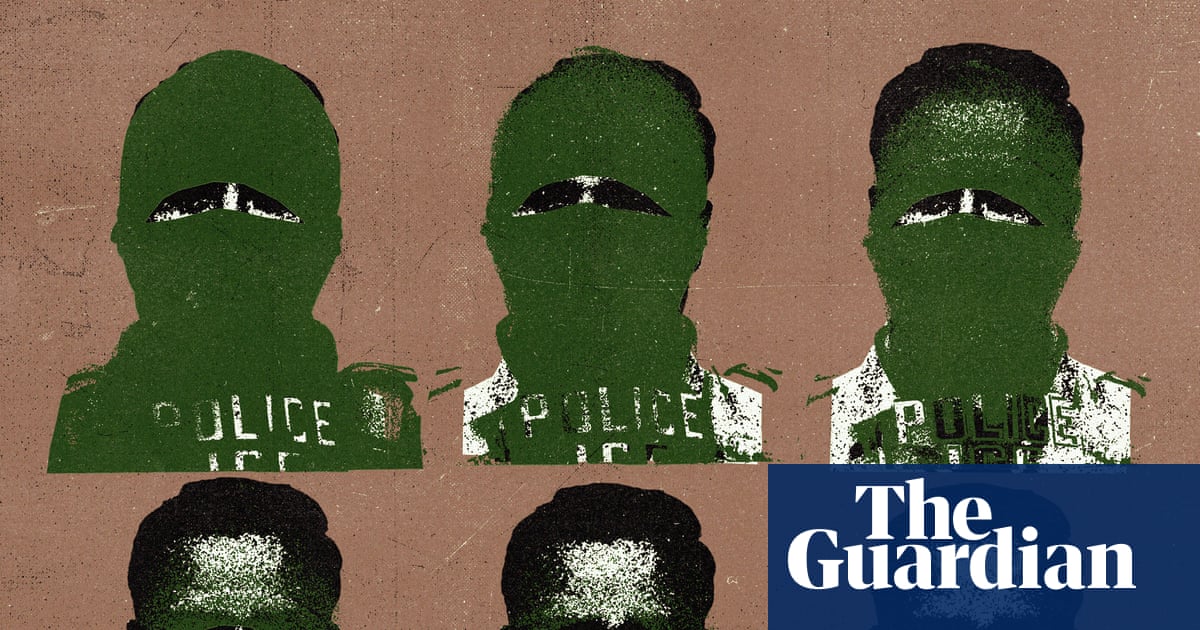
Last week a photographer for the Minneapolis Star Tribune filmed a border patrol agent approach a protester, lying prone in the street, and aim a canister of pepper spray at his eyes. The protester was already detained, three other agents pressing his body into the pavement, but the agent can nevertheless be seen spraying the orange chemical irritant, which causes excruciating pain, at point-blank range.
The agent probably thought he would enjoy anonymity for this bit of brutality. The federal police terrorizing Minneapolis remain largely nameless as they dole out horrifying – and in two cases, fatal – violence against anyone opposing Operation Metro Surge. But within two hours of the Star Tribune posting the footage to social media, a group called Pacific Antifascist Research Collective claimed to have identified him.
The collective – which days earlier promised in a post to “identify ICE terrorists until ICE’s campaign of terror is stopped and the armed thugs and their leadership are held accountable” – made flyers of the agent’s face for people to share online, or to print out and tape to telephone poles and buildings across Minneapolis.
“TYLER GRAMLIN”, screamed the text on the flyers in English, Spanish, Hmong, Somali and Tagalog. “SUSPECTED KIDNAPPER/TERRORIST”.
The Pacific Antifascist Research Collective did not publicly share the methods it used to identify Gramlin, but I know its research to be reliable. Its activists follow exacting editorial standards, a tendency born from the desire to be trusted by their communities; any missteps can destroy the credibility of the whole project. The collective describes itself as an “autonomous group” of “researchers dedicated to providing communities from the Rockies to the Pacific with research and tools to protect themselves from fascism in all its forms”. Its members, like most of the 60 or so other antifascists I talked to for my new book, To Catch a Fascist: The Fight to Expose the Radical Right, keep their own identities a secret to prevent reprisals from the far right.
This modern iteration of antifa grew in response to an alarming new cadre of white supremacist groups that emerged during Trump’s 2016 presidential campaign. Although antifa is most commonly associated in the public imagination with punching Nazis, such militancy represents a tiny fraction of its activism. The story of antifa – a subculture of anarchists, socialists and communists dedicated to destroying the far right “by any means necessary” – is remarkable not so much for its violence, which is rare, but for its espionage and research. Over the last decade it has exposed the identities of thousands of pseudonymous Americans belonging to this new generation of fascists, sometimes deploying spies to go undercover into white supremacist groups and gather intelligence – including secretly recorded audio, covert photos and thousands of private chat messages – that would be used to unmask professors, politicians, police officers and pastors.
Although “doxing” often refers to posting someone’s private information online, such as an address or phone number, as a means of inviting harassment, in the antifascist context it refers to the modern practice of naming and shaming fascists – similar to ripping the white hood off a Klansman. Antifa’s use of this tactic, I found, was often successful, helping destroy multiple fascist or “alt-right” groups during Donald Trump’s first term in office, and beyond.
At the dawn of the second Trump administration, however, antifa’s intelligence-gathering operations were repurposed for a new target: the armed agents of the state carrying out Trump’s promise to mass-deport 100 million people. Antifa is now working to name and shame the president’s secret police. To unmask la migra.
A longtime antifa activist we’ll call Riley, whose real name they asked be withheld for their protection, is currently involved in researching the identities of ICE and CBP agents. Riley told me these agents often wear masks because they know most Americans “hate” the havoc they are wreaking across the country.
“They want to go about their lives and to enjoy life without being recognized as kidnappers and abusers in their community,” Riley said. “We identify ICE and DHS agents for the same reasons we identify any violent, dangerous people intent on doing harm. They have chosen to prey on the community.”
There are now more than 70,000 human beings languishing in America’s immigration detention centers, an all-time high. Report after report has detailed the inhumane conditions at these jail complexes, where detainees have accused DHS and ICE agents of sexual abuse, medical neglect and assault. Thirty-two people died after being detained in these places in 2025, making it the deadliest year in more than two decades. Only one month into 2026, six people have died in ICE custody. One of those deaths was recently ruled a homicide.
“These traveling terrorists need a place to sleep,” Riley said of agents who send immigrants – some of them young children – to these centers, which experts have argued can reasonably be called concentration camps. “They need to get coffee, eat, go to the bathroom, go to the gym, get gas, rent a car like anyone else. Predators should not be able to enjoy anonymity.”
There is a long, proud American tradition of unmasking fascists. Black activists and investigative journalists such as Ida B Wells and Walter White labored for decades, in the late 19th and early 20th centuries, to strip the white lynch mobs terrorizing the south of their anonymity, identifying individual executioners and demanding they face justice. In 1924, the mayor of Buffalo, New York, enlisted a spy to go undercover into the city’s large Ku Klux Klan chapter, eventually obtaining a list of members and putting it on display downtown so Buffalonians could learn which of their neighbors hid behind white hoods at night to burn crosses. In Los Angeles in the 1930s, a Jewish lawyer named Leon Lewis operated a spy network to infiltrate the German American Bund, foiling Nazi plots to massacre the city’s Jews. In the 1940s, activist Stetson Kennedy went undercover into the Klan in Georgia, stealing away thousands of invaluable documents. In the 1980s and 90s, young punks belonging to groups such as Anti-Racist Action would go dumpster-diving outside the homes of neo-Nazi skinheads, retrieving discarded mail with the Nazis’ real names and eventually posting “MEET YOUR LOCAL NAZI” posters in their neighborhoods.
And most recently, as detailed in my book, antifa deployed spies into groups such as Identity Evropa and into online servers where neo-Nazis were plotting violent rallies like Unite the Right in Charlottesville, Virginia. This work was successful because it brought sunlight to groups which depended on organizing in the dark.
Antifa’s doxing tactic leveraged existing societal taboos against explicit white supremacy or neo-Nazism to create a social cost for being a fascist. Oh, you want to join a Nazi group? We will name and shame you. You will lose your job. You will lose your girlfriend. Your family will shun you.
Although it is true we are now living through a “mask-off” moment for fascism, with Trump and the Republican party indulging in constant, explicit white supremacist rhetoric, it’s also true that Maga’s ethnonationalist project is experiencing a deepening unpopularity. A recent YouGov poll showed support for the phrase “abolish ICE” reaching record levels among US adults, at 46%, with 41% opposed. (Nearly 20% of Republicans support abolishing the agency.) Fifty-six per cent of Americans believe ICE agents should not be allowed to wear masks.
More aboveground efforts are under way to unmask ICE, but they are slow-moving and not always reliable. In September Democratic lawmakers in California passed the No Secret Police Act, which would prohibit ICE and border patrol agents from wearing masks, and the No Vigilantes Act, which would require them to wear a form of identification. The White House sued over the legislation, and legal observers are pessimistic about the bills’ chances of surviving in court. (Similar laws have been introduced in about 15 states.)
There is also ICE List, a website run by Dominick Skinner, a 32-year-old Irishman living in the Netherlands, which cobbles together tips about the identities of immigration agents. Skinner told the Irish Times he started the website after seeing the homeland security secretary, Kristi Noem, threaten to arrest Americans who identified ICE agents online. “So I just reshared that and said: ‘That’s cool, I’m not in the US – so send them to me and I’ll do it,’” Skinner told the paper. Skinner claims to have since received the names of ICE agents from bartenders who check their IDs, and from hotel workers where the agents check in as guests.
This week in Philadelphia, Larry Krasner, the city’s district attorney, used perhaps the most aggressive language to date by an elected official towards ICE, warning the agency it would not escape justice. “This is a small bunch of wannabe Nazis – that’s what they are – in a country of 350 million. We outnumber them,” he said of the federal agents, before adding: “If we have to hunt you down the way they hunted down Nazis for decades, we will find your identities, we will find you, we will achieve justice, and we will do so under the constitution and the laws of the United States.”
Antifa, meanwhile, is not waiting around for indictments and prosecutions. Its project to unmask ICE is small, but growing, with a handful of groups taking part. In Portland, Oregon, a group called Rose City Counter-Info has identified at least two local agents. “We put together some posters for people to slap up around town,” the group wrote in a post. “Name and shame these Gestapo clowns.”
In July the DHS lashed out against the “anarchists and rioters” in Portland identifying ICE officers, naming Rose City Counter-Info among them. “We will prosecute those who dox ICE agents to the fullest extent of the law,” Noem warned. “These criminals are taking the side of vicious cartels and human traffickers.” A few months later federal law enforcement arrested three women in Los Angeles for allegedly livestreaming their pursuit of an ICE agent to his home, the address of which they allegedly posted online. The women were each charged with publicly disclosing the personal information of a federal agent. The statute that they were charged with, however, will require prosecutors to prove the women had “the intent to threaten, intimidate or incite the commission of a crime of violence” against the agent. The women, all of whom have pleaded not guilty, will probably argue they were doing something else: simply identifying taxpayer-funded employees of the state.
The Trump administration is pursuing more prosecutions like this, an effort that, if successful, could essentially codify ICE as its secret police force. In December the justice department issued a memo to federal prosecutors to create a strategy for targeting individuals aligned with “antifa” who are “doxing” and “impeding” immigration law enforcement. The memo came a couple of months after Trump claimed to designate antifa a “domestic terrorist organization”, even though there is no federal law to make such a designation. Pam Bondi has directed federal law enforcement to ramp up intelligence gathering efforts on these groups.
“Antifa is not an organization,” Riley told me. “Antifascism is a natural response to state terror. Antifascist action belongs to the people. Anyone can do it.
“Every day this goes on,” they continued, referring to the brazen brutality of border patrol agents seen across the country, “DHS creates thousands of new antifascists.”
Pacific Antifascist Research Collective is continuing to identify ICE agents. A recent flyer claimed to identify one of the agents seen removing a shirtless, elderly Hmong man from his home in handcuffs, bringing him into the freezing cold while his grandchild looked on through the window. Another flyer claimed to identify the ICE agent always at the side of Gregory Bovino, the border patrol commander who was demoted on Monday. And yet another flyer claimed to identify the ICE agent seen in a video seeming to threaten a protester: “You raise your voice, I erase your voice.”
Reached for comment, the Department of of Homeland Security did not dispute that Tyler Gramlin had been accurately identified by Pacific Antifascist Research Collective as the border patrol agent seen pepper-spraying the protester in Minneapolis. In a statement to the Guardian, spokesperson Tricia McLaughlin stated only that the agent’s actions were part of “crowd control measures” used to “disperse a hostile crowd,” and claimed without evidence that the officer had been assaulted. (The Guardian is not aware of evidence substantiating the collective’s characterization of Gramlin as a “kidnapper/terrorist”.)
Gramlin himself seemed to acknowledge the accuracy of antifa’s flyers’ identification last week. After the collective named him online, the 33-year-old logged into Facebook and changed his cover photo to an aerial image of a frozen landscape in Greenland, the territory Trump is currently threatening to invade and annex. “Heard you are a terrorist …” one of Gramlin’s friends commented on the photo. Gramlin gave the comment a thumbs-up emoji.
Reached for comment by the Guardian via text message, Gramlin did not deny being the agent seen pepper-spraying the protester, instead responding with an Amelia meme – popular among racist far-right nationalists in the UK – showing a cartoon of a young white girl in London, waving a union jack flag, with text beneath her reading: “DEFEND YOUR HOMELAND – NOW OR NEVER.”
Riley, the antifascist, has a message for agents like Gramlin: you might feel invincible now, but the people are turning against you, and the people will win.
“For those of you already in ICE and CBP, take your retirement while you still can,” Riley said. “Get out before the funding cuts, before the lawsuits, the criminal trials. Do not volunteer for these assignments.
“Think about your future,” they continued. “Think about your family’s future. Forever is a long time. The people will not forget.”
#Antifa #unmask #neoNazis #exposing #ICE #Predators #dont #anonymity #ICE #Immigration #Customs #Enforcement