wellnessfitpro
Badenoch admits Brexit damaged UK economy
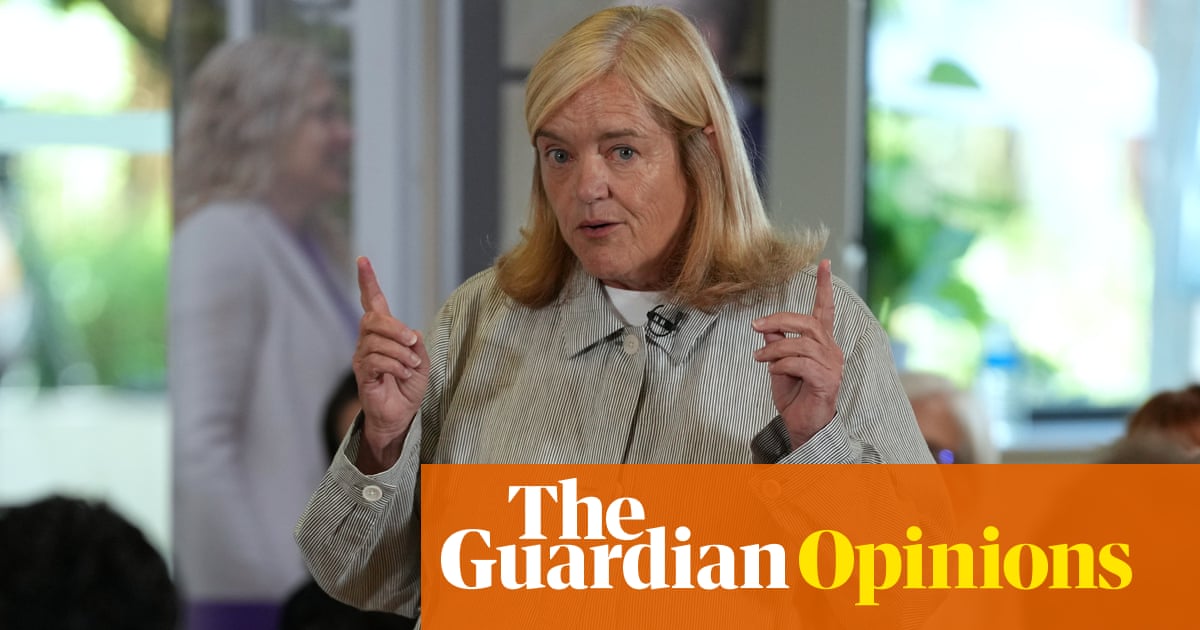
In her speech this morning Kemi Badenoch admitted that Brexit damaged the economy.
In a passage aimed at Labour, she said:
Adam Smith once said, “There is a lot of ruin in a nation.”
For all that is going wrong now, and let’s be honest has gone wrong in the past, nations can absorb shocks.
The financial crisis, Brexit, Covid.
Countries with strong institutions and productive people do not collapse overnight.
Even foolish policies take time to do real, lasting damage.
A crisis is serious, but it is not fatal unless governments keep repeating the mistakes.
We made mistakes in government, but we have learned from them.
Badenoch was not an MP at the time of the 2016 referendum, but she voted to leave and as a minister in the last government she was an enthusiastic supporter of Brexit.
She has never abandoned this position. But since the general elections she has criticised the fact that the last government embarked on Brexit without having a clear plan for how it would implement it.
Key events
What Badenoch’s speech reveals about how future Tory government would cut benefits
Even before the budget, Kemi Badenoch was attacking it on the grounds that Rachel Reeves was raising taxes to fund higher benefits. (The real picture is more complicated than that, but there is some truth in the claim, which means it functions as a political attack line.) Today Badenoch doubled down on that, claiming this approach amounted to “economic suicide”. She said:
Labour’s budget was for Benefits Street.
They send a very clear message.
If you work hard, and do the right thing, you will get less.
And if you are on benefits, you will get more …
How are we funding that?
By taxing businesses, taxing jobs, taxing wealth creators.
The people in our country who get out of bed and make things happen.
This is economic suicide.
What was more significant was what she said about how the Conservatives would cut welfare spending. She did not set out a full programme, but she did give more detail about the sorts of cuts she would favour.
Restoring the two-child benefits cap
The Tories have already said they would restore the two child benefit cap. Today Badenoch produced new figures which she said explained why people are “angry” about Labour getting rid of it. She said:
Well under Labour, there won’t be an economy to attach for much longer.
In Hackney alone, 1,000 families on benefits with 5 or 6 children stand to gain £74 million from the lifting of the two-child benefit cap.
Some of those families will be getting more than £14,000 extra a year.
At the Budget, income tax thresholds were frozen.
Do you know how many people’s thresholds were frozen just to pay for those families in Hackney?
340,000 taxpayers.
To pay for 1,000 families.
No wonder people are angry
While those on the minimum wage agonise over whether they can afford another child.
People on benefits will get paid an extra £3,500 for every child they have because Labour is lifting the two-child benefit cap.
Labour has strong defended the move, saying it will lift almost 500,000 children out of poverty. But Badenoch also said she did not accept the definition of poverty used by Labour. (See 11.26am.)
Tightening the household benefit cap
As well as the two-child benefit cap, George Osborne introduce a cap on the total amount of benefits a household can receive when he was chancellor. Badenoch implied she would tighten this, saying it had too many loopholes. She said:
We will undertake a full review of the level and operation of the household benefit cap, which currently acts more like a sieve than a cap because most people on benefits avoid it through one exemption or another.
Exemptions like being diagnosed with anxiety which can be worth more, than £20,000 to some families.
Restricting access to sickness benefits
Badenoch has often alleged that it is too easy for people to get sickness benefits. Today she implied the government should “draw a line” and exempt some conditions. She said:
Quite simply, our sickness benefits system was not designed to handle the age of diagnosis we now live in.
So, we are also going to review which conditions the state treats as disabilities when it comes to benefits.
All of us will have physical and mental challenges at some point in our lives.
But in an age in which one in four people now self-report as disabled, it’s clear that we are now going to have to draw a line on what health issues the state can support people with.
Time limiting more benefits
Badenoch implied she would like to time limit more benefits. She said:
Work, contribution and purpose give you value, dignity. The chance to change your life’s circumstances and support the people you care about.
So, we are going to look at what form state support should come in and how long it should last.
The Conservatives have published the full text of Kemi Badenoch’s speech on welfare. It’s here.
UK fraud prevention ‘still lacking’ after Covid-related scams and errors cost £11bn
Fraud and error linked to financial support programmes during Covid cost taxpayers £10.9bn, a report has found. Kalyeena Makortoff has the story here.
Trump criticises Europe’s leaders as ‘weak’, in diatribe that appears to include Starmer
Donald Trump has attacked Europe’s leaders as “weak” in an interview with Politico. He criticised them in particular for not being able to end the war in Ukraine, and he complained “they want to be so politically correct”.
The US president did not specifically mention Keir Starmer as part his critique, but he did not exempt him either, and Starmer has been one of the leaders of Europe’s pro-Ukraine coalition that Trump was disparaging.
Jakub Krupa has more on this on his Europe live blog.
Shabana Mahmood set to announce chair and panellists for national grooming gangs inquiry

Jessica Elgot
Jessica Elgot is the Guardian’s deputy political editor.
Shabana Mahmood, the home secretary, is expected to announce the chair and panellists for the grooming gangs inquiry at a ministerial statement later today.
Louise Casey, who was asked by the prime minister to help reestablish trust in the inquiry after several survivors quit an advisory panel, said in a letter to the remaining survivors aiding the inquiry that she hoped the candidate would have the qualities they were seeking.
Casey, who authored a nationwide audit on the grooming gangs which recommended a full inquiry, told the survivors in her letter she hoped they would have the opportunity to meet the chair and panel this week and pledged to stay involved in the inquiry herself.
Earlier this year a group of women quit the inquiry’s victim liaison panel, accusing the government of attempting to widen its remit to consider other forms of child sexual abuse.
Several demanded the resignation of the safeguarding minister Jess Phillips, though a number of other women on the panel then wrote to defend Phillips.
The statement will start soon after 1pm. Treasury questions are running until 12.30pm, and after that there is an urgent question about the Stakeknife MI5 double agent report.
Here is the letter.
NWG is a charity working with abuse survivors.
Badenoch admits Brexit damaged UK economy
In her speech this morning Kemi Badenoch admitted that Brexit damaged the economy.
In a passage aimed at Labour, she said:
Adam Smith once said, “There is a lot of ruin in a nation.”
For all that is going wrong now, and let’s be honest has gone wrong in the past, nations can absorb shocks.
The financial crisis, Brexit, Covid.
Countries with strong institutions and productive people do not collapse overnight.
Even foolish policies take time to do real, lasting damage.
A crisis is serious, but it is not fatal unless governments keep repeating the mistakes.
We made mistakes in government, but we have learned from them.
Badenoch was not an MP at the time of the 2016 referendum, but she voted to leave and as a minister in the last government she was an enthusiastic supporter of Brexit.
She has never abandoned this position. But since the general elections she has criticised the fact that the last government embarked on Brexit without having a clear plan for how it would implement it.
Labour says Tories would plunge kids ‘back into misery’ after Badenoch says its poverty measure not valid
Labour is saying that the Conservatives would plunge children “back into misery” under Kemi Badenoch’s welfare plans.
Responding to her speech, a Labour spokesperson said:
The Tories’ message on welfare is: we broke it, now put us back in charge. Kemi Badenoch is delusional and is treating the public like fools.
Under the Conservatives, the benefits bill rocketed by £114bn and nearly a million kids were plunged into poverty. Now they want to pretend it didn’t happen. There is a simple choice at hand: lifting half a million children out of poverty with Labour, or plunging kids back into that misery under Tory plans.
Badenoch claims Labour using wrong measure to assess whether people are in poverty
Here is the full quote from Kemi Badenoch in her welfare speech saying Labour’s poverty measure is flawed. (See 10.20am.) She said:
Labour will claim that they raise taxes to eradicate child poverty.
We Conservatives need to take on this argument that raising taxes on working people is the best way to eradicate poverty. It is not.
Labour believe that the way to end poverty is give money to people in poverty, and give them more money until they’re not in poverty anymore. This has never worked.
The best way to get children out of poverty is for their parents to have jobs, and for these jobs to pay well.
But Conservatives also need to challenge bad metrics and wrong assumptions that create flawed policy.
Let us start with the metric of relative poverty which Labour use.
Relative poverty just tells you what proportion of households earn below 60% of median income. That’s not a measure of poverty at all.
It is a bad measure because in a booming economy, as incomes rise, more people can be classed as being in poverty even though their real income is rising.
And then during a recession like we had under the last Labour government, where GDP collapsed and unemployment went through the roof, relative poverty fell even though we were all poorer.
So it is not enough for us to challenge the policy. We have to challenge the thinking that underpins it. We need something better.
There are other ways of measuring poverty, but Badenoch did not say which one she preferred.
Tories say Lib Dems are trying to ‘turn the clock back’ with call to join customs union with EU
The Conservatives have criticised the Liberal Democrats for proposing a custom union with the EU by saying Ed Davey’s party is trying to “turn the clock back”.
In a statement on the 10-minute rule bill (see 9.58am), Priti Patel, the shadow foreign secretary, said:
Ed Davey and the Liberal Democrats have never moved on from the Brexit referendum nearly a decade ago. And they will never stop trying to reopen the debates of the past – whatever the cost – when the rest of the country has long since moved on.
The Liberal Democrats would rather try to turn the clock back, than focus on the difficult decisions needed to tackle welfare spending so we can live within our means.
What is interesting about this statement is that it contains no attempt to defend the Boris Johnson Brexit deal, which rejected custom union membership, as good for the UK.
There was more evidence of this yesterday when Lord McFall, the Lord Speaker, published the transcript of his latest Lord Speaker’s Corner podcast interview, with Michael Gove.
Gove, who is now a Tory peer, was one of the leaders of the Vote Leave campaign, and in 2016 he and colleagues highlighted the supposed economic benefits of leaving the EU. But, when asked about the tangible benefits, he gave a reply just focusing on a constitutional point. He said:
As for the benefits that Brexit has brought, I think the fundamental benefit is that it has made this place, not just the House of Lords, but parliament itself, more important.
Because one of my frustrations was, all the time that I was a cabinet minister, I would find myself being invited to agree or disagree with government policy in particular areas. And then, when I said I disagreed, being told that it didn’t matter because this was European Union law that we couldn’t alter.
Q: Do you think there is a genuine mental health crisis in this country? Or do you think that people are just getting a diagnosis to claim benefits?
Badenoch says she thinks it is “a bit of both”.
She says there are people not in work with severe mental health issues.
But she says there are also people clearly playing the system. She says you can watch the so-called “sickfluencers” on Instagram telling people how to cheat.
And that’s the end of the Q&A.
Q: Are you worried that some of the language that you are using, about a Benefits Street budget, for example, is stigmatising?
Badenoch does not accept this. She claims to be careful about the language that she uses. But she says she wants to use language that cuts through.
Badenoch says she would like to get welfare spending back down to pre-Covid levels
Q: Is it realistic to get welfare spending back to pre-Covid levels?
Yes, says Badenoch. She says that is realistic.
Q: When you look at health benefits, are you just going to restrict mental health benefits, or is it all health benefits?
Badenoch says there are a lot of people with disabilities who can work.
She says it is not right that people should be able to get extra money for an ADHD diagnosis. She claims people who are anxious can decide not to work and to get benefits. That is not right.
But where the line gets drawn will be decided by the review, she says.
Q: Would you change the triple lock as part of your welfare review?
Badenoch says the triple lock is Conservative policy.
She say she wants to focus on welfare policies that will promote growth.
Badenoch says she wants welfare system, but not a ‘welfare state’
Q: [From Sam Coates from Sky] Does poverty in any form bother you?
Of course, says Badenoch. She says at times in her life she did not have money.
But she says that at the moment there are people out of work who are better off than people in work. That does not fix poverty at all, she says.
She says we need a welfare system. It should be a safety net. But it should not be a welfare state, she says.
UPDATE: Badenoch said:
Of course it bothers me.
I remember a time when I didn’t have much money at all, I had to work at the same time as I was going to college.
I was on the minimum wage, fending for myself.
So I know what it’s like, and I know that there are many people in worse off situations.
But the way to deal with poverty is not by taking money from the people who are struggling and then giving it to those on benefits.
Badenoch is now taking questions.
Q: Will you be consulting Iain Duncan Smith about this?
Badenoch says Duncan Smith is the father of welfare reform.
But the problems he was work and pensions secretary (he created universal credit) are different from the problems now.
#Badenoch #admits #Brexit #damaged #economy #announces #plan #review #benefits #system #politics #live #Politics