wellnessfitpro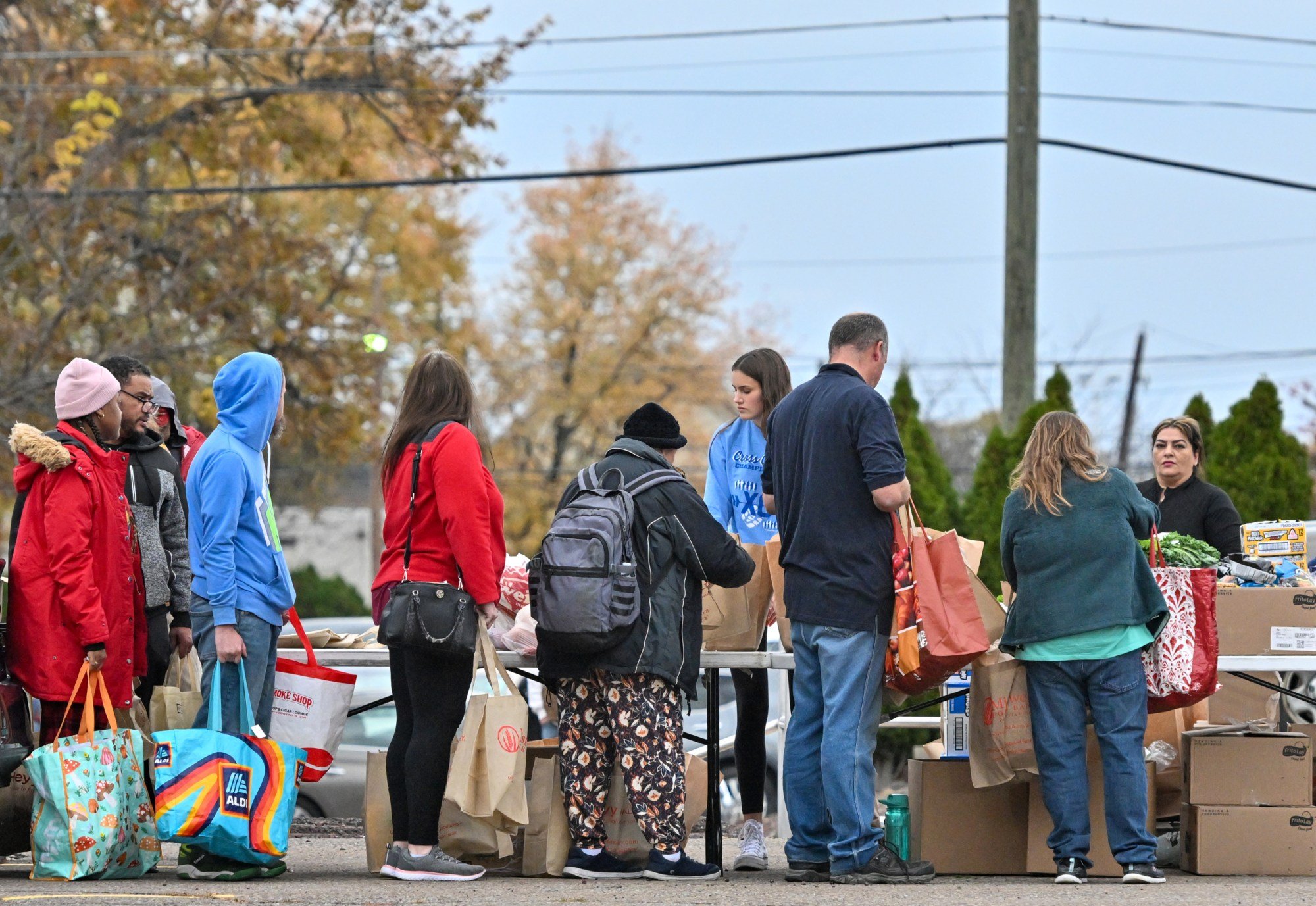
This fall, Americans got to see what it’s like to go without a safety net for the hungry. With the U.S. government shut down for multiple weeks and President Donald Trump refusing to fund SNAP, the federal food stamp program, a panic set in among the more than 40 million people who rely on it. Families skipped meals, and babies went unfed. Food banks ran out of food, and some people turned to dumpster diving.
It was just a glimpse of what’s to come. Starting next October, Trump’s so-called One Big Beautiful Bill Act will shift billions in SNAP costs from the federal government onto states. Some states won’t be able to afford this, and they could be forced to deeply cut or even shutter their SNAP programs altogether, according to the Congressional Budget Office.
“To be crystal clear, what this bill did was create the potential for SNAP programs to no longer exist … in states that cannot afford to?” Rep. Shomari Figures, an Alabama Democrat, asked a panel of state and county social services officials during a congressional hearing in September. Is it correct that under the new cost-sharing arrangement, Figures continued, these states might not have it in their budgets to feed anyone at all, including children and homeless veterans?
“Yes,” officials from Ohio to Wyoming answered, one by one by one.
Most vulnerable to this outcome are 26 states that have enacted sweeping corporate and personal income tax cuts over the past five years, depriving them of billions of dollars in revenue that they could have used at just this sort of moment. These state-level tax cuts, disproportionately benefiting the rich, have moved through legislatures with backing from powerful conservative organizations including the American Legislative Exchange Council, or ALEC, and the Koch brothers-founded Americans for Prosperity, as well as the Tax Foundation, a think tank. These groups seized on an opportunity created by the pandemic — states were flush with cash from 2021 to 2023 largely because federal stimulus funding was flooding in — to make significant progress toward the long-term goal of eliminating state income taxes entirely.
States that slashed their own taxes have only made themselves more reliant on federal funding, and thus stand to be disproportionately harmed by the cuts to SNAP and also to Medicaid contained in the Trump legislation, budget experts and state legislators said.
“It’s clear to policymakers across the country that there will be added costs coming down to states due to the Republican megabill,” said Wesley Tharpe, senior adviser for state tax policy at the nonpartisan Center on Budget and Policy Priorities. “But what’s less well understood by the public is that state and local budgets were already facing extreme strain due to the scope and scale of the tax cut wave that has been sweeping the nation.”
“There have been prior waves,” Tharpe added, “but the number of states that have cut taxes in the last five years, and the sheer size of the cuts, is nearly unprecedentedly large.”
Indeed, according to Pew, the scale of the recent downturn in states’ tax revenue resembles what is usually seen during a recession — even though the U.S. is not in a recession.
Dave Rader, a state senator in Oklahoma who chairs that chamber’s Republican caucus as well as its revenue and taxation committee, told ProPublica that as the costs of SNAP and Medicaid are shifted onto states by the new federal law, those programs could have to be “eliminated” if he and his fellow lawmakers can’t find a way to pay for them. And his colleagues’ recent decision to set Oklahoma on what has been called a “path to zero” income taxes will “put us in an even less fortunate situation because of the decline in revenue,” Rader said, adding that he still hopes the tax cuts work out.
According to a ProPublica analysis of state tax trends since 2021, 26 states have lowered their income taxes, with 23 of them cutting their top marginal rate, which most benefits their wealthiest residents. Eight of these states did so while adopting a “flat” income tax — meaning that a billionaire and his janitor will pay the same rate. Many states, meanwhile, have slashed other kinds of taxes, including property taxes. North Carolina is eliminating its corporate income tax. Missouri is even exempting passive income (money made on stocks, real estate, cryptocurrency and the like) from taxation, which will give millionaires there a $43,000 tax break on average compared with just $80 for everybody else.
These deep cuts to states’ main revenue streams didn’t hurt too much when stimulus dollars were still flowing in from the first Trump and Biden administrations — which, along with high inflation and the temporary spike in sales tax revenue it created, juiced state budgets and budget forecasts. But state lawmakers might have easily foreseen that federal funding pegged to the pandemic would eventually dry up.
Still, they kept cutting taxes, sometimes repeatedly, and now, several states are already facing severe shortfalls. Arizona, which in 2021 enacted an extremely low flat tax against the will of its voters even as it launched the nation’s most expensive private school voucher program, has since had to cut funding for community colleges, road repairs, water projects and services for disabled children. In West Virginia, where former Gov. Jim Justice (now a U.S. senator) signed the latest of multiple income tax cuts into law in 2024, deficits of $400 million and growing are expected in the coming years. Funding for education, child care and health care in the state has been decimated.
And that’s all before the One Big Beautiful Bill Act fully goes into effect, which will force states to come up with hundreds of millions to billions of dollars to cover new SNAP and Medicaid costs. The magnitude of the fiscal hit that they’re going to take is still coming into focus, with the cuts to the two safety net programs delayed by congressional Republicans so that most of the changes will be phased in from 2027 to 2029, after next year’s midterm elections.
On the SNAP side of the equation, all states will see the amount that they already pay for the administration of the program increased by 25%. Separately, for the first time ever, each state will soon have to pay for a percentage of the actual SNAP benefits that go to recipients. Exactly how much that is will depend on how much they’re penalized for their SNAP “error rate,” a measurement of how often they accidentally make incorrect eligibility decisions or overpayments or underpayments to beneficiaries.
By way of example, North Carolina will likely have to start paying out an estimated $420 million annually in SNAP benefits that the federal government used to cover, based on the state’s relatively high current error rate. That’s on top of the fact that it is presently the only state in the nation heading into the new year without a full budget, in part because lawmakers are gridlocked over whether to spend money on Hurricane Helene recovery efforts, teacher pay raises, Medicaid or a new children’s hospital ($535 million for that project has been a major sticking point), among many other priorities.
Recent cuts to income taxes will cost the state $1 billion this coming year alone in revenue that could have been used toward any of these ends.
When it comes to Medicaid, states will among several other things be required to implement new work requirements and to check many recipients’ eligibility for the program twice a year, which will mean new expenditures on additional staff, retraining of existing staff and technology to process all that paperwork. (When Georgia implemented such work requirements recently, it spent twice as much on administrative costs as it did on providing actual health care, the Government Accountability Office found.)
“What states like ours have been doing is more radical than anything that’s ever been done in terms of tax cutting at the state level,” concluded Jason Bailey, founder and executive director of the Kentucky Center for Economic Policy. “Tell me how that works if you’re trying to maintain a Medicaid program.”
Part of why this post-pandemic state tax-cutting spree has gone relatively unnoticed is that tax cut proponents are conscious of what happened not so long ago in Kansas. There, Gov. Sam Brownback in 2012 signed a set of enormous income tax cuts into law to much fanfare, only for them later to be repealed by a bipartisan supermajority after they caused severe economic and political pain. Brownback, with support from ALEC, the Koch brothers and the anti-tax crusader Grover Norquist, had said that the “Kansas experiment” would show how tax cuts spur economic growth and create jobs. Instead, state revenues fell by hundreds of millions of dollars and funding for education and infrastructure had to be slashed.
This time around, most of the 26 states that have cut their income taxes are doing so over a period of years, thus delaying some of the fiscal fallout and diffusing media attention. But what that approach didn’t anticipate is how quickly the hurt would be felt if massive funding cuts were to simultaneously come from the federal level.
To be sure, absorbing the costs of the Trump law will be difficult for states no matter their tax structure. Several blue states that have enacted no income tax cuts or more minor ones in recent years, including Connecticut, New Mexico and Oregon, have nonetheless had to call special legislative sessions over the past several months because they too are worried about the federal budget picture.
Advocates and experts at conservative organizations, in interviews and emails, defended states’ recent tax cuts even in the context of the budget pinch to come.
Jared Walczak is vice president of state projects at the Tax Foundation, a think tank that has provided testimony on several of the recent state tax cut bills. He acknowledged that there was a “sugar high” of extreme state revenue growth just after the height of the pandemic and through 2023, which wasn’t sustainable. Still, Walczak said, revenue remains higher in most states than it was in the 2010s. And cutting taxes from that place of growth was a wise move for the states that did so — especially because the modern economy is so fluid and competitive, with both businesses and individuals moving across state lines to where taxes are lower. New York and California, with their higher tax rates, have seen “out migration” in some recent years, he pointed out.
Walczak said it would be difficult, though, to tell how this calculus might change in the face of the upcoming cuts to SNAP and Medicaid. He said the situation would indeed “force some hard choices” on states, such as whether to reduce their Medicaid rolls in response to the federal law or to consider returning some tax rates to previous levels.
“But whether you’ve raised [taxes], lowered them or kept them the same, you will still face similar choices,” he contended. “Everyone’s in the same boat — that whatever your budget is now, your budget just got a little tighter. … Everyone is going to experience more stress against their baseline.”
A spokesperson for Americans for Prosperity, meanwhile, noted that the group hasn’t just advocated state income tax rate cuts, it has also emphasized the need for tax reforms that “broaden the base” of taxable economic activity, as well as spending restraint.
Liberal state budget experts and advocates countered that a more cautious fiscal approach over the past five years, including saving more surpluses in rainy-day funds rather than jumping at the opportunity to cut taxes, would have better protected essential services and vulnerable populations from future federal funding reductions. Instead, to help pay for their tax cuts, many states have already raided their various cash funds. “We’ve sort of maxed out on gimmicks,” said Geraldine Miranda, assistant director of fiscal policy at the Arizona Center for Economic Progress. “There’s nothing left in the couch cushions.”
And raising income taxes, especially after they’ve just been cut, is easier said than done, politically speaking. “We always try to get the Legislature to open up to the idea of raising revenue,” said Craig Beck, research director at the OpenSky Policy Institute, a Nebraska think tank. “But we’re met with just complete disregard.”
As a result, cutting programs and services will be the most likely route for states as the Trump law takes effect, experts said. Even though the proximate cause will have been the loss of funding for SNAP and Medicaid for lower-income people, those in the middle class will feel the consequences too. States, unlike the federal government, have to balance their budgets. So, everything from raising tuition at state universities to canceling unfinished state road projects to freezing state workers’ salaries is now on the table, as states try to find the money to address the budget dilemma that they themselves are partly to blame for creating.
In an article published in October, Joshua Meyer, director of the tax and fiscal policy task force at ALEC, wrote that the “generational effort” to eliminate states’ personal income taxes is now finally coming to fruition from Oklahoma to Kentucky to Mississippi.
West Virginia might be next. With the backing of many of the same organizations that once supported the Kansas experiment, multiple rounds of income tax cuts have been enacted in the Mountain State in recent years. This has led, among other things, to worsening understaffing at the very state agencies that will have to carry out the Trump administration’s orders with regard to SNAP and Medicaid, like implementing work requirements and trying to reduce instances of fraud, waste and abuse. “Due to vacancies, [economic service workers] are carrying an average caseload of 947 cases. This makes this job nearly impossible,” reads a recent West Virginia budget report.
Matt Rohrbach, the Republican deputy speaker of the West Virginia House of Delegates, still supports those tax cuts, which he said have produced economic growth. “But if we suddenly have to take over all the costs for SNAP and for Medicaid or even a significant part of it,” he told ProPublica, “that’s really going to put a hurt on a state like ours.”
#State #Tax #Cuts #Lead #SNAP #Crisis #ProPublica