wellnessfitpro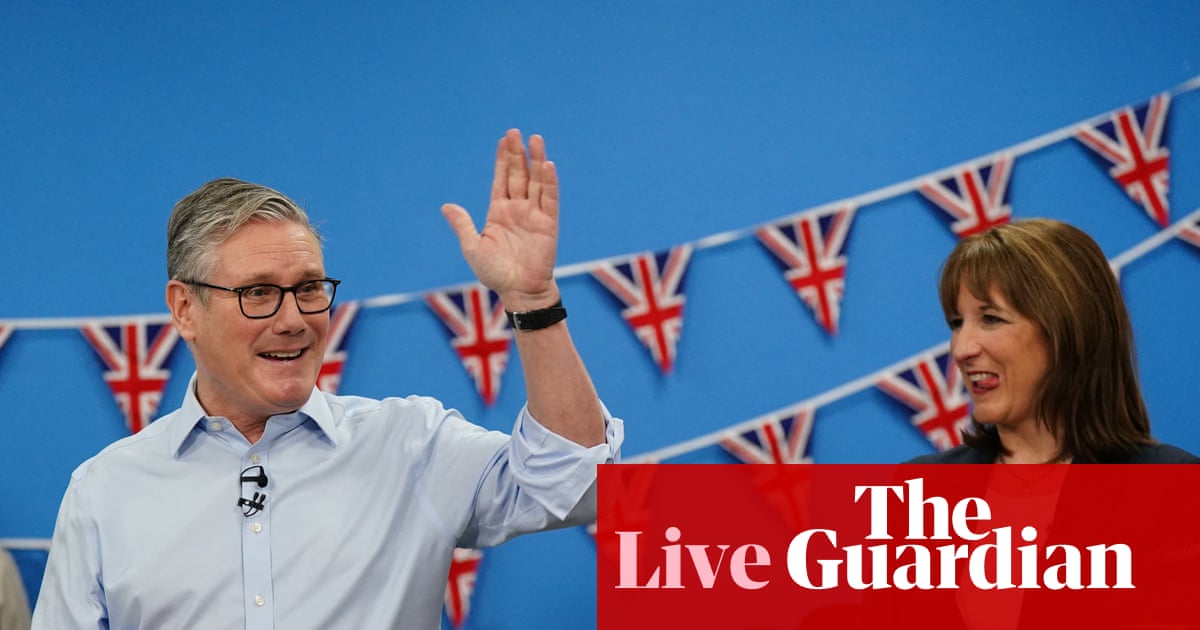
Starmer rejects claim Labour broke manifesto promise on income tax
In an interview Keir Starmer also rejected suggestions Labour broke its manifesto promise on tax.
When this was put to him, he told Sky News:
We kept to our manifesto in terms of what we’ve promised. But I accept the challenge that we’ve asked everybody to contribute.
But he also defended the need to raise taxes. Explaining why, he told the BBC:
I tell your viewers precisely why that is: to make sure that we can protect our NHS, which needs to be there for them and their families when they need it. Everybody understands that.
We want to make sure that we have got schools which are fit for the future so that every child can go as far as their talent will take them, and I absolutely wanted to bear down and reduce the cost of living, because for most of your viewers that will be the single most important thing.
BREAKING: Sir Keir Starmer has insisted Labour “kept to our manifesto” promises despite raising taxes in the budget – as he asked “everybody to contribute”.
🔗 Read more https://t.co/RvJTYs2Xg6
— Sky News (@SkyNews) November 27, 2025
Key events
-
No 10 says it does not accept OBR claim that digital ID scheme likely to cost almost £2bn
-
7 best charts from Resolution Foundation report that explain the budget
-
Tories say big reduction in net migration caused by visa restrictions imposed when they were in government
-
John Swinney rules out raising income tax in Scotland
-
Starmer rejects claim Labour broke manifesto promise on income tax
-
Starmer brushes off polling showing two-child cap popular, saying no other PM has done as much to end child poverty
-
Starmer rejects claim from organisations like CBI and IFS saying budget shows he’s lost interest in promoting growth
-
Share your views on the new ‘mansion tax’ – and how you might be affected
-
IFS says Reeves should have included more tax reform in budget to help growth
-
Jury trials will ‘always be cornerstone of British justice’, minister says, as she claims plan to restrict them not finalised
-
OBR chair Richard Hughes says he will resign over budget mistake if Reeves and MPs no longer have confidence in him
-
Ask the Guardian your budget questions
-
Annual asylum claims up 13% to 111,000, highest figure on record, Home Office says
-
Net migration to UK down 69% in year ending June 2025, to 204,000, ONS says
-
Getting rid of two-child benefit cap ‘huge victory for the left’, says John McDonnell
-
Reeves dismisses Tory claim that she is raising taxes to fund ‘Benefits Street budget’
-
Reeves says 60% of families who will benefit from abolition of 2-child benefit cap have parents in work
-
Reeves interviewed on Today programme
-
‘External person’ may have been involved in accidental, early release of OBR’s budget reports, says its chair
-
Working people would have been better off if Reeves had broken manifesto promise on income tax, thinktank says
No 10 says it does not accept OBR claim that digital ID scheme likely to cost almost £2bn
Downing Street has said it does not accept a claim from the Office for Budget Responsibility that its proposed digital ID scheme could cost almost £2bn.
In its report yesterday, the OBR said:
The implementation of digital ID cards is provisionally forecast to cost £1.8bn in total over the next three years, split across £0.5bn (day-to-day spending) and £1.3bn (capital spending).
Asked to confirm these figures, the PM’s spokesperson said:
The number in the OBR forecast was an initial early estimate spread over a number of years.
We don’t recognise it as an accurate cost of the programme, the scope of which is yet to be decided, let alone costed.
Any costs in this spending review period will be met within existing settlements. The government will run a full consultation in due course.
7 best charts from Resolution Foundation report that explain the budget
Words can explain the budget quite well, but charts do it far better. Here are some of the most revealing from the Resolution Foundation’s budget analysis.
1) The tax rises in the budget hit hardest towards the end of this parliament.
2) No government has raised taxes so much in two budgets in a row since John Major was PM in the early 1990s.
3) The nine-year freeze in the personal tax allowance has reversed 78% of the rise in the allowance that happened in the 2010s. Raising the tax allowance was a key coalition policy, championed by George Osborne. Over time, freezing the allowance removes all the benefits (because of the impact of inflation). Rishi Sunak announced a four-year freeze, Jeremy Hunt extended it for two years, and Rachel Reeves has extended it for another three years.
4) People on low incomes would have done better if Reeves had chosen to raise income tax by 1p in the pound, instead of freezing thresholds for three years. The Resolution Foundation says both measures would have raised about the same amount. But the income tax rise would have been more progressive, particularly because of the sums raised from the highest paid. The thinktank says this shows “the manifesto tax pledge has cost working people”. (See 8.03pm.)
5) Tax and benefit changes introduced since the election have been progressive. Overall, the poorest households have gained, and wealthier households have lost out. The Treasury published its own distributional impact assessment yesterday which government changes look even more progressive – but that used a different methodology, including “benefits-in-kind from public services”.
6) Children have gained most from the tax and benefit changes announced since the election.
7) This parliament is set to be the second worst for improvements to real household disposable income since 1955. The worst was the 2019-2024 parliament.
Tories say big reduction in net migration caused by visa restrictions imposed when they were in government
Here is Rajeev Syal’s story on the fall in the net migration figures. (See 9.50am.)
The Conservatives say the fall in net migration is largely down to visa restictions they introduced when they were in government. This is from Chris Philp, the shadow home secretary.
The fall in today’s figures is driven by the Conservative reforms we put in place on work visas, dependants, and students, but we need to go much further. And under a future a Conservative Government, only those who make a real contribution can stay permanently, and only British citizens will be eligible for benefits funded by British taxpayers.
The IPPR, a left-leaning thinktank, has backed up this claim. This is from Marley Morris, the IPPR’s associate director for migration, trade and communities.
After reaching exceptional highs following the introduction of the post-Brexit migration system, net migration has now plummeted to just over 200,000. Much of this is driven by a sharp decline in student dependants and health and care visas under the previous government.
New reforms by the current government are expected to lead to a further fall. The government will need to be careful to balance the need to manage migration with its other priorities on boosting economic growth, supporting housebuilding, and protecting public services.
In response to the figures, Jonathan Portes, an economics professor and an immigration specialist, has posted this on Bluesky.
Today’s migration stats illustrate the migration doom loop in action…
(from my presentation at the IMF last week)
John Swinney rules out raising income tax in Scotland

Severin Carrell
Severin Carrell is the Guardian’s Scotland editor.
John Swinney has ruled out any increases to income tax rates in Scotland despite widespread concerns the chancellor’s tax tweaks in her budget could impact Scotland’s Treasury grant.
Swinney was pressed by Scottish Conservative leader Russell Findlay during first minister’s questions at Holyrood today whether his administration would raise Scotland’s income tax rates after Rachel Reeves opted to freeze tax thresholds in the rest of the UK.
Although the Scottish National party government has raised tax rates before – despite manifesto pledges not to do so – Swinney seemed to take the wind out of Findlay’s sails by saying it would not do so this time.
He said Scotland’s finance secretary, Shona Robison, had confirmed this morning that after studying the details of the UK budget, “the Scottish government will not increase income tax rates or introduce any new bands.”
Scotland has had the power since 2017 to set its own income tax bands and thresholds (above the personal threshold which is set by the Treasury), and already has higher rates for the better off – a policy the Conservatives have repeatedly criticised.
Scottish income tax funds 32% of devolved spending, adding £4bn to its spending power since 2017, helping ensure overall public spending in Scotland is 20% higher than the UK average. In Scotland, anyone earning above £35,000 pays more than in England, Wales or Northern Ireland. At £50,000 they pay £1,528 a year more and £3,332 more at £100,000.
Under the complex fiscal framework agreement between the two governments, any increase in UK income tax rates means a pro rata cut in the Treasury grant to Scotland. This is to ensure Scotland does not benefit financially from Westminster’s policy on income tax.
It seems Reeves’ decision to freeze thresholds for England and Northern Ireland (and by default for Wales, since it has so far always followed Treasury policy for its partly-devoved income tax rates) has not significantly impacted Swinney’s budget.
Anas Sarwar, the Scottish Labour leader, said Wednesday’s budget would add £820m to Scotland’s devolved budget over the next four years, in addition to a “transformative” £9.2bn uplift from the previous UK budget. Labour’s decision to scrap the two-child limit will also increase Swinney’s budget by £150m, by removing his need to fund a Scotland-only policy to scrap the limit from April next year.
Swinney said thanks for abolishing the two child cap, but was dismissive about that £820m budget lift; Labour’s decision to raise national insurance would cost Scotland’s public sector an additional £400m in a single year, he said – dwarfing any Treasury grant gains.
Starmer rejects claim Labour broke manifesto promise on income tax
In an interview Keir Starmer also rejected suggestions Labour broke its manifesto promise on tax.
When this was put to him, he told Sky News:
We kept to our manifesto in terms of what we’ve promised. But I accept the challenge that we’ve asked everybody to contribute.
But he also defended the need to raise taxes. Explaining why, he told the BBC:
I tell your viewers precisely why that is: to make sure that we can protect our NHS, which needs to be there for them and their families when they need it. Everybody understands that.
We want to make sure that we have got schools which are fit for the future so that every child can go as far as their talent will take them, and I absolutely wanted to bear down and reduce the cost of living, because for most of your viewers that will be the single most important thing.
BREAKING: Sir Keir Starmer has insisted Labour “kept to our manifesto” promises despite raising taxes in the budget – as he asked “everybody to contribute”.
🔗 Read more https://t.co/RvJTYs2Xg6
— Sky News (@SkyNews) November 27, 2025
Starmer brushes off polling showing two-child cap popular, saying no other PM has done as much to end child poverty
In his interviews today Keir Starmer also rejected suggestions that he was only getting rid of the two-child benefit cap to boost his support with the parliamentary Labour party.
When he was asked by Sky’s Beth Rigby if this was the reason for the move, Starmer replied:
It’s impossible to argue that this is a position that has been adopted just in the last few weeks. It is my long-standing ambition.
I’m proud to be the prime minister who has done more on child poverty than any prime minister ever.
BBC’s Chris Mason put it to him that polling suggests keeping the two-child benefit cap would be more popular than getting rid of it. Asked if those in favour of keeping the cap were wrong, Starmer replied:
I think it’s really important that we don’t make children pay the price. I don’t think that, anybody wants to see children growing up in poverty.
He also said three quarters of families affected by the two-child benefit cap are working. “This is the working poor in modern Britain,” he said. “I want to end that.”
Starmer rejects claim from organisations like CBI and IFS saying budget shows he’s lost interest in promoting growth
Keir Starmer has been defending the budget in interviews with broadcasters while on a visit to a community centre in Rugby. And he has rejected suggestions that the budget showed Labour has lost interest in promoting growth.
In its response to the budget yesterday, the CBI said: “The government’s growth mission is currently stalled.” Today the Institute for Fiscal Studies has made a similar point. (See 11.04am.)
But when the BBC’s political editor, Chris Mason, put it to Starmer that the budget would not help growth, Starmer replied:
I’m sorry, growth was predicted at 2025 at 1%. The figures came in yesterday, it is 1.5%.
When it was put to Starmer that 1.5% growth was still not much, he replied:
It is 50% more than was forecast. That is significantly more.
He claimed the government was doing a lot to boost investment.
Share your views on the new ‘mansion tax’ – and how you might be affected
We are also keen to hear from readers who they think they might be affected by the “mansion tax” proposal announced in the budget yesterday. If you would like to contribute, you can do so here.
IFS says Reeves should have included more tax reform in budget to help growth
The Institute for Fiscal Studies thinktank has said that Rachel Reeves should have included more tax reform in her budget to deliver growth.
Presenting the IFS’s assessment of the budget, Helen Miller, its director, said:
Growth not only makes us richer, it makes almost every problem easier to solve. At the last budget the chancellor said, “Every budget I deliver will be focused on our mission to growth the economy”. That wasn’t on show yesterday.
It was never going to be possible to do such a large tax rise and have that be good for growth. But – and I am fully aware that I sound like a broken record here – tax reform was the way to ensure that taxes don’t do more damage that necessary. The chancellor, like her predecessors, continues to shy away from meaningful tax reform that could move the dial. This felt mostly like the budget of a government trying to scrape through. Of course, no fiscal event can do everything, and reform is hard. But given the scale of the challenges we face, and given the government’s lofty rhetoric about change, and its ambitions on growth, I think we’re entitled to ask for more.
Jury trials will ‘always be cornerstone of British justice’, minister says, as she claims plan to restrict them not finalised
Earlier this week it emerged that David Lammy, the justice secretary, has written to colleagues saying that he is considering ending jury trials for all prosecutions except those involving people accused of rape or killing someone. Officially, this is just an option being considered, by Rajeev Syal, the Guardian’s home affairs editor, reported this week that Lammy has been gearing up to announce the move in the new year.
In response to a Commons urgent question on this issue, Sarah Sackman, the courts minister, told MPs this morning that “no final decisisons” have been taken.
She said the government inherited “an emergency” in the criminal courts, and she said a crisis of this scale required “bold action to get the system moving and to deliver swifter justice for victims”.
But she also said:
Let me be clear; jury trials will always be a cornerstone of British justice.
For the Conservatives, Robert Jenrick, the shadow justice secretary, said jury trials were “fundamental to the justice system” and should be protected.
The Resolution Foundation has now published its budget analysis on its website.
Here is an extract from its verdict.
What the budget lacked was a sense of strategy – and not only strategy in the sense that fiscal purists mean, who will always be disappointed by politicians who have to think about messy things like politics.
The deeper confusion relates to the very recent swerve regarding who should bear the pain of consolidation. A matter of months ago in spring statement, a big part of the chancellor’s answer was disabled people on benefits, in plans that were in many ways regressive. This week, the same chancellor was upfront in asking everyone to pay more, and the best-off to pay even more still. Across the parliament as a whole, policy measures will have a progressive effect on incomes with the poorer half gaining £90 on average against losses of £1,000 for the top half.
And yet after all the swerving, it is hard to know where the chancellor would look for further sacrifices if they should be needed. Unfortunately, the possibility of more tough choices is very real, in an economy in which unemployment has been rising and an early fall is not expected.
OBR chair Richard Hughes says he will resign over budget mistake if Reeves and MPs no longer have confidence in him
Richard Hughes, chair of the Office for Budget Responsibility, has said that he will resign if Rachel Reeves, the chancellor, and MPs say they no longer has confidence in him in the light of the mistaken early release yesterday of its budget report.
Speaking at the Resolution Foundation’s post-budget event, Hughes said:
A link to our EFO (Economic and Fiscal Outlook) document was inadvertently made accessible to the public prior to the conclusion of the chancellor’s statement when it is usually published.
It wasn’t published on our website, but there was a link that somebody managed to find, and that made it accessible, and then it was then disseminated. As soon as it was discovered, we took action to take it down.
We take budget security incredibly seriously, which is why this investigation is already under way and will report very swiftly by early next week.
Personally, I serve day-to-day subject to the confidence of the chancellor and the Treasury committee. If they both conclude, in light of that investigation, they no longer have confidence in me then, of course, I will resign, which is what you do when you’re the chair of something called the Office for Budget Responsibility.
Ask the Guardian your budget questions
Heather Stewart, the Guardian’s economics editor, and Hilary Osborne, our money and consume editor, will be answering questions from readers about the budget. You can submit one here.
Annual asylum claims up 13% to 111,000, highest figure on record, Home Office says
The Home Office has also published its quarterly immigration-related figures, covering the year ending in September 2025. These show that 111,000 people claimed asylum in the UK in that period, up 13% in the previous year.
The Home Office says this is even higher than the previous recorded peak, which was 103,000 in 2002.
Half of those claiming asylum arrived through illegal routes, such as on small boats. Others arrived in the UK legally, and then claimed asylum.
The figures also show that the number of asylum claimants waiting for a decision has fallen sharply because the number of claims processed has risen by 31%.
Net migration to UK down 69% in year ending June 2025, to 204,000, ONS says
Net migration to the UK was an estimated 204,000 in the 12 months to June 2025, down 69% on the previous year, the Office for National Statistics has said this morning.
The figure, which covers the first year of the Labour government, is the lowest annual figure since 2021, the ONS says in a report.
It says:
At 204,000, long-term international net migration for the year ending (YE) June 2025 was around two-thirds lower than a year earlier (649,000 in YE June 2024). This is similar to the levels we have been seeing since the introduction of the new immigration system, which followed the UK’s leaving the EU. The fall is driven by fewer non-EU+ nationals arriving for work- and study-related reasons and a continued, gradual increase in levels of emigration.
These figures to a large extent reflect the impact of tighter visa regualtions introduced by Rishi Sunak’s government, which have largely been maintained by Labour.
Getting rid of two-child benefit cap ‘huge victory for the left’, says John McDonnell
John McDonnell, who was shadow chancellor when Jeremy Corbyn was Labour leader, told Sky News this morning that the abolition of the two-child benefit cap in the budget was “a huge victory for the left”.
McDonnell was one of seven Labour MPs suspended from the parliamentary party last year because they voted for an SNP amendment to the king’s speech saying the two-child benefit cap should be abolished.
As Sky News reports, McDonnell said he was not interested in getting an apology from the party for the way he and the other rebels were treated. He said he was “really pleased” by the budget announcement and now wanted to “move on now because there’s a lot more to be done”.
#Starmer #budget #break #manifesto #tax #pledge #scrapping #twochild #benefit #cap #longstanding #ambition #live #Politics