wellnessfitpro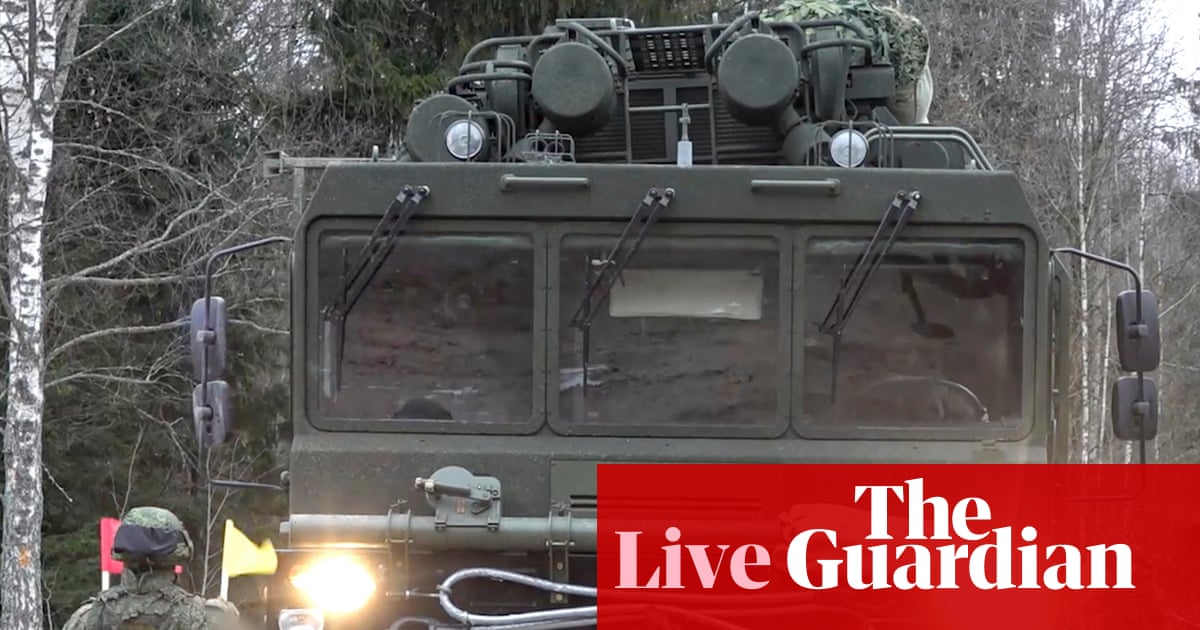
Russia says it has moved Oreshnik missiles into Belarus
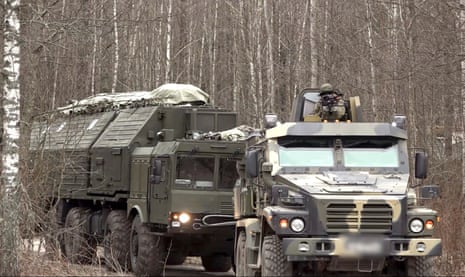
Russia has released a video declaring its nuclear-capable Oreshnik missiles have entered active service in Belarus, its neighbouring ally which also shares a border with Nato countries Poland, Lithuania and Latvia.
Putin has claimed the weapons are impossible to intercept because the missile speeds are supposedly more than 10 times the speed of sound.
The move could feasibly allow Russian nuclear missiles to reach European targets faster, if stored at a base in Belarus. Intermediate missiles have a range of around 5,500km (3,415 missiles) which mean they could strike anywhere in Europe or the US’s west coast from Russia.
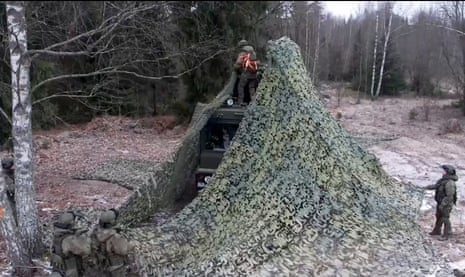
The video released by both Russian and Belarus defence ministries on Tuesday didn’t specify where the missile systems are being placed in Belarus- but it showed them being transported into forests and being camouflaged with netting.
‘The Oreshnik missile division began performing combat duty tasks in designated areas in the country’, Belarus’s defence ministry said.
Key events
Putin has intensified his nuclear threats and posturing ever since November 2024 when Moscow formally lowered the threshold for the use of nuclear weapons.
That move was widely seen as signalling a readiness to respond aggressively to perceived threats.
Soon after, in that same month, Russia used the then new Oreshnik missile, loaded with a conventional weapon, on the battlefield against Ukraine in Dnipro.
The use of a the nuclear-capable Oreshnik was seen as an escalation, and major challenge to European missile defences. The “Oreshnik” – hazel shrub in Russian – is believed to be an intermediate-range missile which can strike anywhere in Europe and reach the US’s west coast.
In October, Putin also announced testing of a new nuclear-powered cruise missile known as the Burevestnik.
Satellite imagery suggests Oreshnik missiles located near Krichev
We’ve just had this public display from Russian defence about their new nuclear-capable missiles in Belarus, but it had been flagged by Belarus’s government that the Oreshniks were arriving.
While we don’t know where they are located, two US researchers had flagged a few days ago that they believed the nuclear-capable hypersonic ballistic missiles were being stationed at a former airbase in eastern Belarus.
After studying Planet Labs satellite imagery, Jeffrey Lewis and Decker Eveleth said the pictures showed features consistent with a Russian strategic missile base.
Lewis and Eveleth said they were 90% certain that mobile Oreshnik launchers would be stationed at the former airbase near Krichev, 307km east of the Belarus capital, Minsk.
The researchers said reviews of the Planet Labs imagery revealed a hurried construction project that began between 4 and 12 August and showed features consistent with those of a Russian strategic missile base.
One “dead giveaway” in a 19 November photo is a “military-grade rail transfer point” enclosed by a security fence to which missiles, their mobile launchers and other components could be delivered by train, said Eveleth.
Russia says it has moved Oreshnik missiles into Belarus
Russia has released a video declaring its nuclear-capable Oreshnik missiles have entered active service in Belarus, its neighbouring ally which also shares a border with Nato countries Poland, Lithuania and Latvia.
Putin has claimed the weapons are impossible to intercept because the missile speeds are supposedly more than 10 times the speed of sound.
The move could feasibly allow Russian nuclear missiles to reach European targets faster, if stored at a base in Belarus. Intermediate missiles have a range of around 5,500km (3,415 missiles) which mean they could strike anywhere in Europe or the US’s west coast from Russia.
The video released by both Russian and Belarus defence ministries on Tuesday didn’t specify where the missile systems are being placed in Belarus- but it showed them being transported into forests and being camouflaged with netting.
‘The Oreshnik missile division began performing combat duty tasks in designated areas in the country’, Belarus’s defence ministry said.
Russia has hit a civilian ship in Ukraine’s Odesa region, injuring one person, says Ukraine’s deputy prime minister.
Oleksiy Kuleba said the Panama-flagged ship, carrying grains, was damaged and two oil storage tanks were also hit in the latest strike on Black Sea ports of Pivdennyi and Chornomorsk.
“This is yet another targeted attack by Russia on civilian port infrastructure. The enemy is trying to disrupt logistics and complicate shipping,” Kuleba said on Telegram.
Both ports were still operating though, he said. Odesa and its port region is crucial for Ukraine’s wartime economy, sustained on agricultural exports. Russia has stepped up attacks on the coastal city and its port infrastructure in recent months while Ukraine is increasingly targeting Moscow’s shadow fleet with drones.
India’s prime minister, Narendra Modi, has said his country is “deeply concerned” after Moscow’s claim of a Ukrainian attack on an official home of Vladimir Putin.
He posted to X:
Deeply concerned by reports of the targeting of the residence of the President of the Russian Federation. Ongoing diplomatic efforts offer the most viable path toward ending hostilities and achieving peace.
We urge all concerned to remain focused on these efforts and to avoid any actions that could undermine them.
Kyiv dismissed the Russian report of a drone attack as baseless and said it is being used as a pretext to justify further attacks on Ukraine and to derail peace talks.
Earlier, Ukraine’s foreign minister had also voiced disappointment over India, as well as Emirati states and Pakistan, expressing concerns for an “attack that never happened”.
Ukraine orders evacuation of northern border villages
Ukraine has ordered the evacuation of more than a dozen settlements in the northern Chernihiv region, which borders Belarus and has been the target of Russian shelling.
“At the defence council, a decision was made on mandatory evacuation from 14 border villages,” regional leader Viacheslav Chaus said, adding: “The border area is under daily shelling. Despite the real threat, 300 people still live there.”
Air defences in the region have less time to react to incoming attacks because it borders Russia to the north.
Germany’s chancellor, Friedrich Merz, has echoed Donald Tusk’s optimistic tone regarding talks on ending the war in Ukraine.
He posted to X to confirm there had been “another round of consultations” with “European and Canadian partners”. It is not clear who was in the meeting.
“We are moving the peace process forward. Transparency and honesty are now required from everyone – including Russia,” Merz added in his post.
Peace is on the horizon in Ukraine, Polish prime minister says
We have some comments from the Polish prime minister, Donald Tusk, who has been speaking to a government meeting. According to the Reuters news agency, he said:
Peace is on the horizon, there is no doubt that things have happened that give grounds for hope that this war can end, and quite quickly, but it is still a hope, far from 100% certain.
“When I say peace is on the horizon, I’m talking about the coming weeks, not the coming months or years. By January, we’ll all have to come together… to make decisions about the future of Ukraine, the future of this part of the world,” Tusk said, as he suggested that Kyiv would need to compromise on territorial issues.
The future of the Zaporizhzhia nuclear power plant in Ukraine, which Russia took control of in March 2022, is one of the remaining sticking points in negotiations.
Almost all countries consider that it belongs to Ukraine but Russia says it is owned by Russia and a unit of Russia’s state-owned Rosatom nuclear corporation runs the plant.
Since Russia’s full-scale invasion was launched, there have been numerous safety concerns at the plant, including power outages and nearby shelling.
A monitoring mission from the International Atomic Energy Agency (IAEA) has been stationed there for over three years, but Russian authorities have been accused of regularly restricting access to the plant, which is located in Enerhodar on the banks of the Dnipro river and the Kakhovka reservoir.
It is not currently producing electricity but relies on external power to keep the nuclear material cool and avoid a meltdown.
Both Russia and Ukraine regularly accuse one another of shelling the plant, risking a nuclear disaster.
The Kremlin said on Monday that Ukraine should withdraw its troops from the part of Donbas that it still controls if it wanted peace and that if Kyiv did not reach a deal then it would lose more territory.
Moscow controls about 75% of the Donetsk region, and about 99% of the neighbouring Luhansk (known collectively as Donbas).
Zelenskyy said earlier this month that the US wanted Ukraine to withdraw its troops from the Donbas region, and Washington would then create a “free economic zone” in the parts Kyiv controls.
The Ukrainian leader said at the time that Ukraine did not believe the plan was fair without guarantees that Russian soldiers would not simply take over the zone after a Ukrainian withdrawal (you can read more on this here).
The intensive diplomacy by European leaders can only achieve so much as the war is likely to continue until Kyiv and Moscow come to an agreement on territorial issues and the status of the Russian-occupied Zaporizhzhia nuclear plant. More detail on both in later posts.
According to reports, Polish prime minister Donald Tusk was due to kick off a meeting on Ukraine at 10:00 GMT with other European leaders. It is not clear who the attendees were but we will bring you the latest as soon as we have it.
In a social media post on Monday, Tusk, one of Ukraine’s staunchest allies, said that he had “nighttime talks” with other European leaders on the war.
He said seeing a “declaration” of US participation in security guarantees would be the marker of success in the negotiations to end the war. “But we are still far from the final talks,” the Polish leader added.
As a reminder, Donald Trump said after his Sunday meeting with Zelenskyy that Kyiv and Moscow are “closer than ever” to a peace deal and that 95% of the issues have been settled.
Russia to harden its negotiating position after alleged drone attack, spokesperson says
Russia has so far stuck to its maximalist positions during the negotiations and has been accused of trying to prolong the war for its strategic advantage.
When asked about the alleged Ukrainian drone attack on one of Vladimir Putin’s presidential residence, Kremlin spokesperson Dmitry Peskov said earlier today that it was “aimed at collapsing the negotiation process”.
“The diplomatic consequence will be to toughen the negotiating position of the Russian Federation,” Peskov said.
“We see that Zelenskyy himself is trying to deny this, and many western media outlets, playing along with the Kyiv regime, are starting to spread the theme that this did not happen,” he added. “This is a completely insane assertion.”
When asked by journalists this morning, Peskov declined to say where Putin was at the time of the alleged attack, saying such details should not be made public.
When asked if Russia had physical evidence to back up its claims, he said air defences shot the drones down but that the question of wreckage was for the defence ministry.
Volodymyr Zelenskyy has dismissed the drone attack claim as “typical Russian lies”, concocted by Moscow as an excuse to continue attacks on Ukraine.
Russia said yesterday it would review its position in peace negotiations after the alleged Ukrainian drone attack.
Earlier that day, Volodymyr Zelenskyy said that the US had offered Ukraine a 15-year security guarantee (even though he wanted guarantees for up to 50 years).
The White House did not immediately respond to these comments, which were made to reporters via WhatsApp as the Ukrainian leader returned to Europe from Florida.
But Trump sounded optimistic about getting closer to a peace agreement following his talks with Zelenskyy at Mar-a-Lago on Sunday.
It is not clear what form the US security commitments would take, but Zelenskyy has been pushing for “article-5-like” security guarantees from Europe and the US, referring to Nato’s founding principle that an attack on one member should be seen as an attack on all.
Trump has ruled out deploying peacekeeping troops. Zelenskyy said the presence of international monitors in a postwar Ukraine was the best form of security and would provide reassurance to the country’s citizens.
European leaders said earlier this month that Europe is ready to lead a “multinational force” in Ukraine as part of a US proposal for a peace agreement.
The leaders of the UK, France, Germany and eight other European countries said troops from a “coalition of the willing” with US support could “assist in the regeneration of Ukraine’s forces, in securing Ukraine’s skies, and in supporting safer seas, including through operating inside Ukraine”.
In an interview with the Russian state news agency Tass published on Sunday, Russia’s foreign minister, Sergei Lavrov, said any European troop contingents sent to Ukraine would be considered by Russian forces as legitimate military targets.
How did Trump react to the claims of the alleged drone attack on one of Putin’s residences?
My colleagues Luke Harding and Sammy Gecsoyler have reported on how Donald Trump, who has at times appeared favourable to the Russian side during negotiations, reacted to the claims of an alleged attack on one of Vladimir Putin’s residences. Here is an extract from their story:
The Kremlin’s latest bellicose threat appeared to be part of a KGB-style informational campaign directed at Russians and an impressionable White House. The Russian presidential adviser Yuri Ushakov claimed Putin briefed Trump about the alleged attack when they spoke on Monday.
Trump was “shocked” at the news, Ushakov claimed, with Russian officials alleging that Britain was also involved in what he described as “provocations”.
Ushakov’s characterisation of Trump rang true when, speaking at Mar-a-Lago on Monday afternoon, the US president told reporters the news made him “very angry”. “I don’t like it. It’s not good,” Trump said when asked if he was worried it could affect his efforts to broker peace.
“I learned about it from President Putin today,” he said, adding: “It’s a delicate period of time. This is not the right time. It’s one thing to be offensive, because they’re offensive. It’s another thing to attack his house. It’s not the right time to do any of that.”
When asked if there was any evidence of such an attack, Trump said: “We’ll find out. You’re saying maybe the attack didn’t take place? That’s possible, I guess, but President Putin told me this morning.”
Trump’s press secretary, Karoline Leavitt, described the conversation between him and Putin as “positive”. It followed a lengthy call between the two leaders on Saturday.
Russia shows no proof of alleged drone attack on Putin’s residence, Ukrainian foreign minister says
We are restarting our live coverage of Russia’s war in Ukraine and will bring you updates on the latest diplomatic efforts to bring the nearly four-year conflict to an end.
Kyiv has issued a fresh response to claims by Moscow that Ukrainian forces launched a drone attack on Vladimir Putin’s state residence in Russia’s northwestern Novgorod region.
In a post on X this morning, Ukraine’s foreign minister, Andrii Sybiha, said Russia “still hasn’t provided any plausible evidence” to back up its claim, which has been dismissed by Kyiv as a lie used to justify future Russian attacks and to derail peace talks.
Sybiha added that making “false claims” is a “signature tactic” deployed by Russia, which he says often accuses “others of what they themselves plan to do”.
Sybiha added:
We were disappointed and concerned to see the statements by Emirati, Indian, and Pakistani sides expressing their concerns regarding the attack that never happened.
It is even more surprising given that all three states failed to issue any official statements when a real Russian missile struck the real Ukrainian government building on September 7, 2025.
The claims of the alleged attack were first publicly aired by Russian foreign minister Sergei Lavrov, who said yesterday that Russian air defences had shot down 91 incoming drones overnight. “Such reckless actions will not go unanswered,” he added, condemning what he described as “state terrorism”.
Targets for retaliatory strikes against Ukraine had already been selected, he said. No damage or casualties were reported, nor were any pictures provided.
Lavrov’s claim came a day after Ukrainian President Volodymyr Zelenskyy met the US president, Donald Trump, for almost three hours in Florida to talk about a revised 20-point-plan to bring an end to the war.
Both leaders said progress had been made during the talks and stressed that the lengthy peace talks would continue. Trump, however, cautioned there were “one or two tough” outstanding issues, including over territory.
#Ukraine #war #live #Russia #moved #nuclearcapable #Oreshnik #missiles #Belarus #World #news