wellnessfitpro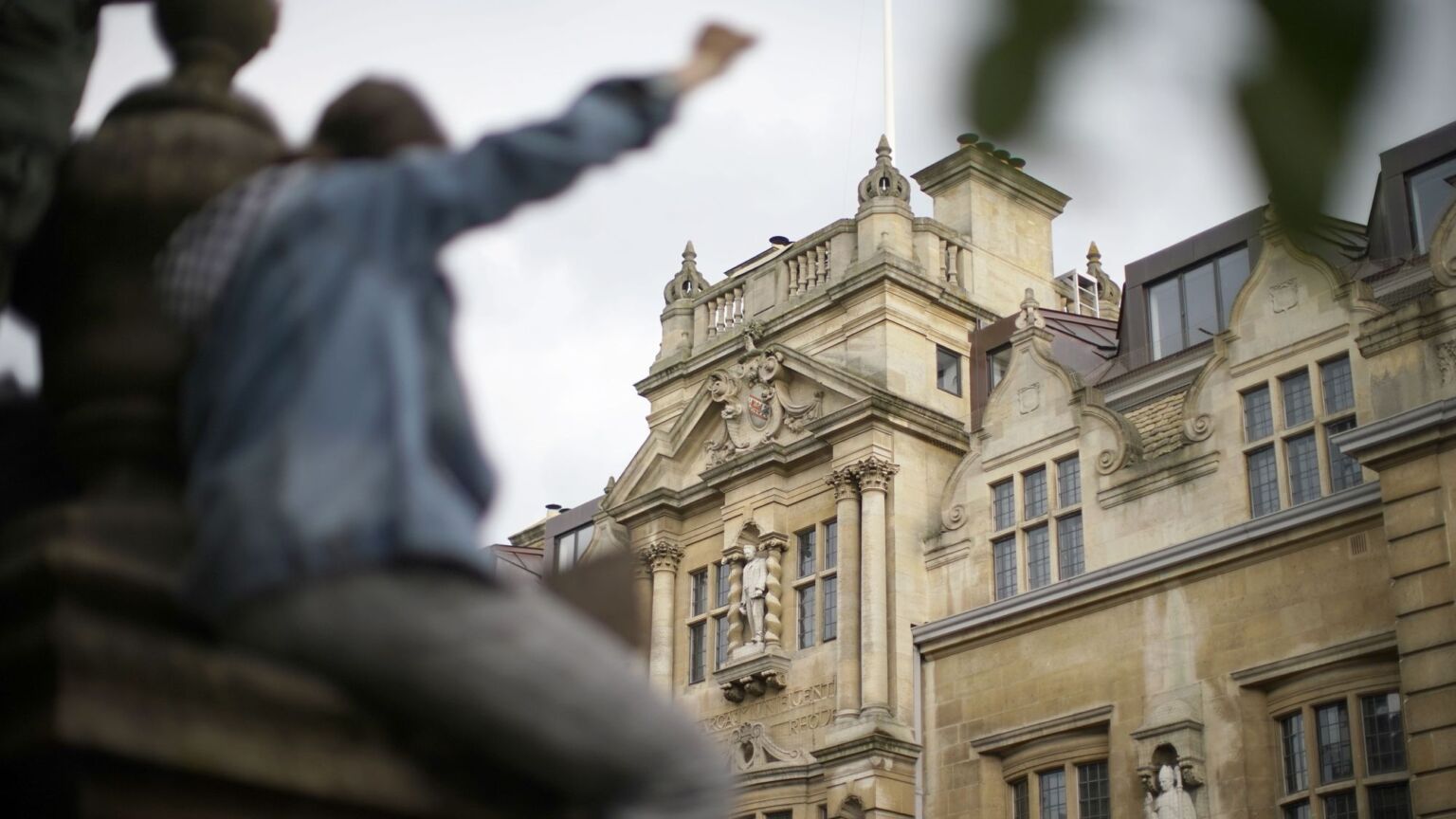
In 1947, as the British Empire was starting to unravel, Obafemi Awolowo, one of Nigeria’s foremost independence leaders, wrote:
‘The conquest of one nation by another in an unprovoked act of aggression cannot be justified by any standard of morality… Nevertheless, it would be harsh to condemn Britain today because of her actions in the 19th century. Every nation or tribe, at one time or other, has been guilty of wanton aggression… We must not allow present grievances to blind us to the virtues of the empire.’
Two decades later, with Nigeria independent, Chinua Achebe – whose novels laid bare the wreckage of colonial rule – told an interviewer: ‘I am not one of those who would say that Africa has gained nothing at all during the colonial period… This is ridiculous – we gained a lot.’
Two of Nigeria’s greatest 20th-century thinkers could hold seemingly contradictory thoughts at once: that empire was morally wrong, yet its legacies were mixed, rather than uniformly terrible. And they could express this publicly without being denounced as coconuts and self-hating sellouts.
The point is not that we should start emphasising the ‘positives’ of colonialism. My argument is that we need to recover that older habit of combining moral clarity with intellectual frankness – and that today’s ‘decolonisation’ movement in Britain often finds this difficult, not because history has changed, but because the psychology of the people now driving it is very different from that of the independence-era decolonisers.
Awolowo and Achebe’s forthrightness reflected their status as intellectual giants, but also the unbridled intellectual ferment of their time. Notably, they were confident enough in their Africanness that their dignity did not rest on pretending nothing of value had ever been passed on to them by the British.
Today’s ‘decolonisation’ debates are different; less forthright, more brittle. I believe the reason lies chiefly in the psychology of the actors at the forefront of today’s decolonisation agenda.
The loudest advocates of decolonisation now come not from Africa or Asia, but from within the former colonial powers themselves. Three groups, in particular, drive the agenda: the advocates, the amplifiers and the audience.
The advocates tend to be ethnic-minority intellectuals in the West, usually on the left. For them, decolonisation is personal. They are the descendants of the conquered who grew up among the descendants of their conquerors. This is not an easy psychological situation to be in, one that I, having grown up in Nigeria, did not have to experience.
British rapper and activist Akala captures this unease in Natives: Race and Class in the Ruins of Empire: ‘Even at five years old, we already know on some level that, in this society at least, we are indeed lesser citizens with all the baggage of racialised history following us ghost-like about our days. We are conquered people living in the conquerors’ land, and as such we are people without honour.’
Writer Ralph Leonard, who is also black British, has recalled how during history lessons at school, white pupils would look in his direction when slavery was mentioned, as if to say: ‘Ah, so this is where you come into the story.’
Add to this the casual references to the ‘Third World’ and it is not difficult to see why some minorities may suspect that beneath today’s talk of equality, assumptions about white European society’s superiority persist. It is striking that 56 per cent of ethnic minorities in London – Britain’s most diverse city – think the UK is either ‘moderately or very racist’.
A strong motivation has thus emerged among some minority intellectuals to puncture that perceived sense of superiority. One chosen path to shaking the majority’s supposed confidence is by insisting that Britain’s wealth and status stem less from national genius or industry than from exploitation and violence – that slavery and colonialism, not the Industrial Revolution, gave Britain its prosperity.
Some decolonial writers like Kehinde Andrews go further, arguing that today’s living standards in Britain and the West are sustained by the continued exploitation and domination of black and brown peoples in Africa and Asia.
There are some elements of truth to this narrative – imperial conquest and extraction did clearly contribute to Britain’s rise. But the story is often told in a way that suggests almost everything Britain has today is tainted, while all the bad in its former colonies can be traced to colonialism. It is far too simple and tendentious a story.
The Western decolonialists’ hope, however, is that if their narrative persuades enough people, then that sense of superiority in the majority will become unsustainable. White Britain will be brought down a notch. For those who have felt belittled, seeing such an end would offer a powerful psychological payoff.
The second group are the amplifiers: white progressives in academia, the media and the arts. They are less the architects of the agenda than its megaphones. Their psychology often appears driven by a mix of moral panic at persisting racial inequalities and confusion as to what can actually be done about them. That confusion can lead to support for abstract symbolic gestures that change little but feel or look good.
Many progressives, especially in academia, are embarrassed by realities such as the awarding gaps between white and ethnic-minority students, meaning the latter more often graduate with lower-class degrees. Or the fact that black academics constitute just 0.1 per cent of all history academic staff in UK universities and are generally rare creatures in British academia. Or they may find it disturbing that Africa and large swathes of South Asia that used to be colonies remain incredibly poor and underdeveloped.
Not really knowing how to ‘fix’ any of this can result in support for tokenistic declarations about greater ‘representation’ on reading lists or feisty calls for the decolonisation of everything from museums and gardens to yoga. The greater the sense of helplessness in changing these material realities, the feistier and more radical the decolonisation declarations become.
To be fair, some work done under the banner of ‘decolonising’ has been valuable: historians have shed more light on imperial atrocities; and some courses have been genuinely enriched by African or Asian voices previously ignored. But decolonisation in practice has too often amounted to the sort of hollow theatre that makes sceptics roll their eyes at the term.
Decolonisation nevertheless serves the ideological interests of some sub-camps within the progressive movement. For Western feminist progressives, for instance, it aligns with their broader challenge to the patriarchy, and specifically white male authority. Colonialism was, after all, designed and implemented chiefly by white men. So, the more it is critiqued and exposed, the more it symbolically undermines the moral authority of that demographic.
For those running Western institutions, embracing decolonisation can be a cost-effective route to gaining some moral credit. Renaming buildings, tweaking reading lists or holding ‘decolonial’ workshops can signal virtue without changing anything fundamental in power structures or bottom lines. And because there are strong social pressures in progressive spaces that make it awkward to question any of this, even the most legitimate doubts and criticisms are stifled for fear of appearing insensitive or reactionary. Hence even the best-intentioned progressives can end up nodding along to decolonial arguments that need scrutiny and debate.
The third group is the audience: the young people for whom this rhetoric provides a story about who they are and what has happened to them.
Imagine being an 18-year-old Briton of Nigerian or Jamaican heritage. You notice early that you are visibly different from the majority population. When you ask your parents how your family came to be here, they tell you about colonialism. You grow curious about your ancestral home, Africa, but most of what you see on television consists of charity appeals and stories of poverty. You wonder why Africa remains much poorer than Europe.
Then someone introduces you to Frantz Fanon’s writings about the psychology of the coloniser and the colonised, or you hear Kehinde Andrews arguing that empire and racism still structure the global economic system. A clear, emotionally satisfying explanation presents itself: colonialism never really ended. There is a system designed to keep white people up, and black and brown people down. This provides a clear historical villain and a single, simple reason for the disparities you see. It can transform confusion into clarity, and a sense of embarrassment into righteous anger.
But as a total explanation it collapses too many different forces – colonial rule, Cold War geopolitics, post-independence governance, corruption, global capitalism – into one villain. Real history is rarely as neat or reassuring as this narrative suggests. The thing is, we are all susceptible to seeking comfort in simple stories, especially when the alternative is to confront a world in which nobody is really in control.
I do not think all the demands of the decolonisation agenda are wrong or frivolous. A recent survey by the think-tank, British Future, asked Britons what they think would most help bridge social divides in the country. While reforming Britain’s immigration and asylum system was the most popular answer, the second most popular was ‘promoting mutual respect between people of different backgrounds in the school curriculum’. Notably, ethnic-minority respondents prioritised this even more strongly. This tells us something important. Most minorities are not asking Britain to apologise endlessly for its past or declare Winston Churchill a villain. But they do want their children to read books in school that reflect the depths and insights of the cultures they hail from.
After being shown pictures at school of the Windrush generation arriving here, my four-year-old daughter, born in Britain, asked my Nigerian wife and me, ‘Where do we come from?’. The issue is not that she knows her parents are from Africa. It is what she will imagine ‘coming from Africa’ means.
Will she believe that being of African heritage is a reason to stand as tall as anyone else, or a reason to shrink? Like any parent, it matters a great deal to me that my child never feels less than anyone else because of the colour of her skin or heritage. Knowing that people who look like her have produced ideas that have advanced human thought is crucial to this. We all, to some extent, draw reassurance from the geniuses of our tribe. That is why it matters to Britons that Shakespeare was British.
We should be focussing less on ‘decolonising’ knowledge than on broadening it. We should be ensuring that intellectual depth, not ideology or ethnicity, determines who our children read. A serious response would start by teaching British pupils more history: more about empire, but also more about Africa, Asia and other empires that have conquered and subjugated.
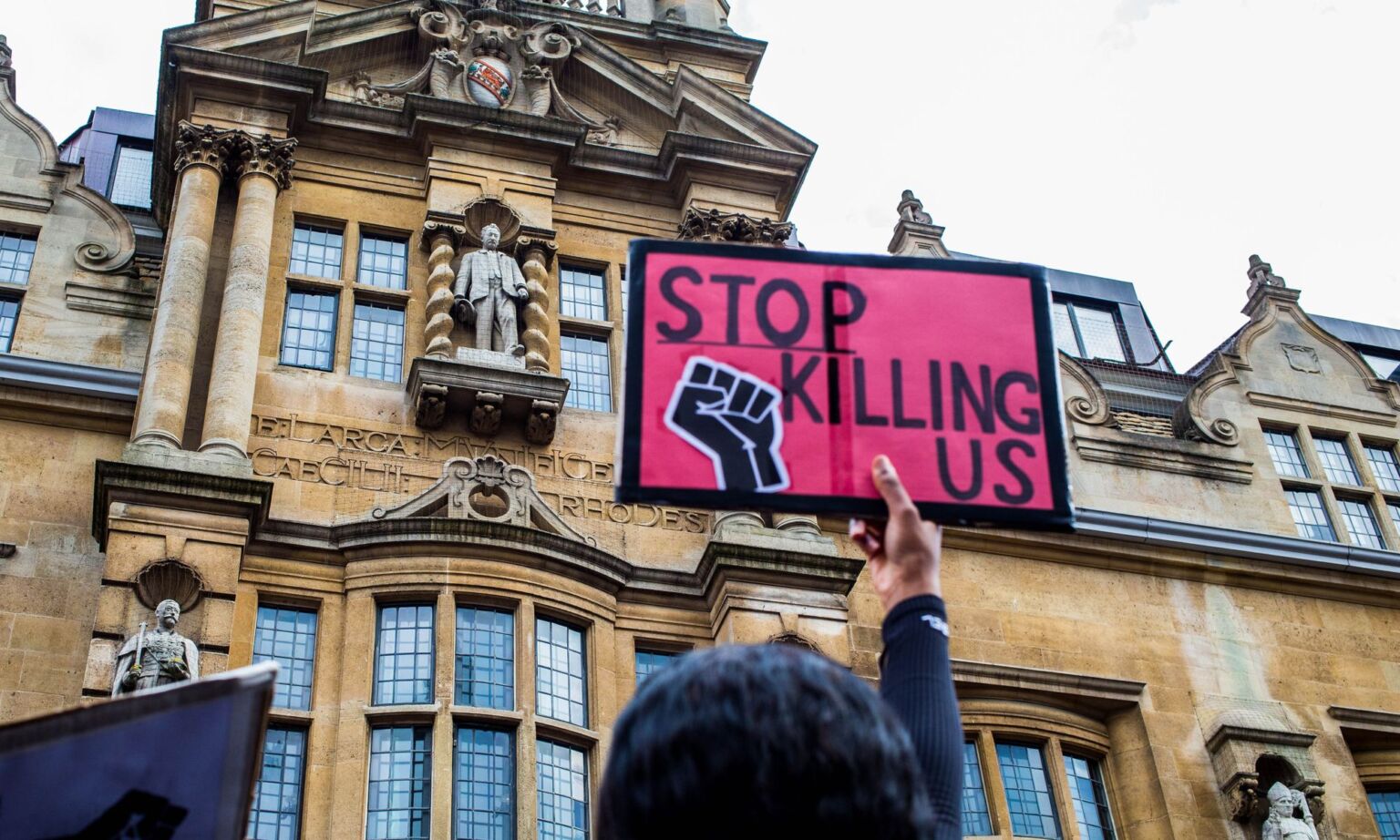
Campaign in reference to Oriel College, Oxford, having a statue of British imperialist Cecil Rhodes above one of its entrances, 6 September 2020
In current practice, today’s Western decolonisers often prefer to highlight African or Asian thinkers who condemn capitalism, empire and Western modernity – while ignoring those who take more complex or sympathetic views of Western influence. And even with unignorable figures like Achebe, it is his most Western-critical writings that are highlighted while his reflections on the positives of Western modernity are quietly omitted.
The result is that a project presented as ‘decentring the West’ can end up actually narrowing the intellectual range available to students. It risks becoming less about broadening the horizons of younger Britons than steering them towards a specific ideological worldview. At that point, ‘decolonisation’ starts to look less like an attempt to respond to the needs of formerly colonised peoples, and more like a new front in the Western left’s battles with the Western right, in which the history and identity of others are instrumentalised once again.
The decolonial thinkers of the independence era did not seek to amputate their peoples from the wider range of human thought. They read Edmund Burke as well as Robespierre. In the kind of curriculum I envisage, British imperialism would be discussed alongside Ottoman, Mughal and Asante expansion. This is not ‘decolonising’ in the now-fashionable sense, because it does not begin with the desire to cleanse, but to understand more.
The remedy for a narrow, arrogant story of the West is not a narrow, resentful story about the West. Instead, it is a larger, truer story in which no one is merely victim or villain, wise or foolish. The independence-era thinkers like Awolowo and Achebe understood that larger story intuitively. And were bold and frank enough to acknowledge it. We owe such honesty to those generations past as well as the ones who will inherit the future.
Remi Adekoya is a Polish-Nigerian writer and political scientist. His book It’s Not About Whiteness, It’s About Wealth: How the Economics of Race Really Work is published by Constable.
#decolonisation #movement #betrays #black #history