wellnessfitpro
Trump’s strategy plan contains echoes of ‘extreme rightwing tropes’ from 1930s, former cabinet minister tells MPs
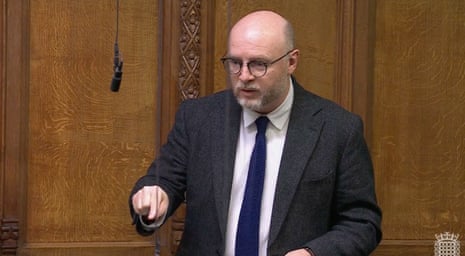
The Trump security strategy paper contains language reminiscent of 1930s Germany, MPs were told.
Liam Byrne, a former Labour cabinet minister and the chair of the Commons business committee, made the suggestion as he said the shift in US policy meant it was even more important for the UK to strengthen economic security links with the EU.
Speaking during the urgent question, he said:
The language of the US national security strategy was deeply regrettable and, frankly, it was not hard to see the rhymes with some extreme rightwing tropes that date back to the 1930s.
Byrne said the publication of the document coincided with talks on the UK joining the EU’s Safe (Security Action for Europe) defence loans programme broke down. He said the government should adopt the recommendations in his committee’s report on economic security, and he said the UK should open talks with the EU on the sort of economic security union that could provide Europe with the growth “that rearmament is going to require”.
Byrne was clearly referring to 1930s Germany in his opening comment, and to Nazi thinking about racial purity. There are echoes of this in the new US national security strategy where it talks about Europe facing “civilisational erasure” in part because of migration. It says:
Economic decline is eclipsed by the real and more stark prospect of civilizational erasure. The larger issues facing Europe include activities of the European Union and other transnational bodies that undermine political liberty and sovereignty, migration policies that are transforming the continent and creating strife, censorship of free speech and suppression of political opposition, cratering birthrates, and loss of national identities and self-confidence.
Should present trends continue, the continent will be unrecognizable in 20 years or less …
Over the long term, it is more than plausible that within a few decades at the latest, certain Nato members will become majority non-European.
In response, Malhotra said she agreed with Byrne that it was important for the UK to further develop its own defence capabilities.
Key events
MHCLG publishes plan to halve rate of long-term rough sleeping in England before next election
The Ministry of Housing, Communities and Local Government has now published the full text of its plan to end homelessness.
And here is MHCLG’s summary of the key goals for the end of this parliament.
-Increase the rate of prevention to protect thousands more households from homelessness. Central to this target is a proposed ‘Duty to Collaborate’, which will be brought forward in legislation for public bodies to work together to prevent homelessness. This builds on cross-government efforts to cut homelessness linked to prisons, social care and hospitals. This strategy sets clear targets on this issue for the first time, including halving the number who become homeless on their first night out of prison and ensuring that no eligible person is discharged to the street after a hospital stay. It also sets a clear long-term ambition that no one should be made homelessness from a public institution.
-Halve the number of people experiencing long-term rough sleeping. For too long, people who have spent years on the streets, often with the most complex needs, have been left with no help. This strategy rewires the system to focus support where it’s needed most. A new £124m supported housing scheme has been launched to get over 2,500 people across England off the streets and into more stable housing as well as preventing those from getting to the streets in the first place. The Plan also includes a new £15m Long-Term Rough Sleeping Innovation Programme, which will help councils develop fresh solutions, alongside £37m of funding for a new Ending Homelessness in Communities programme which will increase support and improve the vital services that are provided by the voluntary, community and faith sector at the frontline of this crisis.
-End the unlawful use of B&Bs for families. This will bring relief to the 2,070 households trapped beyond the six-week limit in unsuitable conditions – often in one room and no cooking facilities. The builds on the commitment in the recently published Child Poverty Strategy, which ensures mothers and newborn babies are not discharged from hospital into this B&B accommodation.
And this chart shows the trend for long-term rough sleeping. It is from the annex to the national plan. Long-term rough sleeping is defined as when “someone has been seen sleeping rough recently and has also been seen on at least three separate months over the past year”.
Lifetime impact of people with skilled worker visas ‘clearly fiscally postive’ for UK, Migration Advisory Committee says
Nigel Farage, the Reform UK leader, is determined to persuade the public that immigration is making Britain poorer. Today the Migration Advisory Committee, the government’s main expert advisory body, has published a report that does a lot to disprove what Farage is claiming.
The MAC has looked at the lifetime fiscal contribution made by a particular group of immigrants – people on skilled worker (SW) visas, and their dependents. It covers the 2022-23 cohort, when these visas were available to health and care workers.
And it says that, overall, their lifetime contribution to the British economy is “clearly fiscally positive”.
The lifetime figure takes into account the fact that some arrivals will stay for good and that, while working-age people tend to be net contributors to the state, children and the very elderly tend to be net beneficiaries. The MAC admits that its report relies on some assumptions where there is a lot of uncertainty, but it says this is its “first comprehensive analysis of the fiscal contribution of a particular visa route”.
The MAC says high earners on SW visas make a particularly valuable contribution. But even lower-earners are net contributors, it says. It says the only people who are not net contributors are care workers.
The MAC sums up the picture by saying:
Overall, the SW visa route is clearly fiscally positive for the UK. This is almost inevitable given that main applicants on the route must have a job offer paying above a set of salary thresholds. This means that these migrants have higher employment rates than UK residents since employment is a condition of the visa and as we shall demonstrate, salaries on the SW route are significantly higher than UK average wages. For the 2022-23 cohort as a whole, we estimate a present value net fiscal contribution of around £47bn over their lifetime. However, this estimate hides very substantial heterogeneity. The entire positive contribution comes from main applicants – particularly those outside of H&C [health and care workers – a subset of the SW route].
This chart shows the static net fiscal contribution for 2022-23 – the amount people contributed in tax, minus the amount they received in public services, that year. It shows that main applicants on SW visas (even H&C ones) are net contributors. But adult dependents of SW main applicants are only just net contributors, and their children, like British children, are net beneficiaries.
But the MAC also estimates the lifetime costs for this group. Explaining how it does this, it says:
Table 23 reports the estimated totals for the 2022-23 cohort. For the entire cohort of 329,200 arrivals, we estimate that they will contribute a net £47.1bn over their lifetime – or +£143,000 per migrant. This is almost entirely driven by main applicants working outside of health and care. The small overall negative contributions for SW (excl. H&C) dependants (-£700m) are little more than a rounding error compared to the large positive contribution of the main applicants. In contrast, the overall net fiscal contribution of H&C visas is only just positive – the positive contribution (+£5.5bn) from the main applicants just offsets the negative contribution from dependants. It is important to note that the relatively low overall positive contribution of H&C main applicants is a result of care workers being able to use the route at that time. These workers are much lower paid than other H&C workers and the average UK worker. Care worker main applicants have a total lifetime negative contribution of £2bn compared to a positive contribution of £7.5bn for other H&C workers. Recall also that the average UK resident will make a negative contribution over their lifetime. And again, these calculations ignore all the potential additional social value that health and care workers provide.
The Lib Dem MP Charlie Maynard has been told to apologise after an inquiry found that he broke Commons rule by failing to declare pro bono legal advice he received on time in the register of members’ interests. The legal advice, worth more than £500,000, related to a legal case in which Maynard was given permission to argue, representing the public interest, that a bailout for Thames Water should be blocked and that it should be put into special administration instead.
Maynard referred himself to the parliamentary commissioner for standards after the Guido Fawkes website revealed that the pro bono advice had not been declared.
In a report, the Commons standards committee said: “We recommend that Mr Maynard should make an apology to the house … and that he commit to take a more diligent approach to the registration of his interests in future.”
Councillors ‘violently intimidated’ by people in balaclavas at meeting to discuss sanctuary plan for asylum seekers, MPs told
Councillors in Kent were “violently intimidated” and “pelted with eggs” at a meeting by people wearing balaclavas in the public gallery, MPs have been told. The incident happened as Swale borough council was debating making their area a “District of Sanctuary” for asylum seekers in the meeting on Wednesday evening, PA Media reports.
Kevin McKenna, the Labour MP for Sittingbourne and Sheppey, raised this during business questions in the Commons. He said:
I’m horrified to report to you and to the house as a whole that last night in Swale Borough Council there were violent scenes as people wearing balaclavas in the public gallery itself violently intimidated councillors.
They were threatening them, pelting them with eggs and missiles from the gallery.
This is an attack on democracy itself. This is an attack on free speech. This is an attack on my constituents.
The building was so badly vandalised afterwards, with toilets flooded, lifts destroyed.
It can’t be used today and is not open. My constituents cannot access council services because of these actions.
Our democracy is based on the ability to disagree with each other strongly, but never violently.
Kent police told PA they had attended a reported disturbance at the council meeting, and received reports of criminal damage and a common assault.
If Nigel Farage is getting a bit fed up with the large number of people joining his party who turn out to be undistinguished former Tory MPs, he might be more impressed with his latest recruit; in a column in the Spectator, the celebrity sex worker and successful internet entrepreneur Bonnie Blue says she is now supporting Reform UK – partly because of their policy on inheritance tax.
She says:
You shouldn’t have to pay any inheritance tax, as you’ve already been taxed on that money. When my grandad died, it was particularly sad because he was too young for my grandma to receive his pension. That’s disgusting. Reform has sensible positions on immigration and inheritance tax, so I stand with Nigel Farage.
Here is some more comment on the Ben Bradley defection from the Conservatives to Reform UK. (See 10.31am.)
From James Ball, political editor at the New World
There is a risk to Reform that if they take too many Tories they just start to resemble the 14-year government that the public resoundingly rejected last year. Not sure they’re really thinking through these defections…
From Robert Shrimsley, the Financial Times’ chief political commentator
If the Tories do manage to get through their slump – and it’s a big if – they will have sloughed off almost all the dregs of their party
Shrimsley is thinking of stories like this one.
Streeting blames McSweeney’s target seat focus in 2024 campaign for fact he almost lost in Ilford North
In his New Statesman interview (see 1.28pm), Wes Streeting, the health secretary, also blamed Morgan McSweeney, who is now Keir Starmer’s chief of staff, for the fact that he came close to losing his seat at the last election.
Streeting represents Ilford North, a marginal seat in north-east London. In 2019 he had a majority of more than 5,000, but last year his majority was slashed to 528 and he was almost beaten by Leanne Mohamad, one of the many independent candidates who did very well in constituencies with significant numbers of Muslim voters by campaigning primarily on the issue of Gaza.
McSweeney was running Labour’s election campaign and he told MPs seeking re-election that they should be campaigning in target seats, not spending time in their own constituencies. Streeting told the New Statesman that he wanted to ignore this rule, but that he received “a proper bollocking from one of the leaders of our general election campaign” who told him he had to campaign elsewhere.
Streeting said:
[My] mistake was listening to the national machine when I should have followed my own gut instinct. I will not make that mistake again.
Streeting and McSweeney clashed again more recently, after McSweeney was implicated in Downing Street briefings implying Streeting was plotting against Starmer.
If you are interested in Mohamad, she is one of several figures involved in Jeremy Corbyn’s new Your Party interviewed for a book about it, Your Party: The Return of the Left, edited by Oliver Eagleton. The book covers the splits in the party, but it goes well beyond that and interviews are revealing about the ideas motivating the party’s founders. Mohamad said she almost won in Ilford North because people were fed up with two-party politics. She said:
The message I heard constantly was that the two-party system was not delivering. There was a very deep, very disturbing sense of betrayal: a frustration with flip-flopping between the same groups of self-serving politicians, neither of which has done anything to improve people’s lives. That is why so many people were willing to turn to an independent alternative.
The book says, if there were an election in the constituency now, Mohamad would be projected to win with a majority of almost 4,000.
Downing Street vows to force employment rights bill through Lords
The government has vowed that there will be no more concessions on the employment rights bill and that it will force the Lords to vote on it again next week, after Conservative and cross-bench peers blocked it on Wednesday night, Jessica Elgot reports.
Keir Starmer has said that reliable bus services “shouldn’t cost the earth” in remarks released ahead of a visit today to promote government spending on buses.
The PM went to Norwich to publicise investment in bus services, including to extend the £3 bus fare cap in England until 2027. He said:
Buses are crucial to our communities – for many it’s how we commute to work, take the kids to school or even help us get home safely after a Christmas tipple.
Reliable bus travel shouldn’t cost the earth – and without it, the threads that hold urban and rural communities together around Norfolk would unravel.
The government is spending £3bn on buses, including £46m allocated for Norfolk.
No 10 dismisses claim that Streeting’s jibe about ‘technocratic approach’ to governing is implied criticism of Starmer
Wes Streeting, the health secretary, has said that Labour’s decision to adopt a “practical, technocratic approach” to governing is causing a problem.
In an interview with the New Statesman, he suggested that this is one reason why the party is doing so badly in the polls, and he admitted that he was “frustrated” about this.
His comments will be seen as implied criticism of Keir Starmer and a clear indication of the pitch he would make in a future leadership contest. Many Labour MPs believe that Starmer will be replaced before the next election, and Streeting is one of the leading candidates to replace him.
In an interview with Ailbhe Rea, the magazine’s political editor, Streeting said that he was not happy with the way the government is performing. He said:
I’m pretty frustrated, to be honest. I feel like on one hand, since we’ve come into government, we’ve actually done a huge amount that we said we’d do … But that’s not reflected in the polls, and I don’t think it’s even reflected in our storytelling. I think we sell ourselves short.
Streeting said that one problem was that Labour was presenting itself as the “maintenance department for the country”. He explained:
The problem with that kind of practical, technocratic approach is that if someone else comes along and says, ‘Well, I’ve got a maintenance company too, and mine’s cheaper,’ why wouldn’t people go, ‘OK, well, we’ll give that maintenance team a try’?
Streeting said that he thought Labour needed to put more emphasis on values, and not just policy implementation. On health, he claimed that what mattered at the next election would not be “who’s going to be more effective at cutting the waiting lists”, but instead “who believes in a National Health Service and its fundamental values”.
He said Labour should be “a party of both the left and the centre”. And he said beating Reform UK would have to involve highlighting Labour values. He explained:
We’re certainly not going to win by out-reforming Reform. And we will certainly not be true to our values and our soul if we try and out-reform Reform.
We can take them on and beat them with values-driven Labour arguments. We can reunite the centre and the left, and I think that is the historic responsibility that we have.
It will be Labour or Reform, and that is a battle not just between left and right, but between right and wrong, between progressives and reactionaries, and between hope or hate. We cannot let them win.
Asked about the interview at the Downing Street lobby briefing, the PM’s spokesperson rejected suggestions that Streeting’s comments highlighted a division over strategy within government. He said:
I think what the health secretary is setting out is that the public voted for change. That’s what they want to see delivered, and again, that is exactly what the government is focused on doing. The government is united behind a manifesto of change.
In the New Statesman, Rea ended her article with a lovely line about Streeting’s ambitions. She writes;
Is 2026 the year he becomes prime minister? Streeting laughs. Then there is a long pause. “I’m definitely not indulging any of that. I think we had quite enough of that with the drive-by the other week. The level of silliness we saw [then] was like panto season come early. So I think the answer to your question is: oh no, he’s not.” Streeting knows his panto, though. And he knows what the audience shouts back.
#brushes #claims #Streetings #criticism #technocratic #approach #refers #Starmer #politics #live #Politics