wellnessfitpro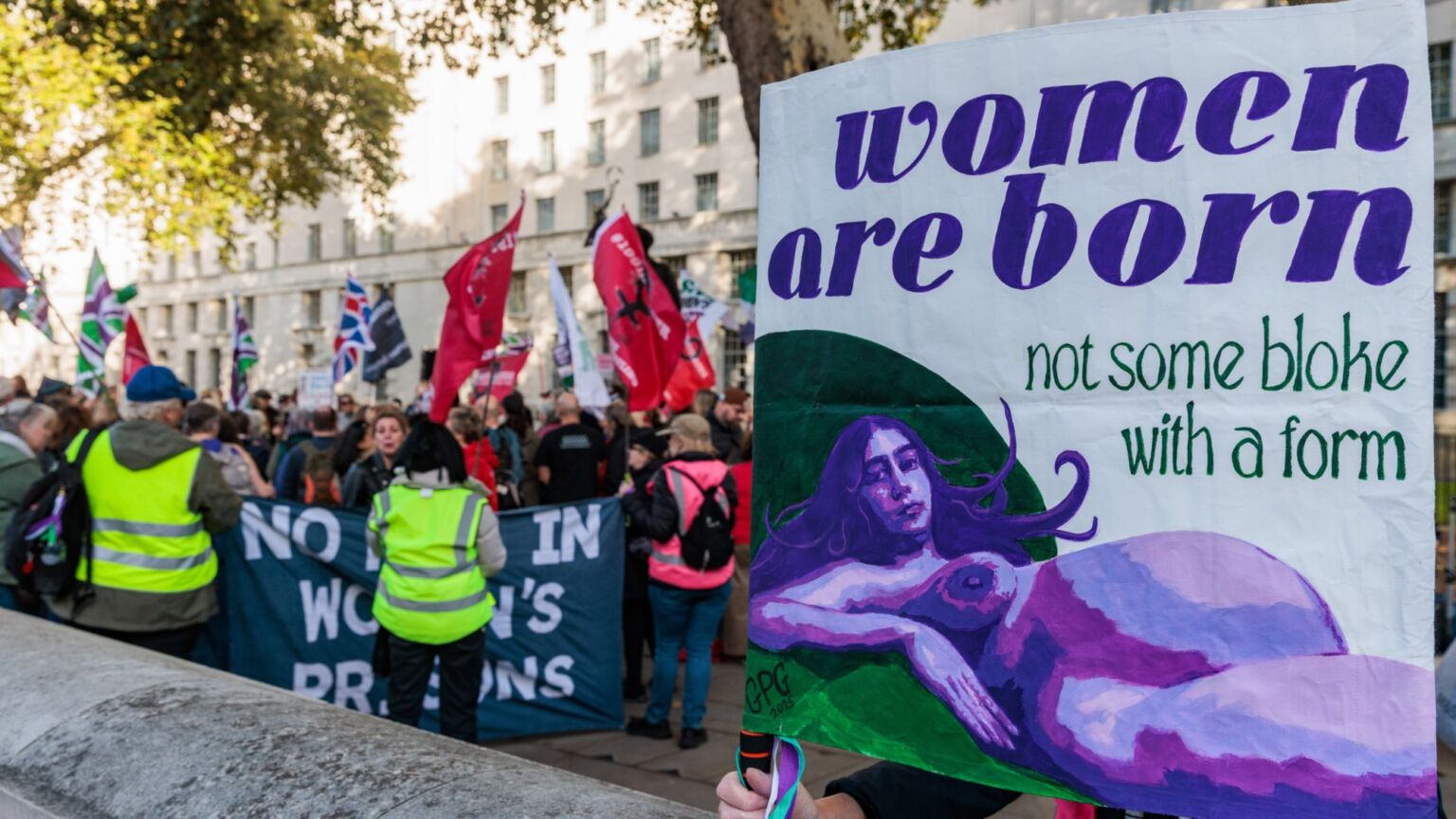
A decade ago, a rift in feminism that had been growing for more than a generation broke into public consciousness.
First came an increasingly noisy brand of ‘gender’ feminism. This popularised women’s victimhood and culminated in 2017’s #MeToo movement, which was envisaged as an attempt to raise awareness of sexual harassment. For many of the same postmodern activists, the category ‘woman’ was merely an identity, and feminism, to be truly inclusive, had to include men who identify as women.
Then came the TERFs – or Trans Exclusionary Radical Feminists. They reminded the world that women have sexed, female bodies that can menstruate, get pregnant and give birth – and are, on average, smaller and physically weaker than male bodies. For TERFs, these biological differences make it vital to defend women’s sex-based rights.
Ten years on, who is winning? The UK Supreme Court ruling that the legal definition of a woman is based on biological sex, and, across the Atlantic, President Trump’s executive order ‘Defending Women from Gender Ideology Extremism and Restoring Biological Truth to the Federal Government’ might suggest that the TERFs have been victorious and gender ideology has been defeated. But weighing up rights won and freedoms lost is not straightforward.
Thankfully, two superb new books, Feminism, Defeated by Kate M Phelan and Feminism Beyond Left and Right by Holly Lawford-Smith, shed much-needed light on today’s ‘woman question’. The important point both make is best summed up by Phelan: ‘Gender is a social kind, sex a natural one. On neither view is “woman” a saliently political category.’
What Lawford-Smith means is that as ‘gender feminists’ have sought to expand the category ‘woman’, and ‘sex feminists’ have, in necessary response, returned us to a pre-political focus on the body, women’s agency, as autonomous, political beings, has been lost.
As a result, feminism, as a distinctly political movement primarily concerned with women’s liberation, has been defeated. Not because men triumphed, but because gender ideologues robbed all meaning from the category ‘woman’. And, in response, their critics brought it back as a solely biological essence.
So central is ‘womanhood’ to ‘feminism’ that the very label ‘trans-inclusive feminism’ should be laughed out of court as oxymoronic. Phelan explains that trans-inclusive feminism emerges from the rejection of politics. ‘A political failure in the form of a refusal to assert the worth of women’, she writes, ‘becomes a moral success in the form of a more inclusive feminism’. Crucially, this ‘moral success’ depends on a changed constituency: ‘While second-wave feminists were accountable to women in the feminist movement, post-structural feminists are accountable to academics. So, while for second-wave feminists respect was respect acquired from women, for post-structural feminists it is respect acquired from academics.’ The inclusion of transgender women – ie, men – led liberal feminism to move away from representing the experiences of ordinary women and morph into a tool of the cultural elite.
What does it mean to champion women as an identity rather than a biological entity? Intersectionality takes the commonsense notion that no one is simply ‘male’ or ‘female’ but a host of other things, too, and dresses it up as an intellectual theory. With people fractured into ever smaller groups, hierarchies can be constructed. Victimhood becomes a currency as groups jostle for pole position. Middle-class women invented a whole new vocabulary to describe the suffering they endure, including manspreading, mansplaining and manterrupting. These privileged women have a voice, then, but they only use it to declare their suffering. And by demanding inclusion above everything else, they make clear that their goal is a higher place within the existing social order, rather than women’s liberation.
All that is required for inclusion within this postmodern, intersectional feminism is a claim of victimhood based on gender. As I wrote in my 2017 book, Women vs Feminism, it is transgender women – men who identify as women – who can stake the biggest claim:
‘Those who have suffered most embody womanhood most completely. Transwomen have struggled to reconcile the contradiction between their innate gender identity and the sex they were assigned at birth. They then face a unique set of challenges when they are forced to confront a heteronormative society that is gendered along a rigid binary axis. By this account, transwomen suffer more than women who find a neat correlation between the gender they identify with and the sex they were assigned at birth.’
Gender feminism claims to champion women, but it is the experience of men that is proclaimed most loudly.
Let’s turn back to the TERFs. When gender feminism seeks to erase women’s bodily experiences and deny hard-won sex-based rights, including the right to single-sex spaces, it becomes vital to reassert the fundamental biological fact that women are adult human females. Championed by brilliant, bold, articulate and powerful women, from JK Rowling to Kellie-Jay Keen, and from Julie Bindel to Helen Joyce, gender-critical feminism seems to hark back to the days of the Suffragettes or, at the very least, the second wave, when feminism was radical, exciting and brave. But by emphasising biology, radical feminism also – necessarily – emphasises women’s vulnerability in comparison with physically stronger men. This is why toilets, changing rooms, prisons and rape crisis centres become the focus of attention.
Gender-feminist words, like ‘chestfeeding’, ‘uterus-havers’ and ‘menstruaters’, are insulting not just because they erase the labels ‘woman’ and ‘girl’, but also because they reduce being female to nothing more than bodily parts and functions. The problem for gender-critical feminists is that, in rescuing ‘woman’ and ‘girl’, they risk falling into the same trap. As Phelan puts it:
‘A trans-inclusionary victory will erase women as a class. But a gender-critical victory will, so long as this feminism emphasises the biological, replace the second-wave dream of freedom with safety. It will replace the abolition of sex class with a refuge in which one class – women – can shelter from the other – men.’
For feminism to be truly liberating, then, it needs to offer women more than sex-based protections. It needs to hold out the promise of freedom, not just safety.
Gender-critical feminism alone cannot do this because emphasising the vulnerability of women’s biology removes bodies (both female and male) from all social, cultural and political contexts. Most men are indeed bigger and stronger than women. Yet most men do not rape, beat or kill women. This is not simply from a lack of opportunity. It is because people are more than just bodies driven by animal instincts. As Phelan writes, ‘these sex differences only allow men who are already inclined to sexually assault women to do so. In the absence of such inclination, these differences do not render female people sexually vulnerable.’
This is not to argue against sex-segregated public toilets and changing rooms. Instead, it is to make the case for such basic amenities being a start, not the end, of a discussion about women’s rights. A political (rather than purely biological) feminism, focussed on women’s liberation, can recognise the anatomical differences between men and women, without sacrificing women’s freedom to the imperative of safety.
Rather than arguing about what comes after biological reality, gender-critical feminists have split along political lines. So-called ultras and moderates consolidate around differences in rhetoric and tactics. They disagree about which groups to work with and which groups to avoid, and – in a postmodern twist to their sex realism – what pronouns to use to describe transgender people.
The apparently ‘moderate’ position leads, at every turn, to confusion and calls for political purity to be put above biological reality. The otherwise sensible Janice Turner, writing in The Times, argued:
‘I will use female pronouns for some transwomen. My rules are personal. I will call no male who commits a sexual or violent offence “she”. But those who respect women, like Debbie Hayton, or those I meet in real life, I will respect.’
The first problem with this is that ‘personal rules’, once declared in a column in a national newspaper, become public. How are we to universalise a rule that a person’s preferred pronouns supersede biology when that person is someone moderate gender-critical feminists like or, more to the point, approve of? It seems the real lesson here is that feminism is all well and good, but political allegiances count for more.
The ‘moderate’ gender-critical position leans into the idea that good feminists are also left-wing and should wish to dissociate themselves from women on the right. This point is explored by Lawford-Smith, who writes:
‘That the left owns minority groups – in the sense that the left, exclusively, champions the interests of minorities and is, for that reason, owed the allegiances of minorities – appears to be an unquestioned assumption of our current political life.’
But, as she reminds us, if we go back to the second-wave feminism of the 1960s and 1970s, we find that ‘many women left the left’ – not to join explicitly right-wing groups, but ‘to pursue women’s liberation; the radical feminists were explicitly separatist.’
Today, both trans-inclusive feminists and many gender-critical feminists get sniffy about working alongside – or even in proximity to – women who do not pledge allegiance to the mainstream left. In 2018, the gender-critical Woman’s Place UK announced that firebrand feminist Kellie-Jay Keen (aka Posie Parker) would be booted out of its meeting in Cornwall, ‘as we object to her stated views on race and religion’. Five years later, gender-critical feminists issued a statement ahead of Keen’s tour of Australia and New Zealand, alleging: ‘The Standing for Women Australian tour is sponsored by right-wing organisation CPAC (Conservative Political Action Coalition/Conference).’
The accusations continued: ‘[Keen] is happy to be interviewed on right-wing media channels… People from across the far-right spectrum are increasingly attending and speaking at her rallies… [She] supported Trump in the US election.’ This raises the question: if feminists cannot trust women to make up their own minds about a particular speaker, how can they trust women to determine the course of their lives? Feminists horrified by news of Pakistani grooming gangs preying on working-class girls, or sexual assaults carried out by illegal migrants, may have good reason for abandoning the left and looking to the right.
Lawford-Smith argues that feminism ‘is not an essentially leftist project’. Indeed, she goes further and suggests that, especially in relation to women’s liberation, the labels ‘left’ and ‘right’ are meaningless: ‘There are only two “teams” or “tribes”, each with a motley collection of unrelated policy issues, and which drop some issues and pick up other issues over time.’ Her solution is not to reinvigorate old distinctions but to ‘start talking in terms of “tribe left” or “team blue”’ to make clear what, exactly, identification with a political party represents nowadays’. Political allegiance as gang membership means, ‘the feminists who claim to be speaking from the left against feminists working with the right are doing nothing but hanging out with their group of pals and yelling at another group of pals that they don’t like them’. And, the fact remains, that many ‘tribe left’ feminists prefer to argue for the inclusion of men, and not women’s rights at all.
Meanwhile, many TERFs who are more explicitly aligned with the political right, such as self-styled ‘reactionary feminists’ like Mary Harrington and Louise Perry, view women in the same way they see men: as physical entities driven by biological instincts. The problem confronting feminism, they argue, is that women’s impulse towards the feminine and maternal has, in recent decades, been denied in the rush to proclaim the gains of liberal feminism. According to this view, access to abortion and the contraceptive pill does not ensure women’s sexual liberation but their entrapment. They see women’s capacity to control their own bodies as benefiting men more than women; women are always available to have sex, but are not protected as wives and mothers. Harrington’s solution is to ‘re-wild’ sex by limiting access to abortion and contraception, thereby reinforcing the link between sex and babies and tying both men and women into relationships and family life.
Phelan’s superb critique gets to the heart of how the reactionary feminist position challenges women’s agency. The idea that only potential babies stand in the way of men and women engaging in casual sex suggests women are incapable of saying ‘no’ to sex without a suitably life-changing excuse. It also suggests that women’s instinct is to say ‘no’ and that they gain no pleasure from consequence-free sex. As Phelan makes clear, ‘Perry and Harrington take women’s sexual subjection to men… for granted’, and, as a result, ‘assume the impossibility of female sovereignty’.
Opposition to abortion, and even the contraceptive pill, denies women control over their own bodies and therefore the capacity to intervene in the world as full citizens. Abortion is necessary for women’s adult autonomy to be meaningful, for women to act as beings in their own right, and not just as potential baby incubators. As Ann Furedi argues in The Moral Case for Abortion, preventing a woman from making her own choice to continue or end her pregnancy is to undermine the autonomy, integrity and agency which are the essence of her humanity.
Right now, women are stuck. We have an intersectional, postmodern feminism that emphasises women’s oppression but cannot make the case for keeping men out of women’s spaces. We have a left-wing trans-exclusionary radical feminism that purports to defend women’s sex-based rights but is squeamish about protecting vulnerable girls from migrants or grooming gangs. And we have a right-wing radical feminism that defends women’s safety but not their freedom: women are physically protected but denied the reproductive rights necessary to exist as equal partners to men.
Women owe a debt of gratitude to TERFs for rescuing biological reality from the elitism of the gender feminists. As Phelan puts it, when faced with ‘a choice not between refuge and the world, but between refuge and no refuge, we must fight for refuge’. But she does not stop there, and neither must the battle for women’s rights. ‘We must not forget that refuge is not the world’, Phelan adds. I would go further. Safety is overrated if it comes at the expense of women’s agency. We need a movement that recognises not just female bodies, but also women’s bodily autonomy, and that fights not just for women to be better protected, but also to exist as men’s moral equals. Whichever group is winning the battle for feminism, it is not yet women.
Joanna Williams is a spiked columnist and author of How Woke Won. Follow her on Substack: cieo.substack.com.
#battle #feminisms #future