wellnessfitpro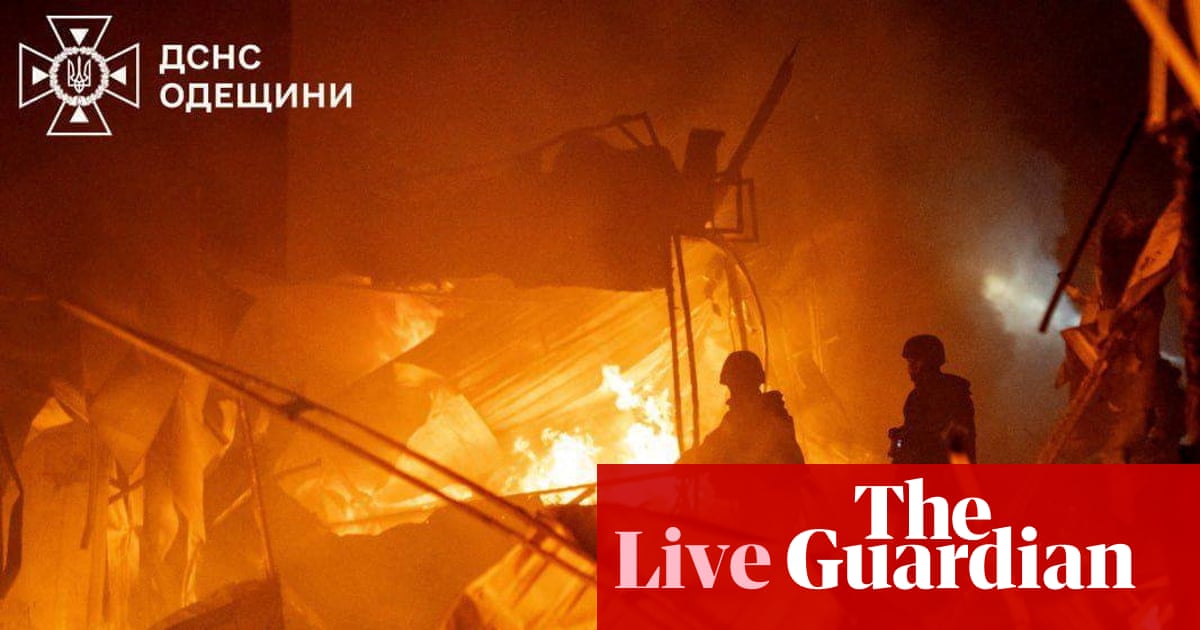
UN calls on Russia to stop attacks on Ukraine energy sites
The United Nations has called on Russia to stop its attacks on Ukraine’s energy sites, which have plunged entire cities into darkness in the coldest winter of the four-year war.
Moscow has stepped up strikes on Ukraine’s power and heating infrastructure, and conducted another nationwide attack on energy facilities overnight that killed two people, AFP reported.
UN rights chief Volker Turk said in a statement:
The relentless attacks by the Russian Federation on energy infrastructure across Ukraine are depriving an already long-suffering civilian population of adequate warmth, water and electricity in an unbearably bitter and dark winter.
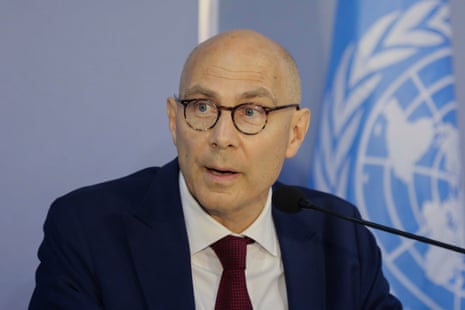
He said civilians had faced continual bombardment and now had to face temperatures as low as minus 20C. Turk added:
Last night, the Russian Federation again carried out a large-scale attack targeting energy infrastructure across Ukraine. Hundreds of thousands of civilians woke up without electricity and heating.
The targeting of civilian infrastructure is prohibited under international humanitarian law. I call upon the Russian Federation to immediately cease these attacks.
Key events
Time for US and Europe to march out together, says Colby

Dan Sabbagh
Meanwhile, at Nato HQ, Elbridge Colby, the US undersecretary for war, said it was time for the US and Europe to “march out together,” sounding a rare conciliatory note as he arrived in Brussels for a meeting of alliance defence ministers earlier today.
The hawkish Colby is representing the US instead of defence secretary Pete Hegseth, but his high status as arguably the leading military adviser to Donald Trump means his presence instead of his immediate boss is not being taken as a significant snub.
After a turbulent start to 2026 in which the US president repeatedly demanded to acquire Greenland from Nato ally Denmark – and at one point even refusing to rule out force – Colby’s initial remarks appeared to soothe tensions.
Colby said that in 2025 “you saw a reframing and a real, genuine commitment, because of the president’s leadership and the sec gen’s [secretary general’s] leadership, to actually have a Europe that leads the conventional defence of Nato”.
He was referring to the agreement at the Nato summit in The Hague last summer, where European members of Nato agreed to match US levels of defence spending at 3.5% of GDP.
“I think this year we actually have a good message to say, which is, now it’s time to march out together,” he said. The future of Nato would be “based on a partnership rather than dependency” by Europe on the US, he added.
UN calls on Russia to stop attacks on Ukraine energy sites
The United Nations has called on Russia to stop its attacks on Ukraine’s energy sites, which have plunged entire cities into darkness in the coldest winter of the four-year war.
Moscow has stepped up strikes on Ukraine’s power and heating infrastructure, and conducted another nationwide attack on energy facilities overnight that killed two people, AFP reported.
UN rights chief Volker Turk said in a statement:
The relentless attacks by the Russian Federation on energy infrastructure across Ukraine are depriving an already long-suffering civilian population of adequate warmth, water and electricity in an unbearably bitter and dark winter.
He said civilians had faced continual bombardment and now had to face temperatures as low as minus 20C. Turk added:
Last night, the Russian Federation again carried out a large-scale attack targeting energy infrastructure across Ukraine. Hundreds of thousands of civilians woke up without electricity and heating.
The targeting of civilian infrastructure is prohibited under international humanitarian law. I call upon the Russian Federation to immediately cease these attacks.
Bulgarian president Iliana Yotova, in an attempt to quell the country’s ongoing political instability, has appointed a senior central bank official as interim prime minister until national elections in April.
Andrey Gyurov, deputy governor of the Bulgarian National Bank, will lead a caretaker government whose main task will be to organize a free and fair vote in a country that is holding its eighth election in five years.
The political uncertainty that has plagued the EU and Nato member state during this period has eroded public trust in institutions, created an opening for populist and nationalist groups, and paved the way for Russian hybrid influence, AP reported.
President Yotova, who announced the appointment, said that she expects Gyurov to propose the members of his cabinet within seven days.
She would then have to approve the proposal and set the election date, which she had previously indicated would be 19 April.
Orban: Europe should stop sending money to Ukraine to boost EU economy
Hungary’s prime minister Viktor Orbán, who is at the Belgium summit with other EU leaders this morning, said Europe should stop sending money to Ukraine it is serious about wanting to boosting its economy.
Orbán, widely viewed as Vladimir Putin’s closest ally in the EU, made the remarks to reporters as he headed into the informal talks (read more about that in an earlier post here).
“Don’t send your money to somebody else if you need it for your competitiveness, so don’t send the money to Ukraine,” he said.
It’s not unusual for Orbán to make disparaging comments regarding Ukraine, especially now since Hungary is due to hold parliamentary elections in April, in which his government faces a serious challenge by the opposition Tisza party. Orbán’s campaign has focused on opposing Ukraine’s potential accession to the EU and vowing to continue blocking the process.
Hundreds of thousands Ukrainians without power, heat and water after Russian attacks, officials say
Here are the main news lines from the onslaught of Russian missile and drone attacks reported last night in Ukraine that has plunged parts of the country in darkness and left hundreds of thousands of people without heat and water:
-
We reported earlier about the attacks in the southern city of Odesa where nearly 300,000 people have been left without water, according to Ukraine’s deputy prime minister Oleksiy Kuleba. He added that about 200 buildings also had no heating.
-
In the capital city Kyiv, about 3,500 buildings were without heating this morning after the attacks knocked out power supplies to 2,600 high-rise buildings, on top of the 1,100 already affected by previous strikes, the mayor, Vitali Klitschko, said.
-
In Dnipro in Ukraine’s south-east, four people were injured including a baby and four-year-old child, the regional governor, Oleksandr Ganzha, said.
-
The Ukrainian energy firm DTEK said one of its thermal power plants was targeted and “suffered extensive damage”, but did not disclose the location. “This is already the eleventh large-scale attack on the company’s thermal power plants since October 2025,” DTEK said in a statement.
-
Andrii Sybiha, Ukraine’s foreign minister, condemned the attacks, saying they undermine diplomatic efforts led by the US to end the war. “Russia must be forced to take diplomacy seriously and de-escalate,” he said in a social media post. “This can only be achieved through unity, strength, and increased pressure on Moscow.”
EU leaders head to a Belgian castle for talks

Jennifer Rankin
Away from Ukraine, EU leaders are gathering this morning in the bucolic setting of the Alden Biesen castle in the east Belgian countryside for a summit dedicated to economic revival in the face of Donald Trump’s tariff threats and fierce competition from China.
The venue, founded by Teutonic Knights in the 13th century, was chosen because it offers a change of scene for the leaders. The summit, in EU parlance, is an informal meeting, i.e. a brainstorming session, rather than a day for big decisions.
Readers may wonder why the 27 EU leaders meeting in Belgium cannot convene in the Europa building in Brussels, the purpose built venue for EU summits.
For EU officials that misses the point of what European Council president António Costa has described as a retreat.
One senior EU official said it was useful to change the location.
“Why do they need to go to Alden Biesen or to a more secluded place with a different environment? Well, precisely because we’ve seen that it is useful to create the atmosphere for these types of discussions. And we’ve seen that these discussions are very useful in our decision-making process.”
In February 2025, EU leaders – with prime minister Keir Starmer as a guest – held their first-ever summit dedicated to defence at the Palais d’Egmont in Brussels. The meeting paved the way for an €800bn (about £697bn) ReArm Europe plan a month later.
Pictures: Russian drone strikes spark inferno in Odesa
We have some images from the newswires showing the fires that engulfed parts of Odesa in Ukraine’s south last night and the aftermath. Local officials said the Russian attack damaged residential buildings and the city’s markets.
Ukrainian athlete disqualified from skeleton over helmet tribute
Our sports team have the latest on the International Olympic Committee’s (IOC) decision to ban Ukraine’s skeleton racer Vladyslav Heraskevych from competing in the Winter Olympics over the use of a helmet honouring Ukrainian athletes killed in the war with Russia.
The IOC said the helmet depicting the faces of Ukrainian athletes and coaches killed in the war wouldn’t be allowed in competition, citing a rule against making political statements on Olympic sites and venues.
A last-minute plea was made on Thursday for “any form of compromise” but to no avail, the IOC said in a statement. The IOC had suggested he wear a black armband during competition instead to pay tribute to fallen athletes, which the 26-year-old refused.
Follow our live coverage of the Winter Olympics 2026 to get the latest developments on this story:
Morning opening
Hello, Taz Ali here to bring you the latest news for our Europe live blog.
Hundreds of thousands of people have been left without power or water supply in the southern Ukrainian city of Odesa after Russia launched a large-scale overnight drone strike, according to local officials. Nearly 300,000 people have been affected by the power outage, while one person has been reported injured.
It was part of a widespread attack across the country that targeted energy infrastructure in cities including the captial Kyiv and Dnipro in south-east Ukraine, an official said.
“Hundreds of drones and ballistic missiles targeted energy system, depriving people of power, heating, and water,” Ukraine’s minister of foreign affairs, Andrii Sybiha, said on social media. He added that a toddler and four-year-old child were among the dozen or so injured from last night’s attack.
While diplomatic efforts have been ongoing to try to bring an end to the war, Russia has pressed on with attacks in Ukraine that have mainly aimed at weakening the country’s energy systems in the depths of winter.
Meanwhile, EU leaders are meeting at a castle in Belgium today to brainstorm how to compete with the US and China and transform the bloc into a major economic powerhouse. They’re not expected to make any decisions at the informal summit in the Alden Biesen Castle, but the talks might give some indication on how the 27 member states plan to strengthen the single market, reduce Europe’s dependence on foreign powers and make the EU more competitive.
We will also bring you the latest on the flooding and devastation wrought in Portugal and other parts of Europe after a succession of deadly winter storms. It has led to the resignation of Portugal’s interior minister Maria Lúcia Amaral over criticism of her government’s response to the weather disasters.
#calls #Russia #stop #attacks #Ukraine #energy #sites #Europe #live #Ukraine