wellnessfitpro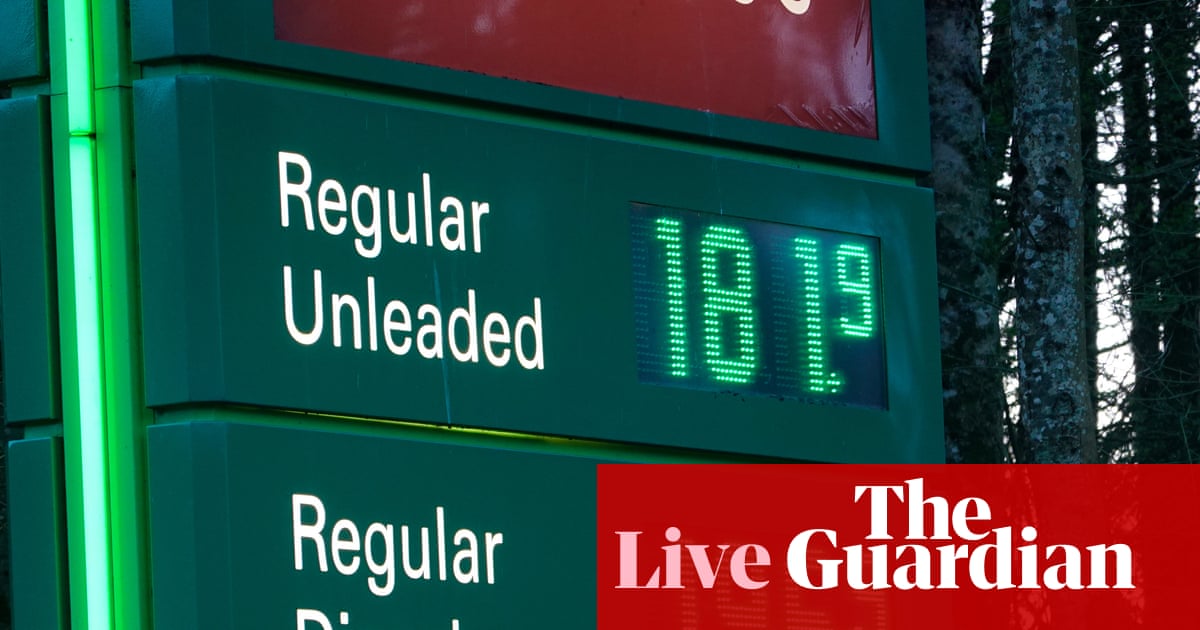
European stock markets fall as investors price in ‘economic catastrophe’
Stock markets are falling across Europe, as investors react to Donald Trump’s special address last night, in which he vowed to send Iran “back to the stone ages”.
Frankfurt’s stock market has started the day with a bump; Germany’s DAX share index is down 1.5%.
France’s CAC 40 has dropped by 1.35%, and Italy’s FTSE Mib is down 1.2%.
London’s FTSE 100 index is showing a smaller fall – now down 0.6%, as oil company shares rally.
Chris Beauchamp, chief analyst at IG, says markets are now anticipating longer delays to oil supplies from the Gulf, as Trump didn’t provide guidance for how the conflict may end.
“In what might be the most dramatic April Fools’ of recent years, Donald Trump did nothing of what was expected in his speech. Instead of ‘no more war’, we got ‘no, more war!’, with heavier strikes expected and a fresh warning of attacks on power plants.
This leaves markets back where they were last week, and now we have to price in hundreds of millions of barrels of oil that aren’t coming out any time soon. The gloomy predictions of last week would have been perhaps misplaced if Trump had signalled a quick end, but now markets are back to pricing in economic catastrophe.”
Key events
This chart from estate agency Knight Frank shows how the markets are broadly pricing in two rate rises from the Bank of England this year.
They add:
For now, the outlook in the Middle East remains confused. Financial markets this week were tentatively factoring in a US withdrawal from the region, irrespective of whether it has re-opened the Strait of Hormuz.
Donald Trump’s television address on Wednesday didn’t confirm the withdrawal to the extent some had expected, but neither did he say anything particularly new.
City investors are now fully pricing in two increases in UK interest rates by December, due to the Middle East crisis.
The money markets are now indicating UK Bank rate will have risen to over 4.25% by the end of the year, implying two quarter-point increases in rates, up from 3.75% at present.
Yesterday the markets had only priced in around 44 basis points of increases, meaning two rises weren’t fully priced in.
UK gilt yields rise
UK government borrowing costs are on the rise again, amid the disappointment over Trump’s speech last night.
With bond prices falling, the yield (or interest rate) on UK gilts is going up again.
Ten-year gilt yields are up 4 basis points (0.04 percentage points) back to 4.886%.
Thirty-year gilt yields are up 3bps.
And two-year bond yields have risen by more – gaining 6bps to 4.36%, reflecting increased fears of an inflation spike from higher energy costs.
Trump speech had “opposite effect” to what investors hoped for
Global markets have taken a step backwards overnight after Donald Trump’s live address, with the mood shifting sharply from the cautious optimism that had been building in recent days.
So explains Matt Britzman, senior equity analyst at Hargreaves Lansdown, who adds:
From a market perspective at least, the speech appeared to have the opposite effect investors were hoping for, with oil pushing higher, bond yields climbing, and equity markets falling back. Rather than offering any fresh clues on a path toward de-escalation, Trump largely repeated a familiar set of talking points that traders have already digested across social media in recent weeks.
The result is a classic risk-off move across asset classes as hopes for further progress toward de-escalation gave way to renewed uncertainty. The FTSE 100 has opened lower, US futures suggest an unwind of yesterday’s optimism, and rate hike expectations are back on the rise. For investors, this is another reminder of how sentiment can shift quickly, and of how hard it is to time entry and exit points. Being diversified and sticking to a longer-term plan is a much more sensible strategy.
Oil markets are higher once more, with Brent and [US] crude now back above $100, as traders began pricing in the growing risk of disruption to energy infrastructure across the Gulf, amid lingering uncertainty around key shipping routes like the Strait of Hormuz. Comments suggesting military operations in the region could extend for several more weeks have dampened hopes of a near-term resolution, adding a fresh geopolitical risk premium to oil prices. That’s come despite a sizeable 5.5 million barrel build in US crude inventories last week, which would typically have weighed on prices but has instead been brushed aside in the current environment.
European stock markets fall as investors price in ‘economic catastrophe’
Stock markets are falling across Europe, as investors react to Donald Trump’s special address last night, in which he vowed to send Iran “back to the stone ages”.
Frankfurt’s stock market has started the day with a bump; Germany’s DAX share index is down 1.5%.
France’s CAC 40 has dropped by 1.35%, and Italy’s FTSE Mib is down 1.2%.
London’s FTSE 100 index is showing a smaller fall – now down 0.6%, as oil company shares rally.
Chris Beauchamp, chief analyst at IG, says markets are now anticipating longer delays to oil supplies from the Gulf, as Trump didn’t provide guidance for how the conflict may end.
“In what might be the most dramatic April Fools’ of recent years, Donald Trump did nothing of what was expected in his speech. Instead of ‘no more war’, we got ‘no, more war!’, with heavier strikes expected and a fresh warning of attacks on power plants.
This leaves markets back where they were last week, and now we have to price in hundreds of millions of barrels of oil that aren’t coming out any time soon. The gloomy predictions of last week would have been perhaps misplaced if Trump had signalled a quick end, but now markets are back to pricing in economic catastrophe.”
Oil company shares rise
The UK stock market is being propped up by oil producers.
BP (+2.9%) and Shell (+2%) are leading the risers on the FTSE 100 share index, following the 6% jump in Brent crude prices this morning.
FTSE 100 falls as global sell-off reaches London
The London stock market has joined the global sell-off, as hopes of a quick end to the Middle East conflict fade.
The FTSE 100 index of blue-chip shares has dropped by 0.68%, or 70 points, at the open to trade around 10,297 points.
Yesterday, the ‘Footsie’ had jumped by 188 points, its best day in almost a year, but the optimism that pushed stocks higher has retreated after Donald Trump vowed to hit Iran ‘extremely hard’.
Precious metal miners Fresnillo (-5.7%) and Endeavour (-5.3%) are the top fallers on the FTSE 100, as traders react to a 3% drop in the gold price today.
They’re followed by housebuilder Barratt Redrow (-3.8%) and copper producer Antofagasta (-3.6%), who would both suffer weaker demand if the Iran conflict keeps interest rates high, hurting borrowers and global economic growth.
Jim Reid, market strategist at Deutsche Bank, says Trump’s primetime address has dented market optimism:
After rallying sharply over the previous two sessions, market sentiment has deteriorated overnight after Trump’s much anticipated address last night delivered little to nothing new on potential timelines or conditions for ending hostilities against Iran. The US President claimed that the operation against Iran was “very close” to completion but also said the US “will hit Iran extremely hard over the next 2-3 weeks”. Trump again raised the threat to hit Iran’s power plants if there is no negotiated deal and reiterated the view that shipping via the Strait of Hormuz was other countries’ problem. So while Trump sounded flexible on remaining war aims, for instance claiming that Iran is “no longer a threat”, there was no signal of the US seeking an imminent offramp out of the war.
In response, markets have reversed the continued positive momentum they’d seen yesterday amid rising hopes that an end to the conflict might be coming into view.
Oven Pride household goods group McBride raising prices to recover Iran war costs
UK cleaning products maker McBride is putting up its prices, to pass on increased costs from the Iran war.
McBride, which makes the Oven Pride, Clean n Fresh and Actiff cleaning ranges, told the City this morning it is implementing “temporary” price hikes to cover increased costs from the conflict.
McBride explained that its chemical and packaging suppliers have begin raising their prices to recover the cost of more expensive raw materials, and higher energy costs.
The first signs of possible shortages in supply chains around the world are beginning to emerge, it warns, adding:
As a result, the Group will see elevated input costs in April and expects further increases in the near future. Consequently, the Group has already informed all customers about temporary price adjustments, or surcharges to current pricing, to recover these higher, beyond our control, cost impacts from the Middle East conflict.
Clampdown on ‘subscription traps’ could help in cost of living squeeze
With mortgage rates and fuel costs climbing, Britons don’t also need to be wasting cash on unwanted subscriptions.
And new government plans, which aim to better protect consumers from “subscription traps”, could help.
The rules, which could come into force early next year, will ensure consumers receive reminders before their free or discounted trials end, or when contracts of 12 months or more automatically renew.
The changes will also make it easier to cancel subscriptions, and create a a new 14-day cooling-off period for when a free or discounted trial concludes, or when a contract renews for a year or longer.
Business minister Kate Dearden has said that the Government’s new rules for subscriptions will give consumers “more control of their hard-earned cash”.
Speaking to Times Radio, she said:
“I’ve heard from so many people the impacts that unwanted subscriptions or subscriptions that you weren’t aware of, the impact that can have on their finances.
“So we’re making sure that people have more control of their hard-earned cash, that you are more aware of the subscriptions that you signed up to.
“These new rules that we’re announcing today make sure that businesses have to inform you about when a free trial might come to an end.
“That’s right at any point, but especially during a cost of living crisis, when people might want to re-look at their subscriptions.”
Nervous investors are, again, taking shelter in the US dollar.
The dollar, a classic safe-haven asset, has gained almost 0.5% against a basket of major currencies today.
This move has pushed the pound down by almost a cent to $1.321, reversing yesterday’s gains.
Brent crude jumps 6% after Trump speech
Oil is pushing higher too.
Brent crude, the international benchmark, has leapt by over 6% this morning to $107.63 a barrel – yesterday, hopes of de-escalation in the Middle East had pushed it below the $100/barrel mark.
Our Middle East crisis blog is covering all the key events that may move the oil price further today:
Asia-Pacific markets fall after Trump speech
Asia-Pacific stock markets are a sea of red after Donald Trump dented hopes of an early end to the Iran war.
All the major stock markets in the region have fallen, after the US president used his primetime address overnight to vow to hit Iran “extremely hard” over the coming weeks.
Hopes of an imminent end to the conflict are fading today, as Trump declared:
“We’re going to hit them extremely hard over the next two to three weeks. We’re going to bring them back to the Stone Ages where they belong.”
Japan’s Nikkei index has fallen by 2.4%, while China’s CSI 300 index is 1.36% lower. South Korea’s KOSPI (which has been particularly sensitive to the crisis) has tumbled by 4.8%.
After a couple of days where markets have struck a decidedly more positive tone, a degree of caution has once again crept into proceedings overnight, says Michael Brown, senior research strategist at brokerage Pepperstone, adding:
President Trump’s ‘address to the nation’ hasn’t helped on this front, with market participants having wanted to hear a bit more than the President provided.
While Trump did note that the US is ‘nearing completion’ of its strategic objectives, and reiterated that those countries reliant on crude flows through Hormuz should be the ones to re-open it, Trump failed to give a definitive timeframe for ending the conflict, while also nothing that Iran will be hit ‘very hard’ over the next couple of weeks.
Record monthly petrol and diesel price increases in March
It’s not just mortgages that are going up, either.
UK petrol and diesel prices jumped by a record amount in March, as the oil supply shock caused by the Iran war quickly rippled to forecourts.
New data from the RAC shows that the average price of a litre of unleaded petrol rose by 20p from 132.83p on 1 March to 152.83p by the end of the month. That surpasses the previous all-time biggest monthly jump of 16.6p recorded in June 2022, following Russia’s invasion of Ukraine.
Diesel prices have risen even more sharply – up 40p in March to an average of 182.77p from 142.38p. That’s almost twice as large as the previous record rise of 22p recorded in March 2022.
RAC head of policy Simon Williams says March’s price rises were ‘unprecedented’, adding:
“The increases drivers have had to endure in March 2026 far exceed those seen in the early days of the war in Ukraine.
“While the monthly rise in a litre of petrol is bad enough, the jump in the cost of diesel is even harder to swallow at 40p a litre.
“With long-term RAC research showing eight-in-10 people are dependent on their vehicles, these costs must really be taking their toll on households as well as businesses.”
However, these record increases are in nominal terms; in real terms, prices rose by more during the oil shock of 1973, the RAC point out.
And despite these price rises, average fuel prices are still below the all-time highs of summer 2022 when petrol peaked at 191.5p per litre and diesel at 199.0p per litre.
Introduction: Iran war brings ‘biggest shock to the UK mortgage market since the mini-Budget’
Good morning, and welcome to our rolling coverage of business, the financial markets and the world economy.
The UK is reeling from the biggest shock to its mortgage market since Liz Truss’s mini-budget in 2022, after the Iran war drove up borrowing costs.
New research from data provider Moneyfacts shows how the cost of fixed-rate mortgages has surged over the last month, making it harder for new borrowers to get onto the housing ladder – and meaning those remortgaging face a surge in repayments.
Here’s the details of how the lending environment has changed since the start of March:
-
Mortgage deals rapidly repriced. Average two-year fixed rates jumped +100 bps in a month (4.84% to 5.84%), with five-year fixes up +79bps (4.96% to 5.75%), marking the sharpest rise since autumn 2022.
-
Product choice contracted. Mortgage availability has fallen by a net 1,283 products (17% of the market) in one month, the steepest contraction by market share since the mini-Budget disruption.
-
Shock for remortgage borrowers. Those rolling off older five-year deals are hardest hit, with rates up 300+ bps and repayments rising by £417–£444 per month (£5k+ annually).
-
Affordability deteriorated quickly. Typical borrowers now face £150 extra per month (+£1,777 annually) on a £250k loan compared to costs at the start of the conflict, with higher LTV borrowers seeing increases of up to £167 per month.
-
Lowest rates moved sharply higher. The cheapest 60% LTV two-year fixed rate has risen +109bps (3.51% to 4.60%), as the most competitive deals have been quickly repriced in response to rising funding costs.
Adam French, head of consumer finance at Moneyfacts, says it adds up too the biggest shock since the aftermath of the mini-Budget three and a half years ago.
French explains:
“Average mortgage rates have risen at pace, with two-year fixes increasing by 100 basis points from 4.84% to 5.84% in just one month and five-year fixes up by nearly 80 basis points, from 4.96% to 5.75%. The cheapest deals available to borrowers have moved dramatically too, the lowest two-year fixed rate at 60% LTV has increased by over 100 basis points from 3.51% to 4.60%. While this falls short of the extreme jumps seen in the aftermath of the mini-Budget, it is still a sharp and sudden shift that has materially worsened affordability in a very short space of time.
“For many borrowers, the cost could be significant. Someone taking out a typical two-year fix will find it costs £150 more per month on average compared to just a few weeks ago. However, the real payment shock will be felt by those coming off older five-year deals, where rates have more than doubled, pushing up repayments by many hundreds of pounds per month.
“The combination of rising rates, reduced choice and heightened volatility means borrowers and brokers are operating in a market where timing is critical and the window to secure competitive deals can be very short-lived. Unfortunately, anyone looking to buy or remortgage this year needs to prepare for substantially higher borrowing costs than expected before this conflict began.”
The City money markets had been reducing their forecasts for how many times the Bank of England might raise interest rates this year to cool inflation, from three hikes to less than two, as of last night.
But, Donald Trump has now disappointed markets by declaring the month-long war in Iran a success which is “nearing completion”, but gave little clarity on how he planned to wind down the conflict over the next “two to three weeks”.
That has knocked Asia-Pacific markets, and pushed up the dollar and the oil price, as hopes of an early end to the conflict fade.
The agenda
#hit #record #rise #fuel #prices #Iran #war #bites #Trump #sends #European #stock #markets #sliding #business #live #Business