wellnessfitpro
Republican senator Bill Cassidy describes shouting match with Trump over Iran

Chris Stein
The Republican senator Bill Cassidy, who just lost re-election to a primary challenger backed by Donald Trump, told reporter he argued with the president over the war with Iran when he visited the US Capitol today.
Speaking to reporters after the president’s lunch with the Senate GOP, Cassidy, who on Tuesday was one of four Republicans who helped pass a war powers resolution intended to prevent the president from resuming hostilities with Iran, said Trump asked: “Why would anybody vote for the War Powers Act?”
“Is that a rhetorical question, or would you like to really know?” Cassidy said he replied.
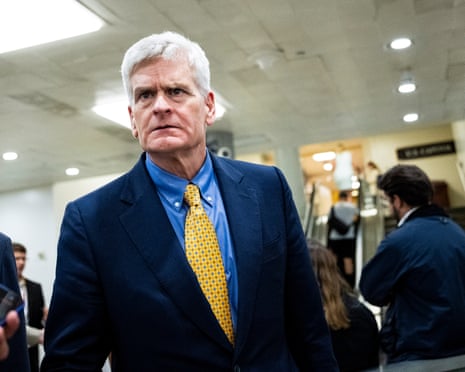
When the president demanded an answer, the Louisiana senator said he stood up and said he wanted answers from the president, noting that a conflict Trump said would last four weeks has instead lasted four months without achieving the US objectives. After Cassidy reiterated that he would vote for war powers resolutions until he received a briefing that answered his questions, the senator said: “He did not particularly care for my comments [and] raised his voice. I lost my integrity. That’s not appropriate, it’s the Irish in me. But I again matched his tone and his volume, and it went back and forth. But at some point my gut said, ‘OK, I’ll sit down’, and so I sat down and tried to de-escalate.”
Cassidy, who placed third in Louisiana’s Republican Senate primary after Trump endorsed one of his opponents, said: “I make no apologies for standing up to the president, if you will, trying to demand that more information be shared with the Senate, and more information be shared with the American people. I make no apologies for that, whatever. And if someone tries to bully me into not asking that question, I’m not going to accept that either. I am sticking up for the American people, even if I’m speaking to the president.”
Key events
Israel says IDF is staying in southern Lebanon, undermining US-Iran peace talks

William Christou
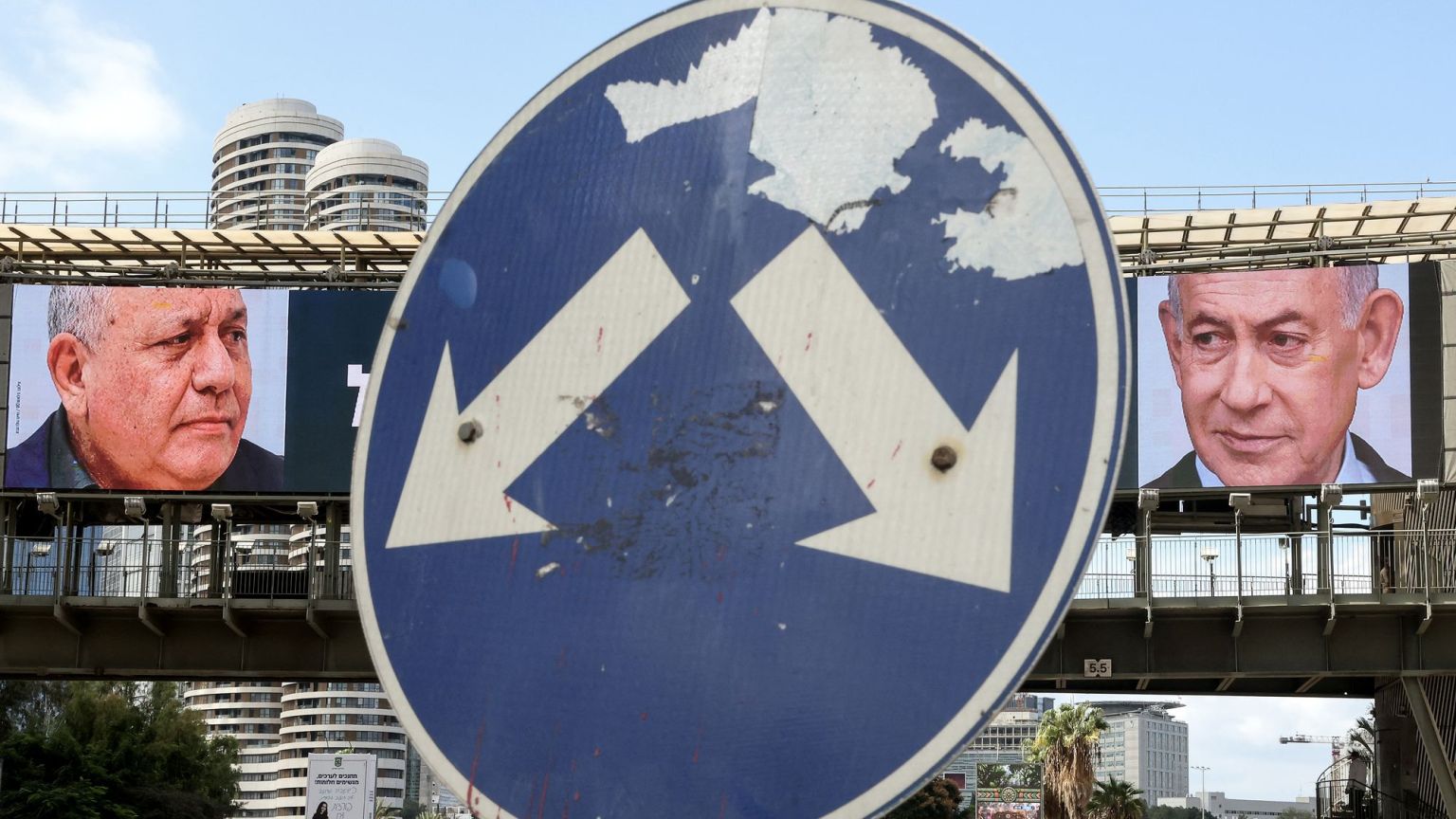
Israel’s defence minister, Israel Katz, has said that the IDF would not withdraw from southern Lebanon, further complicating US-Iran peace talks as fighting in Lebanon continues to be an obstacle to permanent peace.
Speaking on stage in an interview in Tel Aviv, Katz said Israeli troops would remain in south Lebanon – echoing sentiments from Israel’s prime minister, Benjamin Netanyahu.
“The IDF is prepared … and we are not retreating. We announced that in any case we are not withdrawing, and as of this moment – and this is a political achievement – there is no American demand for Israel to withdraw from Lebanon,” Katz said.
The US and Iran signed an accord last week extending a fragile ceasefire and setting the stage for 60 days of talks meant to lead to a permanent peace. The first hiccups to the memorandum of understanding (MOU) came last week after Israel continued its campaign in south Lebanon, leading Iran to threaten closure of the strait of Hormuz.
The US and Iran’s interpretation of the MOU has significantly differed, particularly over Lebanon. Iran has insisted that Israel needed to stop its war there and withdraw its troops in the south of the country. Israel has occupied large swathes of southern Lebanon in what it calls a “security zone”.
The Israeli and Lebanese governments are engaged in US-mediated talks, which, among other things, seek to arrange an Israeli withdrawal from Lebanese territory.
Israel is seeking a phased approach whereby it will hand off territory to the Lebanese army, tasked with keeping the area free of Hezbollah fighters. These talks do not involve Hezbollah, however, calling into question how effective they can be.
Iran, which is not a part of the Israel-Lebanon talks, has worked hard to link a ceasefire with Iran to an end to fighting in Lebanon.
“For us, a ceasefire in Lebanon is as important as a ceasefire in Iran and, further, an end to the war in Lebanon is as important as an end to the war in Iran,” Iran’s parliamentary speaker, Mohammad Bagher Ghalibaf, said on Wednesday.
Israeli strikes have killed more than 4,200 people and displaced at least 1.3 million in Lebanon since the eruption of renewed hostilities on 2 March.
The US army’s commander of its forces in Europe and Africa – who was memorably the last American soldier to leave Afghanistan in 2021 – is unexpectedly stepping down from his post after just 18 months in the job, the army confirmed late last night.
Gen Christopher Donahue, commanding general of US Army Europe and Africa and commander of Nato’s Allied Land Command, will relinquish his command on 2 July, according to an army statement provided to the Associated Press.
He is the latest in a line of nearly two dozen top military leaders to either retire or depart their jobs early under the leadership of the defense secretary, Pete Hegseth, who has undertaken an effort to thin the ranks of the military’s top brass with the mantra “less generals, more GIs”.
Donahue’s deputy, Maj Gen Christopher Norrie, will perform his duties in the meantime, the statement added.
An army official who spoke on condition of anonymity in order to talk about sensitive discussions told the Associated Press that Donahue’s departure comes as the army is discussing downgrading US Army Europe and Africa from a four-star to a three-star command.
This move would come amid ongoing criticism from Hegseth about European allies.
Last week, Hegseth told Nato allies he would be conducting a six-month Pentagon review of American forces in Europe that is “designed to ensure that Nato is moving fast and irreversibly toward Europe leading, stepping up to take primary responsibility for the defense of Europe”.
“It’s a review that some countries will fail and others will pass with flying colors,” he added.
The Pentagon did not immediately comment on the news of Donahue’s departure, which was first reported by the Atlantic.
Earlier, the National Republican Congressional Committee delivered flowers (from Whole Foods!) and a sympathy card to the office of the House minority leader, Hakeem Jeffries, today after the House candidates he endorsed lost to those backed by New York City’s mayor, Zohran Mamdani, in last night’s Democratic primaries.
“Three losses in one night is tough. We wanted so-called ‘Leader’ Jeffries to know our thoughts are with him, his candidates, and whatever remains of his influence in the Democrat Party,” said NRCC spokesperson Mike Marinella.
Chris Stein
Donald Trump spoke only briefly to reporters before and after his lunch with Republican senators, but offered no indication he was changing course on a series of policy decisions that have upended Congress.
The president is demanding that the Senate pass the Save America Act, a bill to tighten voting regulations nationwide that has no path to passing the upper chamber. Earlier, he cancelled a signing ceremony for a major housing bill, saying he wanted Save America approved first, and has similarly tied its approval to the renewal of a key foreign surveillance bill.
Addressing the press after the lunch, Trump made a point to note that “we like our leader”. That seemed to be an endorsement of John Thune, the Republican Senate majority leader whose job he has made more difficult by demanding he shepherd through the chamber legislation that does not have the votes to clear the Democrats’ filibuster.
And one GOP senator described the meeting with Donald Trump as “more of a venting session for the president”.
That and these are from Punchbowl News’s Andrew Desiderio:
Trump and Cassidy just went at each other over Iran during the Senate GOP lunch, per source in room. Trump was interrupting Cassidy as Cassidy was calling the war a ‘blunder.’ Other senators tried to jump in but Cassidy & Trump kept going back & forth, source said.
In addition to the below, another GOP senator (who asked to be referred to as ‘disgruntled’) said Trump was in a sour mood from the start, and that was only exacerbated by his interaction with Cassidy over Iran, which came as Trump was berating R’s who voted for war powers res
Per multiple people in the room: – Cassidy came in guns blazing, at one point stopped calling Trump ‘Mr President’ and referred to him as ‘brother’ —Trump repeated what he’s said on social media about the housing bill, SAVE Act & the filibuster, but nobody pushed back
I’m also told that there were no direct interactions between Trump and Thune during the meeting.
Chris Stein
Asked about what the president told Cassidy when he raised his voice at him, the senator recalled that Trump made note of his recent re-election defeat, a remark he described as meant to “demean another person”.
“If the president and his team shares with the Senate and the House and shares with the American people what is going on, then that satisfies my demand. But if you say everything’s fine, but on the outside it doesn’t look like everything’s fine, it is my responsibility to the people of the United States to ask for answers,” Cassidy said.
The president offered his Republican Senate allies few opportunities to talk to him at the lunch, Cassidy said.
“The president just kind of talked and talked and talked and talked and talked,” he said.
MSNOW’s Mychael Schnell also has this on the shouting match between Trump and Cassidy:
Sen. Bill Cassidy (R-La.) confronted President Trump over the Iran memorandum of understanding, a source familiar with the lunch conversation tells me @MSNOWNews.
Cassidy was ‘yelling’ at Trump, the source said.
This source also tells me that Trump went after Sen. Dave McCormick (R-Pa.) for missing yesterday’s war powers vote, which was successful, 48-50.
But worth noting: McCormick was with Trump at a Pennsylvania rally. And even if he were at the Capitol, the resolution still would’ve been successful because McConnell was absent.
We got Trump’s version of how the closed-door lunch with Senate Republicans went earlier (“really great”).
Burgess Everett, Semafor’s congressional bureau chief, reports:
The Senate GOP meeting with Trump is not going well. ‘A total cluster f#ck,’ one person said
Trump is mad about the war powers resolution passing yesterday and he and [Bill] Cassidy are going after each other
Cassidy was the only senator who clashed with Trump today, per Sen Cramer. No one argued with him about filibuster: there was seemingly nothing new to say
Trump not happy there were absences during yesterday’s war powers vote
no clarity on how housing bill will be resolved
Republican senator Bill Cassidy describes shouting match with Trump over Iran
Chris Stein
The Republican senator Bill Cassidy, who just lost re-election to a primary challenger backed by Donald Trump, told reporter he argued with the president over the war with Iran when he visited the US Capitol today.
Speaking to reporters after the president’s lunch with the Senate GOP, Cassidy, who on Tuesday was one of four Republicans who helped pass a war powers resolution intended to prevent the president from resuming hostilities with Iran, said Trump asked: “Why would anybody vote for the War Powers Act?”
“Is that a rhetorical question, or would you like to really know?” Cassidy said he replied.
When the president demanded an answer, the Louisiana senator said he stood up and said he wanted answers from the president, noting that a conflict Trump said would last four weeks has instead lasted four months without achieving the US objectives. After Cassidy reiterated that he would vote for war powers resolutions until he received a briefing that answered his questions, the senator said: “He did not particularly care for my comments [and] raised his voice. I lost my integrity. That’s not appropriate, it’s the Irish in me. But I again matched his tone and his volume, and it went back and forth. But at some point my gut said, ‘OK, I’ll sit down’, and so I sat down and tried to de-escalate.”
Cassidy, who placed third in Louisiana’s Republican Senate primary after Trump endorsed one of his opponents, said: “I make no apologies for standing up to the president, if you will, trying to demand that more information be shared with the Senate, and more information be shared with the American people. I make no apologies for that, whatever. And if someone tries to bully me into not asking that question, I’m not going to accept that either. I am sticking up for the American people, even if I’m speaking to the president.”
Retiring senator Thom Tillis was another Republican dumbfounded over Donald Trump’s abrupt cancellation of the housing bill signing this morning.
“I don’t know why you’re holding the bill … hostage over a bill that will never pass in this Congress. Makes no sense to me,” he told reporters earlier. “We’ve got to get our act together and stop surprising people and having conflicting messages.”
If you need a refresher on what is in the so-called Save America Act, here’s my colleague Rachel Leingang’s explainer from last month.
The bill would upend voting for all Americans in the middle of a federal midterm election year and create costly, chaotic changes for elections workers, Rachel writes.
It is a rebranded and expanded version of last year’s Safeguard American Voter Eligibility (Save) act, which passed in the House but didn’t get a vote in the Senate. This year’s version includes expansive documentary proof of citizenship requirements and criminal liability for election officials from the initial Save act, in addition to a very strict voter ID requirement for casting a ballot and a provision that requires states to regularly turn their voter rolls over to the Department of Homeland Security.
Every voter would be affected by the Save America Act, Xavier Persad, senior policy counsel at the American Civil Liberties Union, told Rachel, “regardless of political affiliation, all across the country”. It could disenfranchise potentially tens of millions of valid US voters, he said, as people would face more barriers to voting at every step of the process.
“It is a sweeping effort to solve a problem that doesn’t exist that would require a vast, expensive new bureaucracy to be built in a short few months before a major election,” said David Becker, director of the Center for Election Innovation & Research. “It’s a recipe for disaster.”
Here’s what the White House press secretary, Karoline Leavitt, who is on maternity leave, had to say in support of the housing bill last night that Trump abruptly shelved and called “of minor importance” this morning.
Posting it full as I think it illustrates really well why many – from both parties – have found the president’s decision today pretty baffling.
Tomorrow at 12PM on Capitol Hill, President Trump will sign into law the 21st Century ROAD to Housing Act, one of the most significant pieces of housing affordability legislation in American history.
This bipartisan bill includes policies long championed by the President. It cuts unnecessary red tape, helps increase housing supply, and limits the ability of large institutional investors to purchase single-family homes.
As the President has said, homes should be owned by American families, not large corporations.
President Trump promised to lower housing costs, and he is delivering, making it easier for every family to achieve the American Dream of homeownership.
Tomorrow’s historic bill signing is another promise made, promise kept.
Trump touts ‘great’ meeting with GOP lawmakers – but doesn’t mention housing or voting bills
Donald Trump emerged from the closed-door lunch with Senate Republicans rambling about oil prices and talks with Iran in brief remarks to the press – but said nothing on the housing bill he was supposed to sign this morning, or the controversial voting bill he shelved it for.
“We had a really great meeting, and we’re very proud of the party, we like our leader, we like everybody, really, in the room. I don’t like a few people, but that’s OK. I think you know who they are,” the president said.
He added that the GOP is a “well-unified party” and went on to claim, as he often does, that the US is the “hottest country in the world”.
We have more factories being built right now than we have at any point at any time in the history of our country, and all of those factories are opening up soon. It’s all jobs, and our job numbers are incredible. Anyway, I see that oil just broke the $70 number. Who would have thought that was going to happen? And that’s during a war, and Iran is being very nice. They’re agreeing to everything that I want, and they have to.
But is the Republican party agreeing to everything he wants and do they have to? That is the question and on that, Trump gave nothing away.
Federal judge orders Trump administration to explain tarp obscuring Kennedy Center facade
A federal judge has ordered the Trump administration to explain why it placed a tarp over the Kennedy Center’s facade after the president’s name was removed from the building under a court order.
The US district judge Christopher Cooper said the administration must report by 31 July “the purpose and status of the tarp and scaffolding” now in place at the iconic building.
The tarp was installed as workers stripped Donald Trump’s name in a predawn operation earlier this month following an order from Cooper that the administration had unlawfully added his name to the facade in December.
The White House and Kennedy Center did not immediately respond to Reuters’ requests for comment.
In a lawsuit brought by Democratic representative Joyce Beatty, a Kennedy Center board member, the judge last month ordered the removal of Trump’s name from the complex’s signage and blocked his plans to close it for two years of renovations starting 4 July.
Beatty’s lawyers this week in a filing told the US court of appeals for the District of Columbia circuit that the “semi-permanent tarp” obscuring the late president John F Kennedy’s name from public view at the center appears to be the Trump administration’s “effort to frustrate the restoration of the status quo as it existed prior to the renaming”.
Beatty called the obstruction of the facade an “act of petty defiance”.
Here’s my colleague Chris Stein’s report as Trump holds up one of the biggest efforts in decades to increase the supply of housing and reduce prices, all to push the Senate to approve a bill that would dramatically change voting regulations by requiring proof of citizenship at voter registration and significantly curtail mail-in voting.
#Trump #shouting #match #Republican #senator #standoff #housing #bill #presidents #anger #war #powers #vote #live #politics