wellnessfitpro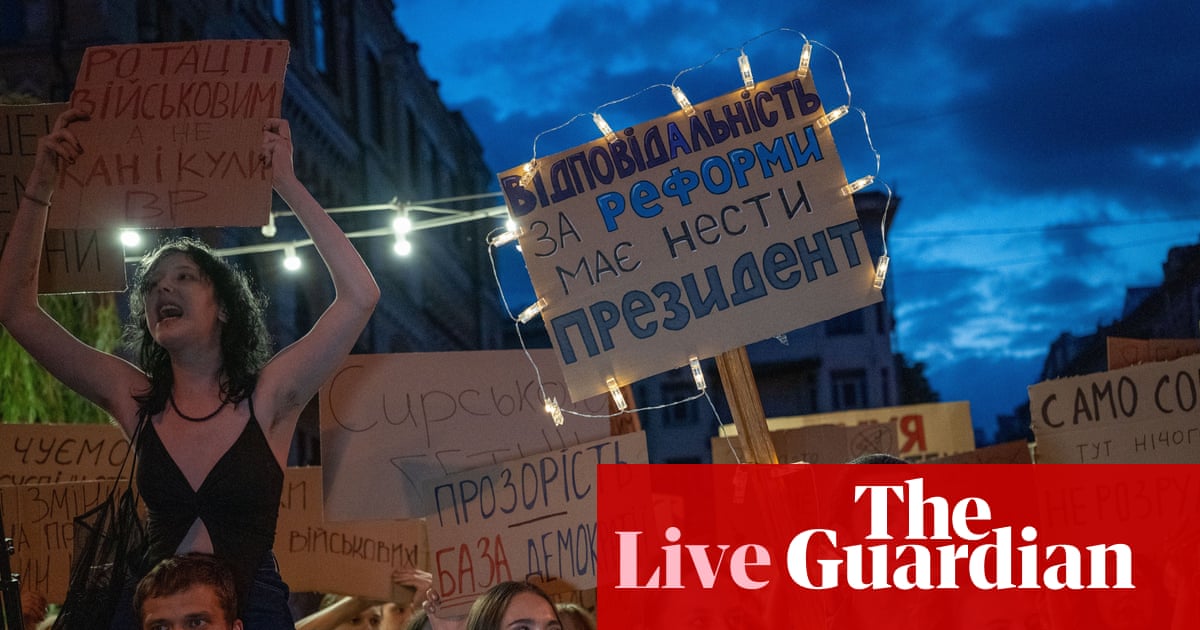
Morning opening: Russia strikes Ukraine’s gas production facilities as Zelenskyy remains under pressure from protests

Jakub Krupa
Russia has attacked Ukraine’s Naftogaz’s gas production facilities in the northeastern Kharkiv region for three days in a row, the state-owned energy company said this morning, as reported by Reuters.
Meanwhile, president Volodymyr Zelenskyy remains under pressure over his sacking of a popular defence minister, with calls to reinstate him into his position and fire the army chief, Oleksandr Syrskyi.
Rare wartime protests against Zelenskyy’s decisions continued last night, with rumours swirling that he was close to agreeing to some of the demands.
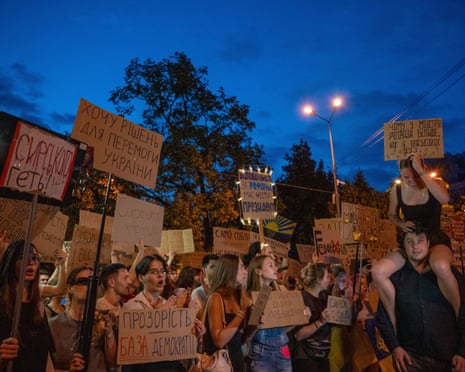
I will keep a close eye on this today for you.
Elsewhere, I will be looking at the situation in Italy after a 42-year-old man died during a police arrest, sparking large protests in the city; but also at Greece and Spain, which face another heatwave with temperatures exceeding 40C.
I will also keep an eye on France where lawmakers are expected to approve a bill banning social media access for children under 15 later today.
Lots to cover.
It’s Tuesday, 21st July 2026, it’s Jakub Krupa here, and this is Europe Live.
Good morning.
Key events
Viktor Orbán’s Fidesz party says prosecutors raided its office to look at communications, databases
Hungary’s opposition Fidesz party, led by the former prime minister Viktor Orbán, said that prosecutors raided its servers to look at party’s “entire communications system and databases.”
In a post on Facebook, the party said that the intervention was unprecedented in Hungary’s post-communist history, as it blamed “the tyrrany” of the new government, led by Péter Magyar, for the raid.
“The Tisza Party’s plan to eliminate Fidesz and with it the resistance to tyranny through political means has failed. Therefore, the Tisza Party is now attempting to legally disable Fidesz,” the statement read.
In a holding statement on his Facebook page, PM Magyar responded by saying that “we await the information on what case they are investigating and what was seized.”
Youth mobility, food exports, economic relations – Burnham’s to-do list for EU reset
In other European news, my colleagues Jennifer Rankin in Brussels and Lisa O’Carroll in London looked at the to-do list on top of the new prime minister’s desk when it comes to the UK’s relations with the EU (10:26).
Unsurprisingly, it’s not short.
“Andy Burnham is unknown in Brussels, but that will soon change. In his schedule for the autumn is an EU-UK summit that may underscore the same dilemmas that have confronted previous British prime ministers in the relationship with Europe.
Now Burnham inherits the reset agenda launched by Starmer. The two sides are due to sign a trio of agreements at the summit: a deal to reduce paperwork and certification for fresh food in an effort to ease trade barriers for British exporters; linking emissions trading systems; a youth exchange scheme enabling 18- to 30-year-olds to work, study, travel and volunteer in the EU and UK.
But when it comes to the UK-EU economic relationship, Burnham will face the same constraints as Starmer.”
Read more here:
World leaders congratulate Andy Burnham as he becomes Britain’s PM

Jon Henley
World leaders have warmly congratulated Andy Burnham on his entry into 10 Downing Street as Britain’s seventh prime minister in a decade, but international media largely focused on the scale of the challenges awaiting him.
Emmanuel Macron, France’s president, said he hoped for a deeper relationship “in the service of our peoples, and by giving new momentum to the partnership between the UK and the EU” rekindled by Burnham’s predecessor, Keir Starmer.
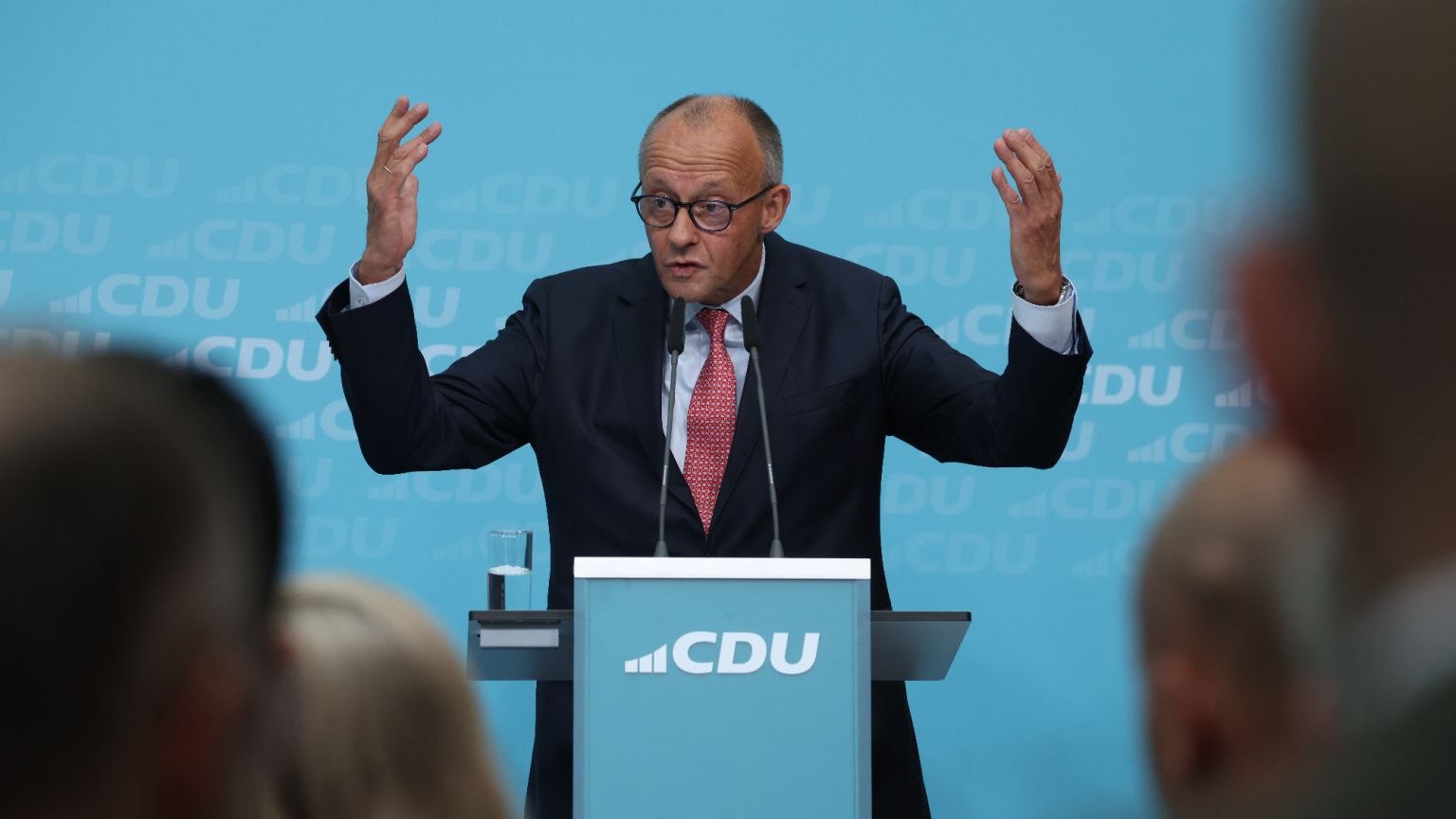
The German chancellor, Friedrich Merz, who spoke with Burnham on Monday evening including about continued support for Ukraine, said Germany and the UK were close partners and he looked forward to working together.
The president of the European Commission, Ursula von der Leyen, said she looked forward to “strengthening the EU-UK partnership”. A “very good first discussion” had revealed a common commitment to “bringing the EU and UK closer and closer”, she later added.
Read more here:
‘No electricity, no water, no fuel’: Ukrainian drone strikes bring darkness to Crimea’s summer

Pjotr Sauer
First, the guests stopped coming.
As Ukrainian drones and missiles pounded Crimea throughout the spring and into the summer, Russian tourists began cancelling their bookings at the small guesthouse Marina runs in Yevpatoria, a resort town on the peninsula’s Black Sea coast.
Then petrol became scarce, making it harder to stock the business with food and other essentials. Now, electricity and running water are cut off for much of the day, just as the summer heat sets in.
“For 12 years they told us Crimea was 100% protected,” Marina said, referring to the promises Russian officials have made since seizing it from Ukraine in 2014. “And then, within a month, we’ve been thrown back into the stone age – no electricity, no water, no fuel.”
Since the start of this year, Kyiv has launched its largest sustained air campaign against Crimea, targeting both the peninsula and the land and sea transport links connecting it to Russia. Residents are facing the most severe disruption to daily life since its annexation in 2014.
It was the first Russian-controlled region to experience the acute motor fuel shortages that have since spread to Russia. The Kremlin-installed authorities last month declared a state of emergency and temporarily banned sales to private motorists in an effort to preserve supplies for the military and emergency services.
By targeting Crimea – long held up by the Kremlin as the crown jewel of Putin’s rule – Ukraine hopes to strengthen its hand in any future peace negotiations, says Rob Lee, a military analyst and senior fellow at the Foreign Policy Research Institute.
“Ukraine has more leverage in future negotiations than it did before because it can now reliably strike almost any target in Crimea.”
Jakub Krupa
For a sense of what it’s like to live in Russia occupied Ukrainian territory, here is Pjotr Sauer’s great story on the current situation in Crimea.
Russia bans anchoring of ships in unprotected areas in key Azov Sea trade route
Meanwhile, Russia banned the anchoring of vessels in areas that are unprotected by air defences in two ports along a key trading route for grains in the Azov Sea, a government decree said, as reported by Reuters.
The decree affects ships in the port of Azov in the Azov Sea and the port of Kavkaz in the Kerch Strait.
Shipping in the Sea of Azov, the route for a quarter of Russia’s grains exports, has been restricted since last Friday amid Ukrainian attacks on tankers and other commercial vessels in the area.
Russian warship carries out rare live-fire exercise 45 miles off UK coast

Dan Sabbagh
Defence and security editor
A Russian warship conducted a rare live-fire exercise in the Channel 45 miles south of Plymouth on Monday, the day Andy Burnham was appointed as prime minister.
The Neustrashimy suddenly announced it intended to fire its guns and requested that a British warship, which had been tracking it, retreat to a safe distance.
The patrol vessel HMS Tyne repositioned, allowing the Russian frigate to conduct a 30-minute firing drill at around 9.30am in international waters to the south of the UK.
Russian warships have been sailing around British waters for much of 2026. Last month another frigate, the Admiral Grigorovich, fired warning shots within a few hundred metres of a couple on a British pleasure yacht, south of the Isle of Wight.
Conducting a live-fire exercise at short notice in international waters close to another country is a rare event and usually conducted with due notice. However, if proper safety warnings are given it is legal.
Jakub Krupa
What might also not help the UK-Russian relations get better anytime soon is that…
Kremlin sees ‘no hope’ for improving relations with UK under new prime minister
Meanwhile, the Kremlin said it had “no hope” for better ties with the UK, a day after Britain’s new prime minister Andy Burnham took office, with Moscow criticising his support for Ukraine, AFP reported.
“No.. we have no such hopes,” said Kremlin spokesman Dmitry Peskov, asked by AFP if relations could improve. “One of his [Burnham’s] first actions was to issue statements expressing support for Ukraine and, consequently, his intention to do everything possible to continue the war,” the spokesman added.
Burnham spoke with Ukraine’s Volodymyr Zelenskyy on Monday night, pledging his continued support for Ukraine.
UN reports major rise in civilian deaths, injuries during Russian invasion of Ukraine
Back to Ukraine, the United Nations said that civilian casualties in the war sparked by the Russian invasion of Ukraine rose 37 percent in the first half of this year, AFP reported.
“We documented 1,396 civilians killed [and] 7,978 injured… that amounts to a 37 percent increase from the same period in the previous year,” Danielle Bell, head of the UN Human Rights Monitoring Mission in Ukraine, told reporters in Geneva.
French parliament to vote on social media ban for under 15s
French lawmakers will vote on Tuesday on a law that aims to ban social media access for children under the age of 15, joining countries around the world in considering a move unpopular with many teenagers but supported by some parents and teachers, Reuters reported.
If it is adopted, France would follow Australia, where the world’s first ban for under-16s on platforms including Facebook, Snapchat, TikTok and YouTube came into force in December, as concerns grow over the impact social media has on the health and safety of minors.
President Emmanuel Macron, who in April urged young people to switch off their phones and read in order to become better citizens, wants the law in place in time for the start of the next academic year and sees it as a part of his legacy.
The vote in parliament is due in the mid- to late afternoon, Reuters said, and I will keep an eye on this for you.
Two people injured in Acropolis stabbing as Greece braces for extreme temperatures

Helena Smith
in Greece
Greece is the latest country to face an extreme heatwave this summer, with temperatures exceeding 42C expected today, including up to 40C in Athens. The searing heat has prompted Red Cross to assign its volunteers to help tourists visiting the Acropolis.
An estimated 16,000 people daily climb the craggy hill to behold the monument at the height of the summer season.
As Red Cross crews began to assemble at the base of the 5th century BC site, emergency medics were also rushed to the area to assist two Greek Americans who appear to have been stabbed as they lined up outside the Acropolis ticket office.
The assailant, an as yet unidentified man, had been arraigned. Eyewitnesses described him as threatening other people also lining up at the Acropolis ticket office before the early morning attack.
The incident is likely to raise security concerns – and calls to reinforce policing – at Greece’s most visited tourist site.
Thousands protest in Bologna, clash with police after man dies during arrest attempt
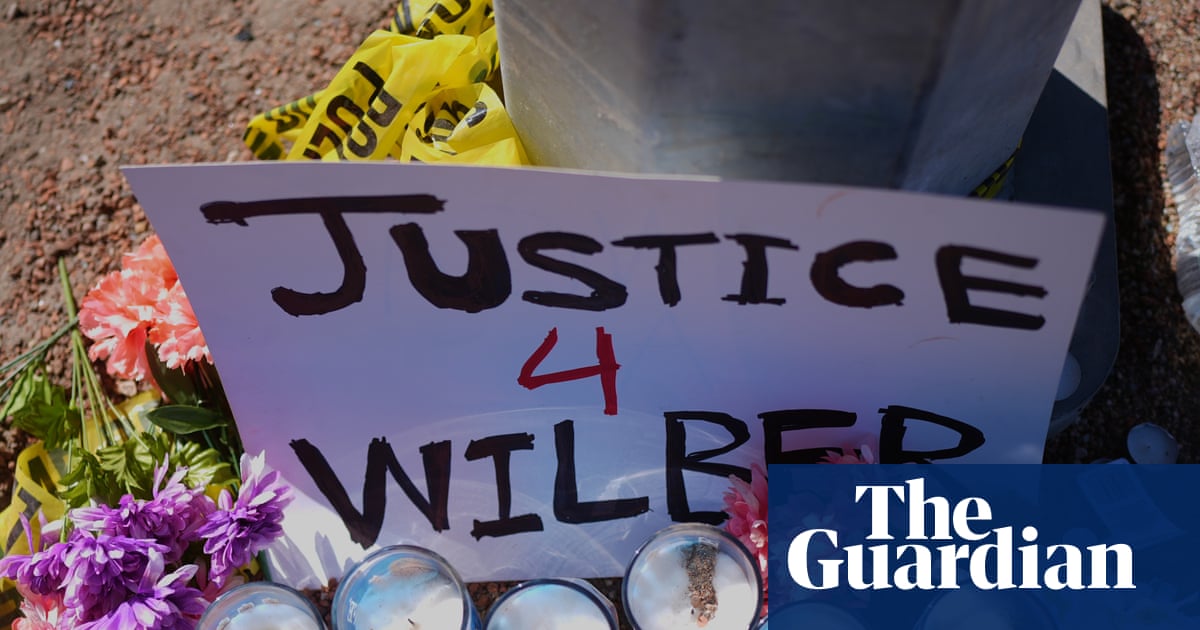
Italian police clashed with demonstrators in the northern city of Bologna on Monday night, ANSA news agency reported, during a protest over a man’s death after officers tried to arrest him, Reuters reported.
Abderrahim Fakir, a Moroccan-born entrepreneur who ran a small removals and cleaning business, died on Sunday after police were called to deal with a man behaving aggressively and damaging a vehicle, Italian media said.
Footage of the incident filmed by a resident and widely shared online prompted hundreds of people to protest. According to ANSA, some threw a firecracker near police buildings in the city and police reacted using teargas and water cannons.
The video showed Fakir lying face down on the ground while two officers restrained him. He could be heard repeatedly calling for help and struggling for breath before his movements gradually stopped.
“The chants of ’police murderers’ and ’the whole world hates you,’ shouted during a demonstration in Bologna … are disgraceful,” said Tommaso Foti, the European affairs minister in the government of prime minister Giorgia Meloni.
Prosecutors have opened an investigation into the incident. Interior minister Matteo Piantedosi said he had “full confidence” the inquiry would establish the facts and clarify what happened.
Falconer named UK PM Burnham’s new lead on European relations

Lisa O’Carroll
Hamish Falconer is taking over from Nick Thomas-Symonds, with responsibilities for intergovernmental relations and European relations in the new British prime minister Andy Burnham’s cabinet.
The 40-year-old former diplomat, who worked in the Foreign Office and the Department for International Development previously, was elected an MP in 2024 and was immediately marked out as a rising star and appointed under secretary of state for the Middle East and north Africa.
Falconer, the MP for Lincoln, is a son of Labour grandee and peer Charlie Falconer, who served under Tony Blair’s government.
He worked for the Foreign Office for 10 years, focusing on national security, terrorism and hostage recovery, particularly in Afghanistan.
He also had a stint at the UK’s National Crime Agency in Pakistan and south Sudan working on human trafficking investigations.
Thomas Byrne, Europe minister in Ireland which holds the EU’s rotating presidency, said he looked forward to working with him “working closely” with Falconer.
The departure of Thomas-Symonds will be a blow to EU counterparts who saw him as a reliable and stable partner able to heal the wounds of the Brexit past.
Byrne said he was responsible for a “genuinely positive step-change in the EU-UK relationship, to the benefit of both UK and EU citizens” restoring cross-channel confidence.
However, some EU diplomats worried that Keir Starmer’s reset talks had lost momentum amid a disagreement over whether EU citizens in a negotiated youth mobility scheme would pay cheaper tuition fees in the UK.
Jakub Krupa
Let’s take a quick look at other news from around Europe, including an update on who will be leading the UK’s “reset” talks with the European Union…
Ukraine-bound gas tanker hit in Black Sea, with three people injured, Romania’s president says
A strike on a ship in the Black Sea carrying propane to the Ukrainian port of Reni wounded three seafarers and forced the crew’s evacuation, Romania’s president Nicușor Dan said.
“Last night, the LPG tanker Gas Lisbon, flying the Liberian flag, was struck outside Romanian territorial waters, approximately 20 nautical miles off the Romanian coast,” Dan said on X.
While the authorities were still working to establish who had hit the tanker, Dan claimed the incident was “most likely part of the Russian Federation’s illegal war of aggression against Ukraine,” AFP reported.
The strike on the ship, which was carrying more than 3,790 tonnes of propane from the port of Alexandria in Egypt, caused a major fire on board the vessel.
After the strike, two Romanian rescue vessels evacuated the ship’s 17 crew members, including three who “required emergency medical care”, the emergency services said.
AFP noted that the Black Sea has been a regular theatre of confrontation between Ukraine and Russia since the Kremlin’s full-scale invasion began in 2022.

Warren Murray
Russian has launched more ballistic missiles against Ukraine in July so far than it is thought to produce each month, the Institute for the Study of War thinktank said.
“Russia appears to be dipping into its stockpiles to continue increasing the number of ballistic missiles it launches against Ukraine, as these missiles have a higher success rate than drones and cruise missiles.”
Morning opening: Russia strikes Ukraine’s gas production facilities as Zelenskyy remains under pressure from protests
Jakub Krupa
Russia has attacked Ukraine’s Naftogaz’s gas production facilities in the northeastern Kharkiv region for three days in a row, the state-owned energy company said this morning, as reported by Reuters.
Meanwhile, president Volodymyr Zelenskyy remains under pressure over his sacking of a popular defence minister, with calls to reinstate him into his position and fire the army chief, Oleksandr Syrskyi.
Rare wartime protests against Zelenskyy’s decisions continued last night, with rumours swirling that he was close to agreeing to some of the demands.
I will keep a close eye on this today for you.
Elsewhere, I will be looking at the situation in Italy after a 42-year-old man died during a police arrest, sparking large protests in the city; but also at Greece and Spain, which face another heatwave with temperatures exceeding 40C.
I will also keep an eye on France where lawmakers are expected to approve a bill banning social media access for children under 15 later today.
Lots to cover.
It’s Tuesday, 21st July 2026, it’s Jakub Krupa here, and this is Europe Live.
Good morning.
#Russia #attacks #Ukraines #gas #facilities #Zelenskyy #faces #protests #Europe #live #World #news