wellnessfitpro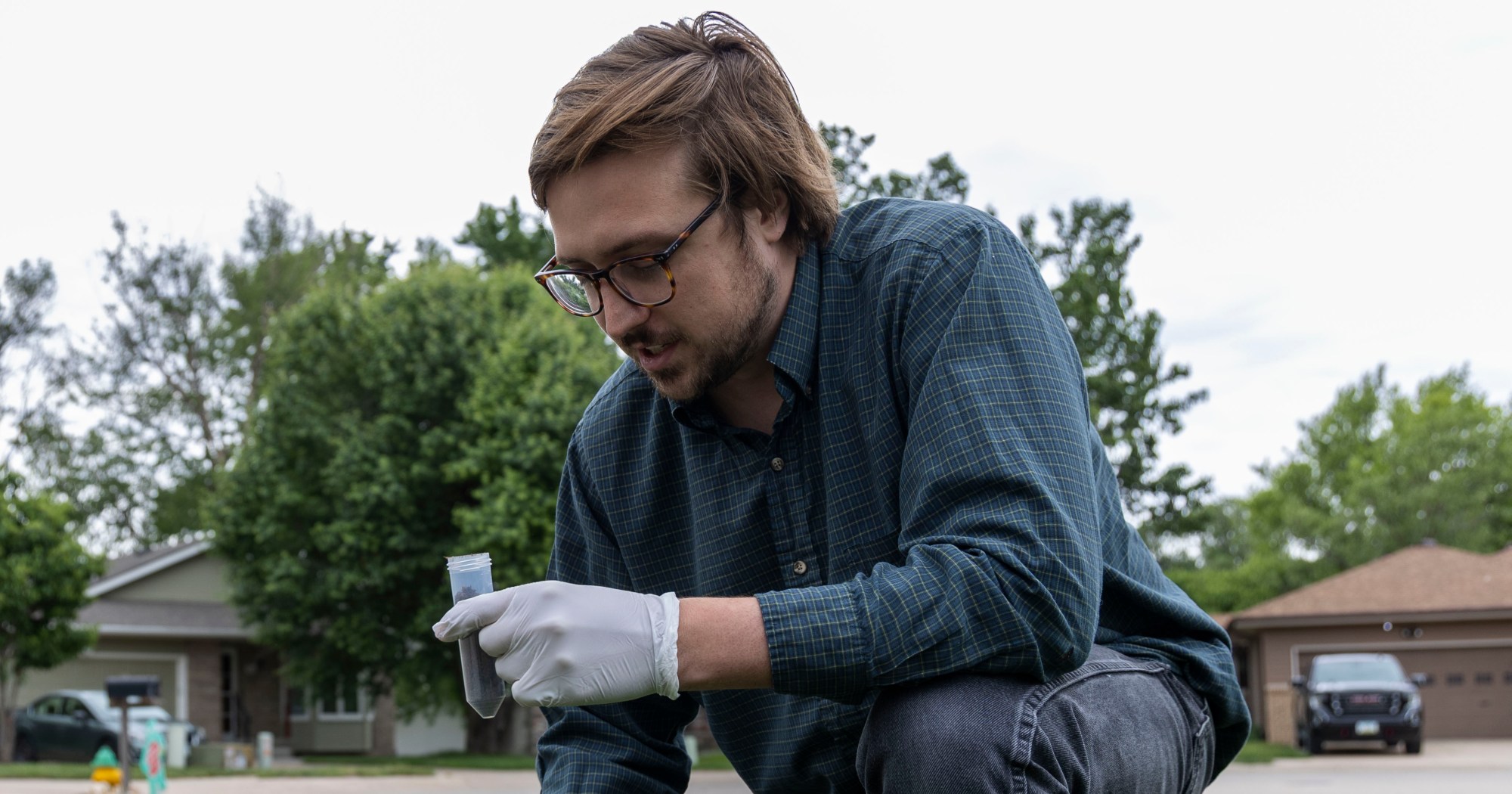
Decades after the last plume of lead-laced smoke rose from a smelting plant in Omaha, Nebraska, the Flatwater Free Press and ProPublica found lead in concentrations that pose a threat to people’s health in soil throughout east Omaha.
Our investigation began more than two years ago, when Leah Keinama, who previously worked for a food security nonprofit, could not find up-to-date information about lead contamination for gardeners in Omaha. Keinama, now the director of civic journalism at the Nebraska Journalism Trust, and reporters at the Flatwater Free Press knew about the city’s refining history, so they teamed up to find out whether concerns about lead exposure were still warranted all these years later.
The Environmental Protection Agency declared a 27-square-mile area within the city a hazardous waste zone, known as a Superfund site, after the American Smelting and Refining Company closed in the 1990s. That prompted a lengthy period of testing and remediation. Today, unless Omaha residents pay for private testing, there aren’t many avenues to find out how much lead is in their soil if their property had been tested by the city and EPA in the past.
An Omaha lead smelter spread dust that seeped into the soil and bodies of many residents. The EPA spent decades cleaning up the surrounding area — but not Council Bluffs, Carter Lake or Bellevue.
Throughout our reporting, we heard from hundreds of Omaha residents who said they didn’t know about the city’s lead history. Some said they believed that because the EPA had already cleaned up thousands of properties that had high concentrations of lead in the soil, there was nothing to worry about.
Our goal was to reach people in every neighborhood in and around the Superfund site. So we knocked on doors, hung up flyers around town, visited a community health center, attended multiple events, partnered with local libraries, and spoke to a college classroom to invite people to sign up for free soil testing. We also posted our online form in various social media channels and shared the news with other local media. We made our reporting available in Spanish, as roughly 10% of residents living within the Superfund site don’t speak English.
Flatwater Free Press initially partnered with local libraries and a community-based organization to distribute do-it-yourself kits with instructions on how to collect a soil sample. We received fewer than 100 samples using this method before switching to a sign-up system in which residents indicated they wanted our team to collect soil from their yard.
After a resident signed up for testing, a member of the reporting team (usually Keinama or Flatwater Free Press reporter Chris Bowling) went to their home, put on latex gloves, wiped down a stainless steel spoon with an unscented wipe and scooped about 3 to 4 tablespoons of soil from the middle of the yard into a sealable vial. We made sure not to collect samples too close to the house or too close to the road, which the EPA has found can be overly contaminated by paint or the remnants of leaded gasoline, respectively. When demand for testing increased, we hired two part-time soil collectors.
We sent labeled samples to Accurate Analytical Testing, an EPA-accredited lab, for $10 per test. Once we received the results from the lab, we informed residents (unless they had opted out of receiving their result) and put together a guide to answer some of their top questions.
Our soil collection process differed from the EPA’s method of taking multiple composite samples from five sections of the yard. We chose to take a single sample from one area of each yard to reach more people and keep costs reasonable. In a few cases, we took multiple samples from the same yard and tested each sample individually but used only the highest result for our analysis.
The EPA said sampling a single area “can be strongly biased high or low” compared to composite sampling. However, several of the nine environmental contamination experts we spoke to said single samples can offer broad conclusions about contamination in an area when enough are collected, which several experts felt we had achieved. Some said our sampling would likely underestimate contamination on a property.
Other experts said our testing method would not accurately depict lead levels across a particular yard because of how variable the contamination can be. At the same time, experts also told us the EPA’s method of gathering multiple composite samples can still miss hot spots or underestimate contamination.
What We Found
Over the past two years, we used the EPA’s sampling protocol as guidance to collect soil from 620 homes in and just outside of the Omaha Superfund site. (We’re continuing to collect samples from the nearby cities of Bellevue, Nebraska; Carter Lake, Iowa; and Council Bluffs, Iowa.)
We matched each home at which we took a soil sample with Omaha’s lead registry, which includes details like the address’ remediation status and results of the EPA’s testing, and compared our test results with historic data. Some homes that had previously undergone the EPA’s remediation process had high levels of lead contamination, our analysis found.
- We tested 150 previously remediated yards. One in 10 of those yards’ results came back with a concentration greater than 400 parts per million, the level the EPA used to decide which yards to clean up.
- Nearly all of the previously remediated yards that tested above 400 parts per million are within 100 yards of another property that originally tested above the EPA cleanup threshold but was never remediated. A third had two such neighboring properties. That proximity could mean that the previously cleaned-up yards we tested were recontaminated by properties where the soil was never replaced, one expert said.
- Many of the 241 homes we tested within the Superfund site that had never been remediated also showed high levels of lead. Of those homes, 1 in 20 had a concentration higher than 400 parts per million, according to our test results.
- Across Omaha, 41% of the 620 yards we tested had more than 100 parts per million in their soil sample, a level that an EPA model shows could cause high blood-lead levels in children. Within the Superfund site, more than half of the almost 390 yards we tested had more than 100 parts per million.
Our testing shows that lead contamination at levels that pose a risk to residents’ health is fairly widespread — even in sites that the EPA previously addressed.
Throughout our reporting, we spoke to nine experts in environmental and lead contamination to make sense of our findings. Several said the EPA should do more testing and possibly cleanup in Omaha.
We asked the EPA about our findings. The agency said it will work with the city of Omaha to “investigate the outcomes you have noted” and work with the city and property owners to take corrective action if needed in accordance with 2009 cleanup guidelines.
#ProPublica #Tested #Hundreds #Omaha #Homes #Lead #ProPublica