wellnessfitpro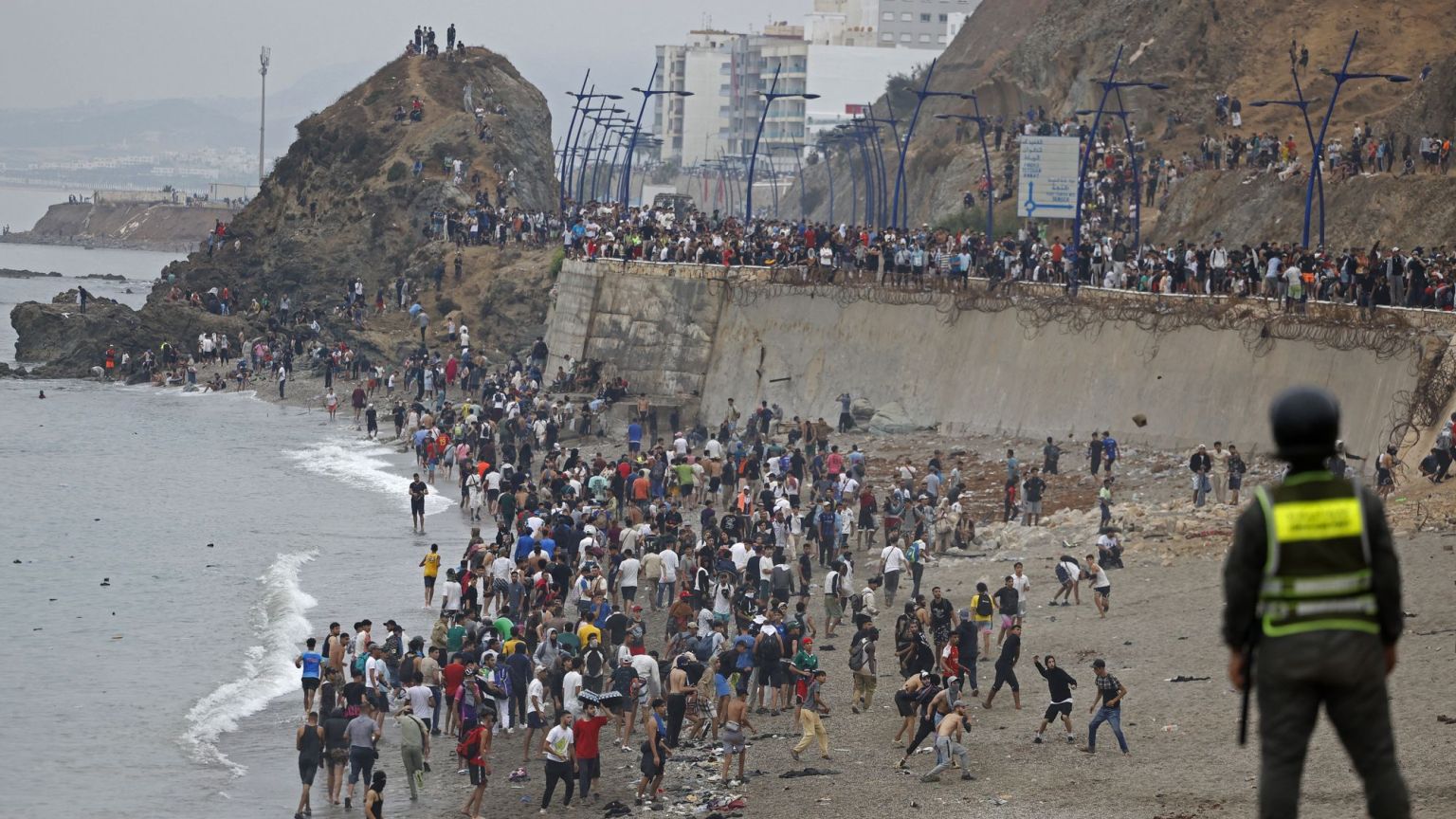
The images of tens of thousands of migrants crossing into Ceuta have understandably shocked much of Europe. It’s hard not to feel sorry for both the locals and the clearly desperate people breaking across the border from Morocco into the Spanish exclave. We’ve seen some pretty harrowing footage, too, of exhausted families and frightened children among those pouring in (though they are by far a minority). It’s easy to see why so many people empathise with the plight of migrants.
This empathy has become domineering. If you question the historically high levels of immigration into Europe or the integrity of national borders, you are charged with lacking empathy – a crime supposedly heinous enough to mark you out as evil in the eyes of ‘progressives’.
However, empathy may not always lead where we want it to. A civilisation depends on many virtues, from prudence to courage to justice. But the modern West seems to have turned a deaf ear to many of them. Instead, it has elevated empathy above everything else. Questions of morality or even simple policy are not assessed in terms of long-term consequences. They are judged, instead, by who suffers most immediately (and too often how worthy that sufferer is of our sympathy). Feeling another’s pain has become the highest moral credential, eclipsing all others.
Compassion and empathy are undoubtedly good capabilities to have. However, if you detach compassion from judgement, you’re on a dangerous path. Because then you’re talking about something like sentimentality.
And, increasingly, ‘progressive’ politics is overwhelmingly sentimental. Activists override moral reasoning with emotional identification; they elevate empathy above every other consideration, muddying the water so we can’t see the difference between genuine kindness that makes for a better world and policies that ultimately undermine the very societies capable of showing and acting on empathy in the first place.
Sympathy (empathy’s close cousin) is many people’s first instinct on seeing the kinds of images we’ve seen coming out of Ceuta. Others, however, see an invasion, as hundreds of young men leap fences and dodge around police. Both instincts are entirely human. The trouble is that empathy entirely eclipses rational concerns. Empathy is treated as the alpha and omega of political thought. If you question it, you’re a Bad Person.
It’s a broad departure from the moral philosophy of Western tradition. To Aristotle, all virtues should form an interconnected web, with none of them dominating any other. It takes phronesis, or practical wisdom, to balance them out without a single dominant trait. If we want to flourish then we need to cultivate a range of virtues, with each helping to moderate the other. Without prudence, courage can be recklessness; without mercy or temperance, justice can easily become cruelty.
The same is true of empathy. It’s valuable because it shows us the humanity in others; it allows us all to share in a common sense of being. But it is limited on its own. It cannot tell us what we ought to do. It cannot weigh competing obligations when it is simply one obligation among many. It can’t help us assess long-term costs, or distinguish between acts of compassion today and acts that produce greater suffering tomorrow.
Politics is all too often the art of choosing between competing goods, not simply railroading the world with empathy as a sole guiding light. Modern progressive politics, however, seems increasingly to deny this complexity, or to not see it in the first place. Public debate is saturated with appeals to emotion, and freighted with manipulative power rather than argumentative force.
It’s neither moral indifference nor unkindness to consider the full picture, untinted by empathy. It’s a dereliction of duty not to, in fact, both for policymakers and the electorate at large. If we go with policies based on immediate emotional impulses, we open ourselves to the laws of unintended consequences. We open up the possibility of encouraging dangerous migration routes, of overwhelming our institutions and infrastructure, of drowning out national cultures and voices, of wearing down the kind of public trust upon which we depend as liberal societies.
Good leadership often requires emotionally uncomfortable decisions – decisions that safeguard the conditions under which a society can continue to flourish. Allowing empathy the lion’s share of our political attention inhibits us from doing so effectively.
So what should we do about Ceuta, where, according to some reports, over 70,000 migrants arrived in just 24 hours? Well, empathy would have us embrace them, clothe them, home them. But we cannot keep doing this. We are a small continent made up of small countries with nothing like the resources to house the rest of the world.
It looks like Spain’s prime minister, Pedro Sánchez, is making decisions based on principles other than empathy. He is deploying troops, speeding up repatriations through a bilateral agreement with Morocco. So far the vast majority of migrants have already voluntarily crossed back or been returned to Moroccan territory.
But it’s a humanitarian crisis that will likely only repeat itself in the coming months and years. And it’s due in large part to the West taking in more migrants than it has the structural capacity to handle, fuelled by an empathy that we have taken as our sole guiding light for far, far too long. It’s time for a bit less empathy and a lot more judgement, prudence and courage.
James Dixon is a Glasgow-based novelist, poet and playwright.
#progressive #empathy #fuelled #Ceuta #crisis