wellnessfitpro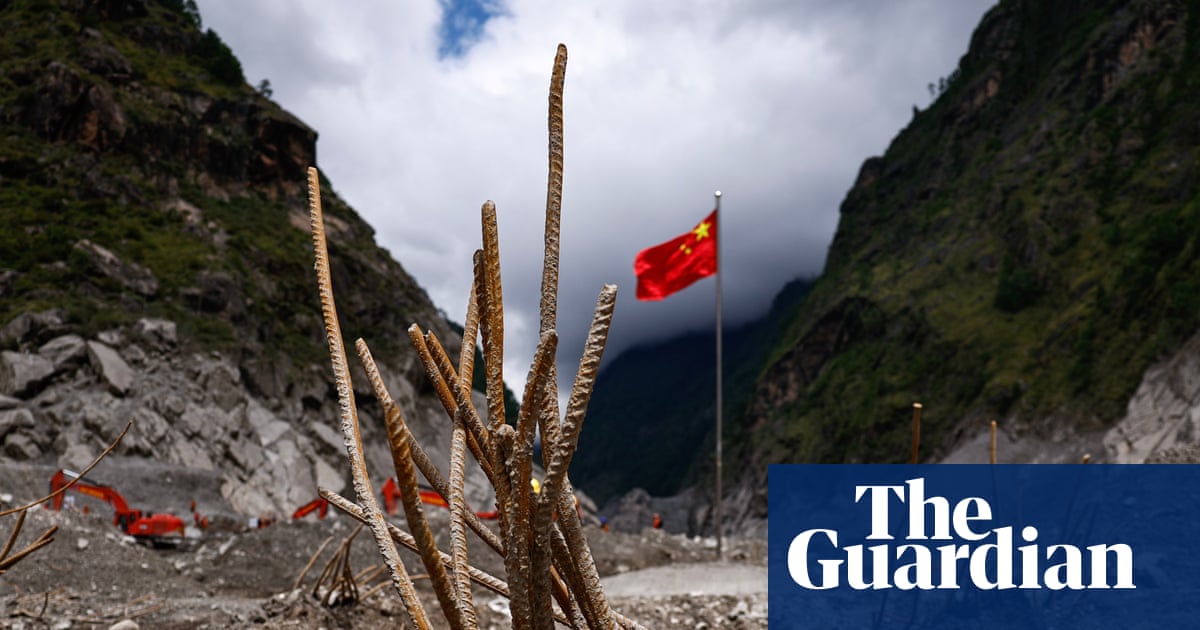
Tsering Phuntsok watched news of the Nepal-Tibet flood unfold from thousands of miles away in southern India. The 46-year-old Tibetan in exile has missing family members on both sides of the border; those in Nepal are named in official government lists, but in Tibet he has received no information.
“I have started praying for the lost ones now. I have to accept they will not return [because] … I’m not getting any information.”
The flooding disaster is an example of the increasing use by Chinese authorities of “Clean Internet 2026”, the latest version ofa long-running campaign by the Ministry of Public Security that criminalises anything officials regard as false information, which includes unofficial accounts of the floods.
It follows a well-established playbook in which authorities promote official narratives, suppress independent accounts, discourage efforts to look back at the causes of a disaster and punish those who post claims that differ from the government-approved narrative.
While earlier versions of the campaign focused on cybercrime and hacking, it is increasingly being used to target what the authorities call “rumours” which include unofficial information about the disaster.
“The campaign serves a dual purpose. Tackling genuine problems like fraud and misinformation while tightening control over public narratives,” says Tencho Gyatso from the International Campaign for Tibet, a US based Tibetan advocacy group. “That dual purpose is what makes it more nuanced and challenging to criticise.”
In the hours after the floods, researchers say they saw a huge surge in interest across Chinese social media. The topic was trending, but then fell away as comments were removed in real time.
Screenshots seen by the Guardian show the Chinese app WeChat restricting posts about the floods. In one case, a user was notified by WeChat that a post about the flooding had been reported and then deleted for containing “politically sensitive content”. Another was stopped from being shared. It was said to be “unavailable due to policy violation” and that it contained “prohibited content”.
“[The trend] was constantly shifting and being manipulated because there was real interest,” says David Bandurski, director of the China Media Project, a research group that monitors Chinese media. “A ‘crackdown’ is not the right word, because they don’t crack down. It’s a consistent, persistent, everyday application of a policy of public-opinion guidance.”
On 30 August, four days after the disaster, police in Tibet reported 10 cases under the Clean Internet 2026 campaign relating to “rumours” about the disaster. In the majority of cases there were claims that more than 1,000 people had been swept away in the floods. So far, Chinese authorities have released a death toll of 43. Human rights and Tibetan advocacy groups have accused the Chinese government of concealing the true scale of the death toll.
The police notice said that spreading of “rumours” “misleads the public and disrupts online order” and it intended to “ensure that disaster relief work proceeds smoothly”.
A user from Jiangxi, a province 3,000km away from the disaster, posted on a video platform claiming “the number of missing people had risen to 826”. According to the police report the user faced “administrative punishment” without specifying what that involved.
‘Proving that the state is working hard’
One former Chinese state media journalist, who agreed to speak on the condition of anonymity for fear of reprisals, says control in times of crisis also works through simple omission of information as much as suppression: “Official news coverage devotes enormous space to proving that the state is working hard, but gives very little information answering the most basic questions: who is missing? Where were they last seen? Which buildings have been searched?
“Controls have become much stricter, especially regarding the internet, though there are nuances, as there are still ways to bypass restrictions. For instance, by posting quickly or using veiled language to get content through,” they say.
But allowing some reporting can serve the interests of central authorities, says one former CGTN editor who worked at the broadcaster during the Covid pandemic and who also asked not to be named for fear of reprisals.
“The government needs journalists to uncover uncomfortable truths because it needs accurate information in order to govern effectively,” they say. “But if journalists are given completely free rein to uncover and publish those truths, they may expose things that are politically uncomfortable or challenge the interests of the state.”
Bandurski says: “The [Communist] party sees itself in a global public-opinion struggle. It is wrestling with the world fighting to get its view out. This is how China sees information globally, in a very, very oppositional framework.”
Phuntsok hopes his family on the Nepal side could still be alive. His grandfather, Wangyal, uncle Janngchup, aunt Sumchok and their young child Yeshi Dorjee are still missing.
On the Tibet side he is unwilling to share the names of his missing relatives with the Guardian for security reasons.
Kalsang Jigme, a Tibetan journalist based in New Delhi, says: “Normally, when there’s some disaster, people are very active, praying and support, and they send goods to the affected area. But this time they’re completely silenced.”
Additional research by Yu-chen Li in Taipei
#NepalTibet #disaster #latest #victim #Chinas #Clean #Internet #campaign #China