wellnessfitpro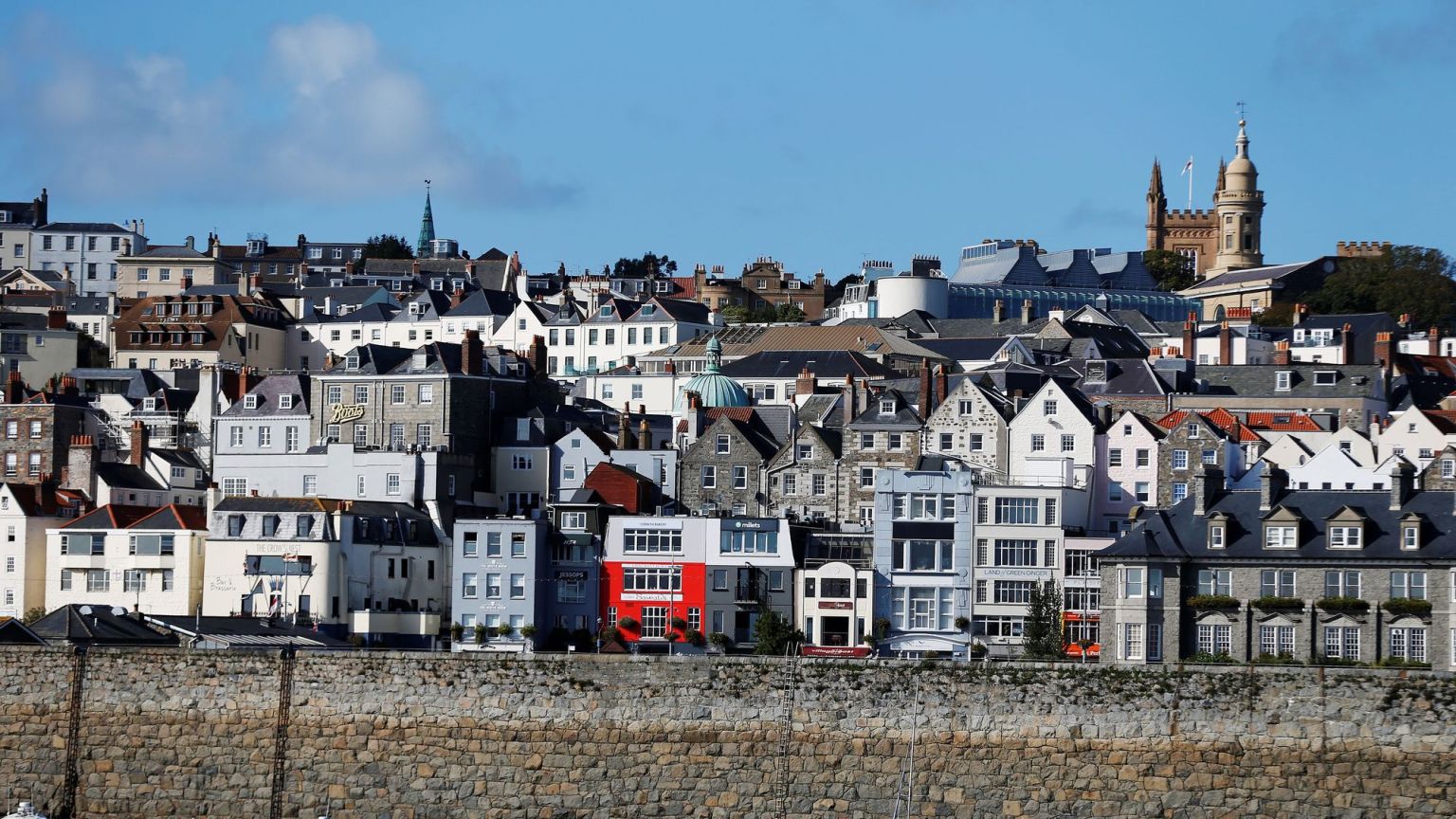
On the August bank holiday, I found myself in Guernsey. Its capital, St Peter Port, was largely as you’d expect from an island of just 24 square miles in the English Channel – something like a quaint English market town, transplanted just off the French coast. There was an abundance of cosy pubs, independent boutique shops and interesting historical tidbits.
What was unexpected, though, was the quantity and quality of opportunities for boozing. On a Bank Holiday Sunday, we had no trouble finding places to drink, even late into the night. What’s more, everywhere was packed with young people, enjoying the kind of spontaneous fun that has basically become a foreign concept in London.
In Soho – supposedly the beating heart of our capital’s nightlife – getting your hands on an impromptu late-night drink can feel nigh-on impossible. By midnight, the shutters are coming down, staff are stacking chairs and punters are rushing to drink up so they can catch the last Tube home. Staying out requires careful planning, either booking in advance or knowing the few places that open into the early hours – and risking being turned away when, invariably, the entirety of central London descends on the handful of bars still serving. The Home Office even warns against areas imposing uniform closing hours for this very reason.
What’s interesting is that Guernsey doesn’t actually have more liberal licensing laws than London. In fact, the rules are, on paper, stricter than somewhere like Westminster Council. Guernsey’s ordinary licensing hours are fairly prescriptive, with standard licensed premises like pubs and bars expected to stop selling alcohol at 12.45am. But Guernsey’s law explicitly recognises nightclubs as a separate category, with later permitted hours, generally until 1.45am. Venues are able to apply for exemptions to stay open later in some cases.
More importantly, Guernsey has not adopted anything quite like the system that constrains Soho. While the licensing of new venues is still restricted so as not to cause too much disturbance to residents, the basic approach is to regulate any nuisance caused by particular establishments, rather than to treat the existence of a thriving nightlife district as problematic in itself.
The killjoys at Westminster Council have adopted essentially the opposite attitude. Soho sits inside the so-called West End Cumulative Impact Zone. This means that, because the area already contains a lot of pubs, bars, restaurants and clubs, the council can treat further licensed activity as potentially harmful, simply because it adds to the total number of people drinking, talking, smoking and generally enjoying themselves after sundown. Any new licences are assumed to be rejected by default, unless the owner can prove that the venue will not contribute to late-night disorder.
Earlier this year, Two Floors – a Soho bar that had operated for 30 years without a single residential complaint – was refused permission to stay open until the frankly quite civilised hour of 1am on Fridays and Saturdays. Even the police conceded that the venue itself was not a source of crime. Its only offence was to be a bar in an area Westminster believes already has too many of them.
One of the parties responsible for preventing Two Floors opening later was the Soho Society. The group, which is part-funded by Westminster Council and has a formal say in the licensing-decision process, has explicitly vowed to veto any new bar and restaurant in Soho, as well as any application to operate beyond Westminster’s already restrictive core hours. The society has a history of making vexatious complaints, including last year objecting to a new gin bar and distillery on the grounds that it could spontaneously catch fire and explode at any time. Although the objection was ultimately rejected, the distillery was still left paying thousands of pounds in legal costs.
The core assumption is that there are already too many opportunities to booze in Soho – and that’s a bad thing. Last month, Westminster Council consulted on its new licensing policy, with the proposals maintaining the effective blanket ban on new pubs and bars in Soho. Even more blasphemously, it proposed to discourage ‘vertical drinking’ – thus threatening the time-honoured London tradition of standing on the pavement outside a pub.
This was all part of the council’s wider planning policy of preventing an ‘over-concentration’ of drinking establishments in Soho in order to preserve a broader ‘mix’ of uses – which is a bit like complaining that there’s an ‘over-concentration’ of jewellers in Hatton Garden. Even London mayor Sadiq Khan recognised that this was insane and denounced the proposals as far too restrictive. For once, he’s right – there is something perverse about a council looking at one of the world’s most famous nightlife districts and deciding that its problem is, apparently, too much nightlife.
It doesn’t have to be this way. While Soho is punished for its own success, somewhere like Guernsey is capable of acknowledging that nightlife is part and parcel of living in a capital city – even if that capital is only home to circa 20,000 people, rather than nine million.
Perhaps a more similar comparison to London would be somewhere like Manchester. Manchester operates under the same licensing laws as Westminster – the Licensing Act 2003 – yet has taken a markedly more enabling approach. It has no fixed core hours and, crucially, no cumulative impact zones that hamstring the creation of any new venues. This flexibility and openness to nightlife have led to Manchester often being described as having a better, more vibrant night-time scene than London does. An investigation in The Times last year actually found that Manchester ranked No1 in England for venues open past 2am, with London trailing in a dismal 10th place.
For an even more radical alternative, we can look further afield. Gibraltar’s licensing system has long designated particular districts as ‘Leisure Areas’. Here, rather than treating a nightlife hotspot as something to be discouraged, the law recognises it as somewhere bars, restaurants and entertainment venues are expected to flourish.
Under Gibraltar’s Leisure Areas legislation, a licence can permit the sale of alcohol during whatever hours the licensing authority decides – even, in principle, without any restriction on hours at all. Separate licensing rules explicitly allow for extensions until 4am in some cases.
Imagine, for a moment, if Soho were a designated late-night Leisure Area. Rather than throttling the very businesses that bring people into the West End in the first place, Westminster could embrace Soho’s natural role as the world-leading party neighbourhood. A less hostile licensing regime and more venues opening later – and more venues in general – would mean more jobs, more custom for restaurants, taxis and hotels, and more business-rates revenue for the council itself. Put aside the whinging residents who complain about the noise after moving into an internationally famous club district, then everyone’s a winner.
A serious late-night district would make London feel like a capital city again. It feels embarrassingly provincial to have to sheepishly explain to tourists that the only place for them to go after midnight is home. And, perhaps most importantly, a less puritanical approach to licensing would make nights out in London finally feel fun again.
Lauren Smith is a writer based in London.
#Guernsey #nightlife #Soho