wellnessfitpro
A federal judge has denied efforts to remove oversight of the Maricopa County Sheriff’s Office, saying the agency continues to show racial disparities in traffic arrests of Latinos — and that there is not enough evidence that efforts to improve would stick without legal monitoring.
In his 72-page ruling issued Sept. 10, U.S. District Judge G. Murray Snow stressed Sheriff Jerry Sheridan’s role in the department’s racial profiling since the start of the case more than a decade ago, including fighting court-ordered reforms and stymieing investigations. Sheridan was the No. 2 under former Sheriff Joe Arpaio when the county was found out of compliance with federal law.
“Then Chief Deputy, now Sheriff, Sheridan in particular was found to have abused his authority over MCSO’s internal affairs process by obstructing and manipulating misconduct investigations and disciplinary proceedings — including those involving himself — to shield deputies and Command Staff from accountability and undermine the enforcement of remedies designed to address the constitutional violations against the Plaintiff class,” the judge wrote in an opinion that mentions Sheridan 30 times.
The department declined to comment on Snow’s statements about Sheridan. But the sheriff previously told Arizona Luminaria and ProPublica that he disagreed with Snow. “I was very truthful. To this day, I think he got that wrong about me,” Sheridan said.
In his ruling, Snow said it may no longer be necessary for the court to track some areas originally identified for oversight in the 2013 decision, recognizing the “burdens” that go into monitoring certain elements.
County leaders have repeatedly cited costs as they’ve called for an end of court oversight. Maricopa County filed the motion in December, with the Maricopa County Sheriff’s Office later joining, arguing the violations were no longer occurring.
The yearslong federal monitorship of Arizona’s largest sheriff’s office dates back to a 2007 class action racial profiling lawsuit that found the department under Arpaio had violated the constitutional rights of Latinos in the state’s most populous county. Today, according to U.S. Census Bureau data, there are an estimated 1.5 million Latino or Hispanic people living in Maricopa County — all of whose rights are protected under the lawsuit.
In 2013, Snow ordered the department to document all traffic stops to detect any patterns of racial bias and to employ additional investigators to probe reports of deputy misconduct. Snow also appointed a monitor to oversee compliance with the settlement.
In the 13 years since, the department has yet to convince the judge that its deputies don’t racially profile Latino drivers and that it adequately investigates deputies’ alleged misconduct. In denying the recent motion, Snow cited data showing that sheriff’s deputies in Maricopa County continue to search and arrest Latino drivers at a higher rate than white drivers, echoing the racial disparities that first led to court oversight of the department.
“Those disparities remain,” Snow added.
A key part of the judge’s analysis results from traffic reports collected by the sheriff’s office. An analysis of those reports on behalf of the plaintiffs by a professor of computer science from the University of California, Berkeley approximates that Hispanic motorists are 40% more likely to be arrested than white motorists, are stopped 30% longer than white motorists and are 2.5 times more likely to be searched than white motorists.
The responsibility is on the defendants to explain the stark disparities for Latino drivers, Snow said. “They have failed to do so.” To end court oversight, the sheriff’s office must be in full compliance with the reforms continuously for three years.
An investigation by Arizona Luminaria and ProPublica found that despite the monitor’s annual reviews showing ongoing racial disparities in traffic stops, Sheridan and county leaders continued to press for an end to court oversight.
Arpaio’s wide-ranging, illegal traffic sweeps prompted the lawsuit, known originally as Melendres v. Arpaio, named for Manuel de Jesus Melendres Ortega, a legal resident who was arrested in such a sweep.
Under Arpaio, Maricopa County became an early testing ground for Immigration and Customs Enforcement’s 287(g) program, which lets local police enforce federal immigration laws. Many Arizonans say abuses from that time, including profiling of Latino motorists, foreshadowed what’s playing out now under the Trump administration’s expanded use of 287(g) and its mass deportation system.
The arrests of hundreds of American citizens by immigration authorities since President Donald Trump returned to the White House have prompted widespread accusations of racial profiling. In response, the Department of Homeland Security told ProPublica that agents do not racially profile or target Americans. “We don’t arrest US citizens for immigration enforcement,” wrote spokesperson Tricia McLaughlin.
The decade-plus of legal oversight of the Maricopa County Sheriff’s Department, criminal justice experts have said, offers insight into the difficulties of reforming law enforcement agencies charged with endemic racial bias.
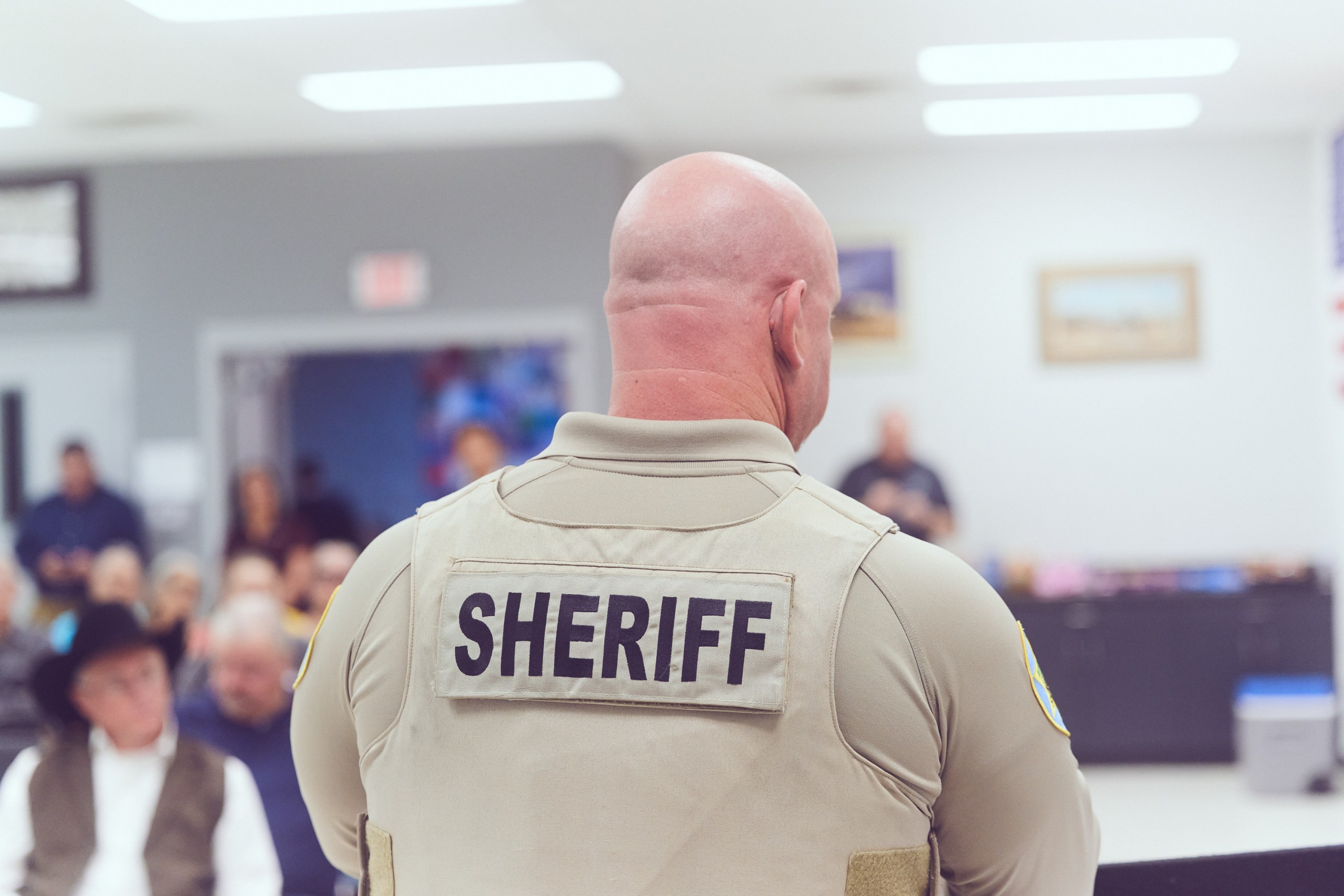
Sheridan, a Republican, was found in civil contempt in 2016 for denying knowledge of Snow’s court order to stop making illegal immigration arrests. Sheridan has said he was always truthful. He inherited the settlement when he took office in January 2025.
A 2025 evaluation by the monitor found the department complied with more than 90% of the requirements but fell short in the two areas that most directly impact Latino drivers: eliminating racial bias in traffic stops and quickly investigating allegations of deputy misconduct.
In trying to end federal oversight, Sheridan and county supervisors argued that racially biased Arpaio-era policies were no longer written department policy and there were few complaints of misconduct by deputies against Hispanic drivers.
“MCSO has reformed its policies, improved its workforce, and implemented mechanisms to assure that racial profiling never occurs. This litigation has been a success, and the time has come to allow MCSO to stand on its own two feet, freed of oversight,” the county’s original motion said.
Since joining the Melendres case and settlement in 2015, the U.S. Department of Justice had supported Snow’s federal oversight and the reforms. But with Trump back in the White House, an attorney with the DOJ’s Civil Rights Division informed the court in January that the department supported ending oversight.
Maricopa County Board of Supervisors Chair Kate Brophy McGee and Vice Chair Debbie Lesko, both Republicans, as well as a spokesperson with Maricopa County Sheriff’s Office, said they were disappointed by the judge’s ruling. Steve Gallardo, the county’s lone Democrat on the five-member board, has opposed ending oversight, advocating for continued progress toward eliminating racial bias in policing.
“The court has maintained an unelected and unaccountable federal monitor over MCSO – creating bureaucracy and regulatory burdens that have cost taxpayers hundreds of millions of dollars. That ‘oversight’ comes at the cost of public safety, as the county must pay the monitor and his staff by foregoing other critical services,” said a joint statement from McGee and Lesko.
Following complaints by Sheridan and Republican county supervisors that oversight costs topped $200 million, the court ordered an audit of the sheriff’s office spending. Court findings, shared in 2025, showed that nearly 72% of the sheriff’s office spending was misattributed or misappropriated. Only $63 million was appropriately charged to the settlement, they said.
Officials with the sheriff’s office, however, welcomed parts of the judge’s latest ruling.
“We believe MCSO has implemented durable remedies for violations that occurred 19 years and three administrations ago,” Sgt. Joaquin Enriquez said. “We are encouraged that the Court has provided a framework on eliminating portions of the Order that are no longer necessary and focusing compliance efforts on the remaining issues to be addressed.”
Speaking to a Phoenix-area radio station, Sheridan said he saw positive elements of the judge’s order but wondered whether his office could ever satisfy all parties to the lawsuit.
“We at the sheriff’s office feel we’re in compliance with all the” court’s orders, Sheridan told KTAR News. “But the court-appointed monitor does not believe so. It’s a matter of us making a pitch to the court directly, not through the monitor.”
Notably, the judge’s ruling said, there was no evidence that the department would continue to remedy the violations should oversight to ensure Latinos’ constitutional rights end.
“The record does not support a finding that, absent federal monitoring, Defendants are unlikely to resume the conduct that necessitated the Court’s injunctive Orders,” the ruling stated.
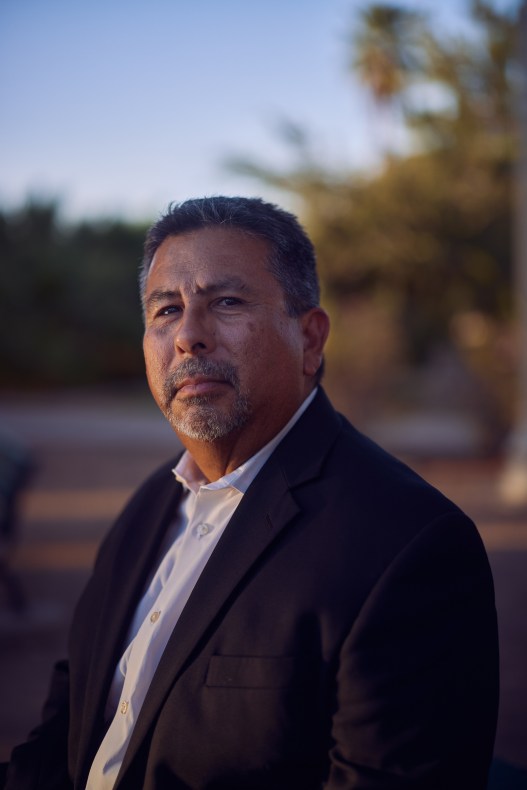
Raul Piña, a member of a court-mandated community advisory board tasked with helping the sheriff’s office rebuild trust with Latinos, said the problems at the department went beyond one specific leader, to multiple systems that have allowed biased policing long-term. To change that, Piña said, you need a broader overhaul. “You can paint the house, but if the foundation is broken you will have the same problem,” he told Arizona Luminaria and ProPublica.
The American Civil Liberties Union of Arizona, which originally filed the lawsuit on behalf of citizens and legal residents caught in Arpaio’s sweeps, celebrated the current ruling.
“Any other decision would have had a devastating impact on Maricopa County’s Latino residents,” Christine Wee, senior staff attorney for the ACLU of Arizona, said in a statement. “The Court’s decision recognizes that any current and future misconduct committed by MCSO will not be tolerated. Simply put, MCSO is not ready for the court-ordered reforms to end.”
#Judge #Denies #Efforts #Oversight #Maricopa #County #Sheriffs #Office #ProPublica