wellnessfitpro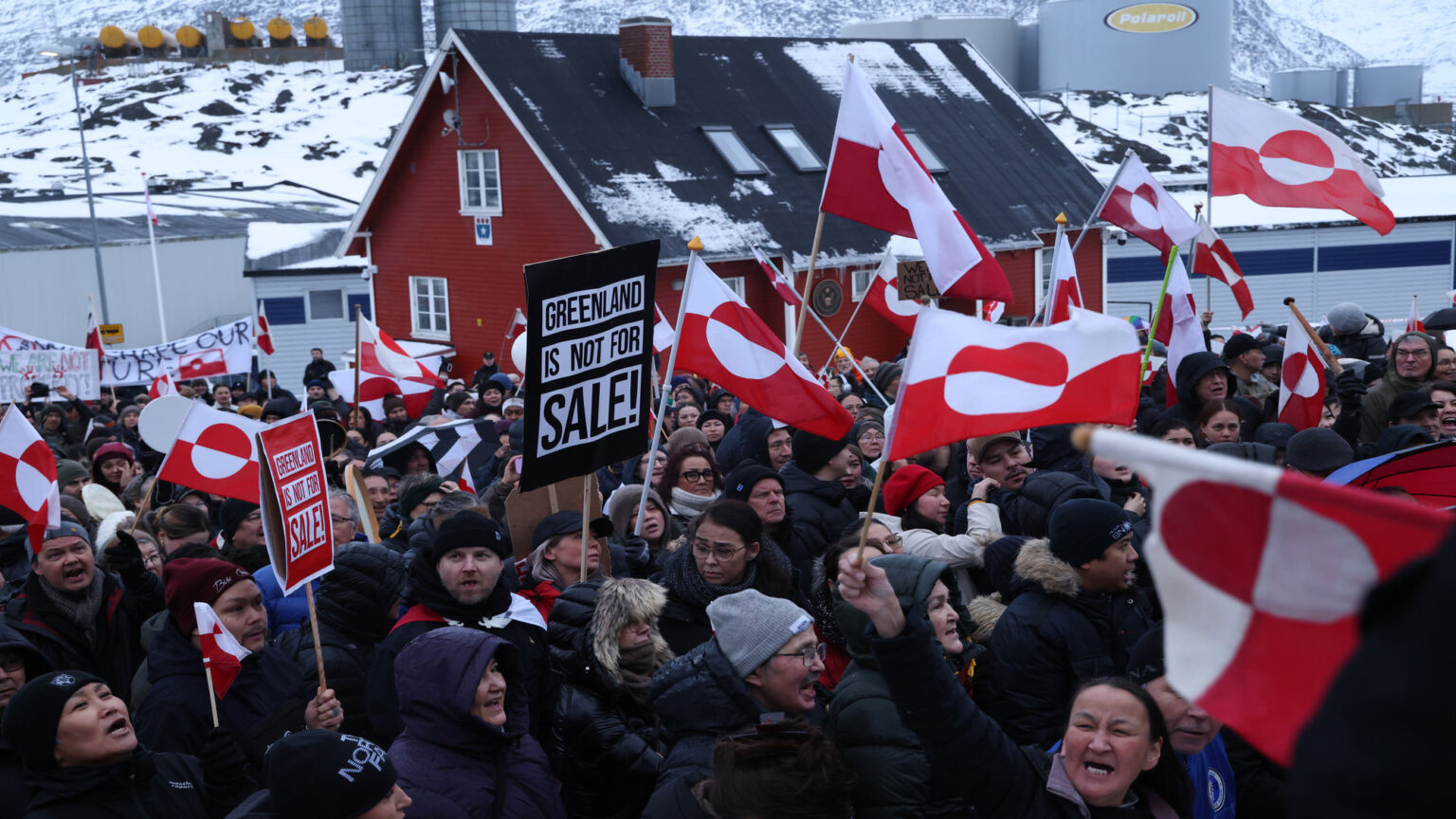
No sooner had Donald Trump announced his ‘deal’ with Denmark and Greenland, granting the US ‘permanent control over [the Arctic territory’s] security’, than two sharply opposing views of the deal’s significance emerged. One view insisted that the deal merely concealed Trump’s de facto defeat. The other view – mostly, but not exclusively, promoted by Trumpian circles in the US – insisted that the US president had achieved what he wanted, following his declared ambition to buy, or even annex, Greenland in the interests of US security.
The nub of the Trump-defeat argument is that he had, in effect, been outmanoeuvred by the canny Danes and their EU backers. They had fobbed him off with a barely revised version of the 1951 US-Denmark Defence of Greenland Agreement, which is still in force. This gave the US largely free rein to site and use military installations in Greenland, along with unlimited overflight and other rights. Early reports from the European perspective suggested that the new agreement introduced only a few minor changes, one being that the terms would apply in perpetuity – not, as set out in the 1951 document, for the duration of the NATO treaty.
In every important respect, however, it was stressed that Trump’s threats had been parried and the status quo preserved. The White House had accepted that Greenland was, and would remain, a self-governing territory of the Kingdom of Denmark.
As a diplomatic exercise that defuses some of the most dramatic transatlantic tensions in years, this apparent reassertion of the status quo would represent almost the ideal outcome for Denmark and Europe. With the agreement due to be signed on the margins of the UN General Assembly in New York this week, a damaging dispute between the US and Europe would appear to be over.
However, it would be unwise to dismiss the victory claims of the Trump camp in their entirety. The essence of diplomacy is to find forms of words that suit everyone, even as they may allow for differing interpretations. And there may well be more to what has been agreed than has yet emerged. The as-yet-unpublished text will deserve close scrutiny if and when it sees the light of day.
There are, though, already hints as to what to look out for in a deal that may indeed affect Greenland’s status and declared sovereignty. Some of these come from details noted almost in passing by Trump and his secretary of state, Marco Rubio; others from points given to the BBC by an unidentified US State Department official.
Both Trump and Rubio stress that the agreement incurs no costs for the US taxpayer (that is, there will be no purchase, but nor, it appears, will there be any leasing or rental costs). ‘From now on’, ran Trump’s Truth Social post last weekend, ‘no US adversary can EVER have a base in Greenland, have a military presence in Greenland or make sensitive investments in Greenland without our express written approval’. This is quite a change from the 1951 agreement, in which there was nothing about the exclusion of adversaries – defined as all non-NATO members – or about screening applications for investment.
Trump also claims that the US will gain ‘permanent control over security and all other needs, in Greenland, completely addressing all of our many US concerns’ – a provision that may or may not be interpreted as limiting Greenland’s, and by extension Denmark’s, sovereignty.
Another, perhaps not unrelated, shift from 1951 is what appears to be the enhanced status of Greenland as a party to the deal. Trump refers to the agreement as being ‘with the Kingdom of Denmark and Greenland’. It also appears to allow for the prospect that Greenland could one day become independent, with an assurance that the agreement would still stand. Support for independence from Denmark currently ranges between 50 and 80 per cent, but replacing one variety of dependence with another – on the US, as initially proposed by Trump – has gained little traction so far.
All in all, the new agreement would appear to place far more limits on Greenland’s (and Denmark’s) freedom of action, giving the US a de facto monopoly on security decisions in and around the territory, but also on many investment and economic decisions, too.
Now, of course, it could be that the new agreement changes little. After all, during the Cold War, the US maintained as many as 17 bases in Greenland, which are now reduced to one, at Thule (the Pituffik Space Base) in the high Arctic. This hardly suggests that Greenland is a defence priority for the US.
But the White House’s perception of Greenland as a natural protective barrier for the US north-east coast should not be downplayed either. And there are recent developments that may well have pushed Greenland further up its list of priorities. Even if Russian or Chinese activity in the region may have been exaggerated (I travelled by ship up the west coast of Greenland in July and saw no vessels other than a few local ferries the whole time), US reasons for a new approach may not be misplaced.
The promise of new ice-free trade routes – shortening Russian and Chinese journeys to Europe, the Pacific and North America – undoubtedly holds potential security implications, as might an escalation in tensions between the US and Canada. Part of Trump’s case is also that the US needs a secure presence on Greenland in order to realise its plans for a ‘Golden Dome’ missile-defence system.
Nor is Trump completely wrong to believe that other nations could have designs on Greenland’s mineral wealth. Chinese companies have in the past made at least two attempts to prospect for minerals. That both efforts came to nothing – the cost-benefit ratio proving elusive even for the Chinese – does not mean there might not be more. At the same time, the US – which could gain an effective monopoly on prospecting under the new defence agreement – may need to tread carefully. Only last month, a joint venture in eastern Greenland, involving a Texas energy company with reputed links to Trump, was suspended over a permit dispute.
That said, the economics and politics of Greenland can both hinder and help the US if the new agreement does indeed significantly increase American control over the territory’s security. On the plus side, there could be investment and jobs that would reduce Greenland’s economic dependence on Denmark and boost its growing appeal for tourists. On the minus side, a more visible and assertive US presence, especially a military presence, could feed local political divisions and damage what is a largely pristine environment, unless handled with care.
Here it should be noted that the new agreement has to be cleared by the parliaments of both Denmark and Greenland, which could prove more complicated than the initial blessing given by the two prime ministers might suggest.
It seems that, despite this deal, Greenland’s future is still shrouded in uncertainty.
#Trump #Greenland