wellnessfitpro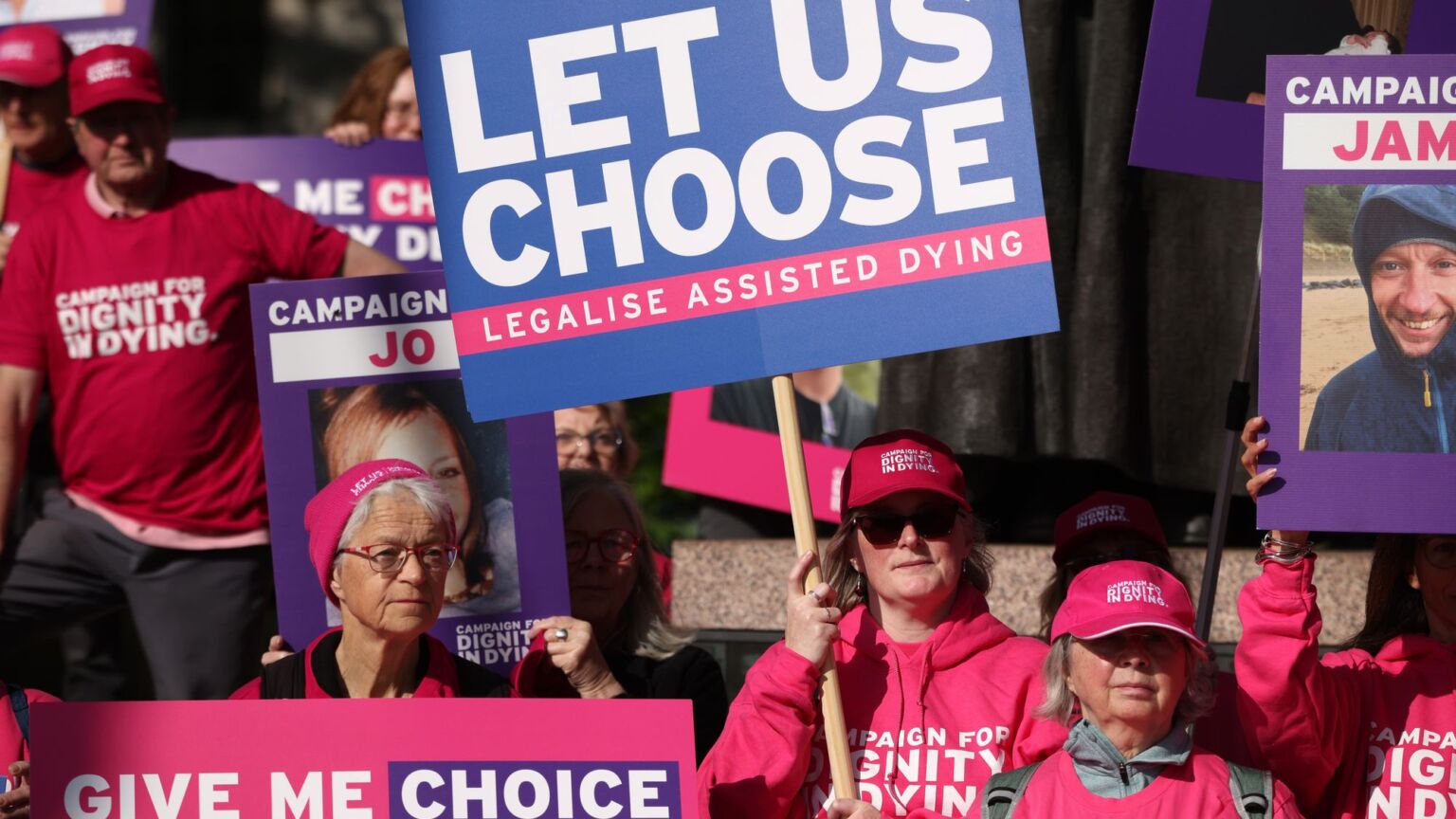
I stood in Parliament Square 10 days ago among a motley group of individuals opposed to assisted dying, waiting for the result of the vote on Labour MP Lauren Edwards’ assisted-dying bill. Whereas those demonstrating in favour of assisted suicide wore signature pink t-shirts, reflecting the campaign’s neat, middle-class support, we included fundamentalist Christians, Muslim doctors, Reform UK supporters, hardened left-wing activists, atheist disabled advocates and a colourful trans person with dwarfism. Other times, many of our side would have been at each other’s throats. But on Friday, we stood together.
As a BBC crew pointed a camera in our faces to record our responses to the vote, I was worried that I might be sick, given my nerves. Not, perhaps, a good look on television. It was a real battle to ensure that all MPs against the bill could vote. Reform’s Suella Braverman, delayed on a train, bolted ahead of her security to get to the vote with 30 seconds to spare.
After the result was announced, the sickness vanished instantly and we cheered, more in relief than triumph. Those who had argued among each other went off to the pub together – including a Muslim doctor who had a Coke.
But now the sense of relief has subsided, it’s worth reflecting on a hugely important result. After the defeat of Liam McArthur’s assisted-dying bill in Scotland, the first rollback of the euthanasia regime in Alberta, Canada, and a referendum vote against assisted dying in Slovenia, we might wonder whether the momentum behind euthanasia and assisted suicide (EAS) has stalled.
Of course, those in favour of the UK’s assisted-dying bill immediately came forward with their own reasons why it failed. Labour MP Liz Kendall complained that the bill had been ‘scuppered by a tiny minority of unelected members of the House of Lords’. She insisted that the Commons vote against the bill belied ‘widespread and deep public support for assisted dying’.
These assertions are not grounded in fact. After all, the bill was defeated on Friday not in the Lords, but in the elected chamber, where Liz Kendall sits. And while among the public there is widespread support for assisted dying, it’s shallow support. The more people learn about assisted dying, the more they reject it. Palliative care doctors, who know most about the end of life, reject EAS by 82 per cent.
The truth is that EAS thrives when no one pays attention to it. The more light that is shone on the case for assisted dying, the more it falls to pieces. Campaigners assume that spending huge amounts of money on popularising simplistic slogans, or telling horrific end-of-life stories, will convince the public and silence the opposition.
But people’s common sense tends to cut through assisted-suicide campaigners’ rhetoric. It is common sense that ingesting poison with intent to die is suicide, no matter how much money is spent rebranding it as ‘assisted dying’. It is common sense to see that those with Down syndrome can be easily manipulated into assisted suicide if it is legal. It is common sense that killing is not medicine.
One of the hallmarks of EAS regimes around the world is that they list the cause of death as the underlying disease rather than poisoning. This cover-up – from California to Canada – has sinister echoes across history. During the Second World War, Nazi Germany ran a euthanasia programme known as T4. It led to the murder of more than 70,000 people deemed senile, mentally handicapped, mentally ill, epileptic and so on. The Nazis, using a similarly euphemistic phrase to ‘assisted dying’, called these murders ‘mercy deaths’. On 3 August 1941, Clemens August von Galen, the Catholic Bishop of Münster, exposed the T4 programme in a brave speech:
‘The patients who have been selected for killing are removed from their home area to some distant place. Some illness or other is then given as the cause of death. Since the body is immediately cremated, the relatives and the criminal police are unable to establish whether the patient had in fact been ill or what the cause of death actually was.’
Under pressure from growing protests, Hitler halted the T4 programme on 24 August 1941, though less systematic murder of disabled people continued.
We should seek to emulate Galen’s stand against the T4 programme today. The more the false claims of assisted-dying proponents are questioned, the more the reality of what they want is exposed. The Lords held the assisted-dying bill to the light earlier this year. They showed that the bill’s much-vaunted safeguards were inadequate. They showed that someone with Down syndrome could be pressured into the ‘choice’ of assisted suicide and that women suffering domestic abuse might also be pressured into an early death. The Lords even brought to our attention the fact that companies like G4S might be employed to dispatch British citizens for a profit. The more light that is shone on these dishonest practices, the better.
The last word should be left to Ashley Dalton, the Labour MP suffering terminal breast cancer. As she told the Commons on Friday: ‘The idea that it is not possible to alleviate pain and discomfort is false… It’s nothing short of irresponsible to scaremonger people like me into believing our deaths will be horrific.’
Kevin Yuill is emeritus professor of history at the University of Sunderland and CEO of Humanists Against Assisted Suicide and Euthanasia.
#inevitable #march #assisted #dying