wellnessfitpro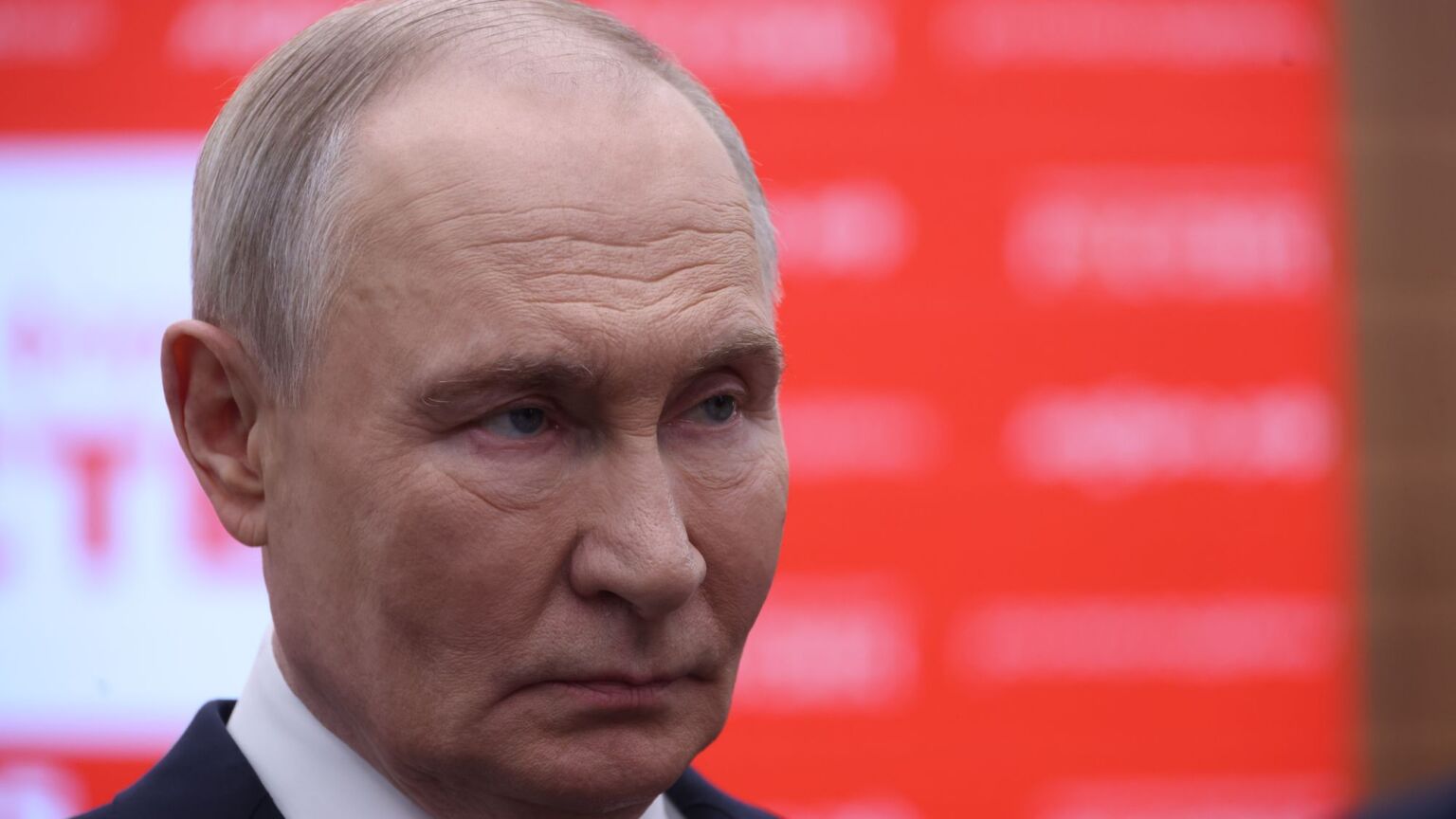
If you followed only the mainstream Western media, you might be under the impression that only one set of elections had taken place this past weekend – namely, the regional elections in Germany that led to the trouncing of chancellor Friedrich Merz’s centre-right Christian Democratic Union.
Landmark though these elections might prove to be, there was another set of elections, involving many times more voters, that barely warranted a mention – unless it was to dismiss them as hopelessly rigged or irrelevant. These were the elections to the Russian Duma – what passes for the national parliament – that were held over three days, ending on Sunday.
There is no mystery to the West’s lack of interest in Russian elections. As you might expect in an authoritarian state, they are a limited-to-negligible vehicle for the sort of democratic change the West regularly demands. Whether they are actually ‘rigged’ or not rather depends on your definition of rigging, however. The whole process, from campaign to count, is indeed tightly controlled, and that includes access to the media and the use by the Kremlin of so-called administrative resources – meaning the privileges conferred by incumbency. But practices such as the overt stuffing of ballot boxes, bussing large numbers of voters into particular polling stations and alterations to the tallies after the vote seem to have been less in evidence in recent years.
It also has to be said that today’s Russian elections are very far from being the one-party state elections of yesteryear, engineered to produce 90-plus per cent majorities. Nor are they elections where the voters have no alternatives to the pro-regime party – in this case, United Russia. This time around, Russian voters also had the generally unthreatening Communists, the nationalist Liberal Democratic Party of Russia (associated with the late Vladimir Zhirinovsky) and the New People Party, seen as the latest effort by the Kremlin to give more liberal sentiment a non-opposition outlet on the ballot paper.
There was, however, one glitch to the careful preparations this year. The authorities imposed a late ban on the Yabloko party – a straggling survivor from the democratic ferment at the end of the Soviet Union, and a party that had favoured peace with Ukraine. But while the ban on Yabloko was regrettable and exposed the limits on what was permitted, it was not quite a blanket exclusion: the ban did not extend to individual candidates affiliated to Yabloko, which meant a dozen or so were elected in individual constituencies.
Whatever definition of rigging you choose, and granted the glaring deficiencies in Russian democracy, none of this means that the process or the results should be disregarded. It should also be noted that, unlike Ukraine, Russia chose to hold the elections while at war. This may suggest the Kremlin cares about appearances, at least to some extent, and may regard the results, however compromised, as a useful bellwether of the political scene.
That is also how they can be judged by outsiders. As the first national elections since Russia’s 2022 invasion of Ukraine, a war that is proving increasingly costly to both sides, the vote has a particular significance. Even after applying appropriate caveats, the results will say something, no matter how skewed, about the state of the country.
If the results are compared with those of five years ago – a reasonable comparison, given that similar rules applied – then they look mildly positive for the Kremlin. Turnout, reportedly at 59 per cent, was up on the 53 per cent of five years before. In other words, the war appears to have resulted in no more apathy or resistance to the regime than before it began. United Russia, with a declared record 58 per cent of the vote, won 355 seats in the 450-seat Duma, with the Communists taking 13.8 per cent of the vote, giving them 40 seats. The nationalist Liberal Democratic Party of Russia won 25 seats and the New People Party got 20.
The overall result is a new Duma that leaves Putin a little stronger. Given that a significant number of candidates, across parties, campaigned on their recent military experience, this parliament may also be more in tune with what is happening in the war.
More important perhaps is that the result does not leave Putin any weaker, which must have been the chief fear in the Kremlin. The question now is how, if at all, he will change his approach to the war or domestic policy, having secured what could be interpreted as a vote of confidence. There has been speculation that he was waiting for the election result before ordering a new mobilisation of troops and increasing the war effort, but this is far from certain.
Of course, these Duma elections should not be hailed as any sort of harbinger of a democratic dawn in Russia. Critics have cast doubt on the figures, especially in the autonomous region of Chechnya and in the annexed regions of eastern Ukraine, where Russia had no right to hold elections at all. In what was said to be a response to the West’s cold-shouldering of Russia, international observers were not invited, and some non-United Russia candidates complained that observers from their parties were excluded. One Yobloko observer reported losing consciousness after being arrested. Other observers, including for the Communist Party, say they were turned away from polling stations.
All that said, dismissal of the elections by the EU and others as irrelevant misses their significance. Overall, the results do not suggest a reduction in Putin’s domestic support since the invasion of Ukraine. If anything, they suggest that the war may still be having a rallying effect. Fatigue with the regime or the war, beyond a few small pockets of resistance, is not making itself felt – at least for now.
#learn #Russias #Potemkin #elections