wellnessfitpro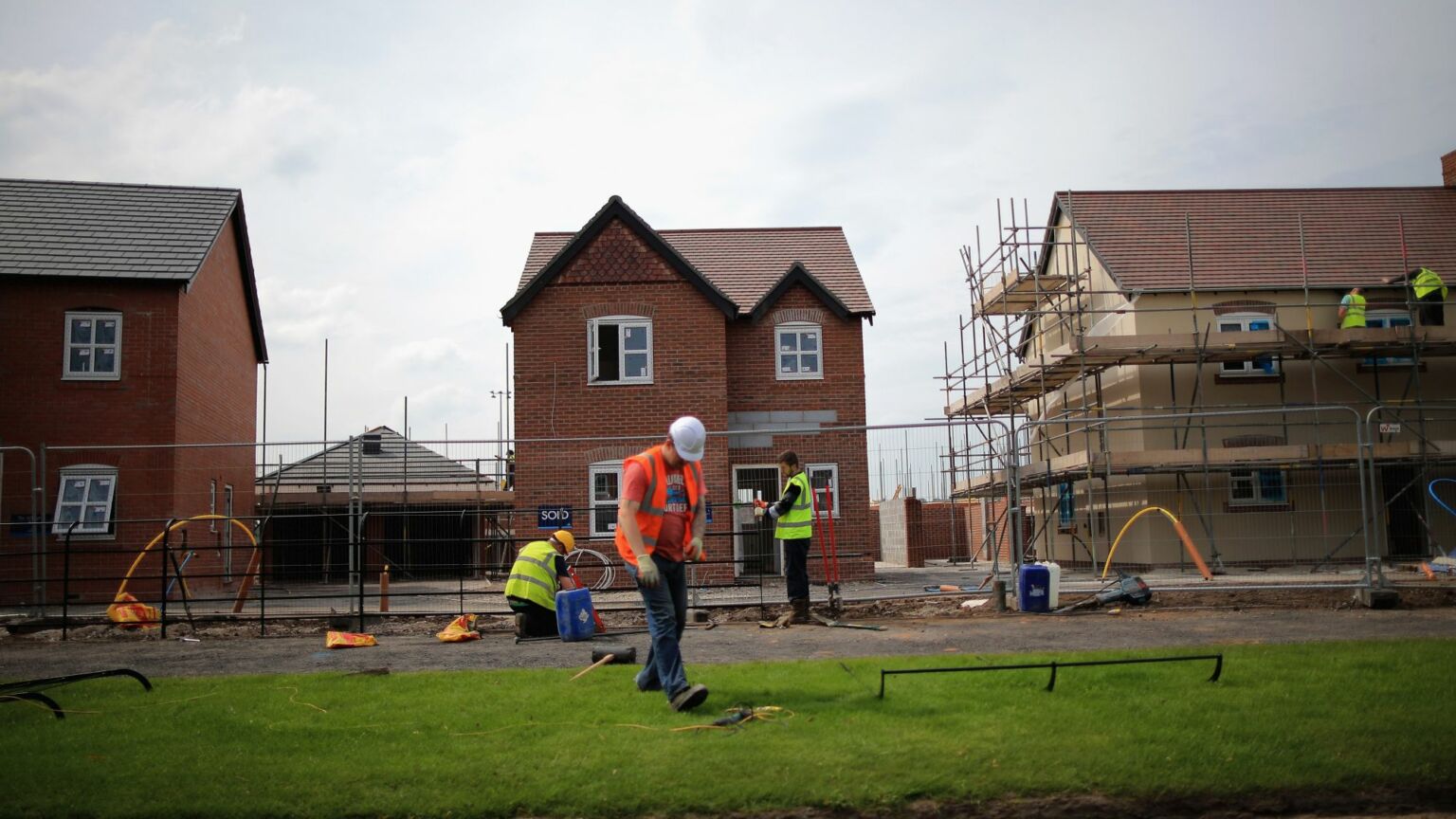
Imagine someone had emigrated from Britain in the mid-1980s, and returned 20 years later.
That person would have had a clear sense of returning to a country that is much richer than the one they once left behind. They would not even need to know the macroeconomic figures. They would not need to know, for example, that real disposable incomes had gone up by 60 per cent in the meantime. They would just see the difference with the naked eye. They would notice within days, possibly hours, that there is more dining out, more travelling, more leisure industries, better cars, better household electronics and better products in the supermarkets.
Now imagine the same scenario, only 20 years later: somebody emigrated from Britain in the mid-2000s, and returns today.
That person would have no comparable sense of returning to a richer country. Sure, they might notice gentrification in selected areas. Of course they would notice that smartphones are now ubiquitous and that DVD rentals have disappeared. If that person is a beer connoisseur, they would notice that the beer selection in most pubs is vastly better than it was in their day, thanks to sneering pretentious hipsters (and three cheers for those!). If they are a ‘foodie’, they would notice a wider variety of dining-out options. But none of that changes the fact that the country, as a whole, is only marginally richer today than it was 20 years ago. Which is another way of saying that the British economy has barely grown for two decades.
This is extraordinary by the standards of the previous 150 years or so. The two decades of stagnation Britain has endured were not supposed to happen. Market economies are supposed to grow over time – that’s just what they do. Every generation is supposed to be tangibly better off than their parents’ generation, and since about the middle of the 19th century, that was indeed the normal, peacetime British experience. Until it stopped being so.
You could imagine a society where the vast majority of people are content with their lot and do not aspire to more. In such a society, economic growth could naturally come to a halt, and nobody would have a problem with that.
Britain, though, is very much not that society. Most economic policy debates these days revolve around distributional conflicts. We demand higher levels of public spending on all sorts of things, from pensions to healthcare to social care to defence, but we are not prepared to pay higher taxes for it. Hence the popularity of snake-oil salesmen like Zack Polanski and Gary Stevenson, who give people the impression that Britain could be the equivalent of a petrostate, just with billionaire wealth instead of oil wealth. It is why the two most popular fiscal measures of our time are the wealth tax and the mansion tax.
Stagnation in overall terms usually means that some things get actively worse, and in Britain, some have indeed. A clear example: the proportion of British adults in their 20s and 30s living with their parents has risen by over a third in two decades. It seems unlikely that this is because young Brits have suddenly developed the cultural preferences of southern Italy. Rather, this change in living arrangements has economic causes, and it explains a lot of the discontent that drove Corbyn mania in the last decade, and Polanski mania in this one. So what went wrong?
My colleague Daniel Freeman and I have just published a book on the subject, The Great Stagnation: Why Britain Stopped Growing, which looks at the main causes across several policy areas. I can’t go into all of these here, but suffice it to say that a large part of the answer is frustratingly simple. Britain has stopped growing because it is systematically denying itself the things that a growing economy needs, such as energy and homes.
Britain has the lowest level of housing supply in the developed world, with fewer housing units than most OECD economies, which are also, on average, unusually small by international standards. We get a similar picture for office buildings, retail space and other business premises. Whether we look at the length of the road network or the volume of energy generation, Britain is well behind Western Europe and even further behind North America. We are trying to squeeze our economy into the built-up environment we inherited from previous centuries, a built-up environment that is increasingly inadequate for that purpose.
The most obvious example of this has to be Heathrow Airport, and the decades-long failure to build a third runway. Heathrow is a business that experienced phenomenal growth in the late 20th century, especially after its privatisation in the 1980s. But then at some point in the 2000s, its growth began to slow down – not because the market for air travel stagnated, but simply because the airport’s physical capacity constraints started to bite. Yes, it is possible to use technological and organisational innovations to use the existing runway space more efficiently. But at the end of the day, there are only so many take-offs and landings one can fit into two runways.
There are, of course, many other examples from economic history of a formerly successful economy suddenly experiencing prolonged periods of weak growth, stagnation or decline. But other such examples are at least intellectually interesting, because the reasons are not obvious, and people have competing theories about why it happened.
Nobody will ever win the Nobel Prize in Economics for writing about the causes of Britain’s economic stagnation. Because it’s really not that complicated. If you make it illegal to build anything without endless consultation processes, give NIMBYs de facto veto powers, and then demand impossible environmental and safety standards from the few projects that can be smuggled past the NIMBYs, then next to nothing will get built. And an economy that does not build does not grow.
Britain does not need ‘smart growth’. We don’t need to reinvent the wheel – we just need to give the wheels we already have the space to roll. Britain needs ‘stupid growth’. We need to do simple, unsophisticated things, like putting tarmac on the ground and putting bricks on top of other bricks. We don’t even need to ‘create’ growth – we just need to allow it to happen.
#Britain #stupid #growth