wellnessfitpro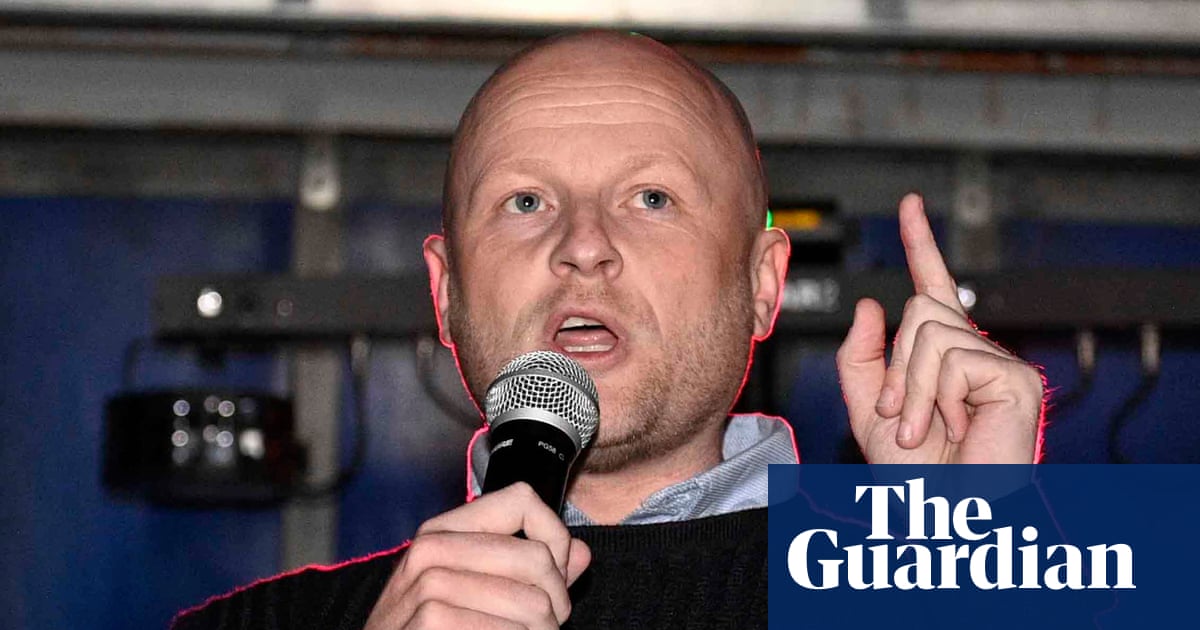
Talks to end the Drumcree parade dispute are on a knife-edge after Jamie Bryson, the legal adviser of the Orange Order, said it would “not surrender” to a deal proposed by Northern Ireland secretary Chris Bryant.
With echoes of the former Democratic Unionist leader Ian Paisley’s “no surrender” mantra of the 1980s, Bryson told supporters in Portadown that Bryant could keep his deal.
He said he had the authority of the Orange Order’s district master to say: “The Portadown District will not surrender the fundamental principle, not now, not last week, not next week, not ever – ever.”
Bryson said the Portadown Orangemen would not “sell out” even if they were offered £20m.
Government sources said they expect talks to continue on Thursday and possibly into Friday.
Earlier today, Bryant said an end to the dispute was “tantalisingly close”, as the Garvaghy Road Residents’ Coalition signalled it would accept a document setting out a resolution if the Orange Order also did so.
Breandán Mac Cionnaith, the leader of the nationalist group, said on Wednesday afternoon that he had been through the document drawn up by Bryant and his team.
“Obviously, I can’t divulge what is in it,” he said after a meeting with Bryant. “But if it’s accepted by the Orange Order, it will be accepted by us.”
But after a second meeting with Bryant on Wednesday evening, Bryson rubbished the residents’ leader’s words.
“Do not be panicked by Breandán Mac Cionnaith coming out and saying there is a document on the table. The document can stay on the table because it won’t be accepted by the Portadown District.”
Earlier in the day, Bryant urged parties to “search deep in their souls for another chunk of compromise” to break the deadlock, after meeting with both sides at Hillsborough Castle, just outside Belfast.
On Tuesday, Mac Cionnaith had described mediation over the dispute as “dead in the water”.
Bryant said on Wednesday: “I would just appeal to everybody – including the wider community, not just the people I have been meeting in the room – that people are going to have to search deep in their souls for another chunk of compromise if we’re going to get to a successful long-term resolution of the situation.”
He added that he and his team were “working flat-out to try and get to a successful resolution, and I think that is tantalisingly close if everybody can just go that extra mile”.
Politicians and others had warned that any parade down Garvaghy Road risked returning Northern Ireland to the bleak days of the Troubles.
after newsletter promotion
But on Sunday a court of appeal overturned a high court injunction banning the Orange Order from processing through the mainly nationalist area, leading to a four-day standoff that has heightened sectarian tensions.
Attempts to march down Garvaghy Road were blocked by protesters, and a small group of Orange Order members has remained at Drumcree church, the starting point of the parade, vowing not to leave until the parade goes ahead.
Jon Boutcher, the chief constable of Northern Ireland’s police force, said the protest stopping the parade was unlawful, and that a major criminal investigation into the blockade was under way. He warned that mob rule must not be allowed to win, and that he would continue to seek a way to facilitate the Orange Order march.
The first minister of Northern Ireland, Michelle O’Neill, visited Garvaghy Road on Wednesday, despite accusations by unionist leaders that she had broken the law by supporting protesters when she went there on Sunday.
Asked if she had broken the law, O’Neill said: “I accept that I made a choice, a choice to stand with the residents of the Garvaghy Road. It is a choice I will continue to make.
“This is very clearly a community which feels under siege, a community that has been put in reverse and retraumatised in terms of what happened 28 years ago.”
The parade was given the go-ahead by the Northern Ireland Parades Commission on Friday, ending a 28-year ban on the Orange Order marching in Garvaghy Road. At a special sitting of the high court the next day, Justice Patricia Smyth issued an order temporarily suspending the parade, but that was overturned on appeal in the small hours of Sunday morning.
Critics of the Parades Commission’s decision included the taoiseach, Micheál Martin, who called it “incomprehensible and wrong”, given that the march prompted some of the most serious violence seen in Northern Ireland in the late 1990s – including the murders of three children – and nearly derailed the 1998 peace process.
On Tuesday, the Garvaghy Road Residents’ Coalition lodged a fresh legal challenge against the march, this time arguing the Parades Commission had “materially misdirected itself” by using historical police assessments over the risk of violence as opposed to a future-looking risk assessment.
#Talks #Garvaghy #Road #dispute #doubt #Orange #Order #criticises #deal #Northern #Ireland