wellnessfitpro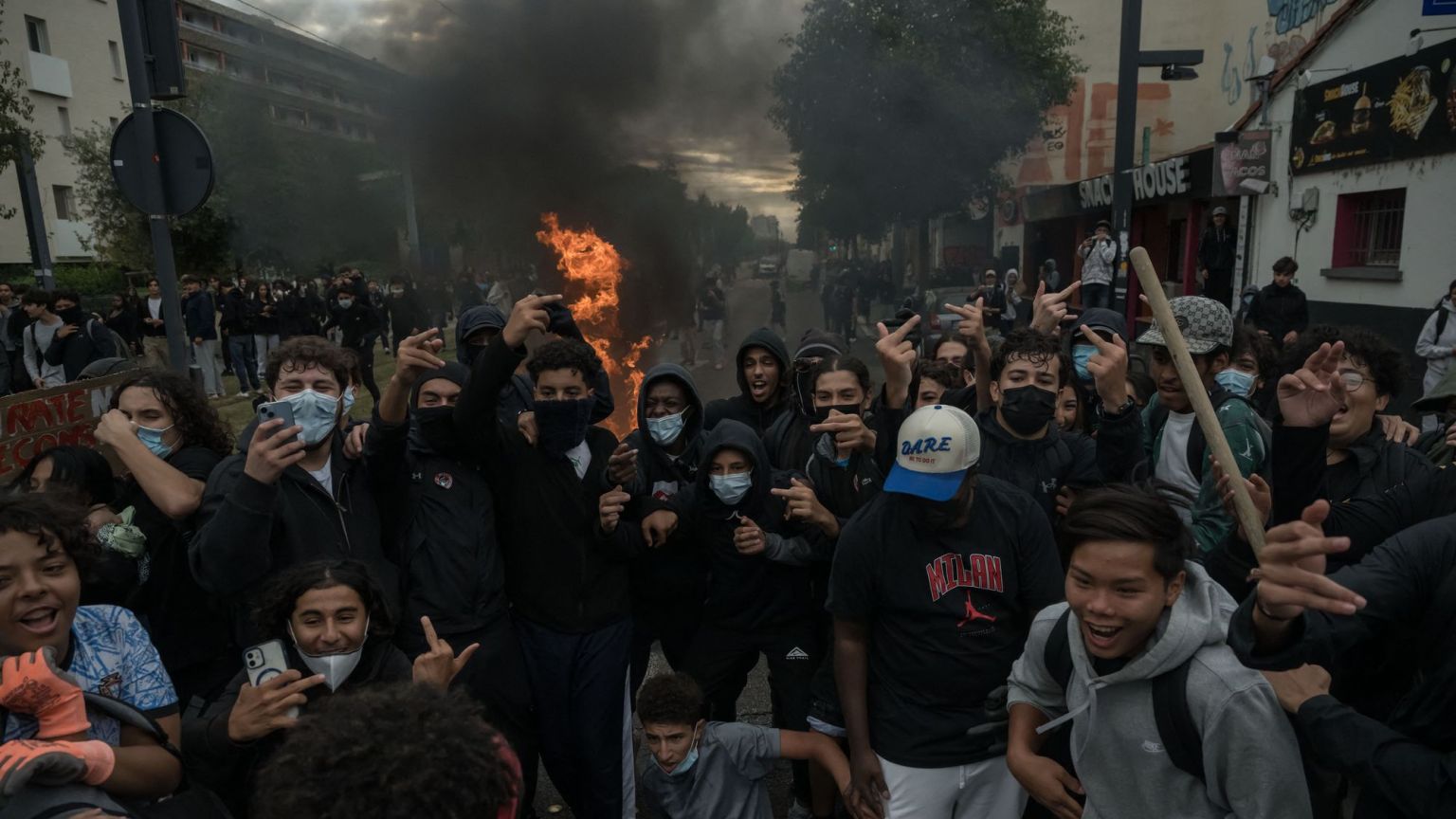
Just over a week ago, the French, inspired by the visit of Leo XIV, were apparently communing in peace and harmony. Around 800,000 turned out on the streets of central Paris to hear the Pope celebrate an open-air mass. But as the papal plane took off from Metz in north-eastern France, the last stop on Leo’s trip, France was descending into a week of chaos and violence.
Teenage school pupils launched a wave of protests that spread across the country. Demonstrations rapidly turned ugly, leading to clashes with the police, assaults on teachers and extensive vandalism of not only street furniture but also school buildings and amenities. By the end of last week, more than 1,000 lycées (sixth-form colleges) and collèges (middle schools) had been affected. More than 5,000 individuals had been detained by police, mostly but not all minors. Over 300 police officers were injured last Thursday alone, by which time 65 schoolteachers and principals, as well as 170 pupils, had also suffered injury.
The most extensive damage was done by fire, accidentally or not. On Thursday, an international lycée in Nantes was ravaged by flames. The fact that it bore the name of Nelson Mandela did not protect it. On Friday morning, the inhabitants of Metz awoke to find that a local collège had suffered a similar fate.
The contrast with the scenes of the apostolic visit could not have been more striking. The level of violence has been exceptional, even by French standards. Comparisons can be made with the riots of 2005 and 2023, but these were in response to supposed incidents of police brutality and drew in disaffected youth from banlieues all over France. This is the first time that school protests have turned so nasty. The French government was in no way prepared.
The unrest began on 18 September with protests outside a school in Créteil to the south-east of Paris. On 24 and 25 September, the movement spread to lycées in the Paris area and then, on Monday 28 September, to much of the country. Since Tuesday, videos showing graphic scenes of violence have circulated, including one of a policeman in the town of Belfort being beaten on the ground, and another of a trainee policewoman in Paris being pursued, pushed over and kicked to shouts of ‘Kill her!’. The protesters and their supporters claimed the violence had been started by law enforcement.
The French doctrine of crowd control and riot policing is certainly very different from that in the UK, and the police have a formidable array of ostensibly defensive weapons that include batons, tear-gas grenades fired from launchers and blast balls. All of these can inflict serious injury if not handled correctly. In some cases over the past week, ill-prepared authorities were obliged to deploy local officers with little experience of riot policing, and mistakes were undoubtedly made.
Yet the armoury of the most violent protesters was also formidable. Apart from bricks and other heavy projectiles, the weapon of choice is the firework launched from a tube. These fireworks have been turned not only on the police but also on firemen who attempted to put out blazes. Another favourite tactic of rioters is to throw aerosol cans into fires and watch them explode. Among other weapons seized by the police were knives, hammers, baseball bats, Molotov cocktails and bottles of hydrochloric acid.
The recourse to violence was clearly anticipated and prepared for by certain protesters. In the mêlée, it was understandably difficult for police to calibrate the proportionality of their response and to distinguish between the aggressive protesters and the rest.
What cause is all this violence meant to serve? In the beginning, pupils, with union prompting, were protesting against the paucity of teachers, the decaying state of school buildings, the complexity and stress of the university application system and, finally, overwork. It is true that during Emmanuel Macron’s two terms, there has been a desultory succession of education ministers with very different approaches. The government was recently humiliated by the publication of the PISA results, which showed an alarming decline in standards.
However, although it is evident that the educational system needs more investment, everyone knows that the French state is stony broke, with record levels of debt and borrowing costs. More money is already spent on education in poorer areas, like the Seine-Saint-Denis district north of Paris, where much of the protests and riots began, than elsewhere.
Was it really to call for building improvements that so much school property was destroyed? The bill for the damage done so far has been calculated in the tens of millions of euros. The already cash-strapped authorities will have to pay for the repairs. As often happens in this situation, there is much talk among politicians of making the parents of vandals pay, but the difficulty of identifying the culprits and of extracting money from the families means that this will, as usual, go nowhere.
What happened over the past week is what always happens when school pupils protest: the movement gets hijacked by extremists of various stripes. Already, the main union behind the protests, the Union syndicale lycéenne, is a far-left organisation. Unsurprisingly, far-left tropes were apparent in the banners and slogans of those protesting – from anti-racism and the supposed need to decolonise education to the plight of Gaza and the usual ‘anti-Zionism’, which swiftly descended into anti-Semitism. The theme of police brutality was quickly placed front and centre, even as the police were deliberately attacked by those who were the real instigators of the violence; namely, the ‘casseurs’ (from ‘casser’, to break) – quasi-professional rioters wearing masks who damage property and clash with police. As always happens, their politically motivated actions drew in non-political hoodlums from the banlieues who are simply eager to engage in violence and mayhem. No doubt hotheads among the genuine school pupils joined in, too.
Equally worrying has been the involvement of politicians from the far-left party La France Insoumise (LFI). On Tuesday, 40 of its elected representatives joined protests outside schools, calling for the movement to spread and blaming any violence on ‘police savagery’. A trio consisting of LFI founder and presidential candidate Jean-Luc Mélenchon, former chair of the Union syndicale lycéenne Louis Boyard and mayor of the Seine-Saint-Denis district Bally Bagayoko were photographed smiling and giving the thumbs up sign amid a crowd of school pupils.
Bagayoko, of Malian ancestry and elected mayor in March this year, has shot to superstardom among far-left politicians. He was greeted by exultant school protesters on Monday when he turned up to show his support. Videos have widely circulated showing him dancing next to a burning wheelie bin and apparently attempting to pull a burning settee away from some school gates. The president of the Paris region has announced she will be sending him a bill for €100,000 to pay for damages to school property. A policewoman has lodged a complaint against him for allegedly helping to vandalise her car. The Paris prefect of police has accused Bagayoko of incitement to commit acts of violence. All this only enhances his status as an icon of left-wing revolt.
On Tuesday, Mélenchon himself made a predictable statement about police brutality, accompanied by a sinister warning that there would be ‘no forgetting or forgiving’, presumably aimed at any officers accused of heavy-handedness. He even went so far as to call on LFI activists to ‘interpose themselves’ between the police and the school protesters in order to protect the latter. Although this tactic may sound Gandhi-like, it is well known that LFI has proxies among Antifa combatants, as was shown by the murder of right-wing militant Quentin Deranque in February this year. The next day, Mélenchon seemed to take a more moderate stance, declaring that only ‘non-violent methods’ should be used. Such strategic ambiguity is typical of LFI, at one moment apparently encouraging anti-democratic behaviour, the next denying any such intention.
All this would be bad enough, but in the present context of the run-up to the presidential election in April and May next year, it has an especially menacing side. The election has two rounds, but in France, the metaphor of a ‘third round’ is habitually used to describe any movement of protests and strikes that inevitably follow an election result the left does not approve of. At present, the polls predict a clear victory for Marine Le Pen. Will LFI and its troops accept the result? In February, Mathilde Panot, leader of the LFI parliamentary group, declared darkly: ‘We will never accept fascism taking power, even legally by the democratic process, as Marine Le Pen wants to do.’ In May, Bagayoko told a podcast audience that if Le Pen were elected, the consequence would be a ‘popular insurrection’.
In this light, Mélenchon and LFI’s involvement in this wave of violence looks very much like a dress rehearsal for what will happen if Marine Le Pen is elected. In the meantime, it is also a way for Mélenchon to consolidate his hold on the youth vote. According to an Ipsos poll for Le Monde, 40 per cent of 18- to 24-year-olds would vote for him, compared with 20 per cent for Le Pen. But there are many abstentionists in this age group, and cultivating the image of a Latin American-style revolutionary might bring them out.
As Emmanuel Macron concludes his 10-year rule, the current chaos contributes to a decidedly fin de règne atmosphere. The worst of the violence and disorder may yet be to come.
#French #school #riots #taste #chaos