wellnessfitpro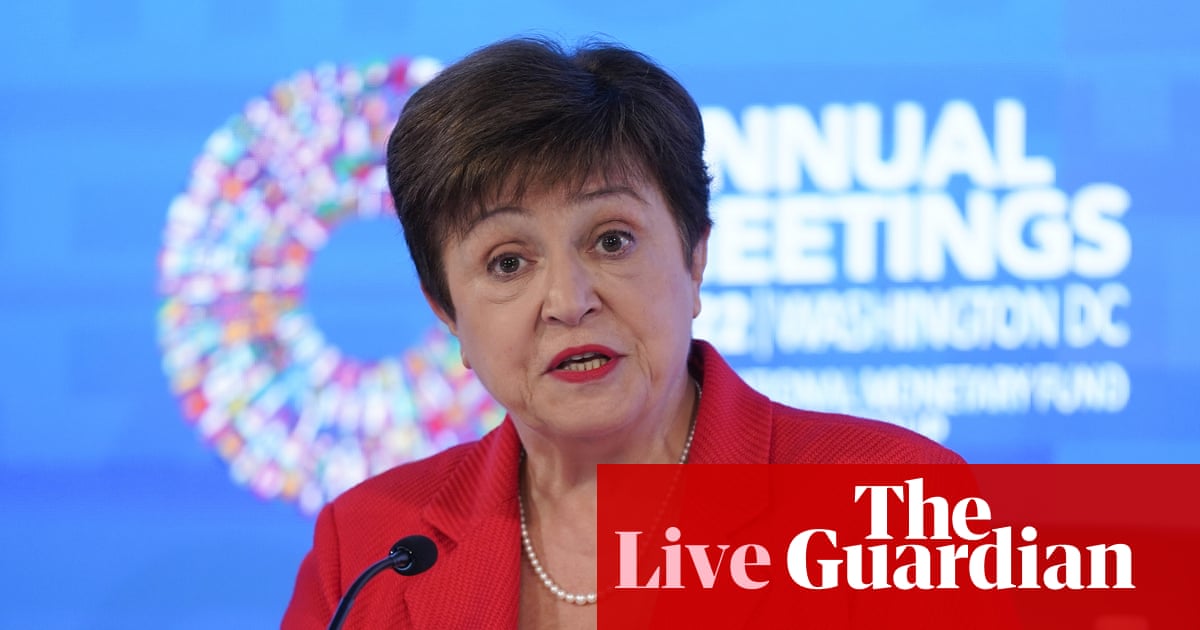
Key events
Frasers Group buys stake in US brand Under Armour
Billionaire Mike Ashley’s Frasers Group has snapped up a stake in the US sportswear brand Under Armour.
The owner of Sports Direct acquired an 8.8% stake in the Baltimore-based company, adding to its portfolio of investments in underperforming sportswear brands.
Frasers now holds about 16.6m shares in Under Armour, according to a 1 October filing with the US Securities and Exchange Commission. The stake is worth around $80.1m, based on Under Armour’s closing share price on Tuesday.
Frasers recently disclosed a stake of almost 6% in the German brand Puma, and also acquired the struggling Norwegian sporting-goods retailer XXL last year.
Ashley’s company built its business by snapping up struggling independent sporting goods chains and bumped up its profits by getting the UK rights to ailing sportswear brands – from Head to Slazenger – and using them to decorate its own products.
The acquisitions are part of the entrepreneur’s modus operandi – picking up bargains during tough times and finding the value where he can, from sportswear to luxury brands.
Frasers bought Harvey Nichols, the upmarket department store in London’s Knightbridge, out of administration in August. It sits beside a large slice of Hugo Boss, a chunk of Mulberry, a snippet of Burberry, the remains of Agent Provocateur and the entire Flannels and House of Fraser chains.
French bond yields jump, euro falls; UK and US yields also rise
French government borrowing costs have jumped, reversing Tuesday’s drop, while US and UK bond yields also rose this morning amid higher oil prices, which add to inflationary pressures.
The yield, or interest rate, on the benchmark 10-year French bond rose as much as 12 basis points to 4.85%, after falling about 11bps on Tuesday.
Not surprisingly, the euro is under pressure again, falling 0.6% against the dollar below $1.12, to $1.1192.
The 10-year UK gilt yield is up 4.6bps at 5.42% after touching 5.44%, but still some way off the 19-year peak of 5.51% hit last week. Bond auctions of two-year and five-year gilts later this morning will test investors’ appetite.
US Treasury yields rose by 4bps to 5.31%.
On Tuesday, the UK chancellor John Healey met economists employed by primary dealers – known as gilt-edged market makers or GEMMs – to gauge market sentiment ahead of his first budget on 28 October.
Economists at Bank of America are forecasting that the budget will lead to a £15bn increase in public borrowing for both the current financial year and the next year, with less room to hit longer-term budget goals.
European stock markets are down, with the UK’s FTSE 100 index falling 41 points, or 0.4%, to 10,500. Germany’s Dax and Spain’s Ibex both lost 0.8%, France’s CAC is down 0.6% and Italy’s FTSE MiB slid 1.3%.
HSBC to make sweeping job cuts in UK wealth management
HSBC reportedly plans big job reductions in its UK wealth management division, slashing the ranks of financial advisers and other specialists as it uses AI to serve its wealthy clients.
Half the business’s management and specialist roles are expected to go, along with 70% of financial advisers, the Financial Times reported, citing anonymous sources.
One source described the cuts as “deep, wide and brutal”, adding that almost entire teams would be made redundant, with a consultation underway.
HSBC is thought to have hundreds of relationship managers across the UK. Affected staff are expected to leave the bank at the end of the month.
The bank said:
HSBC UK is a long-established, leading UK wealth manager and premium banking provider. We’re continuing to evolve to deliver more digitally enabled products and journeys to support our best-in-class wealth service and meet the changing needs of our customers.
Georgieva warns of AI risks but says if done right, technology could boost global growth
Turning to the AI boom, where investment as a share of GDP is likely to exceed that of railroads, electricity grids or telecommunications infrastructure, Georgieva said market disappointment could turn into a “far-reaching shock”.
AI companies are under pressure to deliver productivity and profit gains to justify their sky-high valuations, she said.
She added, though, that if done right, AI could add half a percentage point to global growth a year, according to IMF research.
Regulatory oversight is important to
help manage AI’s substantial perils, which including large-scale labour market fallout, serious cyber and stability risks and frontier models threatening to escape human control and run amok.
IMF chief calls for ‘decisive action’ in high-debt advanced economies including rate hikes
Ballooning government debt will be discussed by the International Monetary Fund’s 191 member countries in Bangkok next week.
In her speech this morning, the IMF’s managing director Kristalina Georgieva said the growing public debt burden is sapping growth and adding to inflationary pressures. The IMF says public debt is at the highest level since World War II and is forecast to exceed 100% of global GDP before 2030.
Governments can no longer rely on higher growth rates alone to solve fiscal problems, she said.
Some very tough political choices stare us in the face. My message to the world’s economic policymakers next week will be this: we cannot keep delaying necessary policy action — you have the tools, now have the wisdom to use them.
She singled out advanced economies in particular, as reported earlier.
And yet we don’t see decisive action in the high-debt advanced economies where the need of the hour is for credible medium-term fiscal consolidation plans, supported in some cases by upfront fiscal measrues, including to take some pressure off monetary policy.
After five and a half years of above-target inflation, Georgieva said inflationary pressures are persisting, from the AI investment boom, energy and food price shocks, trade tariffs, higher defence spending and higher debt service costs.
Now may be a good time for a prudently hawkish bias in many countries’ monetary policy.
She said recent interest rate hikes by the US Federal Reserve, the European Central Bank and the Bank of Japan were “highly appropriate”. The Bank of England has so far left borrowing costs unchanged, but is expected to raise its base rate at its November meeting.
UK housing market comes to standstill
The UK housing market has come to a standstill, ahead of the introduction of the government’s Your First Home scheme targeted at first-time buyers.
The latest figures from Lloyds Banking Group show prices flat last month, following a 0.3% dip in August. The average property now costs £298,441, while annual growth was also flat.
Andrew Asaam, mortgages director at Lloyds, said:
While the market overall has been fairly subdued, property prices have so far proved resilient during a period of higher mortgage rates, which has been driven by changing expectations around the future path of Base Rate. That’s mirrored in wider economic data, with household spending holding up better than many expected despite energy and other cost pressures arising from the Middle East conflict.
Whether that picture continues is likely to depend on how confident consumers feel that the latest cost‑of‑living pressures will prove temporary. Confidence has long been a key driver of housing market activity, and will play an important role in shaping demand over the remainder of this year and into 2027.
For now, the housing market appears to be balancing buyer caution with continued underlying demand. While higher mortgage rates and wider economic uncertainty are encouraging some people to take a more measured approach, new enquiries from prospective buyers are now at their highest since February. That should help sustain activity in the near term, with any movement in house prices likely to remain modest.
Equinor warns UK could become ‘uninvestable’ without North Sea fields approval
Meanwhile,, the energy giant Equinor has warned it may stop investing in the UK if new oil and gas fields at Rosebank and Jackdaw are not approved.
Anders Opedal, boss of the Norwegian state oil company which part-owns the sites, told the BBC:
The question will be: is the UK investable in the future? I hope it will not come to that.
He said the company would “have to take a hard view about it” if the UK government decides against new drilling.
It has to decide whether to give final approval to extract oil and gas at Rosebank and Jackdaw, despite a ban pledged in Labour’s election manifesto.
Opedal said he is confident that prime minister Andy Burnham’s talk of a “pragmatic approach to oil and gas” suggests both projects will get approved but he said the current limbo is “an uncomfortable position to be in”.
He said that the UK could produce more of its own oil and gas.
It’s a political choice. The North Sea oil and gas industry started on the UK side. We learned from the UK and it’s actually the same geology on both sides of the border – several fields actually cross it.
Introduction: IMF chief warns energy shock, public debt and AI investment boom threaten global growth
Good morning, and welcome to our rolling coverage of business, the financial markets and the world economy.
The global economy is under threat from the energy price shock, record public debt and the AI investment boom, according to the International Monetary Fund’s managing director Kristalina Georgieva.
In a speech ahead of the IMF and World Bank annual meetings in Bangkok next week, she said the world is being pulled in two directions – a negative energy supply shock from the Middle East war and a positive demand shock from artificial intelligence that is also driving inflation higher.
The combined impact of these two forces is highly uneven across the world,
she said, noting that the AI boom is bypassing many countries.
Growing government debt is another major worry. Georgieva singled out advanced economies, led by the United States, as the “worst offenders” on debt burdens, with debt to GDP ratios higher than in emerging markets and low-income countries.
Asian shares are down, while on Wall Street, the S&P 500 and the Nasdaq both finished at new all-time highs. The S&P 500 rose nearly 0.6% to 7,818.93 while the Nasdaq closed at 27,599.886.
MSCI’s broadest index of Asia-Pacific shares excluding Japan fell 0.3%. Japan’s Nikkei lost 0.6%, Hong Kong’s Hang Seng fell 0.5%, the Singapore market was down 1.3% and South Korea’s Kospi tumbled nearly 2%.
Oil prices have risen back above $100 a barrel again. Brent crude is up 0.66% at $101.19 a barrel, while US crude is 0.5% ahead at $89.86 a barrel.
Investors are weighing up supply constraints from a storm heading for North American oil-producing regions and Houthi attacks on Saudi Arabia, against higher supplies of oil from the Middle East
Around 12m barrels per day (bpd) of crude oil and 2m bpd of refined oil products have left the Middle East on tankers in the last seven to 10 days, according to commodities trading giant Vitol, Reuters reported.
After last week’s selloff in government bond markets, bonds rallied on Tuesday, pushing their yields (or interest rates) lower. Ten-year French yields fell more than 11 basis points and the spread between French and safer German bonds, which hit almost 160 basis points last week, narrowed to 132bps. The euro recovered from its declines over the past week and stabilised just above $1.1250.
ANZ economists said:
A sense of calm returned to European bond markets with French, Italian and Greek bonds outperforming amid a broad rally.
This morning, French 10-year yields rose nearly 5bps to 4.796%, while US Treasury yields rose 4.5bps, to 5.31%. UK gilt yields meanwhile are down a smidgen to 5.37%.
The Agenda
#IMF #chief #warns #energy #shock #public #debt #boom #threaten #global #growth #business #live #Business