wellnessfitpro
Reporting Highlights
- An Unusual Request: Political appointees at the Department of Homeland Security wanted the agency that protects election systems to get and hack a voting machine, which shocked staffers.
- Undermining Election Security: President Donald Trump has said voting is vulnerable even as his administration has undermined the Cybersecurity and Infrastructure Security Agency, which is supposed to protect it.
- On Their Own: Election officials across the country say the Trump administration’s attacks on CISA have left them to solve security issues with the midterms approaching.
These highlights were written by the reporters and editors who worked on this story.
A few months into President Donald Trump’s second term, political appointees at the Department of Homeland Security made an unusual request of its agency focused on cybersecurity: Secretly acquire a voting machine and hack it.
The appointees wanted the Cybersecurity and Infrastructure Security Agency to procure the machine, examine it and report back the findings so they could be given to the White House, according to two former administration officials with knowledge of the request.
The proposition was shocking to CISA’s career staffers, according to one of the former officials. CISA typically worked to thwart hackers. Moreover, the agency had been directed not to alert the voting machine company if it uncovered flaws, contrary to its standard practices. The request made the CISA employees fear they were being asked to take part in political interference.
“My thought was they could keep it in their back pocket to invalidate any [election] results they don’t like,” one of the former officials said. “This goes against everything CISA represents.”
The CISA employees repeatedly told the political appointees that their request was impossible, in part because the agents capable of pulling off such an operation had just been laid off by Elon Musk’s Department of Government Efficiency initiative. The appointees eventually stopped pressing CISA.
Though not acted on, the request shows how the Trump administration has tried to use the agency for its own ends while draining it of resources for one of its critical missions: protecting the nation’s voting systems.
In Trump’s second term, his administration has laid off or pushed out more than 1,000 CISA employees, shrinking the agency by about one-third. The president’s 2027 budget proposal would reduce funding for the agency by another $700 million, which could necessitate 900 additional layoffs.
In response, Democratic lawmakers have called for an investigation into CISA’s ability to do its job and demanded answers as to why federal funds are not being used to support election security as directed by Congress.
Since Trump signed the CISA Act in 2018, the agency has worked with state authorities and voting machine vendors to help protect election infrastructure from cyberattacks. During Trump’s second term, though, CISA has abandoned much of this work. Several state election authorities said the agency provided them no assistance — and no explanation for its absence — during the most critical planning stages for the upcoming midterms.
“There is a difference between deprioritizing and being nonexistent,” said Ryan Macias, an election technology and cybersecurity expert who has worked as a consultant for CISA. In 2025 and through mid-September 2026 — when the bulk of preparations for the election typically would have been completed — “they were nonexistent. Literally nonexistent.”
While Trump has repeatedly warned that America’s elections are vulnerable to hacking, in some cases repeating disproven claims, experts said his administration is undermining the federal government’s role in helping secure them.
Though CISA re-emerged in September with a last-minute security plan for the election, some state officials told ProPublica they fear that what is left of the agency has been compromised by a conspiracy-obsessed presidential administration. In recent months, in reviving debunked theories about the 2020 election, the Trump administration has declassified troves of records, including sensitive material that state officials provided to CISA. Some state authorities said they no longer trusted the administration enough to share information with CISA, a key to the agency’s success in past elections.
“They’ve violated the entire premise of that information-sharing relationship,” said one former high-ranking federal cybersecurity official who now advises state governments on national security. “There’s no fucking way they’re ever going to give any information to CISA. And it’s unclear if they ever will in the future.”
A spokesperson for the White House declined an interview request but defended Trump’s handling of election security in an emailed statement. “President Trump has done more than any other President to ensure we have free and fair elections,” said Lauren Bis.
Bis referred specific questions about CISA’s handling of elections to DHS. DHS and CISA did not respond to interview requests or to a detailed list of questions.
“There’s no fucking way [state governments are] ever going to give any information to CISA. And it’s unclear if they ever will in the future.”
A former federal cybersecurity official who advises state governments
Current and former CISA employees and state election officials describe an agency that has become significantly less equipped to help states fight legitimate cyber threats. State leaders say they have used their own resources to shore up gaps left by CISA, such as paying for sensor technology that can detect unusual activity in election networks. But some services, like intel on foreign actors, can’t be replicated. Some people interviewed said they were worried that Trump and his allies continue to ratchet up rhetoric about voting security, particularly about threats to voting machines. Officials in one large voting jurisdiction said they have met privately with machine vendors to come up with a contingency plan if the federal government seizes their machines or declares them unusable.
“I don’t pay attention to what the president says. I pay attention to what his administration does,” Arizona Secretary of State Adrian Fontes said. “And what they’ve done is basically cut us off and left us on our own.”
Defending elections from hackers wasn’t always part of DHS’s remit.
Throughout the mid-1990s and 2000s, a series of cyberattacks rocked the federal government, demonstrating the emerging threat. In 2007, hackers broke into the Pentagon and stole terabytes of sensitive data. The digital heist, by an unknown foreign adversary, was so damaging that one intelligence leader later described it as an “espionage Pearl Harbor.”
Under George W. Bush, DHS underwent a reorganization to more effectively combat terrorism and respond to disasters like Hurricane Katrina. The department dedicated resources under an office called the National Protection and Programs Directorate to help fortify advanced cyber defense systems and important infrastructure. The office’s work ranged from helping secure events like the Super Bowl to protecting chemical plants to issuing cybersecurity warnings to the private sector and the public. In 2018, Trump signed a bill making the office a stand-alone agency, allowing for more federal funding and transforming it into, essentially, the ultimate tech support desk for anything DHS designated “critical infrastructure.” The bill renamed the agency CISA.
Though Trump helped create CISA, he didn’t much appreciate the work the agency did under its old name to expose the extent of Russia’s meddling in the 2016 presidential election. Russian agents had unleashed a massive disinformation campaign, with a Kremlin-backed troll farm creating thousands of social media accounts posing as Americans and promoting Trump, according to bipartisan reports from the U.S. Senate Select Committee on Intelligence released before the 2020 election. A dozen Russian military agents were indicted for what the Justice Department described as “a sustained effort to hack into the computer networks of the Democratic Congressional Campaign Committee, the Democratic National Committee, and the presidential campaign of Hillary Clinton.”
Trump publicly downplayed this interference, but DHS leadership saw the Russia attack as an escalation. In January 2017, before Trump took office, DHS upgraded America’s elections to the status of critical infrastructure. This placed the polls and all voting technology used in federal elections under the watch of what would soon become CISA.
To carry out this function, CISA needed help. But states and voting machine vendors were wary about sharing data on weaknesses in voting systems, fearing it could be exploited if certain details were to become public. State officials were also reluctant to cede any role in election preparation to the federal government.
Gradually, though, CISA and state election officials negotiated a fragile trust. At its center was a commitment: The sensitive information states and vendors shared with CISA would be kept confidential.
“It took years and years of building trust, of talking to election officials, of hiring people with elections experience who could be validators for the work that CISA wanted to do, before they finally built strong working relationships,” said Derek Tisler, who specializes in election security as counsel for the nonprofit Brennan Center for Justice, a nonpartisan institute based out of New York University School of Law.
Under Director Chris Krebs, CISA hosted penetration testing in which its agents would try to hack into a state’s system to locate weaknesses that could then be patched, along with tabletop exercises simulating a series of potential catastrophes around elections. CISA also offered regular secret-level briefings to secretaries of state to share federal intelligence. And CISA paid for sensor technology that looked for potential malicious online activity on election networks, notifying officials about emerging threats.
“The staffing was there, the expertise was there, the visibility was there, the funding was there,” Macias said.
The consortium shared data as run of the mill as spambots as well as more serious threats. If Virginia caught unusual activity in its system, it could let other states know to be vigilant.
While CISA had prepared for attacks from the Chinese and Russian governments, or lone wolf hackers, few there had expected the threat to elections would come from inside the White House. But when Trump refused to concede to Joe Biden in 2020, claiming the vote had been rigged, CISA became a key component of the guardrails that ultimately led to the election results being certified.
The agency, in a statement co-signed by secretaries of state and voting machine vendors, vouched for the election’s integrity, calling it “the most secure in American history.” When Krebs publicly rebutted claims amplified by the White House as “unsubstantiated” or “technically incoherent,” Trump fired him over Twitter.
As Congress prepared to vote on certifying the election results, it was members of CISA, along with the FBI, who convinced then-Attorney General Bill Barr that the conspiracy theories embraced by the president could be explained by human error, not systemic fraud or hacking.
When Trump returned to the White House in January 2025, his administration immediately started to dismantle CISA. The administrative notices were sent out just a couple of weeks after the inauguration and included the team in charge of dispelling disinformation.
For the employees under the DOGE microscope, work became impossible, said one former senior CISA employee. “Those groups couldn’t even order a pizza.”
DOGE laid off people critical to the agency’s election work, including those who’d worked closely with states. The Trump administration cut funding for the technology that monitored web and election servers, blinding the federal government to breaches it had detected.
When it came time for states to prepare for the 2026 midterms, CISA had disappeared.
On the evening of July 16, in the Black Hills of South Dakota, dozens of election officials and their staffs gathered for a reception near Mount Rushmore. It was the third night of an annual conference for secretaries of state, drawing participants from red and blue states. They’d spent the week discussing state voter roll maintenance and voter ID — issues that at times made for disagreements.
At about 8 p.m., a wave of discomfort swept through the crowd, visible on attendees’ faces as they glanced frequently at their phones, according to people at the event. Any minute now, Trump was going to address the nation on election security. Some at the reception worried he would declare a national emergency, as his allies had urged him to do months earlier, and use it as a pretext to direct the government to seize voting machines.
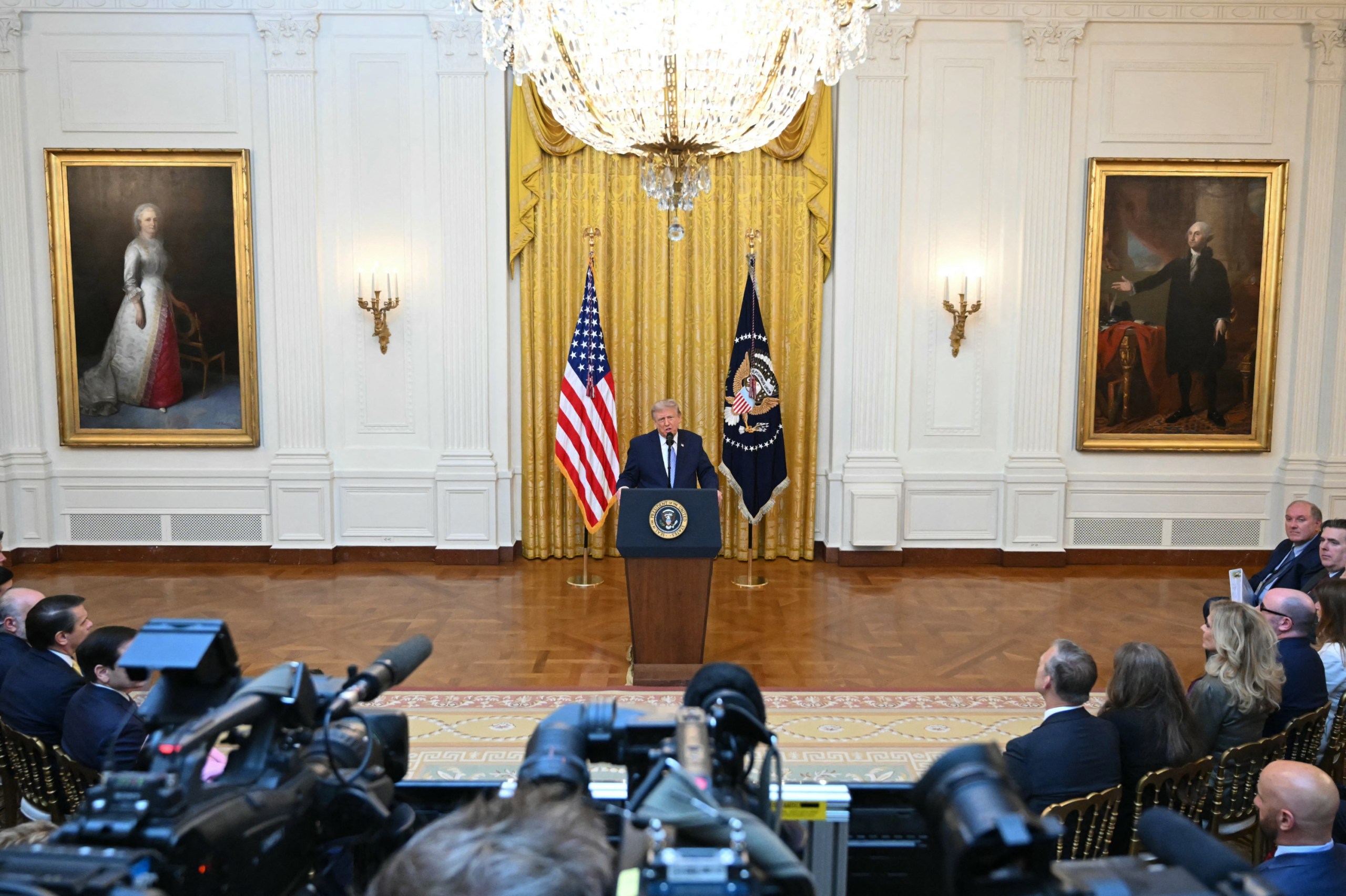
Then reports on the speech began rolling in, and the mood shifted. The claims Trump was making were unsubstantiated and outlandish. Many had been examined ad nauseam, including by those at the reception, and roundly debunked. The collective anxiety that was palpable moments earlier melted away, as many saw the speech as another attempt to revive disproved theories unlikely to be taken seriously by most voters.
“Everyone just sort of guffawed and put their phones away and went to the bar,” recalled Quinn Raymond, co-founder of VoteShield, a nonprofit that works with states to help monitor voter registration data, who was at the event.
Still, if the speech made little impact, records published by the Trump administration to support the president’s claims damaged the already eroding relationship between CISA and state election officials. The material included raw information states had shared with the agency that was supposed to remain private, such as a log of communications from Election Day 2020 detailing activity being monitored in several states.
“It betrayed the trust of all partners who were willing to share information at the time,” said Geoff Hale, who worked on CISA’s elections team from the agency’s inception until last year. Now he specializes in election security at the Center for Democracy & Technology, a nonprofit that advocates for digital and civil rights.
Bis, the White House spokesperson, denied that the Trump administration broke any agreements in releasing the information. “The release of such information is exactly the sort of transparency news organizations should applaud,” she said. Bis also defended Trump’s speech, saying it had been fact-checked “by the agencies whose evidence was released and did not mischaracterize any information.”
Hale and others said the speech was one of several instances demonstrating the Trump administration’s reckless attitude toward sensitive data collected by CISA. Earlier this year, Politico reported that acting CISA Director Madhu Gottumukkala had uploaded records to ChatGPT, even though DHS had barred its employees from using the unsecure program. A CISA spokesperson told Politico that Gottumukkala had been permitted to use the technology for a “short-term and limited” basis.
Last May, an independent journalist named Brian Krebs exposed that CISA published private data, including passwords, cloud keys and other information, on its public GitHub page, in a folder labeled “Private-CISA.” A CISA spokesperson told the journalist there was no indication that sensitive data was compromised.
Some state election authorities were also alarmed to see the lengths to which the Trump administration went to legitimize the president’s fixation on the 2020 race.
In fall 2025, Missouri election officials produced a memo stating Andrew McCoy Warner, a Department of Justice official and prominent 2020 election conspiracy theorist, had called several clerks asking for access to voting machines. Tulsi Gabbard, then the director of national intelligence, had also led an operation in Puerto Rico to seize election machines. When the private cybersecurity contractor hired to examine the machines, Mojave Research Inc., failed to find evidence supporting claims about 2020, the federal government became “dissastified” with its services and stopped renewing its contract, its CEO later told reporters.
A spokesperson for the Office of the Director of National Intelligence told reporters in August that Mojave’s work ceased because it had completed its contract. Testifying before Congress in March, Gabbard said the seizing of voting machines came at the request of an assistant U.S. attorney in Puerto Rico.
“What happened in the second Trump administration is from almost day one — I mean, literally the first two months — they took all that was built up by Trump 1 and just decimated it,” said David Becker, founder of the nonpartisan Center for Election Innovation and Research, a nonprofit that works with state election authorities. “Election officials lost trust in the federal government.”
It didn’t help that, in his speech, the president mocked CISA’s defense of the 2020 election, calling the statement about it being the most secure in history a “very pat line” concocted as part of a deep-state cover-up. One former career CISA employee described being crestfallen at the Trump administration’s erosion of all they’d accomplished.
“We worked so hard to build that trusted relationship,” said Caitlin Durkovich, former DHS assistant secretary for infrastructure protection and co-founder of the cybersecurity firm Civira Partners. “I don’t know how you put it back together.”
A few weeks after Trump’s speech, the state election officials gathered once more, this time for a video call with Nick Andersen, who had replaced Gottumukkala as CISA’s acting director.
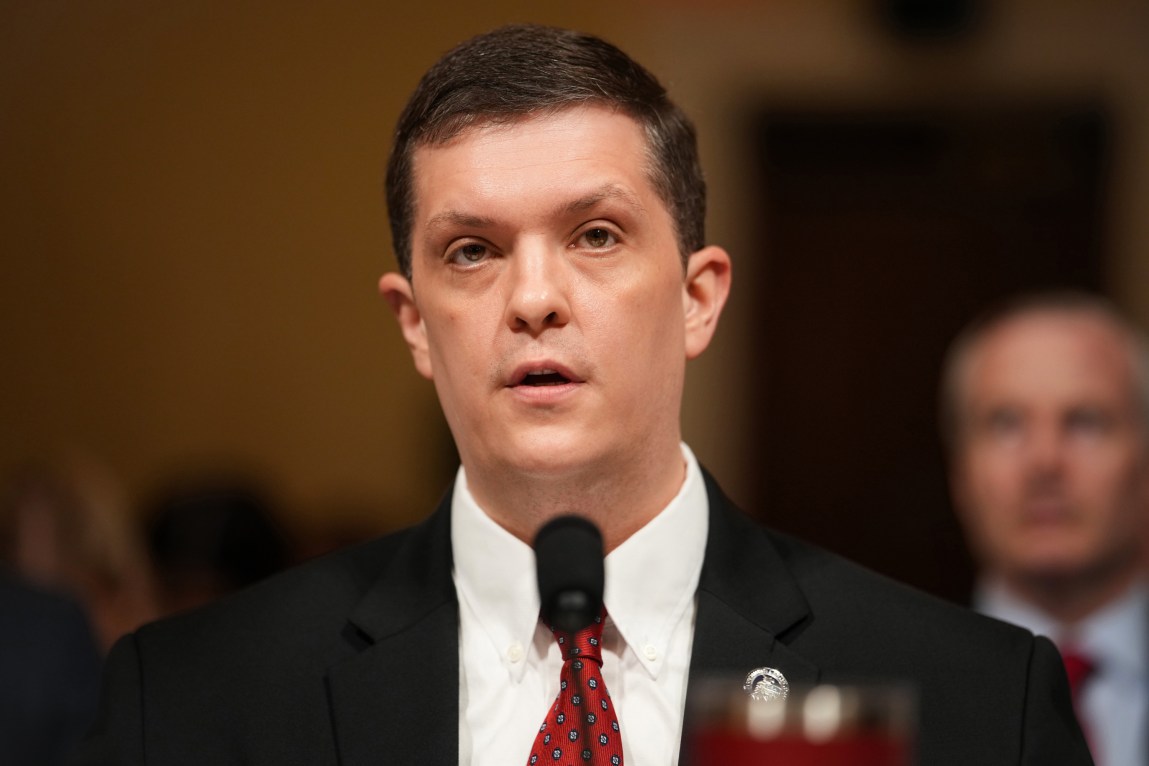
Though the primaries were already under way, this was the first time many had met Andersen, a former cybersecurity adviser to Trump’s White House who had joined CISA a year earlier. Andersen is also a district representative for the Republican Party in Virginia, according to the party’s website. In March, he gave a speech to the Fairfax GOP chapter titled “Fighting Democrat Redistricting.”
Speaking over video in August, the boyish-faced former Marine Corps engineer announced that DHS was preparing to release a plan on how it would work together with state officials to secure the election, according to five people who were present at the video meeting, some of whom shared notes with ProPublica.
Many on the call were stunned at what they perceived as a lack of understanding of election planning. Early voting for the general election was just around the corner. They had spent over a year preparing for the midterms, and there was no more time for ambitious work.
Some peppered Andersen with questions: Where had CISA been when there was still time to make improvements?
Andersen blamed any lapses or perceived breaches in trust on the federal government shutdown in fall 2025, twirling his pen uncomfortably and sipping from a Monster energy drink.
Fontes, Arizona’s secretary of state, was blunt about his feelings regarding working with Andersen and CISA, according to several of the people on the call.
“I told him I didn’t trust him,” Fontes recalled in an interview. “I did raise my voice a little bit, because I’m frustrated — very frustrated — that they would have the temerity to come in, clear the entire deck of competent professionals, stop supporting the states, eviscerate the coordination efforts that they had and then suddenly come in and say: ‘Oh, we’re from the federal government. We’re here to help.’”
Indeed, one recently departed CISA official said attempting to do the agency’s typical election work now would be futile. In previous years, CISA had finished almost all its preparations with the states by Labor Day.
“That ship has sailed,” the official said.
CISA published its security plan for the 2026 election on Sept. 24. The 13-page document describes how, over the past two years, CISA has “recommitted to its statutory mission and remains resolute in strengthening the security of elections.”
State officials said their planning will ensure a secure election, even without help from CISA. Yet they and cybersecurity experts worry that Trump will say the election was hacked if Republicans don’t win in November.
The security plan calls for “leveraging collaborative partnerships” with states the agency has abandoned since Trump took office. Shenna Bellows, Maine’s secretary of state, said she’d welcome that but was skeptical of the agency’s motivations.
“For CISA to promise election officials now, at this point in time, that they are going to be a resource for the 2026 election is too little, too late,” she said.
#Trump #Administration #Politicized #Cybersecurity #Infrastructure #Security #Agency #ProPublica