wellnessfitpro
A budget is not just about the public finances. It is the annual economic set-piece where the government presents its broader aims and strategy. For a new administration especially, the first budget statement is a defining marker of its approach to running the country. It is where the promises hit the wall of financial reality.
In this respect, the first Keir Starmer and Rachel Reeves budget in 2024 spotlighted their administration’s caution as well as its untrustworthiness. Ludicrously, the pair claimed to have been unaware of the abysmal state of Britain’s finances and sought to blame their predecessors for their own spending decisions. Reeves increased taxes by about £40 billion despite a manifesto that had tried to rid Labour of its reputation as a tax-raising party. Her budget announcements set taxes on a path to record highs, putting paid to her earlier pro-growth rhetoric.
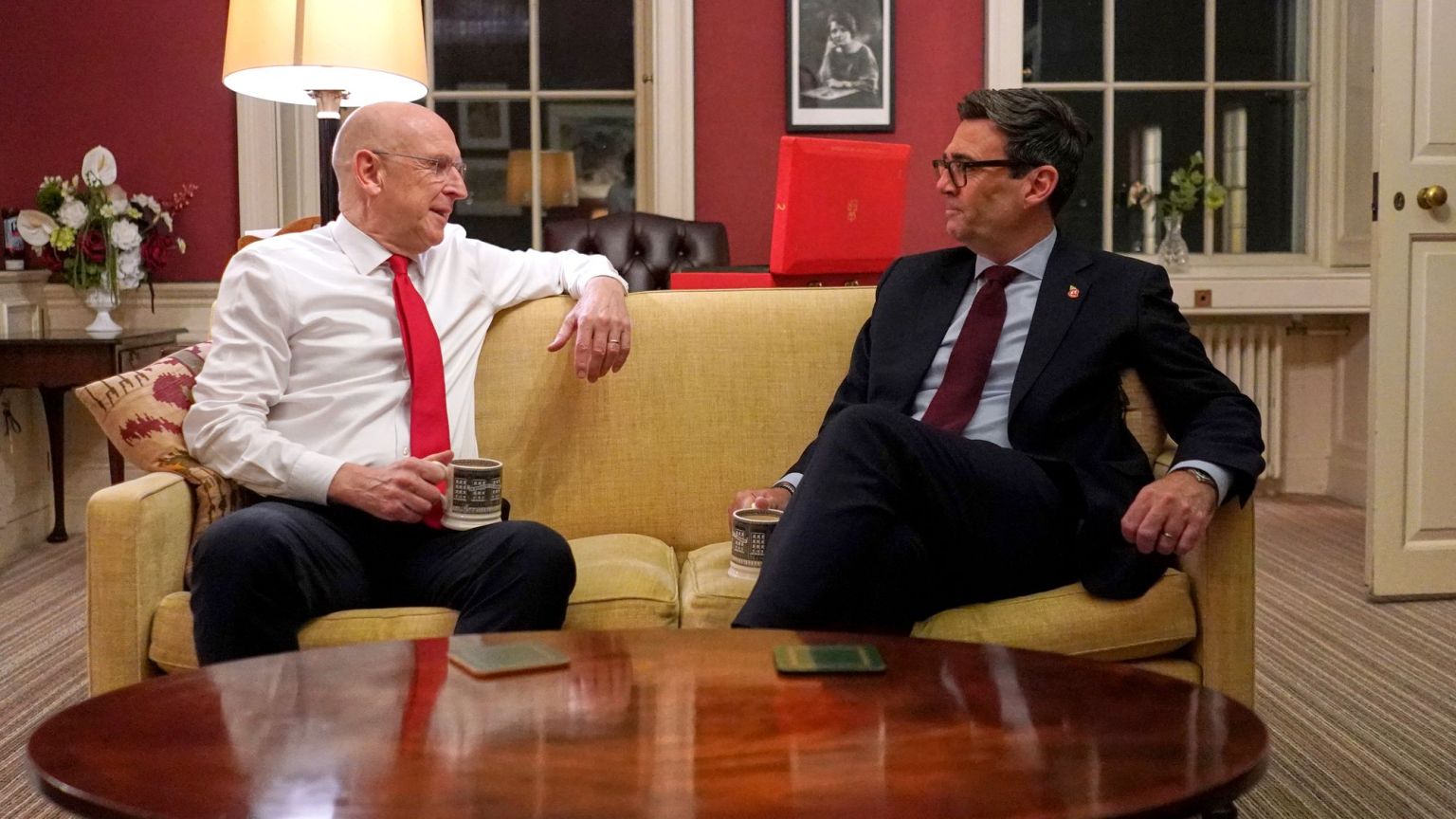
Andy Burnham and John Healey have now had their opportunity. The overriding message in this week’s budget was more of the same. This was a continuity budget of more taxes, more spending and more borrowing. So much for Burnham’s promise on his first day in Downing Street to bring forward the biggest changes in politics and economics in the past 40 years. His first-day pledge was that this transition ‘starts now’. Well, not quite now. Nor in his first 100 days. Nor in his chancellor’s first budget.
Rather than overturning the post-1980s ‘failed consensus’ that they have been going on about, this budget demonstrated that the Burnham-Healey duo is pursuing exactly the same managerial orthodoxies as those of the past four decades – the form of managerial politics that evades solving problems and takes every opportunity to kick them down the road.
Healey began his budget statement by highlighting – quite reasonably – the ‘economic storms’ Britain is facing. But there were no follow-on announcements that engaged with the seriousness of the situation. Normally, when storms are coming, you prioritise strengthening your capacity to meet them. Burnham and Healey did the opposite.
Far from acting immediately to build resilience, they ducked dealing with any of the country’s big vulnerabilities. These were weaknesses that they themselves had identified in their first few weeks in office: Britain’s military unpreparedness, the mounting cost of the national debt and the punishing cost of energy. All these fragilities were passed over in the budget merely with the assurance that they would be addressed later, in Burnham’s forthcoming Ten Year Plan or in the next three-year spending review pencilled in for 2027. Andy Haldane, the former Bank of England chief economist, aptly called this a mañana budget. If someone believes this government will actually deliver on its promise of transformative action in either of these upcoming plans, it might be time to see a doctor.
Indeed, the particularity of this budget lay in the shameful mismatch between the scale of the country’s financial and economic challenges and this deliberate absence of urgency. This disparity can’t be explained by ignorance. In a pre-budget interview with The Sunday Times, the prime minister, in his typical jovial manner, reran the Starmer-Reeves shock-horror at discovering how bad things are. Burnham explained that what surprised him most in his first weeks as premier was the ‘fragile nature of the country’:
‘It’s different. It’s changed a lot from when I was in government [under New Labour]… The fragility from a security point of view, from a financial point of view, from a public services point of view, it’s there. There’s a sense that things are closer to the edge than they were.’
If, as prime minister, you have just found out that the country is on the edge of a precipice, you might expect some action in your first budget to stop it falling off the proverbial cliff. Instead, Downing Street continued with the archetypal complacency of its previous occupants going back decades. Yet again, the Burnham-Healey show shunted long-overdue policy changes into the future.
This is why the attempted characterisation of an innocuous ‘do no harm’ budget is so far off the mark. The UK is being gravely harmed by existing government policies. A continuity budget therefore perpetuates these harms. Failing to change those policies prolongs the wrongs and aggravates the predicaments. This no-action budget is, in itself, harmful.
Take the example of the country’s danger from an underfunded, hollowed-out military. Recall that the current chancellor resigned as defence secretary just four months ago because Starmer, his then boss, had failed to find the funds needed to spend three per cent of GDP on the military by 2030. Yet in his budget, Healey provided no new funding for the armed forces. Instead, the managerial chancellor told the country to wait until next autumn’s Spending Review to find out how the target will be reached.
Burnham is not just guilty of failing to prioritise national security over social security, as he boasted in parliament last month. Worse, at this budget, he and his chancellor have chosen to spend more on welfare and leave defence underfunded. No reductions were announced to the planned increase in non-pensioner welfare spending of more than £23 billion by 2029-30. The government has confirmed that extra taxpayers’ money is available, but for welfare handouts rather than for the nation’s defence.
Rest assured, though, Healey said he would be looking ‘hard at public spending’ over the next year to find the extra money. Of course, a serious chancellor would already have looked at spending by now. Alongside the budget statement, the government’s financial watchdog, the Office for Budget Responsibility (OBR), reported that day-to-day spending on welfare payments is not only still rising substantially in real terms over the next three years, but is also expected to be about £8 billion higher in 2028-29 than the OBR forecast just six months ago.
Healey could have just reversed that additional increase, as a down payment for further cutting welfare spending, and allocated that amount to the military. That alone would be enough to cover the unfunded shortfall that the OBR estimated would be needed to meet the Strategic Defence Review proposals. It would not be the answer to Britain’s urgent need for proper physical and moral rearmament, but it would be an immediate, concrete step in the right direction.
To emphasise, this suggested reallocation to defence wouldn’t even mean cutting welfare spending, only slowing the rate of increase. Starmer and Reeves famously buckled to backbench pressure last year when they proposed a similar slowdown in the ever-expanding welfare bill. It seems that Burnham and Healey are in the same mould. They are more scared of having to battle their own party than of attacks on British assets by Russia or Iran. And so the continuity budget means we are still left defenceless.
Similarly, in this budget, Burnham and Healey refused to make other policy changes that could have alleviated other financial pressures at no cost to the public finances. They could have announced an immediate fast-tracking of the construction of regular and modular nuclear power stations by the private sector. This would start to fix, rather than plaster over with Healey’s sprinkling of temporary handouts, Britain’s exceptionally high energy prices for families and households. The Net Zero-inflated energy costs will remain.
They could also have argued that additional interest costs on the national debt over the past six months, estimated by the OBR at about an extra £15 billion this year and next, require emergency offsetting cost savings that justify breaking the 2024 manifesto. They could immediately scrap the renewable-electricity subsidy schemes that cost about £25 billion a year. These subsidies distort commercial incentives for the production of energy, thereby helping sustain those elevated energy prices.
Pulling public spending down by that amount would also represent a path-breaking statement of intent for the potential buyers of British government bonds. This would probably bring a meaningful reduction to those expensive debt-interest charges. But after this no-change budget, the British government is still paying higher yields on its borrowing than other countries in its group. Our debt is even costlier to service than that of rioting France with its lame-duck president and political paralysis. Less well known is that the Treasury also pays higher rates than several non-OECD countries, such as Thailand, Vietnam, Malaysia and Morocco. This premium charge on British government debt is due to the understandable lack of trust within the institutional investor pool that the current government will end the ‘spend now, pay later’ philosophy that has prevailed since the 1970s. A continuity budget, therefore, means no respite from Britain’s national-debt doom loop.
This budget’s leitmotif of inaction reveals that the most serious gap for the country isn’t really between government spending and taxation. It is the gap between the government’s recognition that it is in a deep hole and its refusal to do anything about it, except dig deeper.
The explanation for this gulf between knowledge and action lies not in any particular weakness of Andy Burnham or John Healey. The problem is that reviving Britain’s economy is beyond the capacity of the managerial mindset that has taken over in Westminster since the late 1980s. This managerial approach shies away from fixing problems and instead tries to keep them in check. For all Burnham and Healey’s winsome words over the past three months, their first budget shows that they are continuing with the same managerial attachment to the status quo. But in their attempts to First Do No Harm, they are storing up many more dangers for the future.
Phil Mullan is the author of Beyond Confrontation: Globalists, Nationalists and Their Discontents.
#Burnham #Healeys #budget #trapped #doom #loop