wellnessfitpro
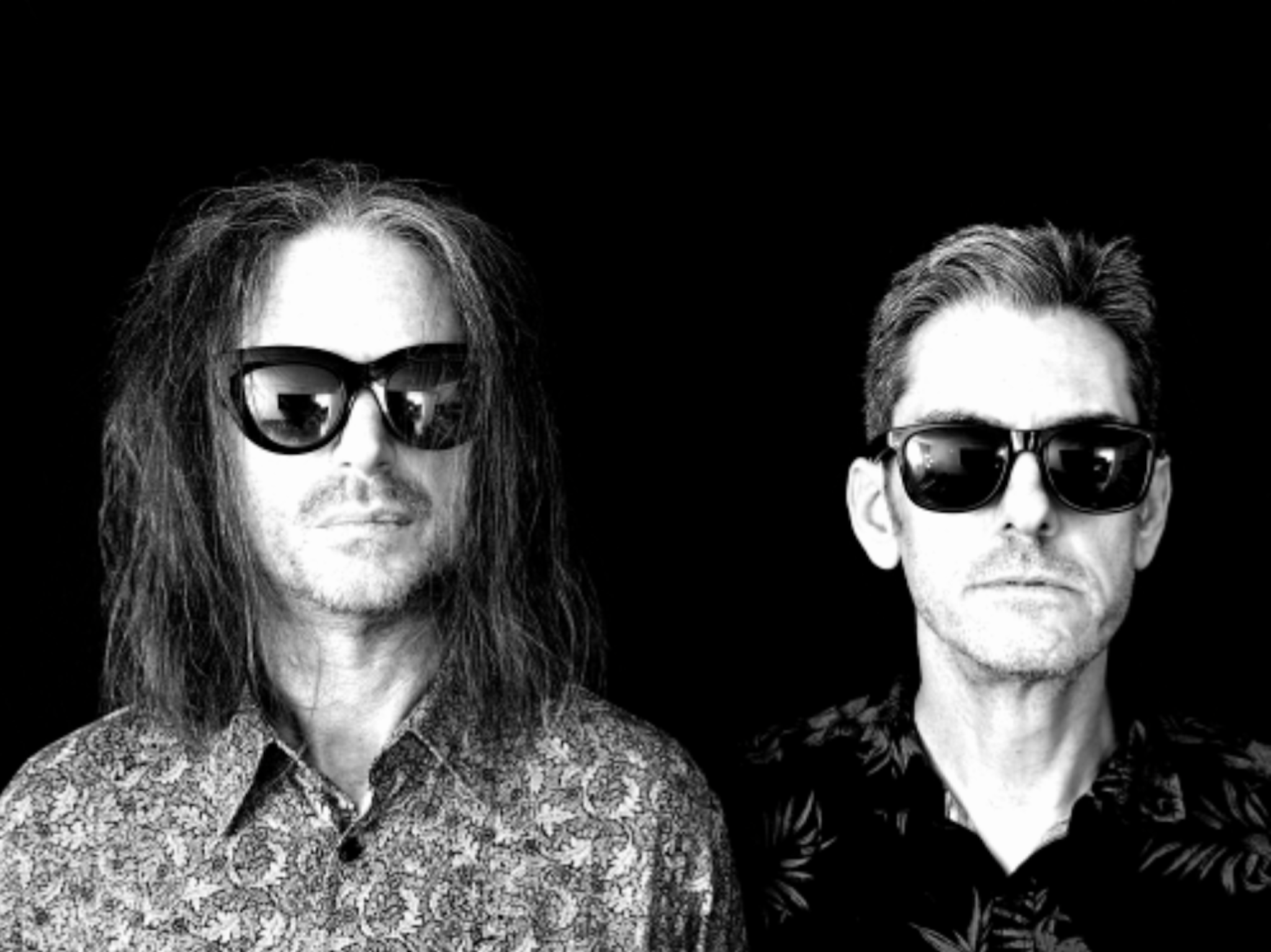
‘Algorithms For Happiness’ is a dark, glistening and deeply felt record, an elegy that took a decade to find its moment and is all the richer for it.
‘Algorithms For Happiness’ is a dark, glistening and deeply felt record, an elegy that took a decade to find its moment and is all the richer for it.
88/100
Backseat Mafia Rating
David Bowie died on 10 January 2016. Within days, a grief-stricken Simon Starling had written half of an album. The rest came more slowly, composed in what the band call the longer shadow of that loss, and nearly a decade on, those ten songs finally emerge into the light as ‘Algorithms For Happiness’, the debut album from The Argon Room, out this Friday, 6 November.
It explains a great deal. When I wrote about the lead single ‘Empty Star’ a few weeks ago, I noted the unmistakable hints of Bowie in the deep timbre of Simon Starling’s vocal. I now know that this was no mere stylistic flourish: the Thin White Duke is the ghost in the machine, the spark that lit the whole enterprise.
The Argon Room are not so much a new band as the culmination of a long, intertwined history. Starling cut his teeth in Sydney punk outfit Cult 45 in 1996, decamped to Melbourne to front Etherland, then returned to Sydney and formed Starling, whose 2012 album ‘Semaphore’ was produced by Steve Kilbey of The Church with Church drummer Timothy Powles behind the kit. The touring line-up from that record – Wes Gregorace (Cult 45, Devoted Few), ARIA-nominated Damien ‘Diz’ Cassidy (Faker, and before that the cult dirty-lounge-noir of CooCoo Fondoo) and Shaun Gaida – solidified, and when a new album was mooted, became The Argon Room.
Powles steps up as producer here, as well as playing, and he has quite the Friday ahead of him: ‘Algorithms For Happiness’ arrives on the very same day as The Church’s magnificent ‘Lacuna’, the band he has long toured and recorded with. Two albums, two very different worlds, one exceptional week for one of the great Australian drummers. Adding to the pedigree, Jeffrey Cain (The Church, Remy Zero) and Mark Axiak lend their distinctive guitars to the mix, and the album was mastered by William Bowden.
This is The Marrickville Sound writ large: seasoned musicians with decades of stages and studios behind them, not resting on past glories but pushing towards something that feels like the best work of their lives.
‘Algorithms For Happiness’ is a loosely threaded concept album, and the threads that bind it are darkness and atmosphere. The band point to The Jesus and Mary Chain, Japan, The Church and All India Radio as touchstones, and you can feel each of them in the album’s DNA: the brooding, nocturnal glamour of Japan; the shimmering, layered guitar psychedelia of The Church; the cinematic, widescreen ambience of All India Radio; and a sliver of Mary Chain noir lurking in the shadows.
The concept itself is pure space-age existentialism. As principal writer and vocalist Starling explains:
…the album follows a lone survivor in space grappling with existence.. out of time and in a vacuum. Is this life? They ask. It seems bleak at best.. but maybe, just maybe there’s hope.
The artwork mirrors it perfectly: a swollen, rust-red sun hangs over a cratered blue landscape, while a line of skeletal lattice towers recedes into the darkness like abandoned signal masts – a transmission station with no one left to receive it. Bowie’s Major Tom, it seems, is never far away.
Powles’ production holds the album together with its sharp edges, where Cain’s and Axiak’s guitars stand out.
The opening title track is statuesque and bold, atmospheric with an Antarctic chill to it, the production crisp and crystalline. The layered vocals echo and drift in the ether as the music circles around ominously, ebbing and flowing with a thrilling drive. It’s like an amalgam of Ultravox and Pink Floyd: theatrical and cinematic. It’s a pulse quickening opening.
‘Am I Hello’ launches with a spine chilling brittle instrumentation over a deep drone and haunting vocal delivery – again echoes of Pink Floyd filter through the periphery, horn sounds at the edge and sharp shimmers of guitar.
As mentioned before, there are undeniably hints of Bowie in the vocal delivery of the single ‘Empty Star’ with its deep timbre as the song starts with an enigmatic sparkle and a wall of synths/strings in the ether. The melody is sweet, melancholic and indelible – a chorus that soars like an albatross across the skies. The guitars are crystalline, a hint of horns echoing in the distance as the song ebbs and flows, segueing into a hypnotic break at one point before an anthemic return.
According to the band:
This was the last song written for the record. Tim said we needed something up tempo. Luckily I had those chords and rhythm kicking around. It’s up tempo… but it couldn’t get much darker.
It’s a multi-layered track that is ethereal and haunting
‘Future Colonies’ starts with crystalline guitars and ghostly vocals in the ether, hypnotic, floating through the head as the track builds up momentum: a cinematic sound that sparkles like sunshine before breaking with a dramatic lull and restarting – echoes again of Pink Floyd with its drama and bluster, its psychedelic sheen and the yearning vocals. There is indeed an operatic quality to the delivery as expensive and daunting as the universe.
‘Holding My Head’ continues the space age journey – the vocal to the fore creating a dreamy miasma with the intermittent pounding of timpani drums like a heartbeat and a snaky synth arpeggio that threads in and out. Another operatic delivery: bold and visual. ‘Last Star’ continues the space theme in a dreamy fugue with warped synths echoing at the periphery, spacious and grand, feeling like some late night fugue when you drift between consciousness and a nightmare you can’t escape from. The vocal range is truly operatic – lifting you up at the end and suspending you in a cataclysmic sound fog.
By contrast, the crisp synths, rapid pace and foggy vocals of ‘Maybe There’s Hope’ breaks through, as the title suggests, with a brighter optimism and dynamism, almost skipping through the dark skies but then being infused by a certain desperation and anxiety – where possibilities might not eventuate. Ultimately as with the rest of the album, there is an intensity and disquiet that is cathartic and delicious. ‘A Moment Too Long’ ties this uncertainty up: a nightmare coda of doubt in the delivery. You can trace elements of Interpol in this track with it’s gothic darkness and melancholy.
‘Shadows Are Light Gone’ is a delicate expression of the disappointed and hopelessness of a lost soul – the ultimate come down from where there once was hope. The guitars etch contrails in the sky: wailing and soaring. The final track ‘Tug Of War floats on a synth bed and again with ghostly voices in the distance, fractured arrangements, making you discombobulated in its short tenure.
There is a wry provocation in the title. We live in an age where algorithms curate what we hear, what we read and, increasingly, how we feel, promising happiness in an endless scroll. An album born of grief, written for the most part in the days after losing an artist who defied every formula, sits pointedly against that idea. You cannot code for this sort of feeling; it has to be lived. Starling’s lone survivor, adrift out of time, is searching for something no formula can supply – and finding, perhaps, the faintest flicker of hope.
‘Algorithms For Happiness’ is a dark, glistening and deeply felt record, an elegy that took a decade to find its moment and is all the richer for it. It is proof once again that creativity does not have a use-by date. This is sterling stuff.
‘Algorithms For Happiness’ is out today via MGM (Metropolitan Groove Merchants) on all digital platforms, as well as on vinyl and CD. You can download and stream here and through the link above.
Connect with The Argon Room on Facebook and Instagram.
Related
#Album #Review #Argon #Room #conjure #dark #glistening #requiem #long #shadow #Bowie #debut #Algorithms #Happiness