wellnessfitpro
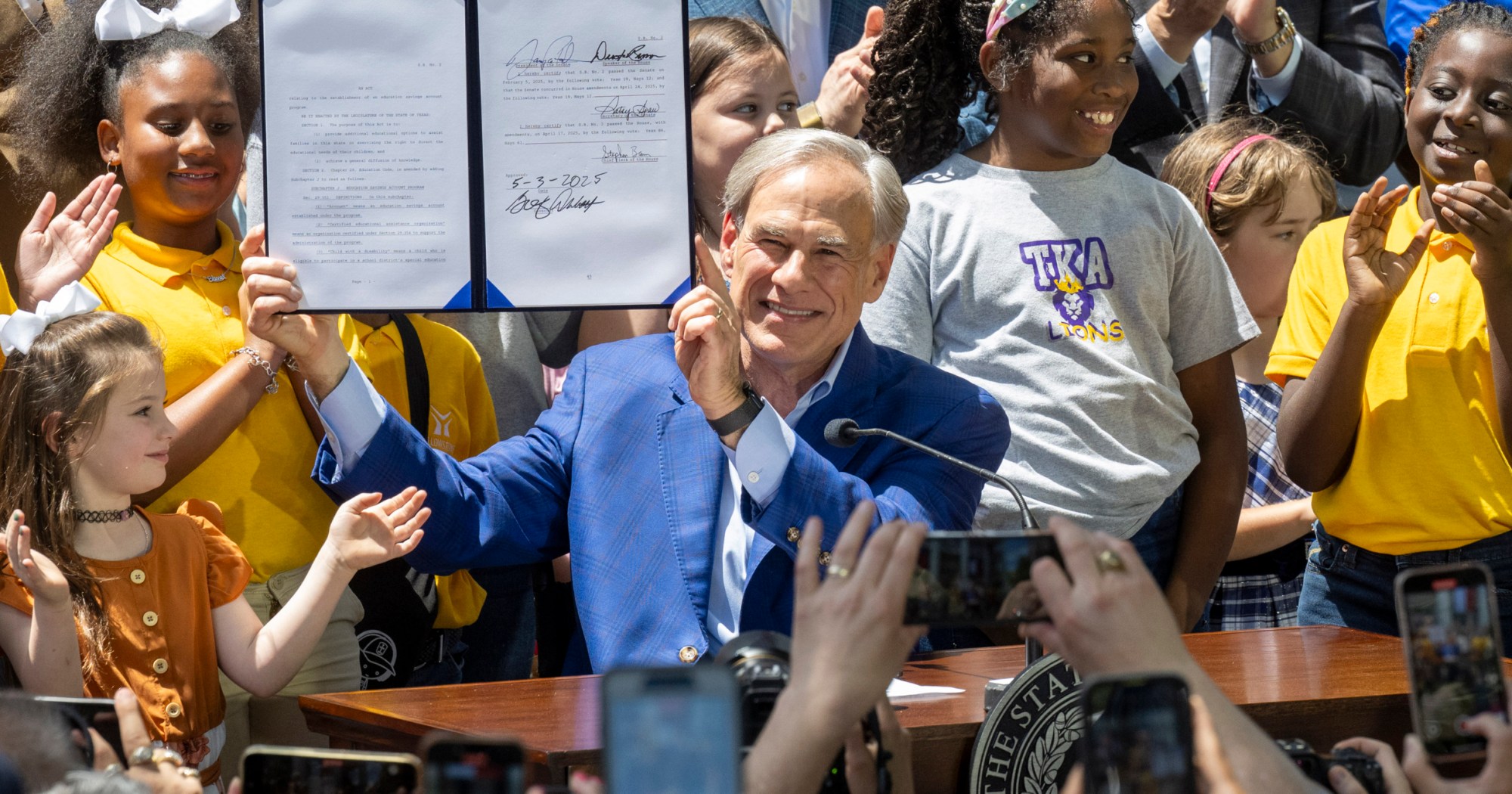
Texas Gov. Greg Abbott’s vision for education was finally coming together.
This year, the state launched a voucher program that allowed roughly 110,000 of Texas’ more than 5 million schoolchildren to get a private education using taxpayer dollars. Abbott’s loyal appointee at the Texas Education Agency, Commissioner Mike Morath, was leading the state’s largest takeover of public schools in recent history. And the Texas State Board of Education, with Abbott’s support, helped pass a controversial new social studies curriculum that required teaching Bible stories and shifted away from world history to focus on Texas and the United States.
On Tuesday night, as Democrats clinched nearly every office in the state, it all began to unravel.
In a speech after denying Abbott a fourth term, Texas Gov.-elect Gina Hinojosa called for a reversal of his education agenda. She pledged to fire Morath and to end the public school takeovers.
Perhaps most significantly, she doubled down on a campaign promise to erase one of Abbott’s biggest accomplishments: school vouchers.
“We will work tirelessly to repair the damage of the Texas voucher scam,” said Hinojosa, who did not respond to requests for an interview.
It is not clear how Hinojosa will deliver on that promise. While Democrats have the ability to restrict parts of the program, eliminating it would require legislative action.
But Hinojosa will have help.
Democrat Sarah Eckhardt, a former state senator who voted against vouchers and will now lead the state office charged with running the program, has said she will push changes to increase accountability and transparency.
Eckhardt, however, acknowledged the limitations of her office, saying that any big overhaul must come from lawmakers.
Democrats won back the Texas House for the first time in 24 years, but Republicans retained a majority in the Senate.
Rep. Diego Bernal, the Democratic vice chair of the House education committee, seemed confident that there is a path toward killing the program, at least as it now exists.
Bernal, whose district is in San Antonio, said some Republican colleagues previously told him privately that they had reservations about the voucher program, but were limited in what they could do because of pressure from leaders who have now been ousted.
“I guarantee that program is not going to be untouched, and it will be probably unrecognizable, if not extinct, by the time we’re done with it,” he said.
Rural Texas Pushes Back
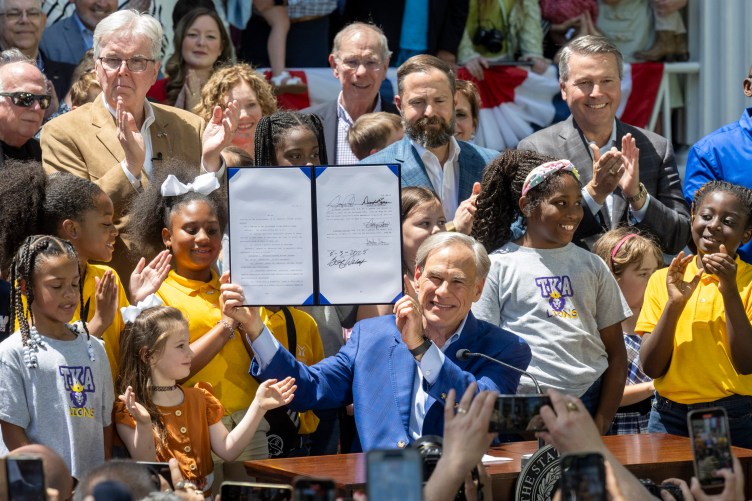
Abbott spent years trying to pass a statewide voucher program. By 2024, he’d grown angry at rural Republicans who repeatedly blocked such legislation because, they argued, public schools were a vital part of their communities. So Abbott shelled out millions of dollars to oust them from office and elect pro-voucher Republicans instead.
He succeeded. And the following year, those Republicans helped pass the $1 billion state voucher program. This week, at least 13 Republicans who Abbott had previously endorsed or helped fund as part of his voucher push lost to Democrats or were trailing in close races.
Abbott’s office declined an interview request, referring ProPublica and The Texas Tribune to his campaign office, which did not respond.
His bullishness on vouchers turned off some Republican voters in rural communities that have historically been strongholds for his party, education experts and politicians said.
A Texas Tribune analysis found Democrats made striking gains in rural and semirural parts of the state, where concern over vouchers, along with issues like data centers, ran high. In rural counties, Abbott’s margin over Hinojosa fell 16 percentage points from his 2022 margin over former U.S. Rep. Beto O’Rourke, and it fell 20 percentage points in exurban counties.
Former state Rep. Dewayne Burns, an anti-voucher Republican from a mostly rural district south of Fort Worth who was defeated by an Abbott-backed primary challenger in 2024, said many of his constituents felt betrayed by the governor’s push for vouchers. “That’s the first time that I think rural Texans really kind of stepped back and said, ‘Are you guys really supporting us?’” he said. “I think they overestimated the loyalty that Texans, especially rural Texans, had to the governor.”
Former state Rep. Steve Allison, who represented a suburban San Antonio district before he was unseated in the 2024 primary, said he remains convinced his constituents never wanted the voucher system. Pro-voucher groups targeted him in a series of ads that attacked him for issues like border security and property taxes but said little about school choice. Polls at the time showed Texans held complicated views on school choice, with one University of Houston poll showing that while two-thirds of Texans supported voucher legislation, an equal number believed that vouchers would funnel money away from already struggling public schools.
“I know what I saw when my staff took very careful notice of what phone calls were coming in and what emails and texts and visits were coming in,” he said in an interview. “It was clear that the overall district was opposed to vouchers.”
Concerns about vouchers became key in several rural and suburban Texas districts this year where Abbott’s selected candidates had won two years ago. One of those races was for Allison’s old seat, which pro-voucher candidate Marc LaHood won in 2024 after Abbott spent at least $700,000 supporting him.
Another was in Bell County in Central Texas. There, the Abbott-backed incumbent, Rep. Hillary Hickland, conceded a close race Wednesday morning. She did not respond to a request for an interview. Her Democratic opponent, Amelia Rabroker, a former teacher, said the Republicans’ heavy-handed push for vouchers spurred her to challenge Hickland.
“A lot of money was pushed into her campaign to make that happen, and she delivered on those vouchers, and it was very upsetting to the people of Central Texas,” Rabroker said. “I think it was a huge concern. The biggest.”
Similarly, LaHood, who did not respond to requests for comment, faced a flurry of questions over his support of vouchers at a candidate forum for the District 121 race in October. His opponent, Democrat Zack Dunn, said vouchers and public education were second only to affordability in the minds of voters he met. On Tuesday night, Dunn defeated LaHood with 54% of vote.
“Across the board, overwhelmingly the sentiment was, ‘We need to fully fund our public schools,’” Dunn said in an interview. “The voucher scam, the voucher scheme, the voucher vote that was taken is hurting us. It’s hurting us definitely across the state, but it’s hurting us in 121. Yes, we heard that over and over and over again.”
What’s Next?
Dunn said he would support measures that ensure more transparency in how taxpayer dollars are used for private schools.
Ultimately, though, he wants to see the program repealed.
Some changes can come through administrative actions by Eckhardt, the new state comptroller. In a news conference the day after her election, Eckhardt said she planned to rigorously audit how taxpayer money is spent and to release more information about the program to the public.
Under her Republican predecessors, the comptroller’s office shielded information that included data detailing how much state funding certain private schools received and how many students most public schools lost to the program. The office argued that it was protecting student privacy.
“As the comptroller, my job is to vigorously follow the money and report back to the Legislature if their investment is not panning out,” Eckhardt said. She added, “That is part of the vigorous audit and performance evaluation of this program that any comptroller should be doing, and I certainly will be doing.”
One key supporter of vouchers in the Senate, the last Republican bulwark in the state, is taking a more measured approach on the program’s future.
Houston Republican Sen. Paul Bettencourt, who led the effort to approve vouchers that had failed in prior years, said the Legislature will need to review the outcomes from the 2026-27 school year and assess the benefits and families’ concerns. He pointed to the fact that vouchers were returned by some parents whose children required special education services.
“I think that it has helped students in many other states,” Bettencourt said. “We need to look at what’s happened here with this first cohort, and we need to make sure that we’re debating not the emotionality prior to passage of a bill, but the facts of what happened after the passage of a bill.”
Scott Schneider, an attorney who represents private schools participating in the voucher program, said the midterm results shocked private school leaders. Some were counting on the state funding to support their business. He said private school leaders could start a lobbying effort to grandfather in the families already benefiting from the program, but schools are also planning for what they will do if the state funding goes away altogether.
“It’s going to be a hot mess,” Schneider said.
#Texas #School #Voucher #Program #Change #Gov.Elect #Gina #Hinojosa #ProPublica