wellnessfitpro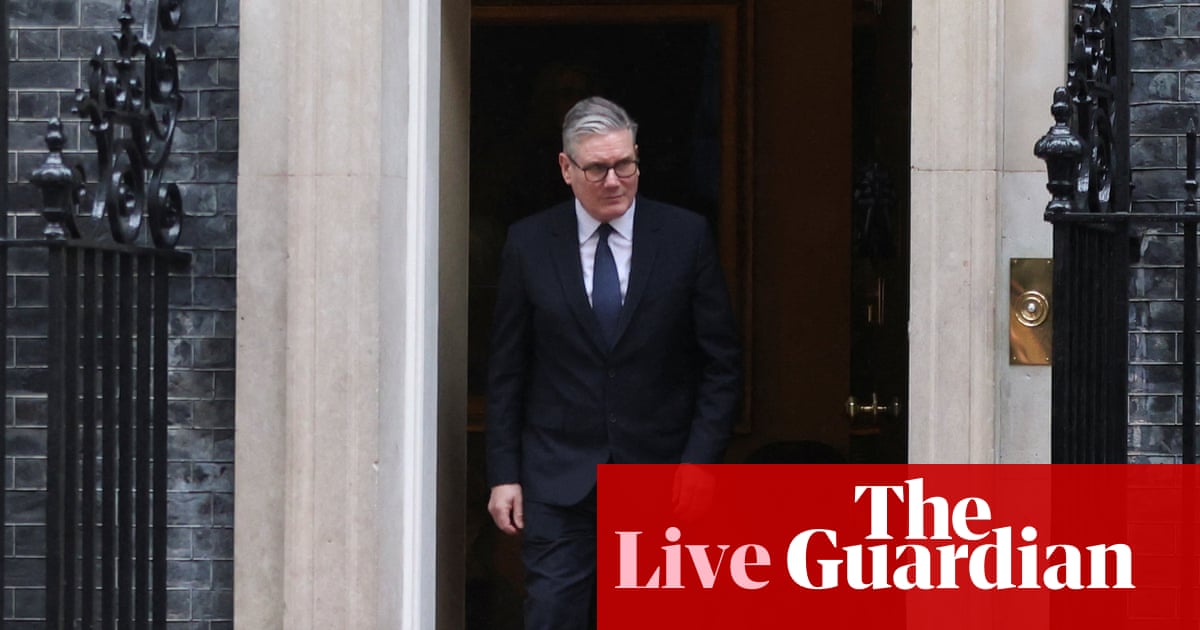
Reeves plays down significance of digital ID card U-turn, saying workers will still have to verify ID digitally
Rachel Reeves, the chancellor, has accused the media of exaggerating the extent of the digital ID U-turn.
In an interview on BBC Breakfast this morning, she said:
On the digital ID, for starters, I do think this story has been a bit overwritten.
We are saying that you will need mandatory digital ID to be able to work in the UK.
Now the difference is whether that has to be one piece of ID, a digital ID card, or whether it could be an e-visa or an e-passport, and we’re pretty relaxed about what form that takes …
I don’t think most people mind whether it is one piece of digital ID or a form of digital ID that can be verified.
When it was put to her that repeated U-turns undermined confidence in the government, she replied:
The key thing is where you’re trying to go. Our government, this government, our focus is on growing the economy and improving living standards for working people.
Key events
Big Brother Watch, a civil liberties group which says it campaigns against the “surveillance state”, has joined Reform UK (see 10.07am) in calling for the government’s digital ID scheme to be now fully abandoned. Its director, Silkie Carlo, said:
We welcome Starmer’s reported U-turn on making intrusive, expensive and unnecessary digital IDs mandatory. This is a huge success for Big Brother Watch and the millions of Brits who signed petitions to make this happen.
The case for the government now dropping digital IDs entirely is overwhelming. Taxpayers should not be footing a £1.8bn bill for a digital ID scheme that is frankly pointless.
Farage says digital ID U-turn ‘victory for individual liberty’
And Nigel Farage, the Reform UK leader, says the digitial ID U-turn is a victory for liberty.
Keir Starmer has abandoned plans for the Digital ID to be compulsory.
This is a victory for individual liberty against a ghastly, authoritarian government.
Reform UK would scrap it altogether.
Zack Polanski welcomes digitial ID U-turn, saying plans to reduce jury trials ‘need to go next’
Zack Polanski, the Green party leader, has welcomed the digitial ID U-turn. In a post on Bluesky, he says:
The Government have u-turned on ID Cards.
Good.
Authoritarian plans to scrap jury trials need to go next.
Heidi Alexander was giving interviews this morning to promote the government’s plans to revive Northern Powerhouse Rail. Gwyn Topham and Josh Halliday have more about that announcement here.
Transport Alexander Heidi Alexander rejects suggestions government has done ‘massive U-turn’ over digital ID
Heidi Alexander, the transport secretary, has also been giving inteviews this morning. Like Rachel Reeves (see 9.13am), she played down the significance of the digital ID U-turn. She told Times Radio:
We will still have mandatory digital right-to-work checks. The form of digital ID … the nature of the material that is presented could be either the digital ID on somebody’s phone [the new document proposed by the government, sometimes referred to as a “card” although not a physical card, that would have been mandatory for workers] … or it could be another form of digital documentation which contains proof of your right to work.
When it was put to her that the government had performed a “massive U-turn”, she replied:
You say that this is some sort of massive U-turn. We said that we would have digital checks on people for right to work. That’s what we are continuing to do … Those are the things that we said that we would deliver for the electorate. Change takes time.
West Midlands chief constable apologises to Commons committee for error in evidence over Maccabi Tel Aviv fans ban
Craig Guildford, the West Midlands chief constable who is fighting for his job over claims his force misled MPs about the intelligence used to justify its call for Maccabi Tel Aviv fans to be banned from a Villa Park match last year, has apologised to the Commons home affairs committee over a mistake in evidence given to it.
He offered a “profound apology” in a letter written Monday, and it has been published today.
Earlier this morning, referring to the statement that Shabana Mahmood, the home secretary, will make to MPs about this later, a Home Office spokesperson said:
The home secretary has this morning received the chief inspectorate’s findings into the recommendation by West Midlands Police to ban Maccabi Tel Aviv fans from attending a match against Aston Villa.
She will carefully consider the letter and will make a statement in the House of Commons in response later today.
As Vikram Dodd reports, Simon Foster, the Labour West Midlands police and crime commissioner, who is the only person who can sack Guildford, has criticised MPs on the home affairs committee for allegedly briefing journalists that Guildford should be ousted, despite the fact their inquiry into the controversy continues.
Dodd says:
Sources say [Foster] has an open mind about Guildford’s fate and wants to read the HMIC [His Majesty’s Inspectorate of Constabulary] and home affairs committee findings before he decides the fate of the chief constable, whom he has praised for cutting crime and improving the force.
Reeves plays down significance of digital ID card U-turn, saying workers will still have to verify ID digitally
Rachel Reeves, the chancellor, has accused the media of exaggerating the extent of the digital ID U-turn.
In an interview on BBC Breakfast this morning, she said:
On the digital ID, for starters, I do think this story has been a bit overwritten.
We are saying that you will need mandatory digital ID to be able to work in the UK.
Now the difference is whether that has to be one piece of ID, a digital ID card, or whether it could be an e-visa or an e-passport, and we’re pretty relaxed about what form that takes …
I don’t think most people mind whether it is one piece of digital ID or a form of digital ID that can be verified.
When it was put to her that repeated U-turns undermined confidence in the government, she replied:
The key thing is where you’re trying to go. Our government, this government, our focus is on growing the economy and improving living standards for working people.
Blunkett says he is ‘disappointed’ by digital ID U-turn, and blames Starmer for lack of ‘strategic plan’ to defend policy
On the Today programme David Blunkett, a Labour home secretary under Tony Blair and a strong supporter of ID cards, said he was disappointed but not surprised by the digitial ID U-turn. Blunkett said.
I’m disappointed, but I’m not surprised.
I’m not surprised because the original announcement was not followed by a narrative or supportive statements or any kind of strategic plan which involved other ministers and those who are committed to this actually making the case.
And, as a consequence, those who are opposed to the scheme for all kinds of nefarious and very different reasons – some of them inexplicable – were able to mobilise public opinion and to get the online opposition to it up and running.
So, very sadly, it’s an indication of a failure to be able to enunciate why this policy mattered, to be able to follow through with a detail of how it would work, and then to reinforce that by a plan and communication of action.
And, when you failed to do all those things, it’s not surprising in the end, this thing runs into the sand.
Blunkett is right to say that Keir Starmer announced plans for digital ID (cards were not part of it – despite the scheme regularly being described in those terms) in a fairly haphazard manner. Digital ID was not in Labour’s manifesto. Starmer announced the proposal in a surprise speech last autumn, just before Labour’s conference. He presented it as a major change. But the following week, in his conference speech, he did not mention it, and he did not build support for it in the party.
At least, when he announced the plan, it was popular. But then public support for it collapsed, leading to claims that Starmer had a “reverse Midas touch”, as Eleni Courea reported at the time. In October she wrote:
Net support for digital ID cards fell from 35% in the early summer to -14% at the weekend after Starmer’s announcement, according to polling by More in Common.
The findings suggest that the proposal has suffered considerably from its association with an unpopular government. In June, 53% of voters surveyed said they were in favour of digital ID cards for all Britons, while 19% were opposed.
Tories and Lib Dems criticise Starmer’s ‘spinelessness’ after U-turn on digital ID
Good morning. Keir Starmer has performed another U-turn – on compulsory digital ID. Here is Peter Walker and Pippa Crerar’s overnight story.
A few days ago Noah Keate from Politico listed seven major U-turns the government has already performed. Today’s news takes that tally to eight, although, if you were being harsh, you could probably find more, because government always involves adjusting to circumstances, and so plans always change. But these a big, proper U-turns, in the usual meaning of the word as applied to politics – significant reversals on signature policy.
U-turns normally allow the opposition to enjoy saying ‘we told you so’, and there has been a lot of that overnight. This is from Kemi Badenoch.
The Prime Minister is ‘turning the corner’…straight into another u-turn.
Good riddance. It was a terrible policy anyway.
This is from her shadow Cabinet Office minister Mike Wood.
While we welcome the scrapping of any mandatory identification, this is yet another humiliating U-turn from the government. Keir Starmer’s spinelessness is becoming a pattern, not an exception.
What was sold as a tough measure to tackle illegal working is now set to become yet another costly, ill-thought-out experiment abandoned at the first sign of pressure from Labour’s backbenches.
And this is from Lisa Smart, the Lib Dem Cabinet Office spokesperson.
Number 10 must be bulk ordering motion sickness tablets at this rate to cope with all their U-turns.
It was clear right from the start this was a proposal doomed to failure, that would have cost obscene amounts of taxpayers money to deliver absolutely nothing.
The political debate about the merits or otherwise of this was captured last in a good exchange of tweets (Bluesky tweets) between my colleague Pippa Crerar and Sam Freedman, the Comment is Freed substacker and policy expert. At the start of a thread, Pippa said:
Remember Lynton Crosby’s “barnacles off the boat” strategy? At 2010 and 2015 elections the Tories successfully shed unpopular policies and perceptions that hindered their electoral appeal. Instead, they focused on core messages they believed would help win over floating voters. It worked.
This is the argument used by governments of all kind down the ages to justify U-turns – take the short-term hit, because in the longer term you are better off if you ditch an unpopular policy.
But Freedman, replying to this post, said:
Unfortunately to make this strategy work you need a boat.
By this he means there is no point Starmer ditching his unpopular policies if no-one knows what his core, popular ones are.
Starmer would argue he has got a boat; he explained it to cabinet yesterday, reducing the cost of living. But Labour MPs fear that voters either have not got the message, or aren’t impressed by it.
Here is the agenda for the day.
Noon: Keir Starmer faces Kemi Badenoch at PMQs.
After 12.30pm: Shabana Mahmood, the home secretary, makes a statement to MPs about West Midlands police and their support for Maccabi Tel Aviv fans being banned from the match against Aston Villa last year. She will present the results of an inquiry by the police inspectorate into how WMP justified the decision. Craig Guildford, the chief constable, has been accused of giving misleading information to MPs about the intelligence used to justify the decision, and, although Mahmood does not hhiave the power to sack Guildford, there is speculation she will says she no longer has confidence in him.
2pm: Rachel Reeves, the chancellor, will confirm plans to revive the Northern Powerhouse Rail project at an event in Leeds.
If you want to contact me, please post a message below the line when comments are open (between 10am and 3pm), or message me on social media. I can’t read all the messages BTL, but if you put “Andrew” in a message aimed at me, I am more likely to see it because I search for posts containing that word.
If you want to flag something up urgently, it is best to use social media. You can reach me on Bluesky at @andrewsparrowgdn.bsky.social. The Guardian has given up posting from its official accounts on X, but individual Guardian journalists are there, I still have my account, and if you message me there at @AndrewSparrow, I will see it and respond if necessary.
I find it very helpful when readers point out mistakes, even minor typos. No error is too small to correct. And I find your questions very interesting too. I can’t promise to reply to them all, but I will try to reply to as many as I can, either BTL or sometimes in the blog.
#Reeves #plays #digital #Uturn #Tories #Lib #Dems #criticise #PMs #spinelessness #politics #live #Politics