wellnessfitpro
Reporting Highlights
- Less Violent Crime: Trump ordered a law enforcement surge in Memphis to end violent crime. But crime in the city has fallen steadily since 2023, hitting a 25-year low before the surge began.
- Arrests for Nonviolent Crimes: The vast majority of the more than 5,200 arrests made by the Memphis Safe Task Force in its first four months have been for nonviolent crimes.
- Immigrants at Risk: Of the task force’s immigration arrests, about 4 out of 5 followed traffic stops, our analysis shows — leaving many immigrants in fear.
These highlights were written by the reporters and editors who worked on this story.
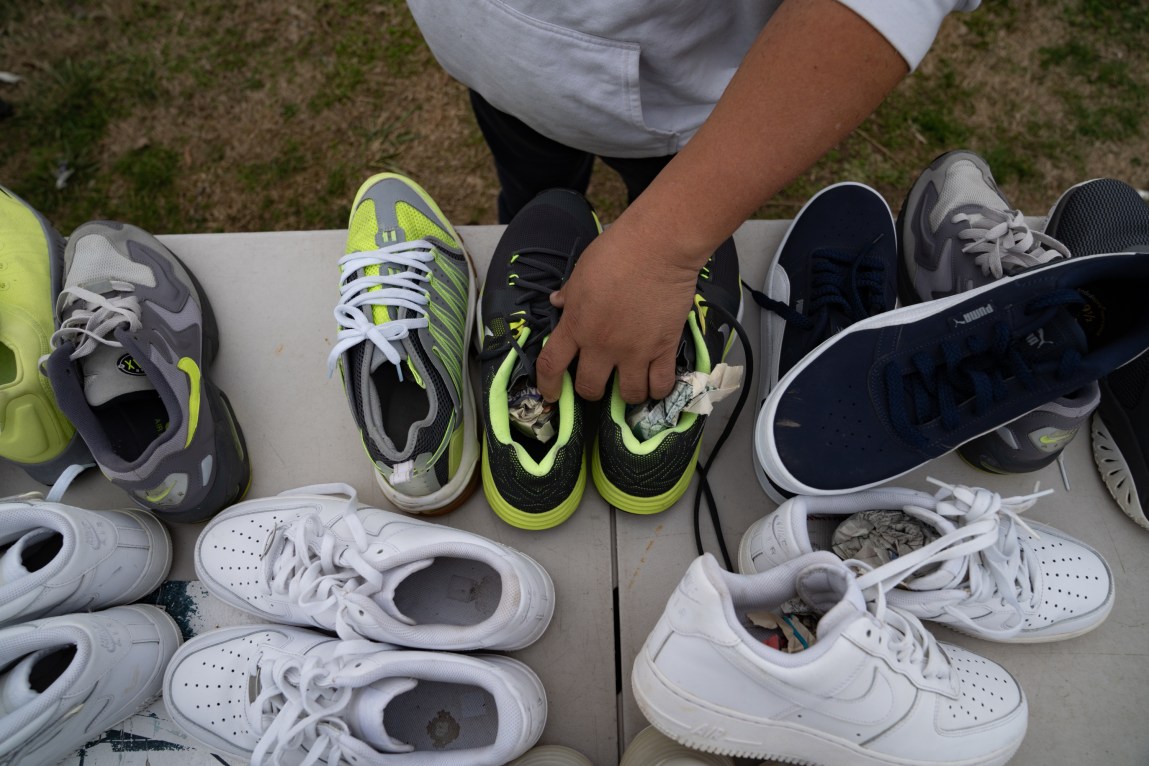
On an overcast Saturday in February, a street vendor named Elmer lined up dozens of pairs of worn but carefully cleaned tennis shoes on tables next to a convenience store.
The 44-year-old father from Honduras felt like his head was on a swivel, greeting the handful of shoppers that approached while also scanning the busy thoroughfare behind him. He was ready to serve — or to run.
Last fall, as Elmer and his son were setting up their shoe stand, he said, agents wearing Homeland Security vests arrested two Guatemalan men in a nearby parking lot. A few hours later, the Mexican owner of a taco truck across the street was also detained by immigration authorities.
Then in December, Elmer’s 19-year-old nephew was taken, too, following a traffic stop; he remains incarcerated in a Tennessee detention center. Elmer worries that he and his son could be next. They fled Honduras seven years ago to escape gang violence and are not authorized to be in the United States. Elmer spoke with MLK50: Justice Through Journalism and ProPublica on the condition that only his first name be used.
Those around Elmer were swept up as part of President Donald Trump’s September order deploying more than two dozen state, local and federal law enforcement agencies, including the National Guard, to neighborhoods in Memphis, Tennessee. Unlike federal operations in Minneapolis, Chicago and other cities where immigration officers flooded the streets to ramp up deportations, the stated mission of the Memphis Safe Task Force was different: “to end street and violent crime in Memphis to the greatest possible extent.”
But just over a quarter of the more than 5,200 arrests made by the task force in and around Memphis have been for violent crimes, according to an MLK50 and ProPublica analysis of nearly four months of daily arrest reports from October through the beginning of February. The vast majority of violent crime arrests stemmed from outstanding warrants.
And despite casting violent criminals as the task force’s primary target, the operation has swept up more than 800 immigrants whom law enforcement deemed to be unlawfully present in the United States. Of those, just 2% — or 17 — were also arrested for violent crimes, our analysis found. Being unlawfully present on its own is a civil, not a criminal, offense.
More immigration arrests occurred in and around Parkway Village, the neighborhood where Elmer sells shoes, than in any other part of Memphis, according to our analysis. This majority Black community on the outskirts of the city’s core is also one of the fastest growing Hispanic neighborhoods in Memphis. It is dotted with immigrant-owned businesses — barber shops, grocery stores, a tax preparer — that serve a predominantly Spanish-speaking clientele. Other vendors sell tamales and cheese from the trunks of their cars. Overall, 81% of the neighborhood’s task force arrests have been for nonviolent crimes, including immigration violations, drug offenses, theft and illegal possession of weapons.
Trump has repeatedly proclaimed success in Memphis, crediting the task force for a more than 30% decline in homicides, aggravated assaults and sexual assaults compared with the same period last year.
While some research has shown that a surge in policing could deter crime, Memphis Police Department data indicates that crime had already been dropping steadily since 2023, hitting a 25-year low before the task force began its operations last fall. Criminologists say more analysis is needed to determine how much impact the task force has had on crime rates in Memphis.
Abigail Jackson, a White House spokesperson, said crime rates continued to drop due to “the great work of President Trump’s task force.”
“Every local leader should want to mimic this success,” she said in a written statement.
Jackson did not answer questions about the gap between the task force’s stated mission to end violent crime and the fact that so few of the immigrants arrested were suspected of committing such crimes. Nor did Brady McCarron, a spokesperson for the U.S. Marshals Service, which leads the task force. Instead, he reiterated Trump’s claims that the task force has restored law and order to Memphis.
“All Memphians are safer today than they were seven months ago because of the Memphis Safe Task Force,” McCarron said in a written statement. “Calls for service are down 18% since last year. Meaning less crimes are being committed that residents must call in for law enforcement response.”
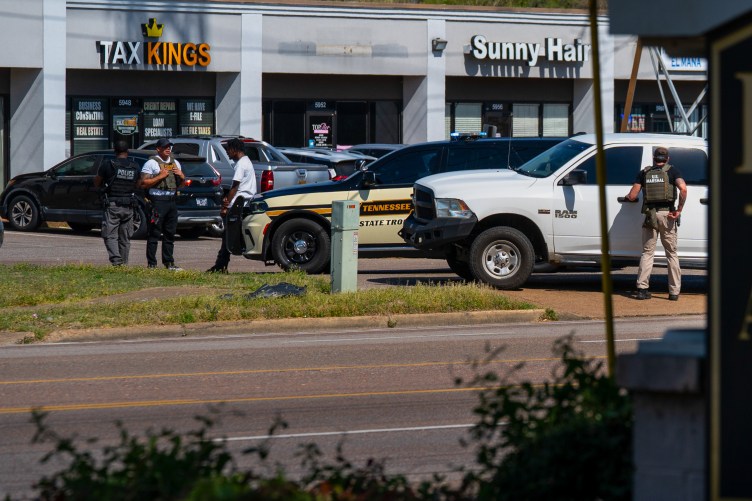
In response to some Memphians saying that the task force’s immigration activity makes them feel unsafe and discourages immigrants from reporting crimes and cooperating with police, McCarron said: “We are aware of concerns raised by community advocates. Our focus remains on removing violent offenders, recovering illegal firearms, and protecting all Memphis residents, including communities who are disproportionately victimized by violent crime.”
What the Trump administration celebrates as a successful crime-fighting campaign, Latino advocacy groups and civil rights organizations argue is a crusade that’s left much of the Hispanic community in turmoil and fear, as it grapples with the social isolation, economic instability and trauma the task force has brought.
The task force has shrunk Elmer’s world to work, church and a drafty rental home near the railroad tracks that he shares with his 20-year-old son, whom he raised alone.
Three of Elmer’s siblings also live in Memphis, but since the task force arrived, family gatherings have been few. No one wants to risk being detained while driving across town.
During the week, Elmer shops for used Nikes, New Balances and other sneakers at thrift stores, then sells them in front of the neighborhood convenience store on the weekends. Elmer said he used to sell 100 pairs of shoes a week. Now, he’s lucky if he sells 20 — bringing home $500 a month instead of his usual $2,400.
Elmer said his father, a former police officer who had a car rental business in Honduras’ capital city, was gunned down after refusing to pay off a local gang. Elmer tilted his chin up as he spoke to keep tears from falling.
“Sometimes I ask my son, ‘What would your life be like if we never left?’” Elmer said through a Spanish interpreter. “He answered, ‘I would probably be dead,’” killed by the same gang that took his grandfather.
Ever vigilant still, Elmer has mapped three escape routes from his shoe stand, just in case the task force reappears. As he pointed them out, a Tennessee Highway Patrol SUV flew down the road behind him, lights flashing and sirens blaring.
On a recent Friday afternoon, while Elmer was working, an unmarked white SUV leaving the parking lot slowed to a stop a few feet from his shoe stand. Immigration officers wearing bulky green vests sat inside the vehicle and stared at Elmer and the Hispanic men standing with him.
The agents didn’t say a word, Elmer recalled, but “I could feel the intimidation because I know who they are.”
Although it felt like forever, Elmer said, the federal agents only looked at them for 10 or so seconds — long enough for Elmer to abandon the escape routes he had planned and remember his son’s advice: Don’t run, or they may chase you.
So he froze, waiting for the moment to pass.
Violent Crime Campaign Swept Up Immigrants
Last month, Trump came to Memphis and declared victory from a stage decorated with seized weapons and cardboard boxes stamped “DEA EVIDENCE.”
“You have now developed a reputation as a city that’s coming back stronger than any city in the country because of what’s happened with crime, and because your political leaders have the courage to do what they did,” Trump told hundreds of National Guard troops, law enforcement officers and local and state Republican leaders gathered in a Tennessee Air National Guard hangar.

Armored vehicles and a law enforcement helicopter were parked next to the stage, framing the president and other administration officials, including Defense Secretary Pete Hegseth and White House Deputy Chief of Staff Stephen Miller. Miller has worked closely with Tennessee Republicans as they try to pass bills to require courts, public health clinics and law enforcement to cooperate with U.S. Immigration and Customs Enforcement. The Trump administration has praised the proposed legislation and the task force as possible models for the rest of the country.
The influx of law enforcement has created a political minefield for Memphis Mayor Paul Young, a Democrat in a blue corner of a Republican-led state. Hours after Trump’s appearance, which the mayor did not attend, Young said during a press conference that the task force has “amplified” the work Memphis police had already been doing to reduce crime and that the increased law enforcement presence has led to “greater results,” especially in executing warrants. About half of all task force arrests have been for outstanding warrants.
But Young said he disagreed with the task force’s immigration enforcement role. “That’s not a part of those efforts that I am supportive of,” he told reporters. “I think that immigrants in our community have been a vital part of the growth of our city for the past 10 to 15 years, and we want them to feel welcome in our community.”
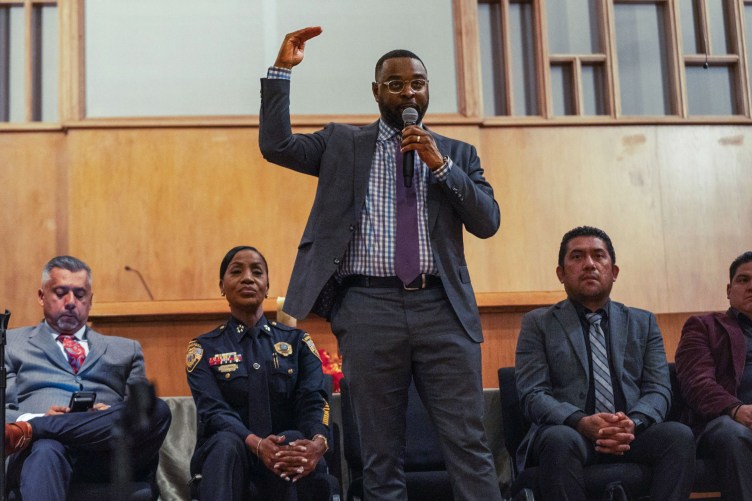
For immigrants without proper documentation, some say one of the riskiest things they can do since the task force arrived is to get behind the wheel. Of the task force’s immigration arrests, about 4 out of 5 followed traffic stops, the MLK50 and ProPublica analysis found. The Tennessee Highway Patrol, which leads the task force’s traffic enforcement efforts, usually initiates the traffic stops — often for minor violations such as a broken taillight or windows tinted too dark. Then immigration officers, who are often following the state troopers or riding with them, interrogate the driver and passengers, according to Vecindarios 901, an immigration rapid-response organization that has witnessed dozens of stops. Those who cannot provide proper documentation are arrested.
The task force did not answer questions about the use of traffic stops as a primary means of arresting immigrants who are not authorized to be in the United States.
As law enforcement descended upon Parkway Village, church attendance dipped, according to a pastor with a primarily indigenous Guatemalan congregation; parishioners too scared to leave home chose instead to submit prayer requests through online services, she said. Pastors have agreed to serve as guardians to their members’ U.S.-born children in case their parents get deported.
Business owners and grocery store workers say sales have plummeted, forcing some to cut back on staffing. In the first weeks of task force operations, Hispanic student attendance at a neighborhood school fell by half, one administrator said.
At another neighborhood school, its communications coordinator, Paola, used to start her workday at the front desk, greeting students. Now she often starts it in her car, shuttling a pair of siblings to school. The 21-year-old from Venezuela stepped in to help after the children’s father was arrested in October during an appointment at immigration court. Their mother is afraid to drive them to school.

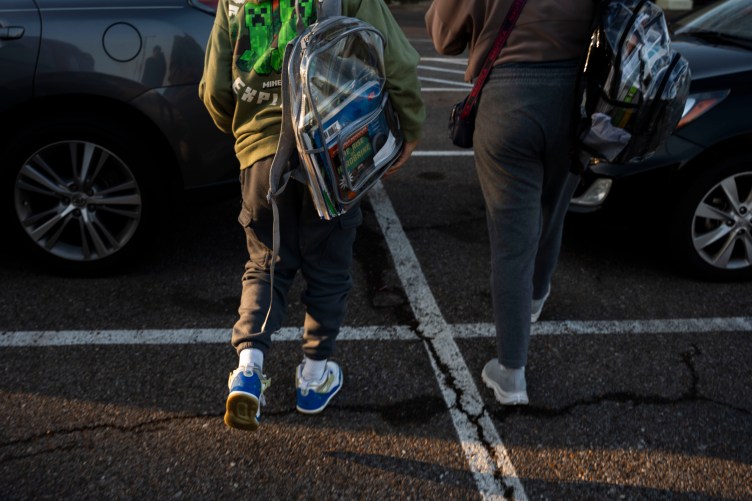
Paola and her father worried at first that she, too, might be detained even though she is authorized to work in the United States. She agreed to be interviewed on the condition that only her middle name be used to protect her and her family.
“Our role is not political,” she said. “We are here to care for students and their families.”
Minutes away off Winchester Road, a busy street in Parkway Village, the Rev. Rolando Rostro is also watching out for his community. Rostro pastors Iglesia Nueva Vida, the largest Hispanic church in the Memphis area, where Sunday attendance fell from 800 to 500 during the first several months of the task force. Parishioners still live in fear, but attendance has gradually increased, he said. “We have to go to church.”
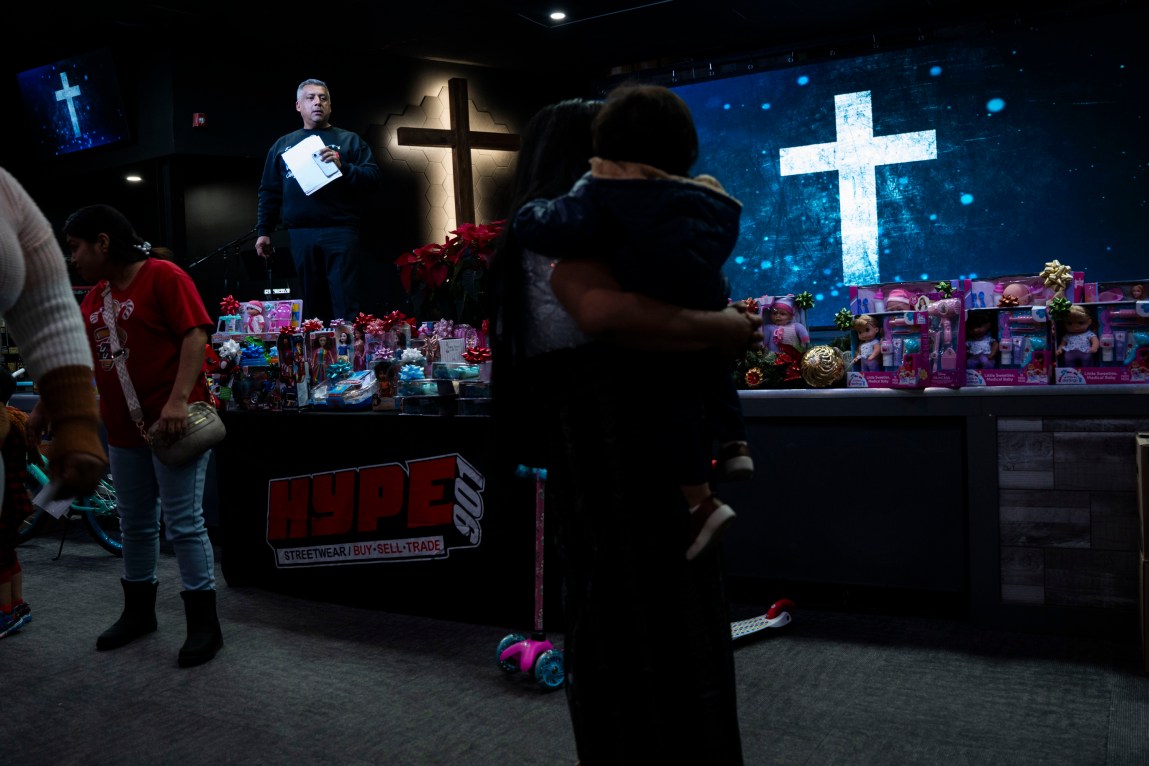
Alerted to traffic stops through phone calls or an online system set up by Vecindarios 901, Rostro often responds to the scene after state troopers or county sheriff’s officers — followed by federal agents — have pulled drivers over. It’s part of his “assignment” as a pastor during a difficult period for his community, he said; he goes to bear witness and ask that immigrants arrested be released. “The Bible says ask and you will receive,” he said.
Sometimes, he recognizes his parishioners.
“Hey, that’s not ‘the worst of the worst,’” Rostro said he has told the law enforcement officers, rebutting the Trump administration’s characterization of the immigrants federal officials are targeting. “I know him. He goes to my church. He’s a good man,” Rostro has said — in hopes that sharing details about the people’s lives would “plant a seed of a different way of seeing things.”
During Trump’s first administration, Rostro said one of his parishioners was released from ICE detention after he spoke with agents.
But that hasn’t happened this time.
So he checks in with church members who are detained, learning they are held in cold, rat-infested conditions and pressured to return to their home countries. A spokesperson for the Department of Homeland Security said ICE has higher detention standards than most U.S. prisons but would not address the conditions at the detention centers in which Rostro’s parishioners are held.
“This is a family community,” Rostro said, “so the breakup of that is very detrimental to the children and to the whole family structure.”
A Community Hub Unnerved
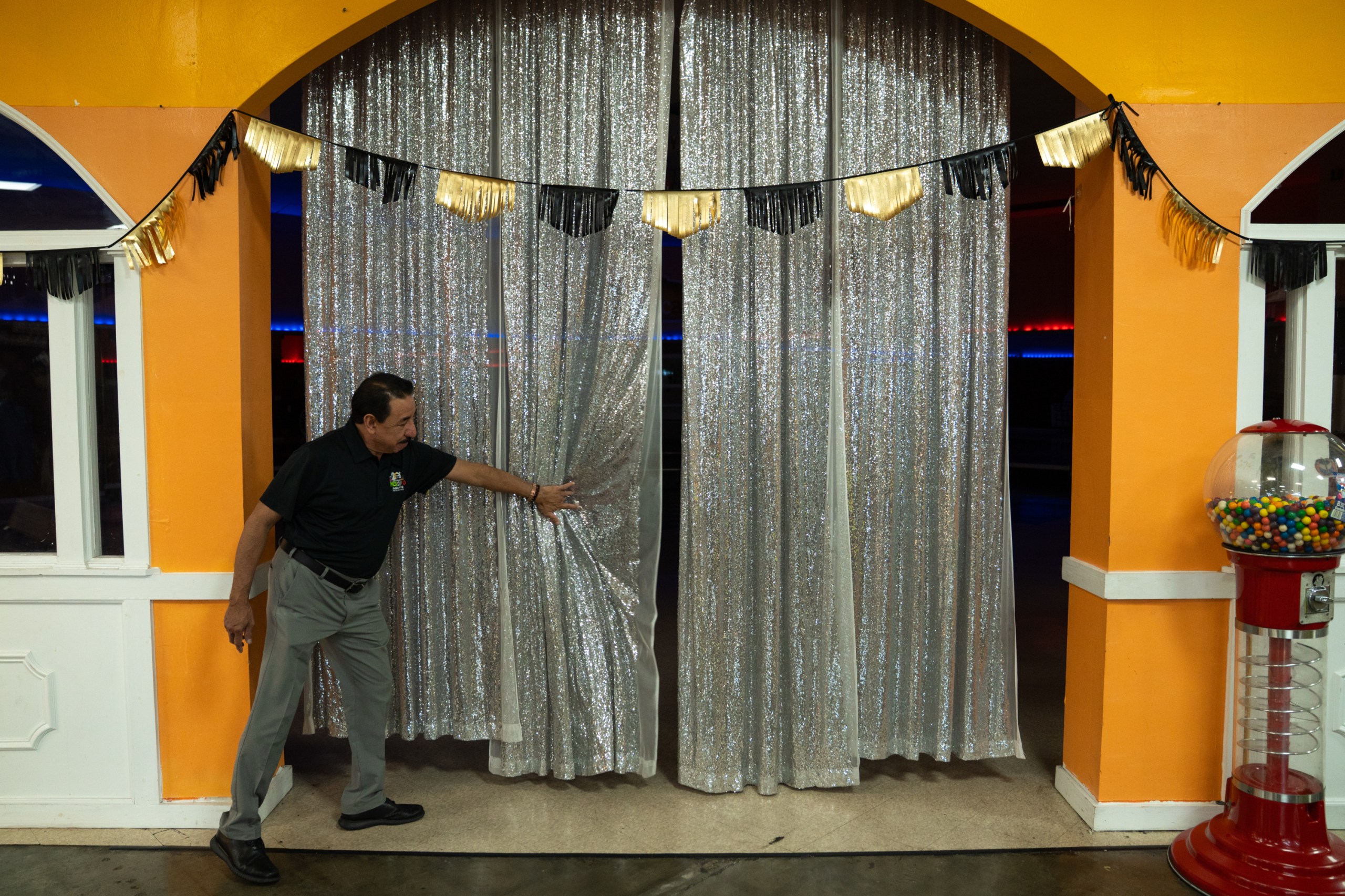
A few miles down the street from the church, Juan Hernandez, who is originally from Mexico, led a reporter through El Mercadito, the sprawling indoor shopping center he opened in 2005. Vendors in the normally bustling commercial hub had few customers to greet one afternoon in early March.
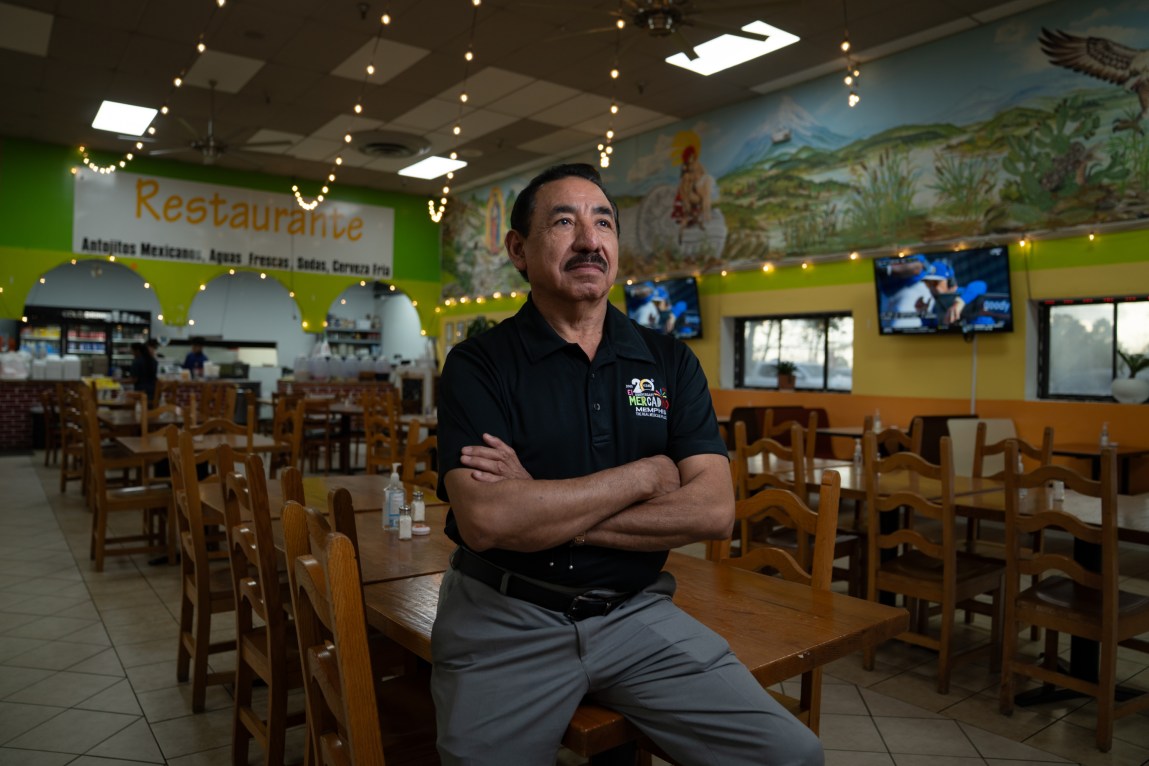
With dozens of immigrant-run booths selling everything from neon safety vests for construction workers to frilly dresses for little girls, El Mercadito also rents space for events, including lucha libre (Mexican wrestling) and quinceañeras.
But since October, there have been fewer bookings for birthday parties. As shoppers stayed home, some booth owners struggled to keep up with the rent, Hernandez said. Two Guatemalan booth owners were so fearful to come to work that they shuttered their clothing stands.
In the task force’s first weeks, Hernandez tried to calm the fears of shoppers, vendors and his employees at the Mexican restaurant inside the market. He hired private security to guard the doors and to monitor video cameras for signs of task force agents. Then he realized that it was the traffic stops by state troopers that were most often leading to immigration arrests, so he no longer needed the guards.
Two or three times a week, federal agents would show up at his restaurant for breakfast. First one, then a pair, then eight or more, pushing tables together. When they left to get in their cars, Hernandez saw them putting on vests marked HSI: Homeland Security Investigations.
On two occasions, someone — he’s not sure if it was a customer or a booth owner — posted photos of the agents at El Mercadito on social media, as a warning to customers to stay away.
Hernandez understands why people are wary: Two of his friends have been deported by immigration authorities across town, leaving behind teenage children. The sister of one of his servers was detained.
But, as he has explained to his vendors and employees in a meeting, no shoppers or diners means no income for the booth owners or the restaurant. He said restaurant sales have fallen by 40% since the task force’s launch.
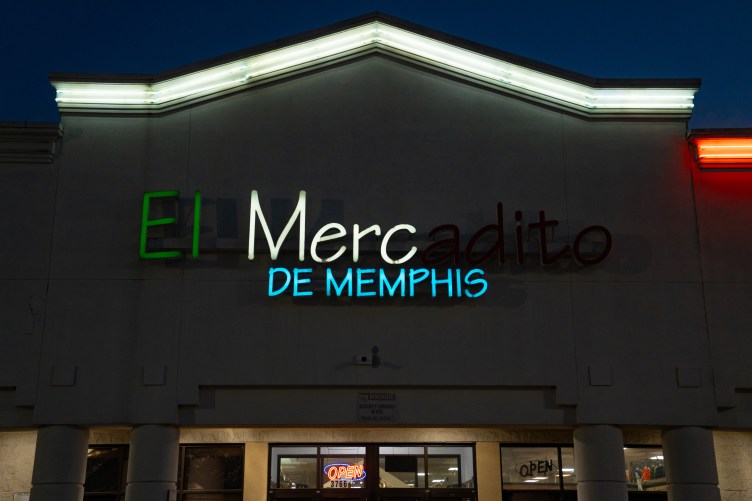
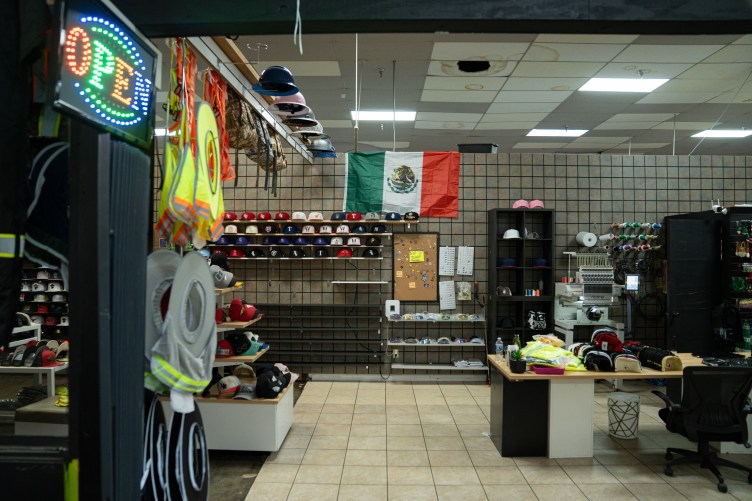
“I used to have these feelings of anger like, you know, they are looking for us, and then they come to eat here,” Hernandez said through a Spanish interpreter, but there was nothing he could do. “They were paying for the food, so we have to serve.”
Hernandez typically offers police officers 10% off their checks, but not for this group. “I decided I don’t give discounts to them because of the harm they are doing in our community.”
Hernandez had received amnesty under Republican President Ronald Reagan when he came to the United States more than 40 years ago. He said he’s now been forced to consider the unthinkable.
“I have never had the thought of coming back to my country,” he said. “Now I do — because of the government.”
#Immigration #Arrests #Memphis #Safe #Task #Force #Violent #Crime #Records #Show #ProPublica