wellnessfitpro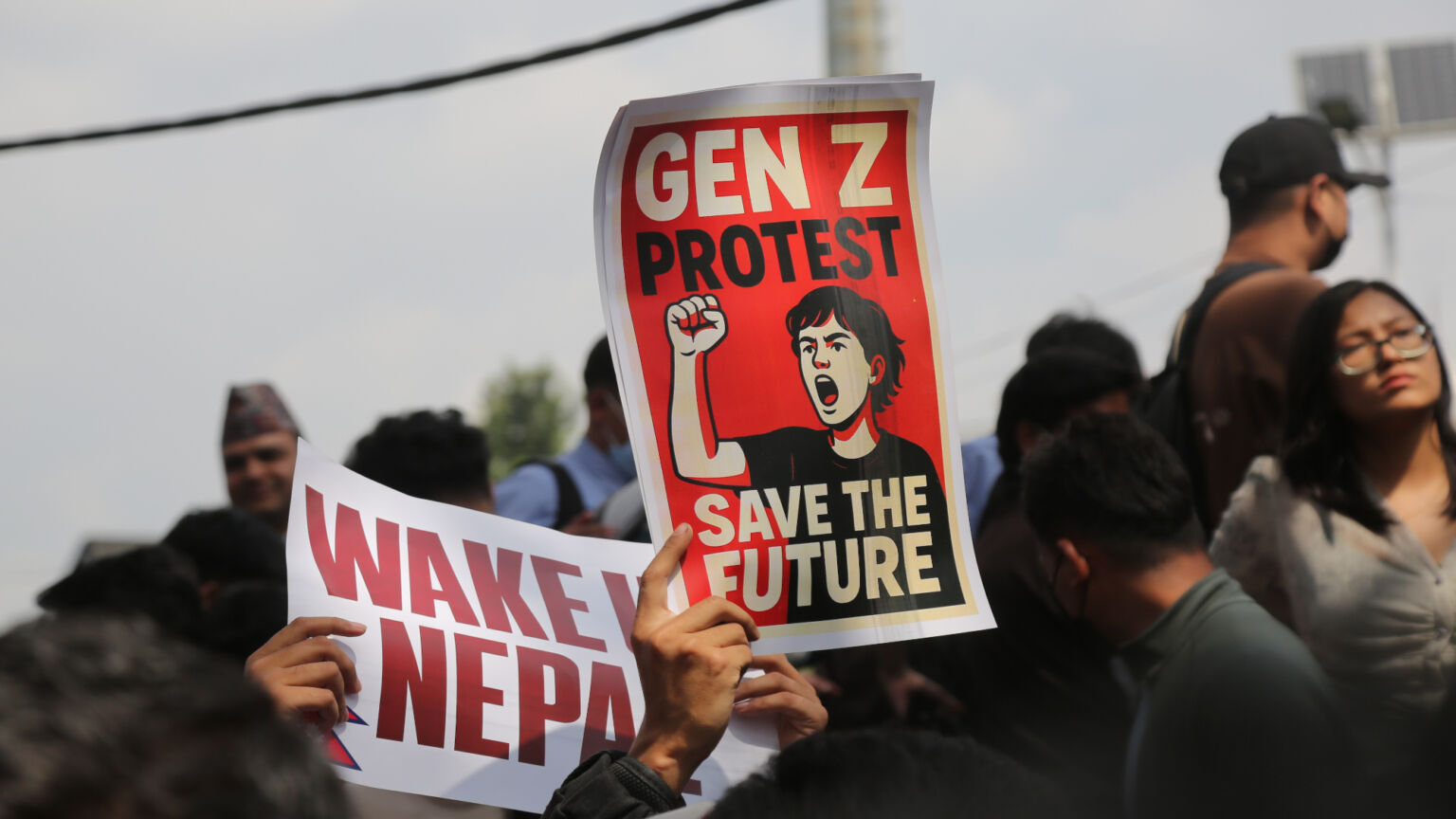
Since the autumn of 2025, a wave of youth-led uprisings has spread across South Asia and beyond. The protests have had different triggers, but they are unified by a striking consistency of grievance: political corruption, economic exclusion and police repression. They are driven by a sense prevalent among Generation Z that today’s young people lack a political voice, and have been saddled with exceptional economic hardship.
Initiated and coordinated by digitally connected youth, these movements also share a common visual language: the One Piece pirate flag, which first emerged in Eiichiro Oda’s manga series in the late 1990s, and is one of the most popular anime franchises in the world. In the same way the pirates in the series raise the flag as a symbol of freedom against their corrupt government, protesters state that the flag is a ‘symbol of liberation against oppression‘ – a message that has resonated across borders. As 23-year-old Eugero Vincent Liberato, a protester in Manila, put it: ‘Even though we have different languages and cultures, we speak the same language of oppression… that we should always fight for the future we deserve.’
This current wave of youth-led rebellion began in Indonesia in late August 2025. It was prompted by the news that Indonesian MPs were set to receive a monthly housing allowance of around $3,000. This is roughly 10 times the minimum wage in Jakarta, and many times more than the minimum wage in the poorer regions outside the capital. Many of these MPs were already earning well over $5,500 a month, placing them in a different financial universe to most Indonesians.
The news of the MPs’ housing allowance came against the background of the growing scandal of the government’s flagship free-school-meals programme. Launched in 2023 to tackle Indonesia’s severe child malnutrition crisis, the programme had, by 2025, been plunged into chaos. Contaminated meals had led to the poisoning of more than 9,000 children, with at least one child reported to have died. For many Indonesians, the contrast was impossible to ignore: a political class enriching itself while a programme meant to feed children had left thousands seriously ill.
Shortly after the Indonesian unrest began, Nepal’s youth-led uprising erupted on 4 September last year. Referred to by the media as ‘Gen Z demonstrations‘, their initial trigger was the government’s decision to block access to several social-media platforms, as part of a campaign to crack down on ‘misuse’. Dominated by students in their twenties and teens, the protests quickly escalated. Protesters stormed and set fire to government buildings in Kathmandu, including parts of the prime minister’s office complex, while police headquarters and ministry offices were attacked in coordinated unrest across the capital. In total, 76 people were killed and more than 2,500 injured. Within days of the uprising beginning, the government had been forced from office and the prime minister, Khadga Prasad Oli, had been toppled.
The government’s attempt to regulate online expression may have been the trigger for the protests. But the core grievances in Nepal were, like those in Indonesia, elite corruption and youth poverty. As 22-year-old protester Ranjana Kami explained to one media outlet, ‘politicians are unchanged, unaccountable and corrupt’. Indeed, Nepal has cycled through 32 governments since 1990, and ranks 109 out of 182 countries on Transparency International’s corruption index. Youth unemployment stands at 21 per cent, the highest in South and Southeast Asia. Perhaps most tellingly, around 1,500 people leave the country every day in search of work abroad. ‘I hope the future will be free from corruption… I want the youth who have gone abroad to return’, said 19-year-old Srijana Bhujel, a garment factory worker and protester.
This wave of youthful protest soon spread beyond Indonesia and Nepal and into the Philippines. On 21 September last year, tens of thousands of mostly young demonstrators flooded Manila, Cebu and Davao in anti-corruption protests over the multibillion-dollar flood-control scandal, with officials and politicians accused of pocketing funds designated for vital flood defences. These were explicitly youth-led rallies, organised largely through TikTok, Facebook and Telegram networks. As in Indonesia and Nepal, the One Piece pirate flag was prominent among the crowds at Luneta Park and at the EDSA shrine in Manila. What began as outrage over an embezzlement scandal became a broader youth revolt against elite impunity.
The youth-led revolts soon extended westward, across the Indian Ocean. The protests in Madagascar, in late 2025, began over water shortages and rolling blackouts, but quickly escalated – as they had done elsewhere – into a broader rejection of corrupt governance. One young activist told the Guardian that the protesters wanted ‘radical change of the system‘ because it maintained ‘corruption and oppression of the poorest’. The One Piece flag again appeared, this time outside South Asia, and was even adapted into a localised Malagasy version.
What has been happening in South Asia and its near abroad has also been happening elsewhere, too. In Peru, in Latin America, youth-led protests, ignited by a succession of corruption scandals, erupted in late September 2025. Police fired rubber pellets and tear gas, leaving one dead and hundreds injured.
Tensions flared again on 28 January this year. Thousands of National University of San Marcos students were joined by other student groups, the relatives of those killed in a 2023 wave of state repression and public-transport workers, on a march toward Peru’s national congress. Protesters repeatedly described the state in now familiar terms, claiming it had ‘normalised corruption and extortion‘. And as elsewhere, the One Piece flag was fluttered above the insurgent crowds.
In late 2025, Mexico had also erupted in youthful rage. The protests were triggered by the assassination of Uruapan mayor Carlos Manzo, a killing linked to the Jalisco New Generation Cartel. The murder served as a flashpoint for wider anger at president Claudia Sheinbaum’s government for its inability to confront organised crime. Thousands marched under One Piece flags, as protesters stormed buildings and confronted security forces.
We’ve seen evidence that young people’s dissatisfaction and anger are congealing into a political force in parts of Africa, too. After Uganda’s disputed presidential election on 15 January this year, violent protests erupted on to the streets of the capital, Kampala. The demonstrators, in their teens and early twenties, had been mobilised by popstar Bobi Wine’s unsuccessful opposition campaign. This was focussed, as Wine himself put it, on corruption: ‘Corruption is Uganda’s greatest evil… It is corruption that has stolen the future of the people of Uganda. Many of you… have seen corruption rob all your youthful and useful days.’
Wine had touched a nerve. With more than 75 per cent of the population under 30 and youth unemployment running at nearly 50 per cent, demographic pressure and economic exclusion once again proved a combustible mix. On the first night of the protests, at least seven people were killed in clashes between police and opposition supporters. Reuters later reported that, by 23 January, 2,000 opposition supporters had been detained, while army chief Muhoozi Kainerugaba said 30 had been killed in the crackdown.
In Kenya, the same demographic and economic tensions have been at play. Young people have been squeezed by a deepening cost-of-living crisis and a labour market unable to absorb the 800,000 young people entering the workforce each year. The result has been ever-rising levels of youth poverty and unemployment. Little wonder that in June 2024, it was Generation Z at the forefront of large-scale protests against tax and price rises. ‘We are the Gen Zs, we were able to mobilise ourselves’, protester Zaha Indimuli told journalists. ‘We use TikTok as a space to be able to not only have young people come to protest but to educate them on the why.’
And in Morocco last October, similar grievances culminated in large youth-led protests. These once again spiralled into violent clashes with the authorities,
The generational uprisings in Uganda, Kenya and Morocco do not share the One Piece iconography with their equivalents in South Asia and Latin America. But they do draw their youthful energy from the same socio-economic source – that is, the economic and political exclusion of swathes of older teenagers and younger twentysomethings. They are increasingly distrustful of those in power and are beginning to push back. The protests are not coordinated between countries. But they are recognisable expressions of the same emerging Gen Z populism.
It may be tempting to dismiss this generational instability as something that afflicts poorer or less developed countries in South Asia, Latin America and Africa. After all, most of the societies affected are experiencing a demographic ‘youth bulge’ – that is, they have a far larger proportion of people in the younger age brackets than the global average. In Nepal, 21 per cent of the population are aged between 16 and 25, compared with the global average of 15 per cent. Likewise, Indonesia has unusually large Generation Z and Millennial cohorts – 52 per cent of Indonesians are aged between 18 and 39 years old. Sociologists have shown that youth bulges in societies that are unable to incorporate a large influx of young adults, economically and politically, have long been associated with far greater instability.
Developed nations have very different demographic profiles. They tend to be aging societies, with higher proportions of people in the older age brackets than in the younger. Yet the underlying problems that have ignited the insurrections in less developed nations are increasingly present in the West, too. Western youngsters face similar problems and have similar grievances to their peers in South Asia or Latin America.
Across Europe, young people are experiencing economic and political marginalisation. They are certainly finding it increasingly difficult to enter the labour market. As of February 2026, Eurostat recorded 2.9million unemployed under-25s in the European Union – which puts the youth unemployment rate at over 15 per cent. At the same time as work is becoming harder to come by, the cost of living is becoming prohibitive. The European Parliament’s youth survey found that 40 per cent of Europeans aged 16 to 30 cite rising prices as their biggest concern, with a further 31 per cent stating governments need to focus more on providing economic opportunities.
In Britain, the problems are just as acute. Between December 2025 and February 2026, 713,000 young people aged 16 to 24 were unemployed – 70,000 more than the previous year. The unemployment rate for young people at the start of the year was at 15.8 per cent, up from 14.6 per cent the year before. Add in exorbitant housing prices (the median home in England now costs nearly eight times the median annual earnings) and record levels of student debt (the average graduate leaves university with around £53,000 in debt) and you have conditions in which generational grievance and anger can easily flourish.
This is all aggravated by a rapidly declining sense of trust in the political system – a sense, in short, that it is incapable of responding to young people’s demands. The evidence is all about us. Keir Starmer is historically the most unpopular prime minister in history. And he’s just the tip of the iceberg. The consequences of successive Conservative government failures to live up manifesto promises on everything from Brexit to immigration, and the constant scandals involving both Tory and Labour administrations have cemented a perception of the political establishment as incompetent and duplicitous. This is not dissimilar to the view held by young people elsewhere of their own governments as corrupt. Indeed, Transparency International says the UK has fallen to its lowest ever corruption perception score.
Young Brits’ anger is certainly transforming their political outlook. As polling from Find Out Now shows, young people’s loathing of the political establishment is prompting a shift in their voting intentions. Many are now moving away from traditional party politics towards more radical solutions – 41 per cent of under-30s intend to vote for the Green Party, with Reform UK and Restore Britain both at around 10 per cent each. This more radical sentiment is reinforced by Channel 4 research from last year, which found that 47 per cent of Gen Z agreed with the statement ‘the entire way our society is organised must be radically changed through revolution’.
All that said, neither the UK nor the EU are Indonesia or Nepal. The middle-class student bodies of Cambridge or Bristol are unlikely to kickstart a street-focussed uprising. If your sensibilities are inflamed by micro-aggressions and misgendering, you are unlikely to face down riot shields and tear gas.
But something is undeniably stirring. With the looming economic consequences of the Iran War set to hit the UK and EU this summer, the actions of South Asian youngsters should serve as a loud warning shot to any Western government that thinks it can continue to ignore youth immobility and perceived elite corruption.
At best, the West may discover it has incubated a generation indifferent to the collapse of its institutions. At worst, it could face a reckoning similar to that faced by governments elsewhere.
Young people’s demands are clear. They want the opportunities and the political voice that have been denied to them for too long. The consequences of failing to respond to young people’s needs could be dire for society as a whole.
Stephen Sidney is a multimedia producer at spiked.
#Gen #revolt #spiked