wellnessfitpro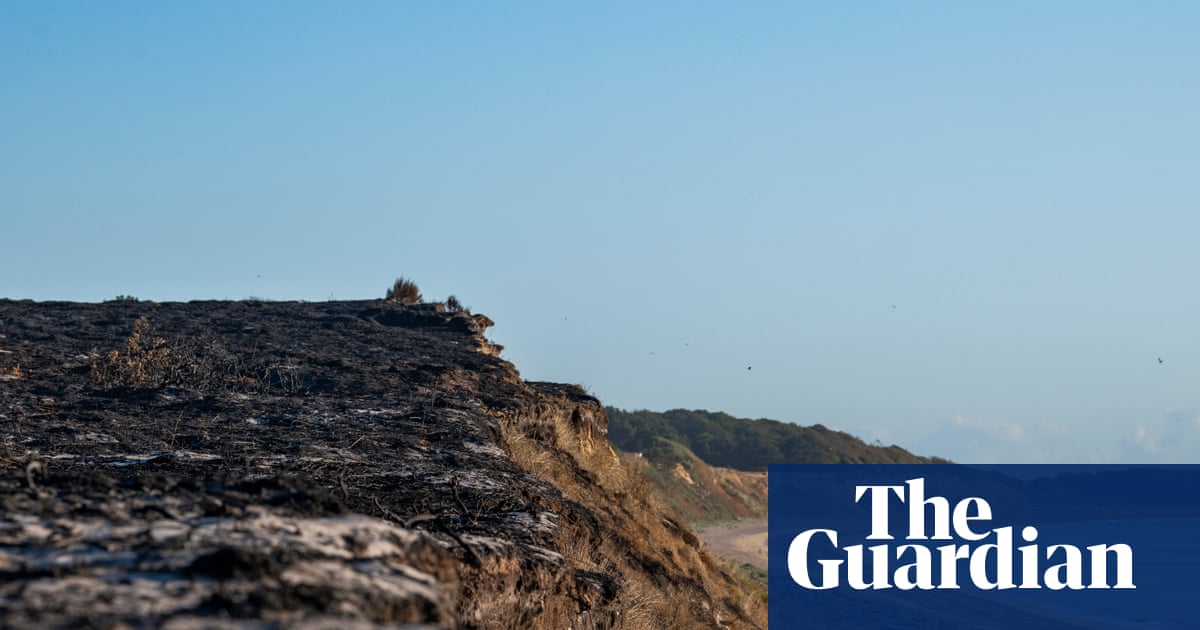
A local community pulling together, emergency services saving homes and caravan parks from catastrophe, and farmers and nature reserve wardens working to rapidly create fire breaks to halt a marauding fireball 40 metres high – there was plenty to praise the week after a swathe of east Suffolk burned.
But local people were also in tears at the blackened, ruined state of more than 112 hectares (277 acres) of Dunwich Heath, mourning the devastation of a much-loved nature reserve alongside neighbouring Minsmere. The rare birds that inhabit the reserve have lost crucial habitat, while the rare invertebrate species there will have been “decimated”, according to the reserve staff.
The fire started on Wednesday 29 July; the cause is still unknown, but Suffolk Fire Service said the fire took hold at a “ferocious pace” owing to the hot weather, dry conditions and changing winds. More than 100 firefighters have attended the scene since then, and crews from 18 fire services were in attendance.
A week later, the above-ground fire has been subdued. The fire service has measured temperatures below ground exceeding 600C and surface temperatures of 60C. Hot winds and a lack of rain leave the dry, sandy region in a state of high alert for further outbreaks, with many evacuated residents advised not to return home. Locals and visitors have been kept away from an area of Dunwich Heath because the fire exposed unexploded ordnance from the second world war.
The impact on wildlife has been vicious. The reserve is home to some of the rarest bird species in the UK, including nightjars, nightingales and Dartford warblers. “The vegetation that is essential for supporting that birdlife, the structure of the gorse and the trees, all appears to have gone. So, in essence, the habitat they would rely on to nest, to feed, to shelter and to roost at night has gone, so they won’t have anywhere to return to,” said Adam Rowlands, the area manager for the RSPB.
As well as rare birds, the site is home to a wide range of rare invertebrates, including the narrow-mouthed whorl snail, antlions, and green tiger beetles.
“We know from previous fires that invertebrates aren’t well equipped to escape fire so they will have suffered mortality,” Rowlands said. And even if they did survive, the loss of the landscape meant they now had nowhere to return to, he added.
While the police investigation into the cause of the latest in a series of devastating global-heating-exacerbated wildfires across Britain is ongoing, the fires had not stopped burning by the time right-wing media and commentators began reporting that “rewilding” was to blame. But when the Guardian asked residents about the fire, its cause and future prevention, rewilding was on no one’s lips.
Conservationists firmly rebutted the claim that an enthusiasm for rewilding – “leaving underbrush, fallen and overgrown vegetation alone”, according to the Times columnist Libby Purves – had contributed to the fires.
“It’s worth stressing this was not a rewilded landscape, this was a traditionally managed, classic 20th century conservation landscape,” said Jonathan Spencer, the former head of the environment for Forestry England and an expert on rewilding and other conservation techniques.
The fire occurred on the old areas of Dunwich Heath, an open and naturally dry mosaic of heather and gorse which has been managed in a similar way since the 1800s. It did not spread to areas of restored heathland created on former arable land in recent decades by the RSPB and the National Trust.
According to the RSPB and National Trust, on whose heathlands the fires raged, the land is managed like most other lowland heaths, with regular cutting of scrub, including heather and gorse, to encourage young growth and keep areas warm and open for rare species, such as adders and silver-studded blue butterflies. Bracken is removed, and the area is traversed with firebreaks and a wet ditch, which helped prevent the fire’s spread.
The rewilding critique was “missing the point”, according to Rowlands. “We don’t have any land at Minsmere that would be defined as rewilding,” he said. “We get criticised by the rewilders for being too interventionist. That’s not a criticism of rewilding, we need a variety of approaches in nature conservation, but it would be incorrect to say this incident was related to rewilding activity.”
Paul Forecast, a regional director for the National Trust, said: “The wild habitats themselves probably saved the fire from being much worse.” He said he was in tears when he was allowed back on to the burned heath for the first time.
“We already had firebreaks built in, we removed dead material, and having different age structures means you maintain more moisture in the ground,” he said. “It’s been heath for hundreds of years. It’s not the heath that’s changed, it’s the environment around it. These are not really wildfires, they are often started with human barbecues, cigarette butts or litter, but the key thing is climate change. We’re getting much longer, hotter, dry spells. We’re seeing fires on farmland, we’re seeing fires on some of the most proactively managed land. We have to face that climate change is a primary driver of that.”
after newsletter promotion
The sense of loss was palpable among local people at the state of their heathland, while businesses in the village of Dunwich – which was untouched by fire and open for visitors – were despairing over the impact on tourism. A 4-mile stretch of beach during the peak summer holiday season featured a lone angler, one family and two swimmers. Christian Elsley, a co-owner of Flora tea rooms on Dunwich Beach, had eight members of staff serve just 17 customers last Saturday; normally they would serve more than 200.
A textile artist, Rachel Robinson, said: “The whole area is a mix of anxiety and depression. It’s not just about us, ‘Oh, poor Dunwich’, it’s the whole of Europe and a lot of the UK. It’s very alarming. It feels a bit ironic this summer. We thought that the developing world would be the hardest hit by climate change. No, Europe is. That’s a shock.”
Sarah Peel, the assistant manager of Dunwich museum, praised the efforts of villagers in Westleton and Dunwich, including nature reserve wardens and farmers who laboured alongside firefighters to supply water or halt the fire’s spread. “Those National Trust and RSPB teams were so brilliant for this,” said Peel. “One of the fantastic things that’s come out of this is just how strong the communities are, and the connections we have.”
So how can fire resilience be improved? One local who did not want to give his name said the authorities needed to reinstate the larger firebreaks of old, and criticised the lack of fire paddles and fire buckets with sand that used to be stationed in forests and fire-risk areas so passersby could quickly subdue small fires if they spotted them. “Now they don’t do it because of health and safety,” he said. “It’s mad.”
Conservationists are optimistic that a more fire-resilient wildlife habitat can be created in fire-ravaged Suffolk, the Peak District and the Cairngorms.
Spencer, who is advising the National Trust, said this fire-resilient habitat could be achieved through rewilding. Releasing beavers, for example, could create large wetlands which would act as fire breaks, just as the wetlands of RSPB Minsmere protected Sizewell B nuclear power station from the Dunwich Heath fire. Other rewilding techniques, such as winter grazing with large herbivores, could reduce thatch and fuel loads. And a more diverse patchwork of deciduous trees, scrub and open land – rather than a monoculture of pine plantations or grouse moors – further reduced fire risk.
However, Spencer conceded there were no simple solutions on lowland heaths such as Dunwich, which is a naturally sandy dome and cannot be “rewetted” by beavers. Clay-lined ponds, firebreaks and possibly even light, controlled burns in early spring, as practised in the New Forest, could help reduce fire risk, he said.
At the RSPB, Rowlands said they were always willing to learn and seek to adapt the recovering heathland to be more fire resilient.
“Our charitable objectives are to benefit nature, benefit wildlife and encourage people to enjoy and learn and be aware of wildlife, and we’ll continue to seek to deliver those in a safe and resilient way. With this change in climate, we all need to learn all the time.”
#human #fires #wildfires #Dunwich #reflects #devastation #Suffolk