wellnessfitpro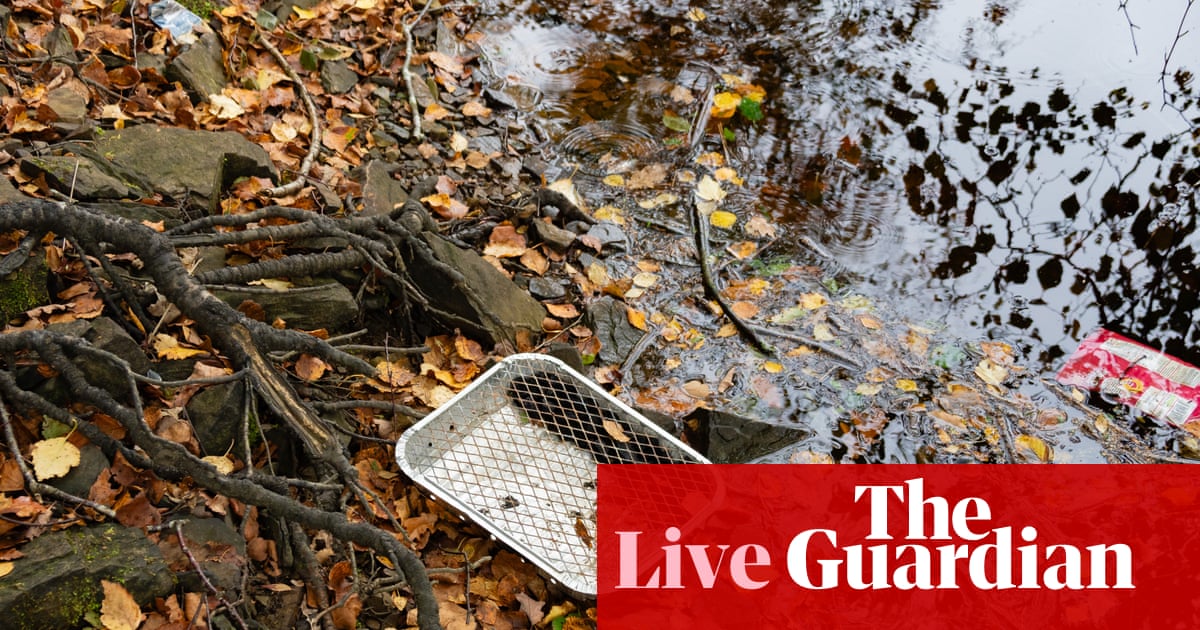
Burnham urges retailers to withdraw sale of disposable barbeques
Prime minister Andy Burnham has urged “all retailers big and small” to withdraw the sale of disposable barbecues in order to prevent more wildfires this summer, as he warned extreme heat conditions “could be with us for some weeks yet”.
His comments came after chairing a meeting of the Government’s emergency Cobra committee in response to the prolonged spell of exceptionally hot and dry weather.
Most major UK supermarkets have suspended sales of disposable barbecues in recent weeks in line with voluntary guidance from the NFCC.
England and Wales have already seen as many wildfires this year as in the whole of 2025.
Some 1,017 wildfires have been recorded in England and Wales this year, according to data shared by the National Fire Chiefs Council (NFCC), the same as last year’s record-breaking total.
Key events

Rachel Hall
Around 100 family, friends and colleagues have attended the funeral service of the former Conservative minister Ann Widdecombe, who was killed in her home in Devon last month.
Politicians and broadcasters were among the mourners at Buckfast Abbey in Buckfastleigh, a Catholic abbey where Widdecombe regularly worshipped, and which she described as her “safe haven”.
A 90-minute requiem mass was held – where prayers are offered for the soul of the dead – for the former MP, who later became a Reform UK spokesperson.
Before the service, police officers, including sniffer dogs, could be seen searching the grounds.
Widdecombe died on 8 July, aged 78, after she was hit over the head with a hammer 21 times at her home in Haytor, Devon. Joshua Kerry, 28, of Rotherham, South Yorkshire, was charged with her murder on 20 July.
It is understood that Reform leader Nigel Farage did not attend the funeral because he did not wish to be a distraction. He is expected to attend a public memorial, which will be held later this year.
Nearly three-quarters of England and the whole of Wales are in drought, heaping pressure on water resources for households, agriculture and the environment, and temperatures are expected to climb as high as 38C in some parts of England on Thursday.
A key climate adviser has warned it “gets worse from here” until the greenhouse gas emissions – mostly caused by burning fossil fuels in power plants, vehicles, home heating and industry – behind global warming are cut to zero overall, known as net zero.
Baroness Brown, who chairs the independent advisory Climate Change Committee’s adaptation work, told PA: “We need to remember that this is as good as it gets.
“It gets worse from here. Until we get to net zero, things go on getting worse.”
She also urged the government to take steps to help the UK adapt to rising temperatures, such as air conditioning in hospitals, schools and for vulnerable families.
Andy Burnham told broadcasters there had been a “significant number of excess deaths from heat this summer already”.
He urged the public to follow health advice, including to “check in on elderly friends and relatives who may need support at this particular moment in time”.
Asked if there was still a case for drilling the outstanding North Sea fossil fuel deposits given the impact of climate change, Burnham replied: “It is really important that we deal today with the situation that we are in right now and we focus on making sure that we have the serious incidents under control across the country, and those incidents are under control.”
He later said: “The bigger questions obviously will come at the right moment in time.
“But I have said that we have had it all but confirmed that this is the hottest summer on record, and as we go through it, we need to realise that these conditions could be with us for some weeks yet.
“There is some rain forecast, but not necessarily rain that will change the situation fundamentally. So we are looking at a dry prospect going forward.”
Speaking from the Downing Street garden after a Cobra meeting, Burnham said: “The big risk in terms of risk to the wider regions across the country is the risk of wildfires. What we are seeing is multiple serious incidents across the country.
“Fire services by and large are supporting each other through mutual aid to deal with those incidents, but we are keeping a very close watching brief on them.
“There is advice to the public here not to use disposable barbecues. We have today confirmed through the National Fire Chiefs Council that the framework restricting the retail sale of those disposable barbecues is being extended.
“Now I would ask all retailers big and small to adhere to that framework.
“Longer term we will look at whether a temporary ban in the summer months is justified.”
Burnham urges retailers to withdraw sale of disposable barbeques
Prime minister Andy Burnham has urged “all retailers big and small” to withdraw the sale of disposable barbecues in order to prevent more wildfires this summer, as he warned extreme heat conditions “could be with us for some weeks yet”.
His comments came after chairing a meeting of the Government’s emergency Cobra committee in response to the prolonged spell of exceptionally hot and dry weather.
Most major UK supermarkets have suspended sales of disposable barbecues in recent weeks in line with voluntary guidance from the NFCC.
England and Wales have already seen as many wildfires this year as in the whole of 2025.
Some 1,017 wildfires have been recorded in England and Wales this year, according to data shared by the National Fire Chiefs Council (NFCC), the same as last year’s record-breaking total.
Zero-hours contract ban could cost employers up to £3bn a year, government analysis says

Andrew Sparrow
A ban on zero-hours contracts could cost businesses up to £3bn a year, according to government analysis, the Press Association reports. PA says:
But proposed reforms are still expected to “support growth” by improving conditions for workers, an impact assessment published today says.
The direct cost to employers of a ban as a whole could be between £350m and £2.9bn per year – with an “indicative central” estimate of £1.1bn, according to the data.
The government is consulting on whether to apply the policy to anyone working 48 hours a week, but its preference is for the threshold to be between eight and 20 hours.
Ministers have defended the reforms by arguing they will help millions of workers who face uncertainty over their weekly hours and earnings, and unions have said a ban will help offer greater security in the event of shifts being cancelled at the last minute.
That is all from me for today. Nadeem Badshah is taking over now.
Family and friends mourn Ann Widdecombe at her funeral
Around 100 family, friends and colleagues have attended the funeral service of former Tory minister Ann Widdecombe, the Press Association reports. PA says:
Politicians and broadcasters were among those who gathered at Buckfast Abbey in Devon, a Catholic abbey where she regularly worshipped and called her “safe haven”.
Mourners could be seen wearing black as they arrived at the requiem mass – a Catholic service where prayers are offered for the soul of the dead – for the former MP, who later became a Reform UK spokesperson.
Ahead of the service, which lasted around 90 minutes, police officers, including sniffer dogs, could be seen searching the grounds.
It is understood that Reform’s leader Nigel Farage did not attend the event.
Farage was campaigning in Clacton on Wednesday and did not wish to draw attention at Widdecombe’s funeral, which the family asked to be kept private.
However, he is expected to attend a public memorial for Widdecombe, which will be held later this year.
In a post on X, Farage described her as an “extraordinary woman who left a serious mark on British politics”.
Those to attend include the shadow chancellor Mel Stride, Conservative former justice minister Crispin Blunt and broadcaster Iain Dale.
Stride, who is the local MP for the abbey, described the funeral as “very moving” in a post on X.
The Central Devon MP said: “The sun shone bright for her. A very special lady who will be much missed.”
The private requiem mass included a homily from the Rt Rev David Charlesworth, Abbot of Buckfast.
He said: “In the midst of the shock, clamour and sometimes unwarranted comment surrounding her death, our response is to pray for the repose of her soul, to give thanks for her fortitude, and offer Holy Mass in this Abbey Church which Ann called her safe haven.
“Here we pray that she has finally been enfolded in the arms of the Risen Lord, where true love and peace reign, and where she will hear the Lord’s words, ‘well done, my good and faithful servant’.”
What’s happening in Clacton byelection?
Tomorrow it’s the Clacton byelection. Given that Nigel Farage, the Reform UK leader, faces no serious opposition, and that the one poll in the constituency suggests he will see off the challenge from Count Binface very easily, this may turn out to be the most pointless byelection in British history.
Farage called the byelection by resigning as MP for Clacton because he thought victory would counter the sleaze allegations he is facing – either morally (because he could argue voters backed his claim to be a victim of an establishment stitch-up) or actually (because the inquiry into claims he did not properly declare donations worth more than £5m would be closed down).
But there is very little evidence that voters in Clacton buy into Farage’s theory that he is the victim of some establishment miscarriage of justice (perhaps because he isn’t), and so it will be hard for him to credibly present a low-turnout win as a significant moral victory.
And, although the parliamentary inquiry into claims he broke rules by not declaring the £5m donation he received from Christopher Harborne, or some of the financial support he got from “Posh” George Cotterell, was suspended when the byelection was called, it is expected to resume if/when he wins.
Here are some Clacton developments around today.
Farage retreated to his coastal haven for an electoral comfort break, getting relief from scrutiny in a place where he can still enjoy unchallenged status as the man of the people. But his people are fewer than they were and never as many as he claims. If he has hit the ceiling of his national support and feels part of his base wobbling beneath him, he will try to consolidate by further radicalisation. That will then give more urgency to the anti-Reform voter coalition.
He is trapped. But only if other parties refuse to follow him a single step further down the road to ethno-nationalism, where immigration policy degenerates into sinister fantasies of demographic engineering, and instead push back.
It isn’t a hard choice. There are many more people in Britain who like to live happily alongside their neighbours, regardless of skin colour and country of origin, than want to burn them out of their homes. It doesn’t take a great leap of political courage to draw a line between rigorous migration control and racist demagoguery.
There were good reasons for major parties to sit out this Thursday’s byelection. But from Friday onwards, the task of fighting Farage can’t be delegated to a man with a bin on his head. Not even in Clacton.
Voters seeking to re-elect Nigel Farage Thursday will have to scan past an array of comedy characters and oddballs on the longest ballot paper in British history.
The man who hopes to be the U.K.’s next prime minister is all but certain to retain his seaside fiefdom of Clacton — but his self-styled “people versus the establishment” electoral gambit is sowing some seeds of discontent even among loyal supporters.
Fear of Clacton becoming a “laughing stock” is a common refrain during a pair of focus groups POLITICO attended in the run-up to this week’s election.
The feeling that the town has been made to look daft was apparent even among those preparing to vote once again to return the Reform UK leader to parliament.
For thousands of years, a solar eclipse has been a prophetic harbinger of a spectacular, epoch-making event. Just saying. #VoteBinface #Clacton
-
Campaigners from Climate Resistance have put up some anti-Farage posters. Sam Simons, a spokesperson for the group, said:
Nigel Farage isn’t fighting the establishment – he is the establishment. Bankrolled by billionaires to further the interests of the super rich, he has no interest in working for ordinary people. While residents of Clacton struggle to put food on the table, Farage is rolling in dodgy donations that most of his constituents could hardly dream of.
-
Support for Binface has spread to St Leonards in Hastings, East Sussex. My colleague Harry Cockburn lives there and he has sent me this picture of the Queen Victoria statue, which has been repurposed, apparently in support of Farage’s main rival.
Zack Polanski defends signing open letter backing Cambridge professor Jason Arday
Zack Polanski, the Green party leader, has defended his decision to sign an open letter in support of the now-discredited Cambridge professor Jason Arday.
In an interview with Radio 4’s PM programme, Polanski said that he defended Arday “up until the point he resigned” and that at the time he signed the open letter “it looked like Cambridge University had run an investigation into Jason Arday and that he’d been cleared”.
Asked if it was a mistake for him to back Arday before he knew the full facts, Polanski replied:
Two things can be true at once. The first thing is that it looked like Cambridge University had done an investigation and cleared him, so I think under those circumstances it was perfectly OK to say, if someone has been cleared, I’m going to stand with them.
Secondly, to recognise that there is a problem with racism in academia and there’s a lack of people of colour who are academic professors.
And it’s also, thirdly, true that it doesn’t help if we just push people to the front without the right credentials because they’re really keen to make sure that they’re filling some sort of quota.
I think we need to make sure that the right people are in the right jobs, and we also need to tackle racism in society. All of those things can be true at once.
In an interview with LBC yesterday, Andy Burnham declared that he was “a fan” of Greggs. This came as a conversation about government plans to revive high streets morphed into a chat about his takeaway preferences. Asked for his favourite Greggs order, Burnham replied: “That sausage, bean and cheese thing.”
The PM was referring to what Greggs call their sausage, bean and cheese melt. He may not have known its proper name, but Greggs aren’t daft, and they can spot a marketing opportunity when they see one. Here is the signage that has been on display today at the Greggs near Burnham’s No 10 North office in Manchester.
According to Greggs, sales of the snack at the store have doubled.
Yvette Cooper says NHS must prepare for regular heatwaves, just as it plans for winter crisis every year
Yvette Cooper, the health secretary, has said that she has told NHS England to start planning ahead for summer heatwaves, just as it prepares every year for a crisis in the winter.
In an article published in the Mirror, Cooper says global heating means Britain will face heatwaves like the one we are going through now “with increasing frequency and increasing intensity”. And this puts extra pressure on the NHS, she says, referencing a report that said there were almost 3,000 excess deaths because of the heat in May and June.
Cooper, who is attending the meeting of the Cobra emergency committee this afternoon to discuss the extreme heat, says:
During the heatwaves in May and June, we saw more than 2,800 lives lost because of the extreme heat, and this year is on track to see the highest ever number of heat-related deaths. My thoughts go out to every family who has lost loved ones …
Our NHS is used to gearing up for these kinds of pressures in winter. But we are going to need the same level of preparation in future summers. I have told the NHS to start drawing up summer plans now in the way they have traditionally done for winter.
Especially as all the same people who are most at risk when it is very cold are at risk in the extreme heat: older people, the youngest children, and people with existing conditions …
We know Britain will face heatwaves like this with increasing frequency and increasing intensity. So we have to take the health consequences much more seriously, so that everyone is ready when they come.
Cooper also says in her article that some of the £6.75bn being spent on improving NHS buildings will fund air conditioning.
Bridget Phillipson condemns Richard Tice’s ‘chilling attempt to silence free press’
Richard Tice has been accused by Labour’s Bridget Phillipson of mounting a “deeply chilling attempt to silence the free press” after he sent a legal threat to the Guardian over its reporting on his financial affairs, Rowena Mason reports.
Offenders who commit violence against women and girls should be treated ‘liked terrorists’, Jess Phillips says
Jess Phillips, who was minister for safeguarding and violence against women and girls (VAWG) in Keir Starmer’s government, has said that people who commit VAWG should be treated “like terrorists”. She was speaking in an interview on the World at One after the sentencing of Simon Levy, the sexual predator who was able to kill two women because of mistakes made by the police and prosecutors.
Phillips said:
Violence against women and girls has to be an absolute priority in every single police force in our country. Twenty per cent of callouts to almost every single force in our country is violence against women and girls … it kills way more people on the streets, just in London, let alone anywhere else.
These people are a danger and a risk to our society, and they have to be treated like terrorists, because that is what they are doing. They are harming and killing people on our streets. It’s exactly the same, and it needs to be treated with that level of seriousness.
Sharon Graham says she wants Unite to ‘better serve working class’ after being re-elected general secretary with 69% win
Sharon Graham has, as expected, been re-elected as general secretary of the Unite union. She faced a leadership challenge from Simon Dubbins, international director at the union, which is the second biggest in the UK and a key player in Labour party politics.
Graham won with 69% of the vote. As usual for an internal union election, turnout was low. Unite has more than 1m members, and only 100,089 people voted.
Commenting on her win, Graham said:
It’s an honour to be re-elected by Unite members to serve as their general secretary. This decisive victory is a powerful mandate to continue change …
My second period of office will continue to be marked by a relentless focus on the jobs, pay and conditions of workers. It will always be members over ministers and the workplace over Westminster.
We will continue to deliver much needed reform to our union. It is my mission to build the industrial and political power required to better serve the working class.
As Matthew Taylor explained in an article about the election earlier in the summer, Dubbins’ campaign was in part motivated by a concern that, under Graham, Unite has not done enough to counter the threat to the left posed by Reform UK.
Dubbins explained why he was standing against Graham at length last month in this Counterfire interview.
UPDATE: Unite is not giving the turnout figure in the election, but sources say it is around 10%. The journalist Andy Twelves says the figure is 10.31%.
Why Chris Philp wrong to say Burnham has had more small boat arrivals during his first 3 weeks than any other PM
In an interview with Times Radio, Chris Philp, the shadow home secretary, claimed that Andy Burnham has had more small boat arrivals in his first three weeks in office than any other prime minister. Philp said:
Three thousand have entered our country in the first 22 days of Andy Burnham’s premiership, that is more … than any other prime minister has seen in their first 22 days.
The Press Association’s QuickCheck team have been looking at this – and they say Philp is wrong.
PA says:
Burnham’s first 22 days saw considerably fewer migrants cross the English Channel than the first 22 days of the premierships of Rishi Sunak and Liz Truss.
Government data shows 3,003 people crossed on small boats between July 20 when Burnham became prime minister and August 10, 22 days later.
In the first 22 days of Keir Starmer’s premiership, 2,258 people crossed the English Channel on small boats. In Sunak’s first 22 days, 4,105 people crossed, and the figure for the first 22 days of Liz Truss’s premiership was 4,739.
During Boris Johnson’s first 22 days in office, 138 people were recorded crossing the Channel.
Data collection on small boat crossings started in January 2018 so the figures do not include any other prime minister’s first 22 days.
Boat crossings are very seasonal, meaning prime ministers who enter the role in peak season are likely to see higher crossings in their first few weeks.
Between 2018 and 2025, the months that saw the most crossings were September (28,734 people), August (26,591), July (20,672), and October (20,324).
Starmer, Burnham and Johnson all became prime minister during July. Sunak became prime minister in late October and Truss took the role in early September.
Officials in the Ministry of Justice are reportedly unhappy about the way that, after Andy Burnham announced a new version of the prisoner early release scheme at the start of last week, they have now been asked to revise it again.
In the Times, Steven Swinford reports:
There is said to be anger within the Ministry of Justice, where some officials feel they have been unfairly blamed for simply doing their jobs in spelling out the pros and cons of each policy option to the prime minister.
One government source claimed that Burnham appeared to be “trying to be nice to everyone” and failing to understand the trade-offs involved.
“The Ministry of Justice is totally demoralised,” they said. “They never said anything was impossible — they simply spelt out the risks involved.”
And at the Telegraph Will Bolton and Tony Diver have also been talking to an MoJ source (who may or may not be the same one as Swinford’s). They report:
One senior Ministry of Justice source said: “Alex [Norris, the justice secretary] has 100 per cent been thrown under the bus. There’s a lot of anger and frustration from MoJ to the PM and No 10.”
A senior Labour source added: “There is frustration in the MoJ that he has raised victims’ expectations. If it’s an issue he’s staked himself on, then No 10 should be gripping it. They’re passing it on to Alex Norris, and he’s only been in post for two weeks.”
Swinford says Norris was all set to head off for a summer holiday on Monday night when he was told that Burnham wanted him to find a new early prisoner release mechanism that would keep the killers of PC Andrew Harper in jail.
Repeated debilitating heatwaves this summer are likely to have cost the UK economy more than £4bn in lost economic output by the end of July, according to a report by Verdant, a Green thinktank.
The report is here, and here is Heather Stewart’s write-up.
The report says:
Successive heatwaves from May to the end of July 2026 have an estimated economic cost of at least £4.4bn. Previous estimates by Verdant placed the cost of the June 2026 heatwave alone at £2.36bn; this figure now includes all three heatwaves this year, from May to the end of July. May’s relatively minor event cost around £500m; July’s larger hit was £1.5bn, over two distinct peaks.
These losses are the result of reduced productivity due to the well-documented effect of all work becoming harder at higher temperatures, and that infrastructure and equipment overheat and fail. For each one degree Celsius temperature increase above 30 degrees in Europe, a 3% reduction in average output per hour has been observed. In a prolonged heatwave, these impacts add up to become significant economic losses. This is only the direct economic cost from productivity losses, and excludes things like losses from wildfires, or higher costs of energy for businesses and households.
Commenting on the report, Zack Polanski, the Green party leader, said it showed why the government needed to “set out an emergency response to the danger facing us now, and the damage coming fast down the tracks as heatwaves and flooding get more extreme”.
UK energy minister says John Swinney ‘irresponsible’ in calling for ban on Chinese wind turbine investment to be lifted
John Swinney, Scotland’s first minister, was “irresponsible” when he asked Andy Burnham to lift a ban on a Chinese firm building a wind turbine factory in the Highlands, a UK government minister has said.
As the Press Association reports, energy security minister Michael Shanks described the call from John Swinney in support of the proposed Ming Yang facility at Ardersier, near Inverness, as “surprising”.
With the development having the potential to create up to 1,500 jobs in the area, Swinney reportedly asked Burnham to review the government’s decision to block the Chinese investment. The Scotsman reported the SNP leader raised the issue in his first meeting with Burnham, and has also written to the PM on the issue – with Ming Yang also said to have been in contact with the UK Government following the change in leadership.
In April, Swinney described the government’s decision as “anti-Scottish”.
In an interview on BBC Radio Scotland this morning, Shanks said that, after Swinney made those comments earlier this year, he arranged for the first minister to have a “security briefing at the highest level” on the issue.
Shanks went on:
I do think it is surprising he is now making what feels like a political intervention.
I think it is for him to answer why he is balancing what seems to be a political intervention against the country’s national security.
I think it is irresponsible for the first minister to do that.
There is no inherent reason why the UK government would not want to see jobs created in the north of Scotland either, so I hope people would take it on face value when I say there are national security implications. That is a legitimate reason for us to say no to a particular investment.
#Burnham #urges #retailers #stop #selling #disposable #barbecues #emergency #Cobra #meeting #politics #live #Politics