wellnessfitpro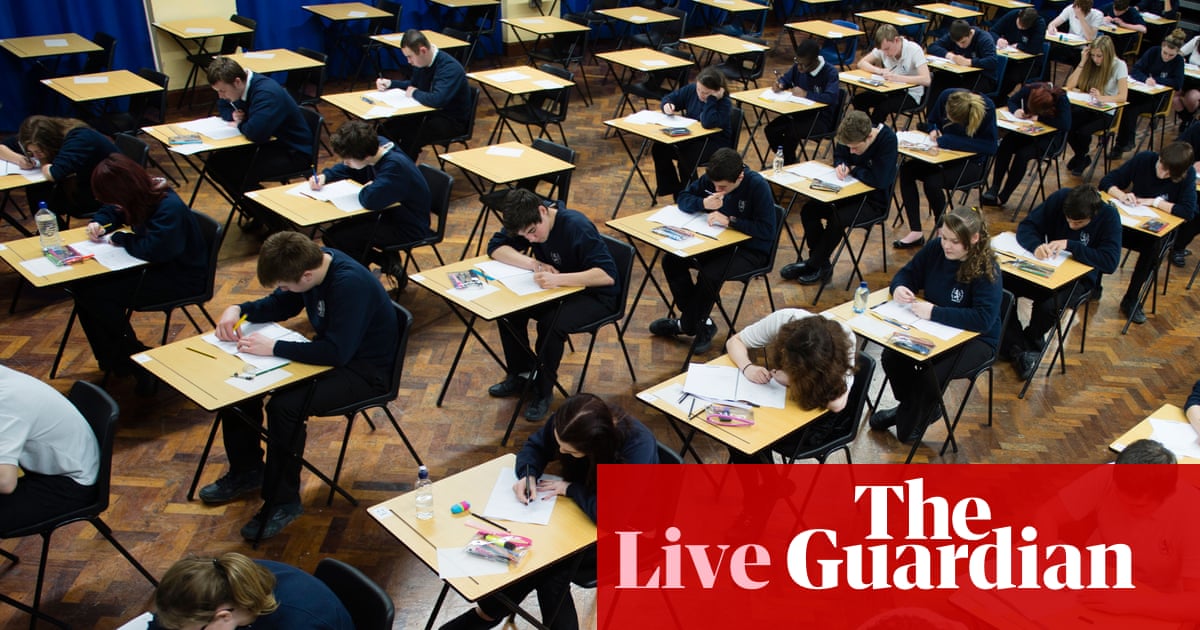
Hundreds of thousands of pupils across England, Wales and Northern Ireland await grades

Mabel Banfield-Nwachi
Good morning and welcome to our GCSE results day live blog.
Today, like every year, hundreds of thousands of pupils across England, Wales and Northern Ireland anxiously await their grades.
In 2025, there was an overall rise in grades among 16-year-olds taking GCSEs and the gap between boys and girls has narrowed to its smallest level since 2016.
Boys showed improved performances in some of the major subjects like maths and English, while girls slipped backwards in their traditionally strong subjects such as English.
The results mean that the gender gap in favour of girls is now the smallest since separate data for 16-year-olds in England was first published in 2016.
Pupils in England who were thought to have been among the worst affected by Covid bounced back in their GCSE results last year, with more achieving top grades despite the disruption of the pandemic.
The percentage of pupils who achieved a grade 7 and above was 23% in 2025, up from 22.6% in 2024. While those who achieved a grade 4 and above (pass) was 70.4%, a slight increase from 70.4% last year.
For pupils in Northern Ireland, the proportion getting A and A* – equivalent to grades 7 and above in England – rose by a full percentage point to 31.4%, while the proportion getting grades C or above went up to 63.8%.
In Wales, where letter grades are also still used, pupils getting the top grades rose to 20.1%, up from 19.8% in 2024, and those getting a C or better edged up by 0.3 percentage points to 63.8% this year.
If the GCSE results follow last week’s A-level results, it might be a bumper year for grades. The proportion of students in England gaining the highest grade of A* in A-level subjects rose to 9.7%, up from 9.4% last year, setting a new record outside the pandemic era, when exams were scrapped.
Northern Ireland was the best-performing country, with 30.7% of grades being As and A*s, followed by 29.6% in Wales and 28.7% in England.
The GCSE cohort taking exams in 2026 were in Year 5 when the pandemic and subsequent lockdowns began in 2020. They faced severe disruption during key developmental years (perhaps less so than the 2025 cohort, who were in their final year at primary school in 2020), particularly the primary-to-secondary transition period, chronic absenteeism, and mental health challenges.
Follow along as we look at whether the overall 9-4 pass rates are affected in key subjects like English and maths, as well as if girls’ overall results drop again.
Key events
Lucy Powell’s daughter among students receiving GCSE results on ‘big day’
Education secretary Lucy Powell is on the media round this morning as students prepare to pick up their GCSE results, including her own daughter.
She said it was a “big day” that marks “a really important moment in a child’s progression”.
Speaking to Sky News, she added: “I know that the vast majority of young people have worked incredibly hard for these quite tough exams that they have faced over the summer, and what they will be getting today, hopefully, is a gateway to continue their study, to continue learning, to continue training and move on to the next stage in their life.”
She said plans to bring in new post-16 vocational qualifications would mean there is a “path for everybody”.
“I’m sure people today will feel proud of themselves, but they should be reassured that there is a pathway and there are options for them, and they need to make contact with their school or college and really talk about those options.”
Powell is due to visit a school later today, we will bring you the updates as soon as we get them.
The app allowing students to access their GCSE results digitally is being rolled out nationally this year, after a successful trial last year.
In 2025, nearly 100,000 year 11 pupils in the Greater Manchester and the West Midlands combined authority areas received their GCSE results via an app called Education Record, which automatically collates their key information and exam results.
Across the country, students can access their results on the app from 11am. However, they can still collect their traditional physical results at school starting around 8am.
You can find out more information about the app here.
Compulsory GCSE resits in England harm teenagers’ mental wellbeing, study finds

Richard Adams
Forcing teenagers who fail GCSEs into multiple resits has a negative impact on their mental health, according to research to be published as pupils receive their grades on Thursday.
The study by academics at University College London (UCL) compared the mental wellbeing of students in England, Wales and Northern Ireland who failed to reach a grade 4 or equivalent in maths or English GCSEs – and found that only those in England, where resits are mandatory, showed significantly lower wellbeing.
Robbie Maris, a research fellow at UCL and one of the authors, said the dent to teenagers’ self-confidence when faced with resits could be a contributing factor to the rise in young people not in education, employment or training, known as Neets.
Maris said: “Some [resitting] students will not turn up for their exams, they won’t enter them or they will drop out of education – these are the kids at highest risk of dropping out of education and becoming Neets.
“It could be leading to further disengagement, which is a worrying thing. People need to pay more attention to this, because if you demotivate or demoralise young people it puts them at risk of dropping out of the education system entirely.”
Read more:
Hundreds of thousands of pupils across England, Wales and Northern Ireland await grades
Mabel Banfield-Nwachi
Good morning and welcome to our GCSE results day live blog.
Today, like every year, hundreds of thousands of pupils across England, Wales and Northern Ireland anxiously await their grades.
In 2025, there was an overall rise in grades among 16-year-olds taking GCSEs and the gap between boys and girls has narrowed to its smallest level since 2016.
Boys showed improved performances in some of the major subjects like maths and English, while girls slipped backwards in their traditionally strong subjects such as English.
The results mean that the gender gap in favour of girls is now the smallest since separate data for 16-year-olds in England was first published in 2016.
Pupils in England who were thought to have been among the worst affected by Covid bounced back in their GCSE results last year, with more achieving top grades despite the disruption of the pandemic.
The percentage of pupils who achieved a grade 7 and above was 23% in 2025, up from 22.6% in 2024. While those who achieved a grade 4 and above (pass) was 70.4%, a slight increase from 70.4% last year.
For pupils in Northern Ireland, the proportion getting A and A* – equivalent to grades 7 and above in England – rose by a full percentage point to 31.4%, while the proportion getting grades C or above went up to 63.8%.
In Wales, where letter grades are also still used, pupils getting the top grades rose to 20.1%, up from 19.8% in 2024, and those getting a C or better edged up by 0.3 percentage points to 63.8% this year.
If the GCSE results follow last week’s A-level results, it might be a bumper year for grades. The proportion of students in England gaining the highest grade of A* in A-level subjects rose to 9.7%, up from 9.4% last year, setting a new record outside the pandemic era, when exams were scrapped.
Northern Ireland was the best-performing country, with 30.7% of grades being As and A*s, followed by 29.6% in Wales and 28.7% in England.
The GCSE cohort taking exams in 2026 were in Year 5 when the pandemic and subsequent lockdowns began in 2020. They faced severe disruption during key developmental years (perhaps less so than the 2025 cohort, who were in their final year at primary school in 2020), particularly the primary-to-secondary transition period, chronic absenteeism, and mental health challenges.
Follow along as we look at whether the overall 9-4 pass rates are affected in key subjects like English and maths, as well as if girls’ overall results drop again.
#GCSE #results #hundreds #thousands #pupils #England #Wales #Northern #Ireland #await #grades #latest #updates #GCSEs