wellnessfitpro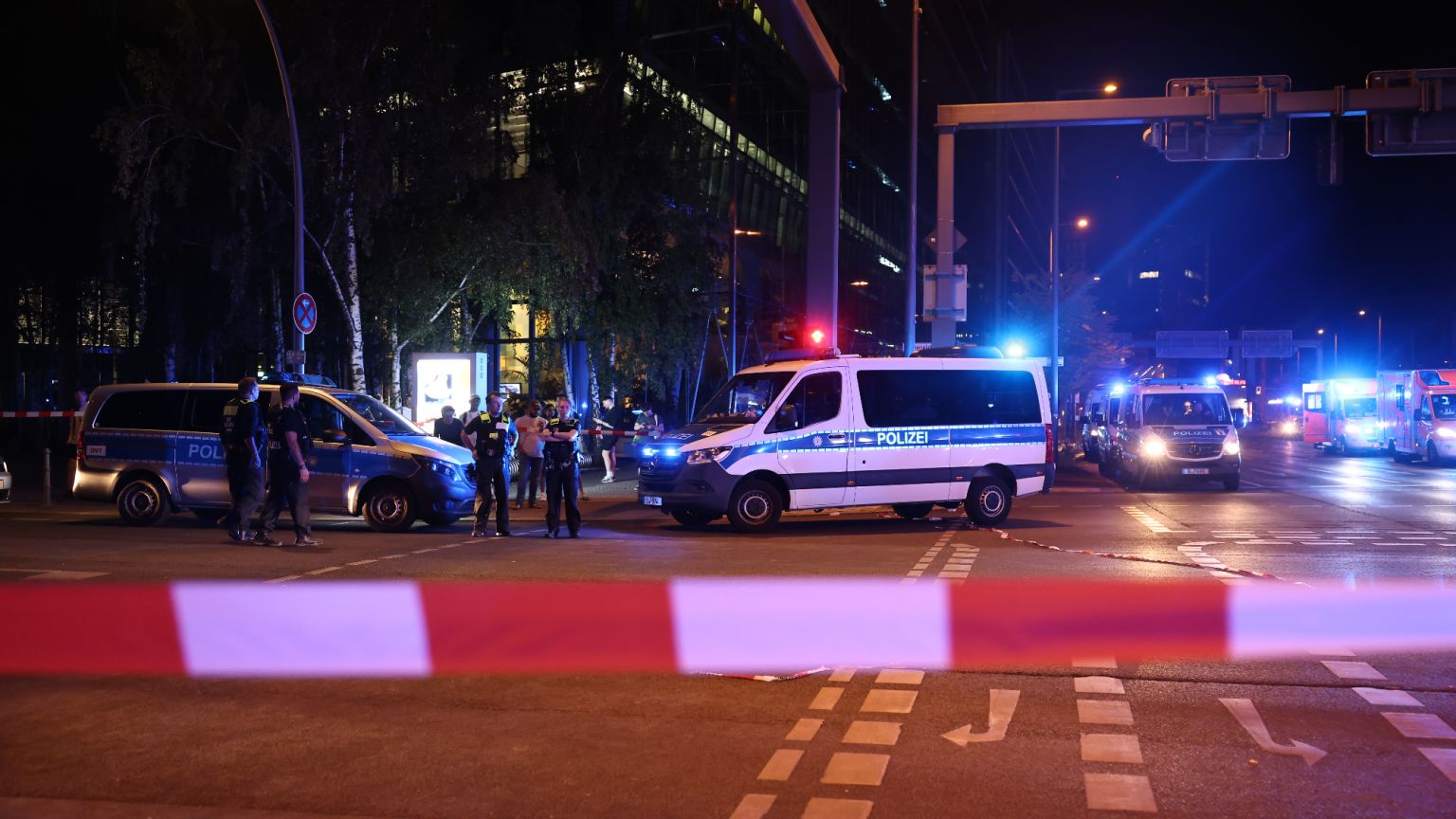
The German state cannot fairly be accused of inattention when it came to Abdul Ballout. It had been observing him for the better part of a decade. It had convicted him three times and had, by the start of July, arrived at an assessment of his character that turned out to be entirely accurate. The counsellors of the deradicalisation programme into which a Berlin court had released him in May had logged their misgivings, concluded that his cooperation was a performance, and set about drafting a recommendation that he be removed from their books. They were still drafting that recommendation on Saturday 25 July, when the 21-year-old drove a white van into the closing party of Christopher Street Day, a part of Berlin’s Pride season, a few hundred yards from the Brandenburg Gate. He killed one person and injured 29 others, and then proceeded to set about the survivors with a machete.
The failure, in other words, was not one of assessment. Everything necessary had been perceived, written down and filed. What could not be managed was to convert an accurate judgement into an action within a period shorter than the one a young man needs to hire a vehicle.
His record showed that he posed a threat to civilians. He was found guilty of assault in 2019, assault and extortion in 2022 and distributing Islamic State propaganda on Instagram in 2024. In May of last year, he took a flight to Lebanon with the declared aim of crossing into Syria to enlist himself in the cause of the Islamic State – an ambition frustrated only by the Lebanese authorities, who jailed him for incitement to sectarian conflict and returned him to Germany in November last year. A Berlin juvenile court gave him one year and 10 months, for preparing a serious act of violence endangering the state, then deferred the question of suspension by six months, lifted the arrest warrant and consigned him to a course of counselling. Twenty-six sessions were prescribed, of which Ballout attended two.
The commentary that followed this attack possessed a fluency that suggested much of it had been composed in advance, and required only the insertion of Ballout’s name.
There was the all-too-familiar injunction not to let the attack divide us. This came from, among other places, the board of Berlin’s own Christopher Street Day. In its statement, it named Islamist terror without equivocation (which is more, it should be said, than several British organisations managed) but then, in the same breath, warned against the instrumentalisation of the murder for hatred against Muslims. A young organiser at the vigil beneath the Brandenburg Gate explained that she did not wish the attack to fuel hostility towards foreigners, migrants or Islam. A columnist in German daily taz accused politicians of shamelessly exploiting the suffering of the queer community. And a speaker who had begun by mourning the dead proceeded, with a briskness one can only admire, to the subject of funding cuts for queer counselling services, and to an appeal that the crowd refrain from directing its anger at people of an immigrant background. This was received with thunderous applause.
Every one of these propositions is defensible in isolation. Muslims in Germany will have encountered genuine ugliness in the aftermath of the attack from people who have no interest whatsoever in the dead. But all too often, speakers and commentators seemed more concerned with policing the reaction to what happened than with what actually happened. The woman killed had come to Berlin in order to accompany her daughter. By Sunday evening, she had been named in perhaps a dozen public statements though she was the main subject of none of them. Two sentences of grief here and there, and thereafter a great volume of prose concerning the reaction to her death, the exploitation of her death, the lessons of her death, and the coalition that must be preserved notwithstanding her death. She went to a parade with her child and did not come home, and by the third paragraph, she had been converted into a warning about the rise of the AfD (Alternative for Germany).
That the right-wing AfD exploited the attack is certain. But that doesn’t alter the fact that a woman was murdered by an Islamist. And yet the danger uppermost in the minds of the commentariat is that the wrong people might mention it. There is a circularity in this which too few appear to have detected, whereby the problem of Islamism, a subject that no respectable person will discuss, is ceded by default to the only people who will discuss it. The AfD’s eagerness to discuss it is then produced as evidence that the subject was disreputable from the beginning.
To the credit of the German press, some of this was noticed at once. taz ran a column under the title ‘Auf einem Auge blind’ (blind in one eye), observing that the enemy on the right had long served as queer officialdom’s main concern and that its representatives had spent years making light of the danger from the Islamist direction. A second taz contributor told a vigil that Islamism is hostile to queer people by its nature, that Islamism kills, and that these are facts rather than opinions. Mouhanad Khorchide, professor of Islamic theology at Münster and himself a Muslim, said that mosque congregations bear a responsibility, and that homosexuality is spoken of within them with contempt.
Islamism, the thing to be avoided, can therefore be said. And it can be said in Germany, by Muslims, in left-wing newspapers, and within 72 hours of an Islamist attack. Which rather punctures the suggestion that saying it is an amusement reserved for the reactionaries in the AfD.
But then came the assurance from all too many that Islamist violence has nothing to do with Islam. The confidence of that sentence is a wonder of the age. Those reiterating it are claiming to know what Islam essentially is with a confidence no imam can truly ever claim for himself. Which Islam is intended? The Salafi reading or the Barelvi; Deobandi, Ibadi, Twelver Shia; and what of the Ahmadis, whom several Muslim states have legislated out of the religion altogether?
The Islamic State holds the overwhelming majority of Muslims to be apostates and murders them on that basis. The claim that none of this is Islam is merely the bigot’s claim with its sign reversed: both parties assert a single essential Islam and quarrel only over its contents. The question worth asking was never whether a doctrine is Islamic, but which reading, held by whom, preached where and financed how. All of which are questions possessing answers. But these are not being asked.
The underlying manoeuvre is not new. It is to claim that the perpetrator is simply another victim, and that the causes worth investigating lie in his circumstances rather than his convictions. Its charm is that it explains every case and predicts none of them. Its costs are paid by people nobody thinks to ask.
Britain has spent the better part of a decade turning a blind eye to the threat in our midst, especially as it pertains to gay people. At the start of 2019, the parents of Parkfield Community School in Alum Rock, Birmingham, withdrew some 600 children for a day. The provocation was a string of picture books concerning a dog who does not ‘fit in’ and two male penguins raising a chick. The pro-’diversity’ books scheme had been assembled by an assistant head named Andrew Moffat. The school, rated ‘outstanding’ by schools inspectorate Ofsted, suspended the programme. The protests migrated to Anderton Park Primary, where the programme was not taught at all, and were led by persons with no children at the school. They alleged that the staff were pursuing a paedophile agenda and instructing infants in masturbation. Mr Justice Warby, granting a permanent injunction in November 2019, disposed of these allegations in four words: none of this is true.
Moffat was threatened and required protection. The Commission for Countering Extremism subsequently found evidence that the now proscribed Hizb ut-Tahrir and comparably charming outfits had stoked the affair. Two years afterwards, a school teacher at Batley Grammar, in Yorkshire, displayed a caricature of the Prophet Muhammad during a lesson on blasphemy and went into hiding, where he now remains.
Not one of those campaigns was mounted by the far right. They were mounted by the pious and the well-organised; their objects were a gay primary school teacher and a secondary school religious studies teacher. And the reply of the British state consisted of an injunction, a suspension, a review, and several years of the most scrupulous silence. I have read a very great deal about the threat that populism supposedly poses to gay people in this country. I have read very little about those six hundred empty desks.
The survey evidence offers no consolation either, though it must be handled with more care than is generally afforded to it. ICM’s 2016 poll for Channel 4 found a majority of British Muslims disagreeing that homosexuality should be legal. A finding I reproduce with its caveats attached and visible, since ICM sampled only districts at least one fifth Muslim, and some three in 10 respondents declined to answer in either direction. Gallup’s work and Pew’s European series run in the same direction, if not always to the same depth. Pew’s American series, however, is the instructive one. Acceptance of homosexuality among Muslims in the United States rose from 27 per cent in 2007 to 39 in 2011 and 52 by 2017, overtaking white evangelical Protestants en route, with the sharpest movement recorded among the young, the college-educated and the American-born.
Doctrine, then, is not destiny. These attitudes shift, and they shift fastest wherever genuinely liberal values are defended, and illiberalism is contested. But this is exactly the labour that the whole apparatus of ‘don’t divide’ exists to obstruct. Every act of exculpation performed on behalf of conservative Muslims is paid for by the liberal, the secular, the apostate, the gay and the dissenting among them, who must live with its consequences. The don’t-divide stance grants the fundamentalist his claim to speak for the entire population and then defends that population against an ‘Islamophobic’ charge that nobody ever laid.
The confusion concerning the right is almost amusing. Islamism is a movement of the reactionary right upon every criterion anybody has yet proposed: theocratic, restorationist, preoccupied with sexual order and the obedience of women; anti-Semitic across the greater part of its strands, and hostile to pluralism as a matter of doctrine rather than of temper. Abul A’la Maududi (1903-1979), born in what would become Pakistan, wrote that his Islamic state would bear a resemblance to the fascist and Communist states, and that no man might regard any department of his affairs as private. Egyptian Islamist Sayyid Qutb prescribed offensive jihad in order to establish divine authority over the whole Earth. These are not caricatures assembled by enemies but published positions, argued at length by Islamism’s own principal theorists. They would be astonished to discover that European academics account them ‘progressive’ by default.
That so many liberals, leftists and ‘progressives’ should prove incapable of recognising a reactionary movement unless its adherents happen to be European is a parochialism so profound that it has become invisible to those it afflicts. It rests on the unexamined premise that reaction is a white speciality, and whatever that premise may be, it is not anti-racism.
We have been here before, and recently enough that novelty cannot be pleaded. In June 2020, Khairi Saadallah murdered three men in a park in Reading, 17 days after his release from prison. His defence advanced mental illness. Mr Justice Sweeney rejected it, and found the killings to be terrorism, committed for the purpose of advancing a political, religious or ideological cause. The men were James Furlong, David Wails and Joseph Ritchie-Bennett, three friends who had gone out to enjoy a summer evening in Forbury Gardens. Ritchie-Bennett had lost his husband to cancer six years earlier, while Furlong left a long-term partner. The local Pride organisation knew all three of them. Whether their sexuality had anything to do with why they were chosen was raised at the time and then, by some quiet process of attrition, stopped being raised at all. I too had forgotten their names until the days after the Christopher Street Day attack.
One academic writing on LinkedIn, offered warmly and I am sure sincerely, claimed that when there are atrocities in the Middle East to be marched against, it is Muslims who turn out alongside gay and bisexual and women’s groups, and that all of us ought to bear this in mind. Two things are wrong with that. Firstly, there’s the flippancy of producing it at all within hours of this attack, as though the pressing question were which alliances must now be shielded from the consequences. The second and larger problem is that the claim is not true, except in a few streets in Western Europe. Muslims and gay people do march together in London and Berlin; nobody disputes it. But homosexuality remains a criminal offence across much of the Muslim world, and a capital one in Iran, Saudi Arabia, Yemen, Mauritania, Brunei and the northern states of Nigeria. A fact about who attends demonstrations in two European capitals has been offered as though it were evidence about a doctrine practised, and enforced, on three continents.
There is worse in the sentence, and I doubt it was intended. Muslims stand alongside gay people, it is stated, as though these were two separate populations, drawn up in ranks against a common enemy, with nobody standing in both. The formulation has nowhere to put a gay Muslim: which is to say nowhere to put the person with more at stake here than anybody arguing about it. Berlin has a queer Muslim congregation, and a mosque founded by a woman who needs police protection in order to run it, and some of those in the Tiergarten on that Saturday night last month will have been both things at once. Nobody decided to leave them out, it is simply that the framework herein has no place for them, so it leaves them out automatically, and it will do so again the next time somebody drives a van into a crowd.
There will be another case of this kind. When it comes, nobody should have to choose between the collective indictment of Muslims and the collective acquittal of Islamism. The first is bigotry and the second is a lie. Name the dead before discussing the electoral consequences of their deaths. State what the murderer believed, who preached it to him and what the authorities already knew. Defend Muslims against reprisals, certainly; but defend also the gay, female, secular, liberal and apostate among them against the reactionaries who claim ownership of their lives. These are not competing obligations and only the dishonest have an interest in pretending that they are.
And do this before the usual people arrive to explain that candour will assist the far right. Nothing has assisted the far right more reliably than the surrender to it of facts that everybody else is too frightened to mention. The next atrocity will be followed by the same liturgy: grief, warning, euphemism, evasion and, finally, amnesia. It need not be. Refuse the first euphemism. Ask the forbidden question before the fanatic supplies the only answer. And when reaction comes disguised as religion, extend it neither the courtesy of silence nor the compliment of lowered expectations. One is not obliged to choose which eye to close. Next time, keep both open.
Owen Shapell is a PhD researcher in social sciences.
#Islamism #silence #progressives