wellnessfitpro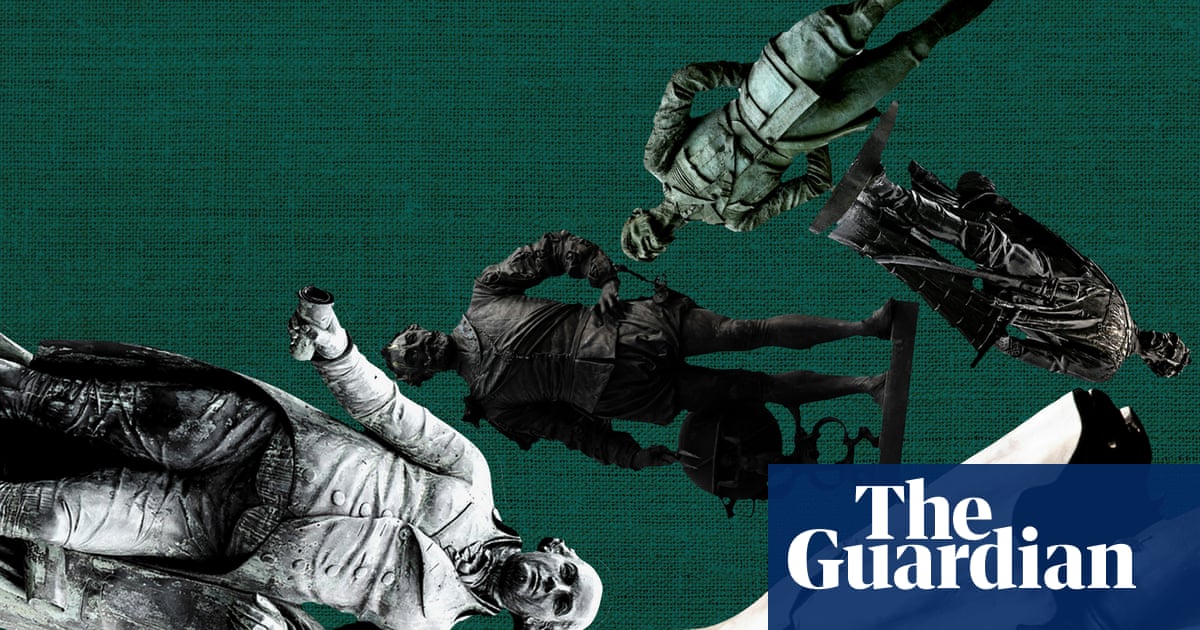
Hello and welcome to the Cotton Capital newsletter. I’m Nadine White and this month we’re asking: after the toppling, what comes next?
Britain spent much of 2020 arguing about what should come down. Statues of enslavers and colonial figures were toppled, defaced or quietly removed. Edward Colston ended up in Bristol harbour. Robert Milligan was taken down outside London’s Museum of Docklands, while campaigners renewed calls for Cecil Rhodes to come off his plinth at Oriel College, Oxford. But six years on, one of the most persistent battles is still playing out.
The longstanding Hackney MP Diane Abbott has highlighted ongoing calls for the removal of a statue of Robert Geffrye, the 17th-century merchant whose wealth was built partly through investments in the transatlantic trafficking of enslaved Africans. The statue remains prominently displayed outside the Museum of the Home, formerly the Geffrye Museum, despite a 2020 public consultation finding strong support for its removal.
Abbott argues that the issue is not about erasing history, but refusing to honour those who profited from slavery in public spaces. “We must never forget that,” she wrote. “But we must not honour it.”
If you’ve walked through most British towns and cities recently, you’ll know the landscape hasn’t changed all that much. The vast majority of imperial monuments are exactly where they have always been: on plinths, in parks, above doorways and worked into the stone of public buildings.
The toppling of Colston became globally symbolic precisely because it was so unusual.
Elsewhere, changes were smaller and more localised: in the London borough of Lewisham, Sir Francis Drake primary school became Twin Oaks primary school after a community consultation; in Tottenham, north London, Black Boy Lane became La Rose Lane, honouring the Trinidadian-born activist and publisher John La Rose.
So, six years on, a quieter question has started to emerge: what is actually replacing Britain’s imperial symbols?
A different kind of intervention
Across the country, a new memorial landscape is slowly taking shape, often pushed forward by artists, campaigners and community groups unwilling to wait for institutions to act.
At the International Slavery Museum in Liverpool, the Black British-Caribbean artist Rayvenn Shaleigha D’Clark is creating iron entrance panels that reinterpret materials historically tied to enslavement and control. “Bronze and iron carry deep historical associations with the transatlantic trafficking of enslaved Africans when they were used to confine, control and restrict,” she told me. “This project considers how those same materials can now be reclaimed and subverted within a contemporary context.”
For D’Clark, artists have a particular role to play in how Britain faces its difficult histories. “Through their work, artists can help make visible stories that have often been hidden, overlooked or excluded from mainstream historical narratives.” This is a different kind of intervention to pulling something down, but no less intentional.
In London, The Wake, a memorial honouring victims of the transatlantic slave trade by Khaleb Brooks, is due to be unveiled outside London Museum Docklands in 2027. Standing seven metres high, it will include a bronze cowrie shell that people can enter, offering a space for reflection.
Meanwhile, campaigners are working to preserve and publicly display the anchor of HMT Empire Windrush, the passenger liner that brought over the first wave of people from the Caribbean after the second world war to help rebuild Britain, turning a physical relic of migration into a national site of memory.
These projects are unfolding against considerable resistance – one that’s worth taking seriously. A recent YouGov poll found that 60% of Britons oppose paying reparations for slavery, with 24% in support.
At Oxford’s Oriel College, after years of campaigning, the Rhodes statue stayed put. The college opted instead for contextualisation – exhibitions and commissioned artwork exploring Rhodes’s legacy. Critics saw it as compromise dressed as engagement. Supporters argued it was more thoughtful than removal alone.
In Glasgow, the city council confirmed in July that all 11 statues returning to the revamped George Square will come with material explaining their links to enslavement, colonialism and imperial conflict. The monuments – among them William Gladstone, Sir John Moore and Field Marshal Colin Campbell, who helped crush the 1857 Indian Rebellion – will form part of the city’s Legacy of Slavery and Colonialism Trail when the square reopens at the end of October.
Internationally, the mood has also shifted in complicated directions. In the US, a new Christopher Columbus statue was recently installed at the White House using fragments of a monument toppled during the 2020 protests – a signal that the reassessment of empire is far from settled.
What has changed, perhaps irreversibly, is that Britain can no longer treat its imperial symbols as neutral background scenery. Whether those symbols stay or go, they are now contested in a way they weren’t before.
The question isn’t really whether empire should be remembered – it’s whose version of that memory we choose to keep and whose we’re still, quietly, walking past every day.
Editor’s picks
after newsletter promotion
Regional spotlight
Jamaica | Jamaican officials will head to the UK this month to petition King Charles on their claim for reparatory justice from Britain. They will ask Charles to use his authority to request legal advice from the judicial committee of the London-based privy council on whether the forced transportation of Africans to Jamaica was lawful from the privy council, the final court of appeal for some Commonwealth countries.
Jamaica’s culture minister, Olivia Grange, said the request was being made to the king “in his capacity as head of state of Jamaica from whom we expect protection”.
The unprecedented move has the full support of Ghana’s president, John Mahama, who has said global discussions on reparations have reached “a defining moment”. Our Caribbean correspondent, Natricia Duncan, will be keeping an eye on all the latest developments. Angela Foster, assistant editor
Manchester | The links between Manchester’s historic Portico library, the Peterloo Massacre and transatlantic enslavement have been explored by a walking tour inspired by research for the Portico Reunited project, which aims to reposition Peterloo in its global context.
The Portico and Peterloo: A Transatlantic Moment marked 207 years since the Peterloo massacre, in which 18 people were killed and hundreds injured while protesting for the vote in August 1819. It was a turning point in British history and led to the founding of the Manchester Guardian.
Hugh Hornby Birley led the anti-democracy militia who charged the crowd on that fateful day. What is less well known is that Birley, who was a board member of the Portico, owed his position as leading cotton manufacturer to the enslavement of African people, including on the Rabot Estate in St Lucia. Chris Osuh, community affairs correspondent
Sea Islands | California is gearing up to become the first US state that requires corporations to investigate their historical records and submit an affidavit disclosing whether they benefited from enslavement.
The Truth in Disclosure Act passed in the California state legislature in late August and will be sent to Governor Gavin Newsom’s desk to become law. Under the legislation, entities with an annual revenue of more than $100m will declare under oath if the corporation “bought or sold persons subjected to slavery, used persons subjected to slavery as collateral, provided loans to purchase persons subjected to slavery, insured such transactions or the persons subjected to slavery, or provided related or other services to aid or otherwise facilitate those transactions”.
Introduced in February by assembly member Isaac Bryan, it seeks to highlight the lasting impact of enslavement and follows the work of the California Reparations Task Force, which offered recommendations to repair centuries of harm in a 2023 report (pdf).
“For too long, corporations have been allowed to benefit from the economic engine of slavery while avoiding any public accounting of that history,” said Bryan. “Californians deserve to know which companies built their wealth on the backs of enslaved people – and they deserve that truth under oath.” Melissa Hellmann, senior reporter on Guardian US’s race and equity team
What we’re enjoying
Finally made it to the V&A East for The Music Is Black exhibition, which traces 125 years of Black British music, and have been rinsing the playlist ever since. It begins with a sombre look at attempts to stifle Black creativity and expression during enslavement, with a slave voyage map showing that more enslaved Africans were taken from the west Africa coast to Brazil than any other country, manumission papers and the “Slaves’ Bible”, which had any passages on freedom and equality edited out to curb rebellion. It moves on to the music Black people brought with them through migration – jazz, blues, lover’s rock, trip-hop in Bristol, ska in Coventry, jungle and grime – effortlessly conveying the role Black musicians have played in shaping the music scene in Britain. No stone is left unturned in this thoroughly immersive exhibition. Angela
Looking ahead
This month marks the 25th anniversary of the Durban declaration and programme of action, which acknowledged the transatlantic slave trade as a crime against humanity. It was adopted in September 2001 at the World Conference Against Racism, Racial Discrimination, Xenophobia and Related Intolerance in Durban, South Africa, and was a major turning point for the global reparations movement – although there is still much to be done.
We want to hear from you
What would you like to see covered in Cotton Capital? Let us know by replying to this email or emailing [email protected]. We’ll be back next month.
#reckoning #toppling #replacing #Britains #symbols #empire #Society