wellnessfitpro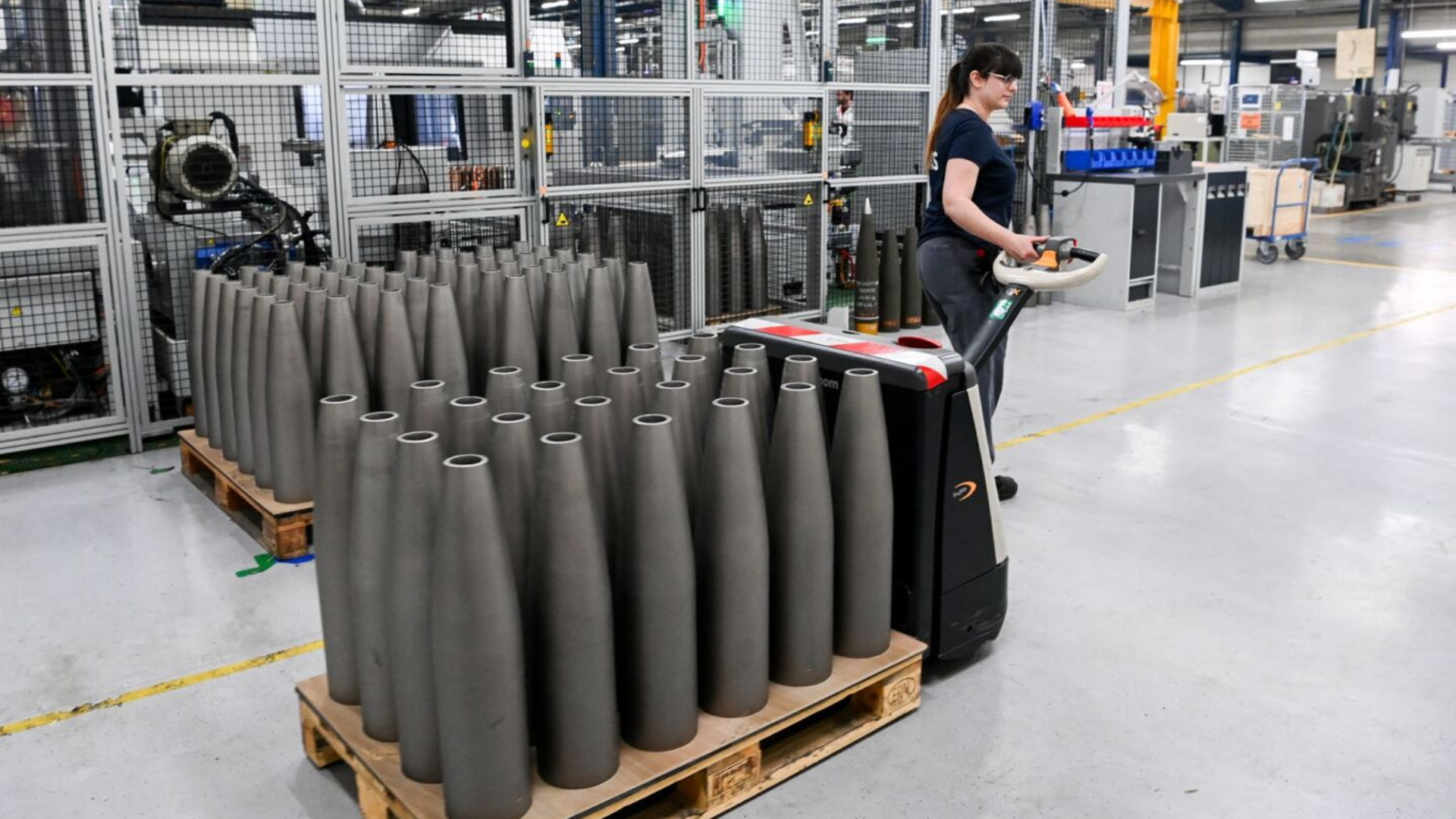
In a way, this has always been the case. In an attritional conflict, the ability to produce, replace and sustain military capability matters as much as the weapons a country starts with. Military power has always depended on productive force. It was Paul Kennedy who documented the relationship between economic power and military power across five centuries of great-power competition in his magnum opus, The Rise and Fall of the Great Powers. In December 2024, John Bew, former chief foreign-policy adviser to No10, gave this logic a new name – ‘machinepolitik’. He argued we are returning to an era of ‘raw power’ in which the ability to harness productive force, from armaments to energy to technology, will increasingly determine which countries shape events.
The wars of the past four years have gone a long way towards vindicating both Kennedy and Bew’s analysis. As the Centre for Strategic International Studies has noted, Russia’s war in Ukraine has consumed extraordinary amounts of materiel, with both sides burning through artillery shells, precision-guided munitions, drones and other equipment at rates far beyond peacetime assumptions. In the case of drones, an estimated 10,000 are being used each day.
For people living in Britain and Europe, this should be deeply concerning. If the United States, the so-called arsenal of democracy, is already struggling to replenish critical munitions while confronting lesser adversaries like Iran, then the implications for a prolonged conflict with a peer competitor like China should be blindingly obvious.
The problem is even more acute in Europe. Unlike the United States, we enter this period of renewed great-power competition with some of the highest energy prices in the developed world and a much-diminished industrial base. Decades of poor policymaking have hollowed out foundational sectors such as virgin steel, chemicals and refining, all of which provide essential inputs into sustained military operations
Oil refining in Britain is a good example. There is a tendency among politicians and in the media to treat refinery closures as manageable because cars can be electrified and planes can eventually use sustainable aviation fuel. But military demand is very different. F-35s, tanks, ships and logistics fleets still depend overwhelmingly on conventional fuels. Domestic refining capacity cannot easily be substituted in a crisis.
As Dev Sanyal, chief executive of VaroPreem, whose refineries supply a tenth of Europe’s road fuels, told the Financial Times last week: ‘The reality is when you start thinking about F-35 jets and Leopard tanks they don’t run on hydrogen, they run on conventional energy.’ It is a similar argument to the one I made in the Telegraph in April.
Unfortunately, the national conversation about rearmament is still framed far too narrowly around defence budgets, procurement and headline spending commitments. Those things are necessary, but they are not sufficient. Rearmament ultimately requires reindustrialisation. For Britain and Europe, that means confronting the policies driving structurally high energy prices – in particular, the climate agenda that is eroding the competitiveness of energy-intensive industry.
Another major obstacle is the second ‘China Shock’. Europe is trying to rebuild domestic manufacturing while Chinese overcapacity is intensifying competition across sectors that matter to future economic and military strength, such as car manufacturing.
The problem is that this is not simply a question of commercial competition. Too many seem unaware of how the same industrial base that is undercutting European manufacturers is also helping to sustain Russia’s war economy. As experts at RUSI, the world’s oldest defence think-tank, and Policy Exchange’s Edward Stringer have argued, Chinese productive capacity is structurally embedded in Russia’s war effort. We rightly focus on Russia’s shadow fleet because it helps to directly finance the Kremlin’s war machine. But we are far less willing to confront the contradiction of deepening our own dependence on Chinese industries that are helping to sustain that same war effort.
That is worth remembering the next time Labour politicians such as Ed Miliband point to the alleged benefits of importing ever greater quantities of Chinese clean technologies in pursuit of Net Zero.
All of this points to a harder truth about UK defence and rearmament. It will require a break with assumptions that have shaped British policy for decades – namely, that a statutory Net Zero target can be pursued without weakening industrial capacity; that cheap imports from China are a cost-free substitute for domestic production; that Britain can safely dispense with its domestic oil and gas sector (or simply keep onshore and offshore resources in the ground); and that green industries can replace the strategic value of the heavy industries being lost.
Those assumptions were easier to sustain in a more benign international environment. They are much harder to defend today.
Maurice Cousins is campaign director for Net Zero Watch. Follow him on X: @MDC12345678.
#Net #leaving #Britain #defenceless