wellnessfitpro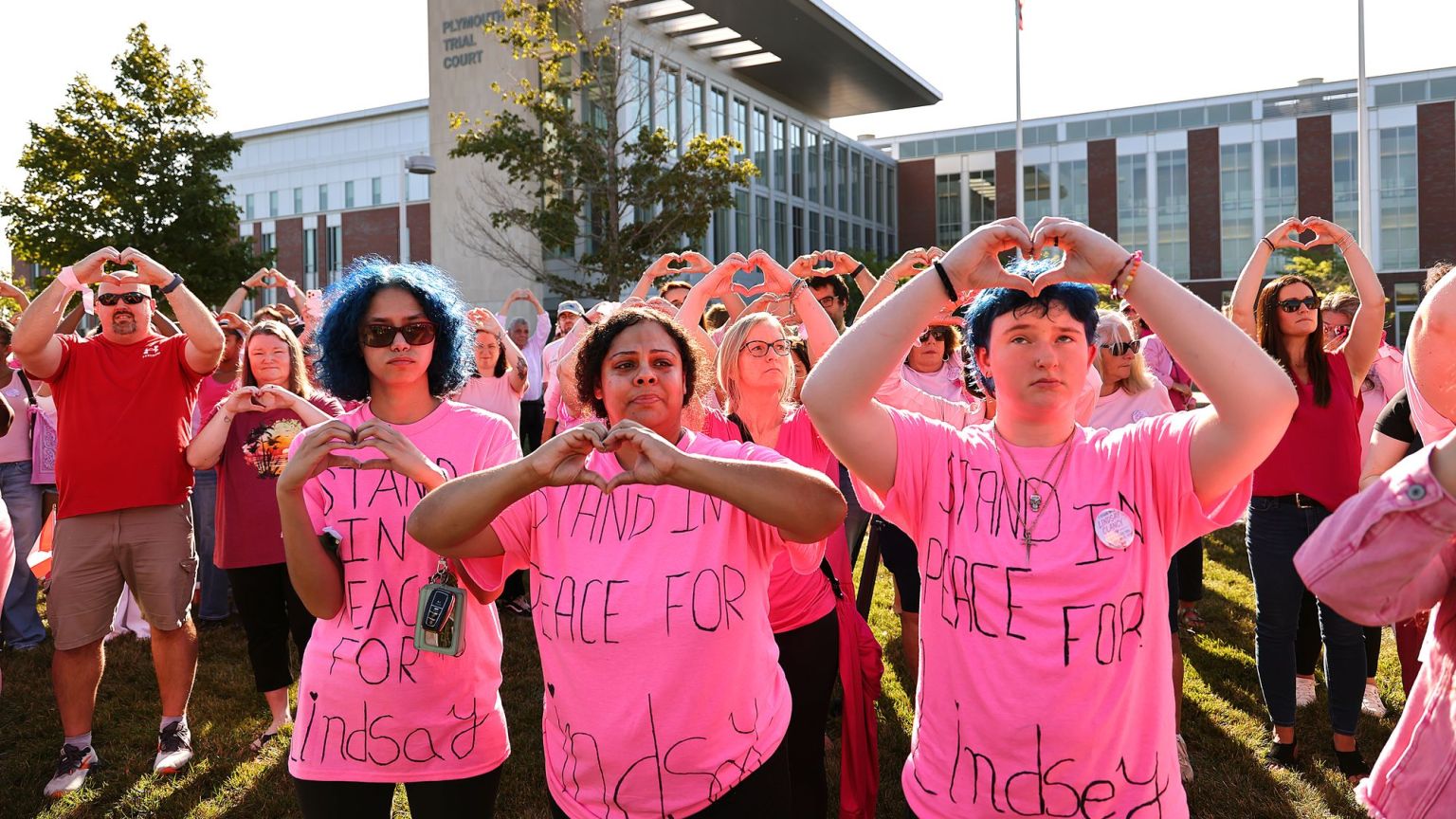
In late August, hundreds of women lined the streets of Plymouth, Massachusetts. Bedecked in shades of pink, they applauded, made lovehearts with their hands and held aloft handmade signs. You would be forgiven for thinking these scenes were a prelude to a pop concert.
The unlikely celebrity these women had gathered to support was Lindsay Clancy, then 20 days into a trial on three counts of first-degree murder. On Friday, the Massachusetts judge brought proceedings to a halt and declared a mistrial, leaving Clancy’s future uncertain as prosecutors decide what to do next.
The Clancy case has divided not only America, but international opinion, too. On 24 January 2023, while her then husband was out picking up dinner, Clancy strangled her three children with exercise bands in the basement of the family home. She then cut her wrists and neck and leapt from an upstairs window in an apparent suicide attempt. Though she survived the fall, the impact left her partially paralysed. Five-year-old Cora, three-year-old Dawson and eight-month-old Callan were all later pronounced dead.
During her trial, prosecutors said she planned the killings in advance and had sent her husband out on errands in order to give time to murder her children. Her defence team argued that she was mentally unwell, suffering from bipolar disorder and postpartum psychosis, and therefore could not be held criminally responsible.
The tragedy has created a maelstrom of conflicting narratives on social media. For some, the situation is clear-cut: Clancy killed her three children and must now be held criminally responsible. For others, it is a case about the failures of healthcare professionals to intervene to help a woman mentally struggling with motherhood. Those within the latter category, it seems, range from fairly nuanced commentators to people who genuinely believe Clancy should not be considered culpable for the deaths of her children at all.
‘I feel as women we are treated very unfairly’, one Clancy supporter told the Associated Press after the judge declared a mistrial. ‘We get dismissed, things are minimised. Even what’s happened today, I think one person failed her.’ Voxpops with ordinary American women have revealed similar sentiments, with another saying simply: ‘She was very sleep deprived… You know, working night shifts and three children is a lot.’
A third woman suggested that Clancy’s ex-husband, Patrick, who had been picking up a takeaway meal at the time of his children’s murders, should go to jail for negligence. Admittedly, this is a more generous stance than that taken by legions of internet sleuths convinced Patrick was actually the culprit. ‘We all can’t be wrong’, said a TikTok mom-fluencer in a now-deleted video, implying that the sheer volume of women online convinced of Patrick Clancy’s ‘guilt’ should be enough to prove the theory. Bear in mind, not even Clancy’s defence team has disputed that she killed her children.
The reason so many women stand behind Clancy, explained sage male psychiatrist and streamer Alok Kanojia on the Modern Wisdom podcast earlier this week, ‘is because they have looked down from the cliff that she jumped off of’:
‘So many women have had such terrible postpartum experiences… It is like you’re fighting against something that’s going to kill your kids. And you love your kids. And you’re fighting against it day after day after day after day… It’s like everything is falling apart around you… I think that’s why so many people are supporting her. Because they know what it’s like, and they know how dangerously close they came to succumbing to this.’
Kanojia went on to describe postpartum psychosis as ‘actually, like, quite common’. An unusual conclusion, given that the condition – characterised by a sudden loss of touch with reality in the weeks after childbirth – is thought to affect roughly one to two women in every thousand.
Arguably more notable, however, is the way in which Kanojia and others tend to frame the mental-health argument. The implicit premise appears to be that the ordinary spectrum of postpartum difficulties brings women meaningfully close to the extreme pathology that Clancy claims to have suffered from. ‘Any one of us who has dealt with mental health – anxiety, depression, postpartum’, said Renee Kimball, an organiser of the pro-Clancy gathering outside the court, ‘could be sitting in her chair’.
Could we, though? Is there really an assumption that any woman with perinatal difficulties is familiar with the urge to literally kill her own children? Desperately unwell, even medically neglected though Clancy may have been, the leap that a subset of her support base has made from ‘she was a woman suffering mentally’ to ‘therefore she represents me’ is alarming. And yet, the internet is awash with voices claiming exactly that, flanked by hordes of bad-taste armchair detectives spilling poorly evidenced theories to their social-media followings.
Undergirding the idolisation of Clancy is a version of feminism mangled beyond recognition. Far from humanising women, the language being used by the so-called experts harks back to a time when to be female was to be a set of complex, malfunctioning humours, the influence of a uterus rendering women infinitely less rational than their male counterparts, less capable of controlling themselves, less responsible for terrible decisions. How is it that we have gone from ‘don’t call us hysterical’ to ‘actually, we’re all a bit hysterical and to say otherwise is negligent’? In the name of compassion, women are being stripped of the very thing that their predecessors spent generations insisting they possessed: the moral and intellectual autonomy to act of their own free will.
Thomas Sowell once noted how easy it is for the media to garner sympathy for the man on death row – we see his misery, watch his family weeping, hear about all his good qualities. What we do not see is the look on his face when he committed the heinous act that put him there. If we did, said Sowell, ‘Many of those people who gather outside prison to protest his execution might instead be inside volunteering to pull the switch’. Whatever the precise role played by Lindsay Clancy’s psychological state, three children are now dead. That so many have taken to the streets in support of the woman who killed them tells us something unmistakably bleak about what now passes for feminism.
#warped #feminism #Lindsay #Clancy #fan #club