wellnessfitpro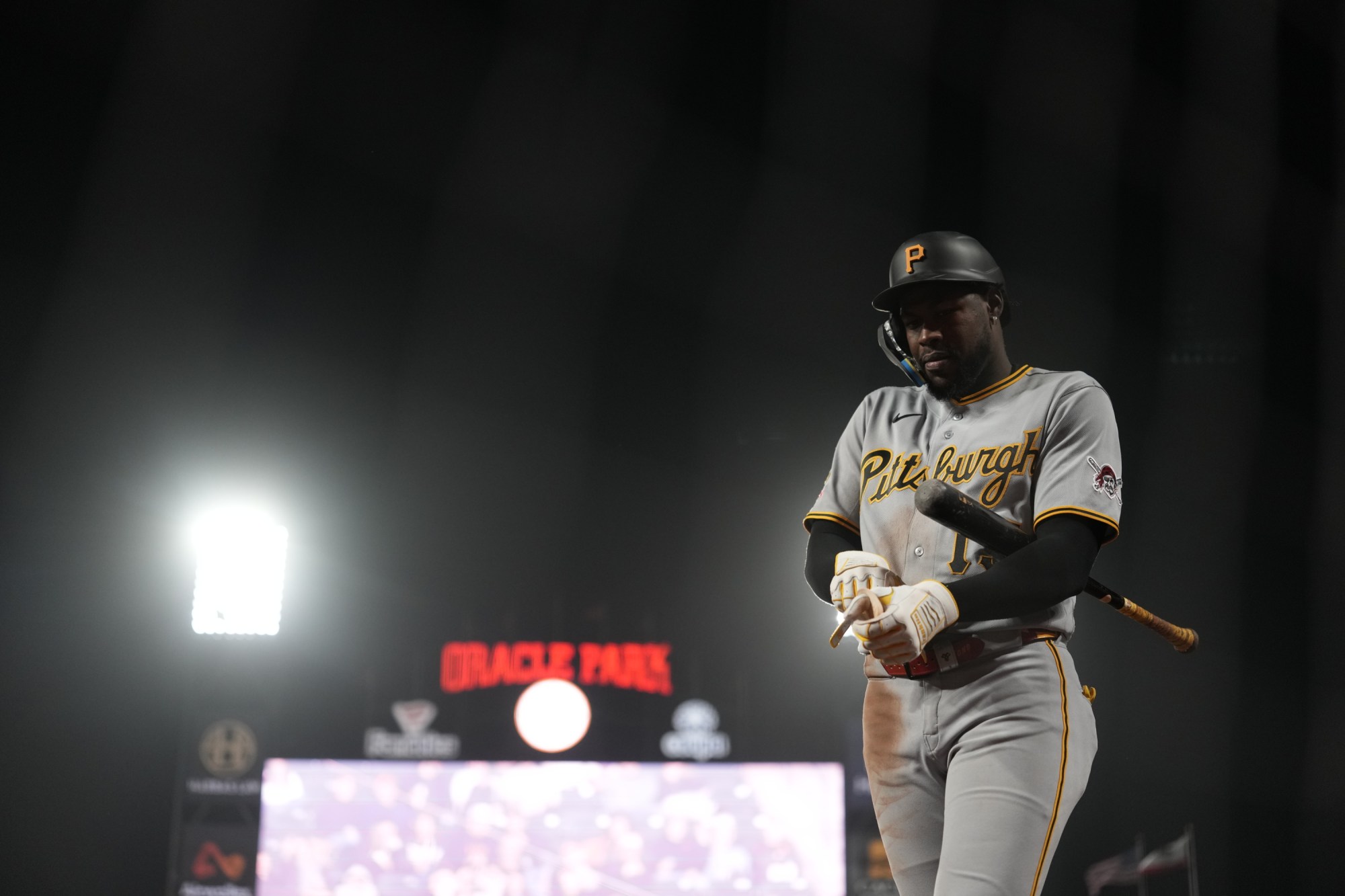
Reporting Highlights
- A Deadly Crash: Six years ago, Pittsburgh Pirates star prospect Oneil Cruz rear-ended a motorcycle, killing all three of its passengers and jeopardizing his career.
- Making It Disappear: Cruz’s parents brought in a fixer to pay off the victims’ families so they wouldn’t sue and wouldn’t demand that prosecutors pursue the case.
- Behind the Scenes: In making the case go away, that fixer, Santo Caraballo, saved Cruz’s career and launched his own as one of the most powerful figures in Dominican baseball.
These highlights were written by the reporters and editors who worked on this story.
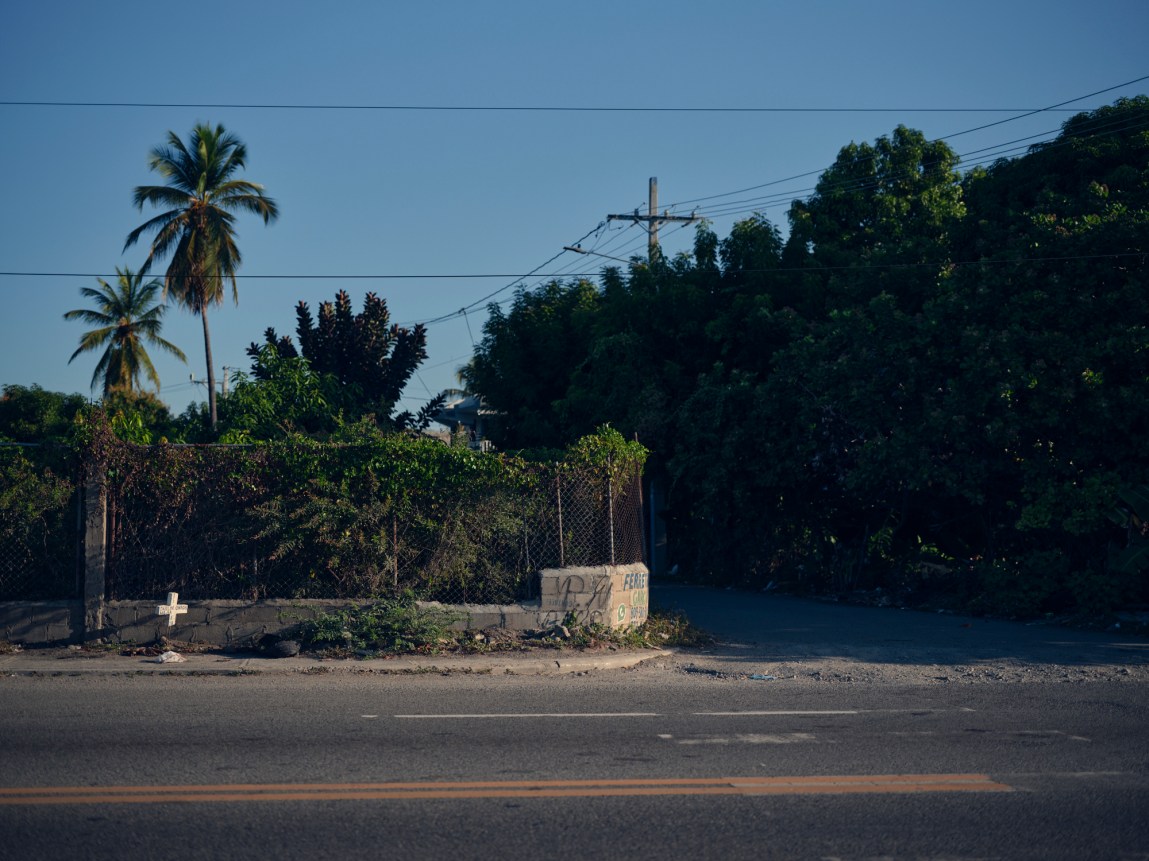
Around 4 a.m. on Sept. 21, 2020, Luis David Saba arrived at a desolate stretch of highway along the southern coast of the Dominican Republic. Police and paramedics had left by then, taking with them a Jeep Grand Cherokee with a crumpled hood and the tangled remains of the cheap motorcycle it had smashed into. Also gone were the motorcycle’s two critically injured passengers. The only signs that an accident had occurred a few hours earlier were the blood and debris smeared across the asphalt and a pile of neatly placed branches.
Saba knew what to expect underneath that pile. It was a Dominican custom to use anything on hand to shroud a body abandoned by paramedics. Pushing away the branches, Saba saw shredded clothes, torn skin and long, curly hair forming a halo over a battered face. He covered the body of his 20-year-old younger brother, Yohan Saba Mercado, with a sheet. In shock, he felt nothing but the need to get his brother out of the road.
Saba sat and waited for forensic investigators he was told were on their way. Hours passed, the sun rose and traffic began to stream by them. Finally, he gave up. With the help of friends, he loaded his brother’s body into a van, and hours later it was at his mother’s house.
“Paper Trail” Podcast
Learn more about this story on ProPublica’s podcast “Paper Trail.”
Later that morning, two other families were experiencing similar horrors. Deby Beato Charles, 20, and Daniela Perez Garcia, 19, had been riding on the back of Yohan’s motorcycle when the Jeep rear-ended them. When Deby’s older brother, Ruben, got to a nearby hospital, he was met by a doctor who handed him a wallet and bracelet. Deby had died of a severe head injury and blunt chest trauma. At another hospital, Daniela’s uncle was ushered into a room where his niece lay. Her face was so swollen he didn’t recognize her. According to her death certificate, she had suffered injuries to her head, chest and hip and went into hypovolemic shock, in which the loss of bodily fluids causes a person’s organs to shut down.
The families of Daniela and Yohan held funerals in their homes that afternoon. During the proceedings, word spread about who had been driving the Grand Cherokee. It was Oneil Cruz, a “pelotero,” a ballplayer, with a fortune and a future, the 21-year-old scion of a local baseball family, a top prospect in the Pittsburgh Pirates organization. Seemingly everyone in the area knew how much he received from his major league signing bonus five years earlier: $950,000.
The families also knew what was going to happen next.
Yohan’s mother told me that after all the mourners left the house, a driver showed up holding out a phone. On the line was Cruz’s mother offering condolences — and wanting to negotiate.
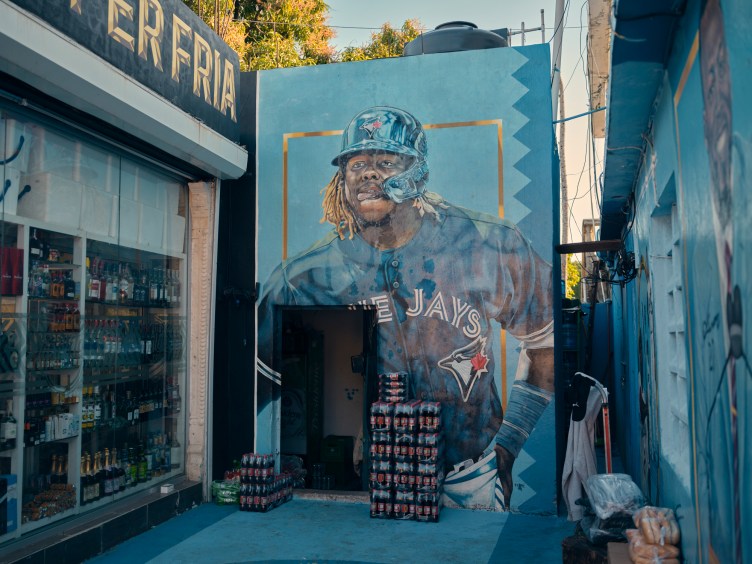
Less than 7 miles from the site of the accident is the striving farm town of Nizao. Even though it has a population of just 32,000, Nizao has produced dozens of professional ballplayers, including three-time All-Star Ketel Marte and, most famously, Hall of Famer Vladimir Guerrero Sr., one of the best hitters in modern baseball and father of Vladimir Jr., the star first baseman for the Toronto Blue Jays. Looming over the main road into town is the Guerreros’ mansion. Right below it, a giant 27 has been carved into the hill — the jersey number the two share.
By 2020, Oneil Cruz Ureña looked poised to be among the best of Nizao’s ballplayers. The Los Angeles Dodgers signed him when he was 16 and over 6 feet tall. They traded him to the Pittsburgh Pirates, who considered him their future shortstop. The statistics website FanGraphs ranked him as one of baseball’s top prospects, declaring that “there aren’t many who have a chance to be what this guy might.”
But the accident on a darkened road threatened to destroy that chance before Cruz even made it to the major leagues. Police detained him at the scene. In a court filing the following day, prosecutors said that they had opened an investigation “en contra del imputado,” “against the accused.” They sought “coercive measures,” a mechanism in Dominican law by which a suspect can be forced to remain in custody while an investigation continues. In a press release, they alleged that Cruz “had consumed alcoholic beverages prior to the accident.”
The scandal made headlines in the Dominican Republic and the United States, and then, in a matter of days, it evaporated from the public eye. How that happened has been unknown, until now.
I’d heard about the Cruz case last year when I began reporting on the booming industry of “prestamistas,” moneylenders, who exploit major league prospects in the Dominican Republic by getting their undereducated parents to give up sizable portions of their signing bonuses. The case’s disappearance, I was told, marked the origin story of the most dominant prestamista in the country’s chaotic baseball ecosystem: Santo Caraballo. At the time, Caraballo was an obscure businessman with political connections. He rose to prominence after forming a business partnership with national hero David Ortiz, the retired Boston Red Sox great who remains an influential figure in Major League Baseball. (In a statement, Ortiz said his business relationship with Caraballo “began to come to an end” more than 18 months ago.) I wrote about Caraballo’s practices in “The Dominican Baseball Factory.”
To find out how Caraballo made the case against Cruz go away, I interviewed more than 30 people in the Dominican Republic. Some were afraid to talk, but others, primarily family members of the victims, were eager to speak publicly for the first time. I also obtained hundreds of pages of previously unreported documents, including court records and bank receipts, as well as voice notes. I made numerous attempts to reach Caraballo about his role, including sending him a summary of my findings. He never responded.
The Dominican court system gives victims or their families significant input on whether to pursue a prosecution. Caraballo oversaw a campaign to persuade the families of the three victims to accept cash in return for signing documents withdrawing all “penal, civil or judicial” claims against Cruz.
The effort rescued Cruz’s baseball career — he is now the starting center fielder for the Pirates — and it launched Caraballo’s. He became a ubiquitous operator in the sport, feared for the sort of high-powered connections that could make a deadly crash disappear. But for some of the victims’ relatives, the money they received — roughly $66,000 in total for the three families — hasn’t lasted nearly as long as the hurt: six years of unresolved grief, resentment and regret that they allowed their forgiveness to be purchased.
Cruz declined a request for an interview. His lawyer, Amauris Vásquez Disla, called the accident “a profound tragedy for all parties involved, especially the victims’ families.” He went on to say that the court “issued an order of dismissal based on the findings, a legally binding decision that was a lawful resolution of this matter.”
A spokesperson for the Pittsburgh Pirates said the team and Cruz “addressed this matter more than six years ago based on the information available and the outcome of the legal proceedings.”
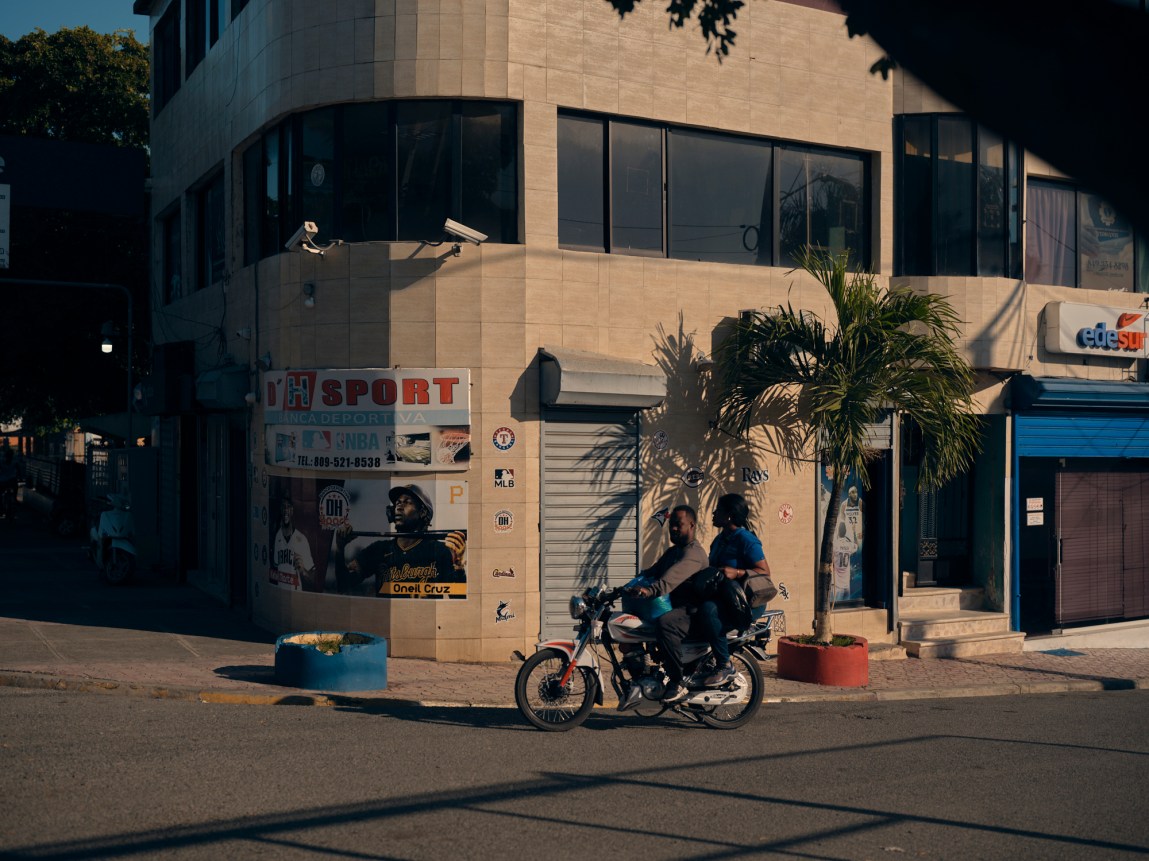
Yohan and Deby lived in and around a barrio of Sabana Grande de Palenque, known as “Sal Si Puedes,” Get Out If You Can. Five miles from Nizao, it is marked by ruddy dirt roads and half-built homes and is separated from the rest of the town by a deep canal. Some residents have to cross makeshift footbridges to reach their front doors. Daniela grew up in the nearby village of Juan Baron.
As was the case with Deby and Daniela, Yohan’s parents separated when he was young. His early childhood was spent in a small wooden home where his paternal grandmother took care of him while his mother worked in Santo Domingo as a housekeeper. A teenager when his father suffered a stroke, Yohan would bring him blood pressure medicine and take him to the beach to exercise in the ocean. Yohan worked as an air conditioning mechanic, telling his dad his goal was to pay for a new roof for his mom’s house so that it wouldn’t flood every time it rained. He commuted to Santo Domingo on a X1000 motorcycle he had bought secondhand. In a country where it’s common to see three or more people on a “moto,” the noisy rig was also how his friends got around.
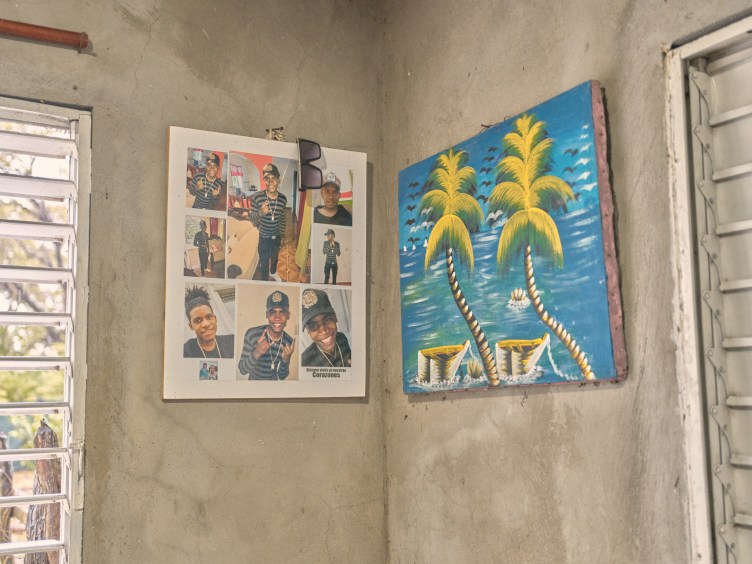
The best of those friends was Deby. The third of four boys, all right-handed pitchers growing up, he lived in his mother’s immaculate home. After she moved to Chile six years earlier to find work, Deby spoke with her every day, updating her on his love life. He had her name tattooed within an infinity symbol on his arm. When he failed to make a top-level baseball academy, the most common route to be signed by a major league team, Deby returned to high school. At the time of the crash, he was days away from graduating, bagging groceries and taking care of his younger brother.
Deby and Daniela had known each other since they were kids and, according to their families, had an off-and-on relationship. Videos and photos of Daniela often show her dancing and singing. “She never wanted the party to end,” a friend said. The youngest of four, she lived with her mother, who considered Daniela her best friend. She was her “chiquita,” or “little girl,” Daniela would remind her mother when she insisted on sitting on her lap. Many nights, they slept in the same bed together. She had graduated high school and was taking English classes in Santo Domingo.
Deby, Yohan and Daniela were in that hopeful, stressful, liberating period between adolescence and adulthood. They had no intention to be out late that September night, but they were also not going to turn down an impromptu plan to party.
Daniela told her mom she was going to meet girlfriends at the Nizao River and would be back by early evening. It was still daylight when she recorded herself at an outdoor bar, wearing a red dress and singing along to a salsa song. Nobody was in a rush to return to the stagnant indoors. As for the country’s 5 p.m. COVID-19 curfew, few young people took it seriously. In Baní, the nearest sizable city, there was a bar referred to as Escondido, or Hidden, because it served drinks past curfew. Daniela and a friend recruited Yohan and Deby, who were home but easy to persuade to join.
At around 11 p.m., according to court records, they were riding on the four-lane highway heading home. Late at night, the road is desolate and poorly lit. Trucks and cars howl by at high speeds, and accidents are frequent. A security guard who works at a snack stand across from the site of the accident told me that his boss was killed when a car smashed into his business.
Yohan was at the handlebars, with Daniela and Deby seated behind him. None wore a helmet. A friend on his own motorcycle was riding alongside them. They had just passed the shuttered snack stand when Cruz rear-ended Yohan’s motorcycle, smashing its rear tire and throwing the three friends onto the pavement.
Cruz called 911, according to his lawyers. A lieutenant from the national police responded to the scene, but his subsequent report, which he filed in court, offers little detail about the accident site or investigation that followed. If there was any forensic analysis, prosecutors never produced it. There is no mention of whether police believed either Yohan or Cruz was driving recklessly or speeding. The report does not indicate whether the victims were tested for their alcohol levels. It makes no reference to the second motorcyclist. When I reached him, he said that the authorities never questioned him. He declined to be interviewed further.
According to the report, Cruz told the lieutenant that “en ningun momento,” “at no time,” did he see the motorcycle before colliding with it in the passing lane. He said it didn’t have lights — an assertion that would later become a point of contention in court. Cruz’s legal team filed a photo of the motorcycle that showed missing lights, but it was taken after the accident, when the bike was barely intact. Luis David, Yohan’s brother, told me that the motorcycle had working lights in the front but not in the rear.
The day after the accident, stories were posted on Facebook that included photos of Yohan, Deby and Daniela lying mangled on the highway as emergency responders attempted to save them. On Dominican gossip and news sites, opinions poured forth. Some were convinced that Cruz would get preferential treatment. Others predicted that the families of the victims would be seeking a payday. Many asserted that the deceased were as much at fault as Cruz since they were all out past curfew.
The families of Yohan, Deby and Daniela all knew of the Cruzes. Oneil’s father, Rafael, played pro ball, first in Japan and then in the Atlanta Braves organization until 2009, when he was suspended after testing positive for steroids. He returned to Nizao, where he opened a baseball academy. His most promising pupils included Oneil and his brothers, Rafael Jr. and Homer, who played pro ball in the United States. Oneil was named after Rafael’s favorite ballplayer, New York Yankees outfielder Paul O’Neill.
Among the Cruzes’ inner circle was Osvaldo Tamarez, a trainer known as Cabezon, Big Head. He told me that in the hours following the accident, when Oneil was still in custody, he went to see the Cruzes and advised them to handle the aftermath of the accident carefully. “Cuidado, tu hijo va a ser una figura pública,” Tamarez said he told them. “Your son is going to be a public figure.” According to Tamarez, the Cruzes assigned him to speak with Daniela’s and Deby’s family members, some of whom he knew from baseball. He told me that from the beginning, their focus was on how to pay off the victims’ families so they wouldn’t sue and wouldn’t demand that prosecutors pursue the case. A person close to the Cruzes confirmed Tamarez’s account.
Tamarez said that another trainer recommended that Cruzes bring in Santo Caraballo, a businessman he knew from the baseball industry. Among Caraballo’s many companies was a legal services firm, even though he wasn’t a lawyer. More relevant, Caraballo had political connections. He was an ambassador in the ministry of foreign affairs, a patronage position awarded him four years earlier by President Danilo Medina.
Tamarez said that Caraballo immediately got to work on multiple fronts, including organizing a legal team. But that wasn’t his most important role. Caraballo’s most important job was simple, Tamarez told me: Fix the problem.
At Cruz’s initial court appearance, which came a little more than two days after the accident, one of his attorneys asked to delay the case so his representatives could “in a humane way, seek solutions” for the families and their “material hardships.” The judge postponed the hearing for two days. Family members told me that Caraballo, or those working with him, had already begun reaching out to them.
The last time Mercedes Garcia saw her daughter, she had helped Daniela pull the price tags off her red dress before she went to the river with her girlfriends. In the days after the accident, Garcia was haunted by a vision of her daughter plastered to the road in the torn dress, yelling, “Ayúdame Mamá, ayúdame!” “Help me, Mama, help me!”
I found Garcia where she spends much of her day: seated alone in her tiny living room, rocking back and forth on a couch, her hair neatly pulled back, digging under her fingernails with a bobby pin. I could hear the shouts of a woman preaching at the church next door.
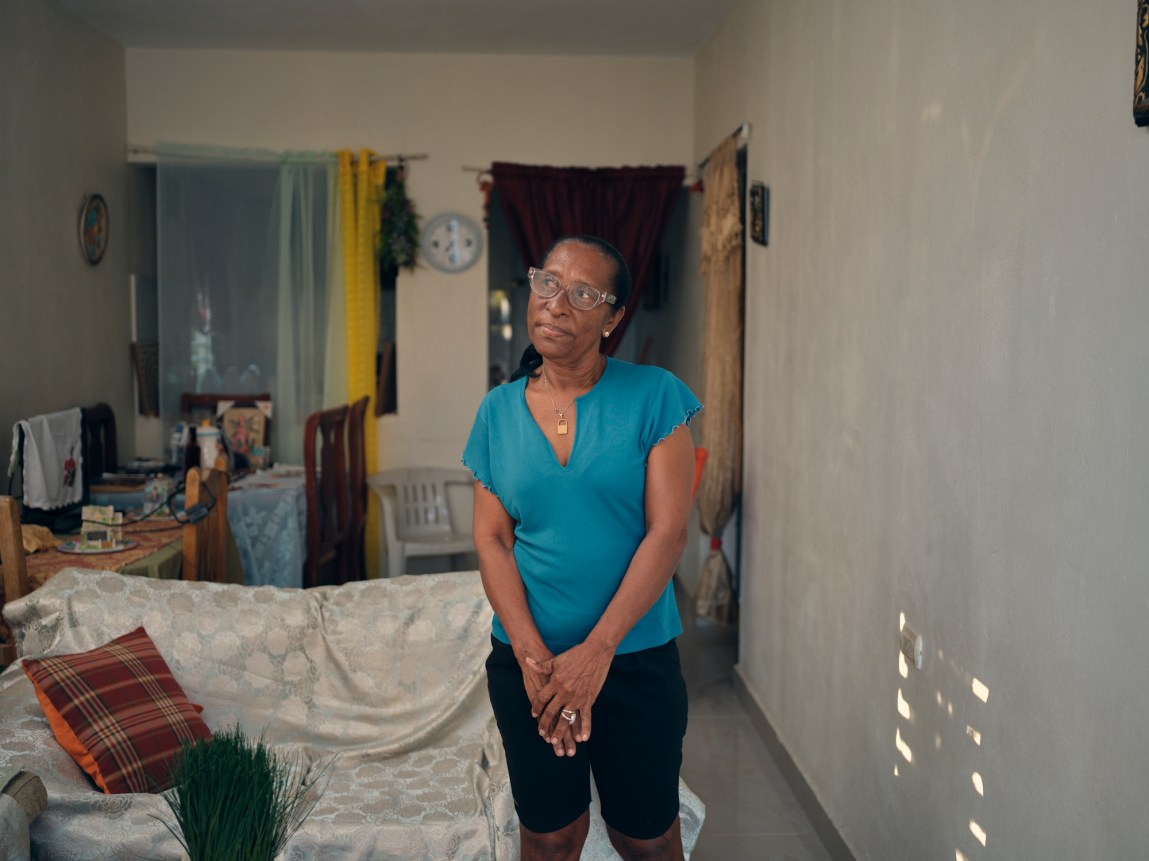
Garcia, who is 65, says she was clear from the beginning that she didn’t want money from the Cruzes. “Rich people, especially baseball players, like to pay for dead people with money,” she told me. “I am poor, but I have honor.” All she wanted, she said, was for Cruz to answer for what happened and apologize. Instead, she said, her family — most prominently, her son — tricked her into agreeing to a deal.
Garcia told me that in the aftermath of her daughter’s death, she entrusted her son Porfirio with handling all the paperwork. Porfirio was a traffic cop in Santo Domingo who moonlighted as an Uber driver. What Garcia didn’t know, but what Tamarez later confirmed, was that Porfirio was already working with Caraballo.
According to Garcia, Porfirio brought her a document to sign that he partially obscured with his hand. Shortly afterward, Porfirio drove her and another of her sons, Juan Manuel, to Caraballo’s office in Santo Domingo. Porfirio went in by himself and brought out another document for his mother to sign. She was in a fog of grief, she told me, and didn’t read it. Juan Manuel confirmed his mother’s account that she didn’t understand what she was signing and that Porfirio didn’t explain what it was.
Daniela’s father, Porfirio Perez, co-signed the documents. Perez, who can barely read, parks cars at a bank for tips. He told me that Garcia’s brother brought him the papers but didn’t tell him that they exonerated Cruz. “Because they saw that I’m a simple person, they took advantage of me,” he said. Garcia’s brother declined to comment.
I reviewed the two documents, which were dated the same day as Cruz’s court appearance. One was filed in court by Cruz’s attorney; the other was not. The document filed in court states that the family sought to “withdraw” all legal claims against Cruz. It also says that the family had not received any “pecuniary interest” in return for withdrawing the claims. They were doing so out of an awareness that the accident was not caused by Cruz, the document says, “but rather by circumstances of life.”
The contract not filed in court is signed by Daniela’s parents and Oneil’s mother. It’s a “discharge and legal settlement” stating that the parents were paid 900,000 pesos, about $15,000, for Daniela’s “funeral expenses.” That amount is more than twice the average annual income in the Dominican Republic. The document says that the money represented a settlement for “damages caused” by Cruz to Daniela’s family. But Garcia and Juan Manuel said that Porfirio controlled the payout and that he gave them around 300,000 pesos, or less than $5,000. Daniela’s father told me he received nothing.
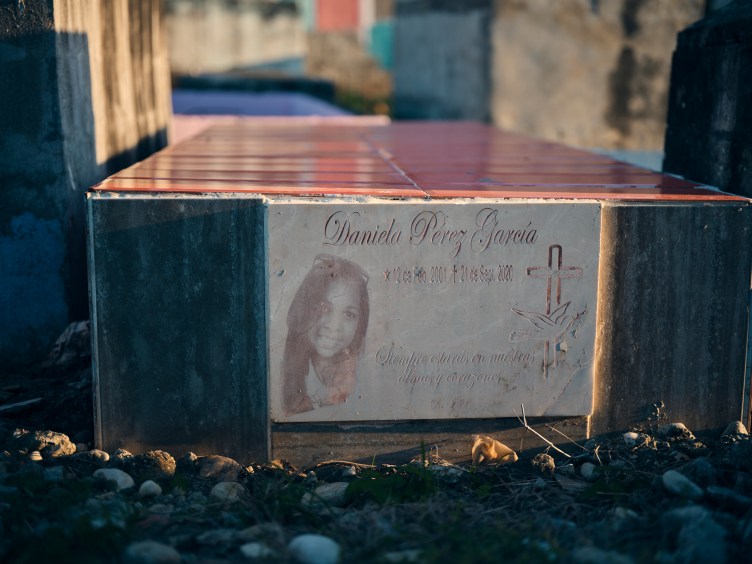
Garcia said that she didn’t talk to much of her family for years after she realized what had happened. Once they decided to take that money, they lost her, too, she told me. “I was buried along with Daniela.”
I left multiple voice and text messages for Porfirio, who declined to be interviewed.
Cruz’s mother, however, did agree to hear my questions. I met her at the Cruzes’ gated home on a busy street in Nizao. With wary politeness, she indicated that we sit on the front porch. Batting cages were in the back.
I asked her about Caraballo’s role in persuading the victims’ families not to sue, but she denied that she knew him, contradicting several witnesses. When I showed her a photograph of Caraballo, she told me she didn’t recognize him. Before I could ask my next question, she stood up, making it clear the interview was over. No more than five minutes had passed. “Thank you so much for coming,” she said. “I can’t really answer because I don’t know anything.”
When Deby’s mother, Elena Charles, left for Chile to find restaurant work, it fell to Ruben, the eldest of her four sons, to take “las riendas de la casa,” the reins of the house. So it was Ruben, who turned 27 the night his brother died, whom Tamarez visited shortly after Cruz’s court appearance. Ruben told me that Tamarez encouraged him to strike a deal, arguing that the ballplayer was never going to be punished and that Daniela’s family had already received a million pesos for agreeing not to sue. He should meet with a man named Caraballo and hear what he had to say.
Ruben spoke with his father, who told him the same thing: Deby was not coming back. Take the money, even if you just keep it in an account. (Deby’s father did not agree to an interview.)
When Ruben got to Caraballo’s office, he said Cruz’s mother was there. All he wanted, Ruben told me, was justice — he didn’t care if the courts administered it or if he did. But he was also aware that Tamarez and his father were probably right: He and his family were powerless.
Ruben yelled at Caraballo that he wasn’t there to negotiate over his brother’s death like it was a car for sale. Caraballo, he said, responded like a man used to people exploding with rage in his office. He pointed out all of his surveillance cameras. According to Ruben, he then made his offer. Because both of Deby’s parents lived outside the country —– his father had been in Spain for years —– additional legal work would be required if Ruben’s family made an agreement. Therefore, he was willing to go as high as 2 million pesos, roughly $34,000.
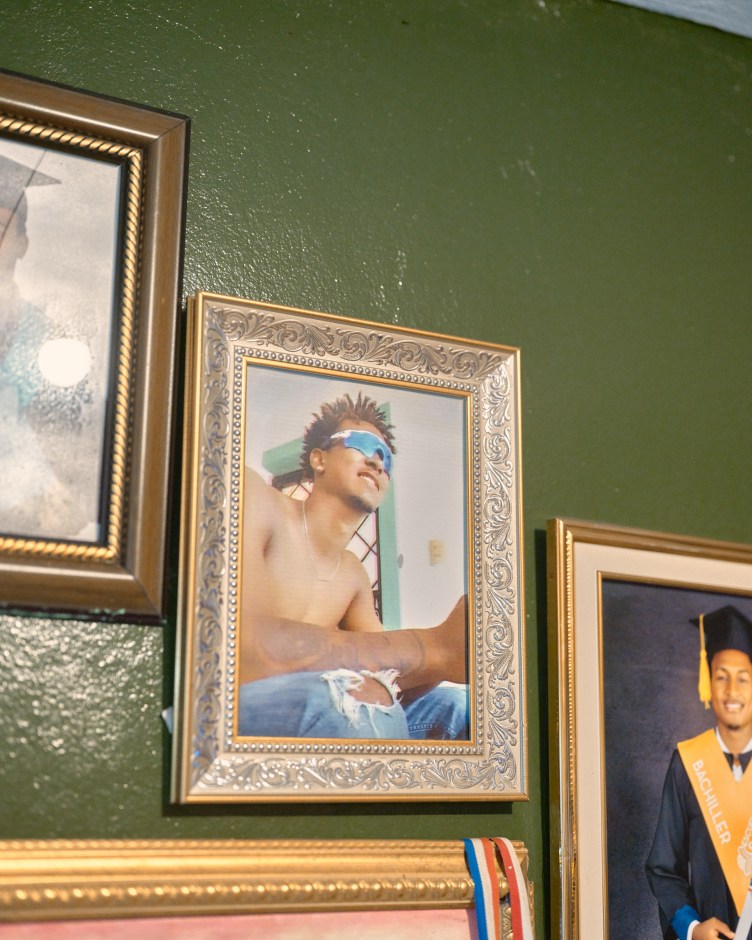
Deby’s mother returned home a couple of weeks after the accident. I recently met with her and her three surviving sons in their comfortable and tidy living room. Fifty-two years old, dressed in a patterned jumpsuit and a necklace bearing her nickname — Ramonita — she frequently wiped away tears as she discussed Deby. On the wall were portraits of each of the boys. Deby’s brothers are wearing their high school graduation robes. Deby is pictured shirtless, sporting sunglasses, ripped jeans and a knowing grin.
As we discussed the negotiation with Caraballo, Ruben and his mother revisited an argument that seemed as fresh as those they had during hourslong phone calls six years ago. She was absolutely clear about what she wanted: Cruz should be in prison for 120 years.
“Te dije no lo hagas,” she said to him, her voice rising. “I told you not to do it.”
“And what did I tell you?” Ruben responded. “That they were going to release him anyway!”
Ruben signed a document on behalf of his family called an “act of withdrawal,” which Cruz’s attorneys later filed in court. Similar to the document signed by Daniela’s parents, it attested that Cruz “had not the slightest intention of causing the accident” and that Deby’s family had agreed to withdraw all legal claims against him, including criminal and civil, without “any type of pressure [or] pecuniary interest.”
Caraballo, though, wasn’t done. Ruben told me that Caraballo then pitched him on turning his brother’s death into an income opportunity: Rather than give the family the 2 million pesos in a lump sum, Caraballo would invest the money for them and pay 15,000 pesos, just over $265, a month indefinitely.
Ruben, though, was done with Caraballo. “I don’t want to do business with you,” he said he told him, “and I don’t want to hear from you ever again.”
The family put the money in a bank account. Except for the interest, roughly $65 a month, which the family has used to help pay for the youngest’s tuition, the money is still there, they told me. Charles explained that there’s been plenty of times that they could’ve dipped into the principal, but the money repels her. “It doesn’t have an end,” she said of the anguish she feels about having made a deal with the Cruzes. “For the rest of my life, it’s going to be a conflict.”
Genny Mercado, after turning away the driver with Cruz’s mother on the line, faced a similar gantlet of pressure from her family. Word spread that the other families were accepting a deal. Genny earned about 16,000 pesos, about $275, a month as a housekeeper, so a settlement would likely exceed several years of income. Rejecting the money, Yohan’s half brothers told her, would accomplish nothing.
Mercado, who is 48, was also the de facto decision-maker. Yohan’s father, Pedro Saba, had suffered a second stroke the day he learned of his son’s death. She hired the only lawyer she knew, who negotiated a deal on the parents’ behalf. The document was a withdrawal like those signed by the other families, exonerating Cruz. Mercado said that she couldn’t think clearly about any of this at the time: “My mind was set on my son.”
Minus the lawyer’s cut, Mercado and Saba received approximately 800,000 pesos, or $14,000. Yohan’s father spent 300,000 pesos on a refrigerator, a television and a bed. Mercado used the money to buy rebar and 75 bags of cement to build the roof that Yohan had promised. She stopped working for seven months and rarely left her home except to put flowers on his grave.
When I showed up, two of her sons arranged plastic chairs in the living room so I could speak with her and her husband, José Enrique. She had never been interviewed, and it had been years since anyone outside the family even pretended to care about what happened to Yohan. “Any family that goes through something like this just wants justice,” Mercado told me. “Everyone who kills has to go to jail.” But in Cruz’s case, “No one wanted to hurt the future del muchacho.”
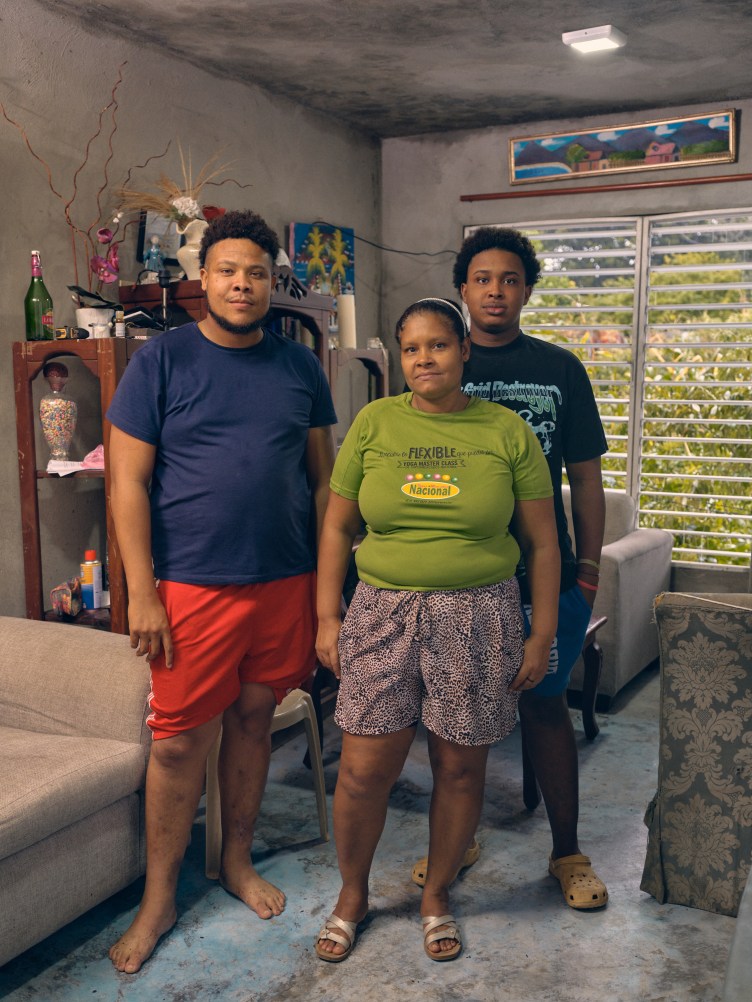
There were no second thoughts about having accepted the money, only resignation that there was never going to be a fair outcome for Yohan. “Around here, the police let a lot of things slide, especially when it involves people who have money or connections or whatever else,” said José Enrique, tossing shucked pea shells on the cement floor. “We’re not going to try to dance around that fact anymore.”
Later I visited Yohan’s father, who spends his days in a spartan home with three of his elderly brothers, two of whom are blind. “Terminator” blared on the television. Saba doesn’t have any photos of Yohan on his walls because, he said, it would make him too sad. In a voice slurred by his two strokes, Saba told me how Yohan would put him on his motorcycle and take him to the ocean. “Wherever I wanted to go,” he said, “he would take me there.” He hasn’t been back to the beach since Yohan was killed.
Cruz’s second court date occurred on the Friday following the accident. Prosecutors were seeking to keep him in custody for three months. The victims’ families weren’t present. The court didn’t know how to reach two of them, a clerk explained to the judge. Prosecutors didn’t even get the names of the victims right, referring to Yohan Saba as “Jons Sabab” and Deby as “Baby.” The charges they sought against Cruz included reckless driving and causing an accident that resulted in death. If convicted, he could face one to three years in prison.
Most striking was what was not said. In their press release after the crash, prosecutors had referred to evidence that Cruz had been drinking before the accident. But they never made that claim in court. I reached out to the lead prosecutor as well as the prosecutor’s office to ask why they had decided not to charge Cruz with driving while intoxicated. Both declined to comment. A Pittsburgh Post-Gazette journalist asked the same question the week of the court date. He reported that a spokesperson for the prosecutors explained that Cruz had “smelled of alcohol” after the accident but that police hadn’t performed a sobriety test because of a “procedural error.”
While Cruz remained in police custody, his legal team submitted the withdrawals that had been signed by the victims’ families. In addition to offering his condolences, an attorney explained that Cruz was providing “material support” to the families for their “basic needs of being human: education, food, clothing, among other matters.” He also submitted numerous testimonials praising Cruz’s good character, including from his pastor, who attested that Cruz had demonstrated “loyalty and absolute fidelity to the gospel,” and from a local marble and granite contractor who said that Cruz was a responsible client “deserving of an open line of credit.” The attorney emphasized that Cruz was one of baseball’s “five highest-rated prospects internationally.”
The accident, he told the judge, “hurts the whole town, Oneil above all, who for this will have to go to professional therapy so that he can cope with the trauma … For God’s sake, let’s try to ensure that Oneil Cruz Ureña’s mental health is now a priority.”
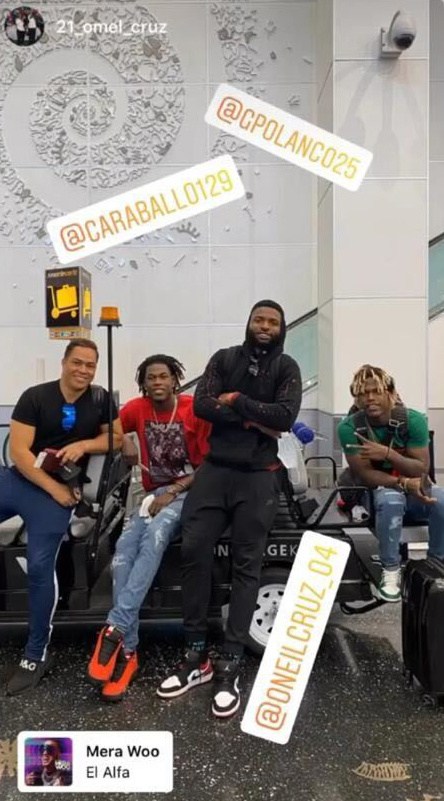
The judge released Cruz on a bond of 2 million pesos, or $34,000. A couple of weeks later, Cruz posted a photo of himself with Caraballo, grinning while seated on a golf cart at the Miami airport.
The following March, Cruz was at the Pirates’ spring training facility in Florida. An article at the time mentioned the accident in passing, buried under the news that the team was moving him into the outfield. It’s the only time I know of in which Cruz has been quoted discussing the accident.
“In the beginning, I was very fearful of not being able to continue to play the game that I love and to reach the dream I’ve always had, which is to reach the big leagues,” Cruz said through an interpreter. “However, when things became clear later and everything was solved, I was able to … hope again that I’ll be able to play. Now, I have peace.”
The press, both in the United States and the Dominican Republic, stopped covering the accident after that.
The man who helped deliver him that peace used the incident to become one of the most powerful figures operating in the shadows of Dominican baseball.
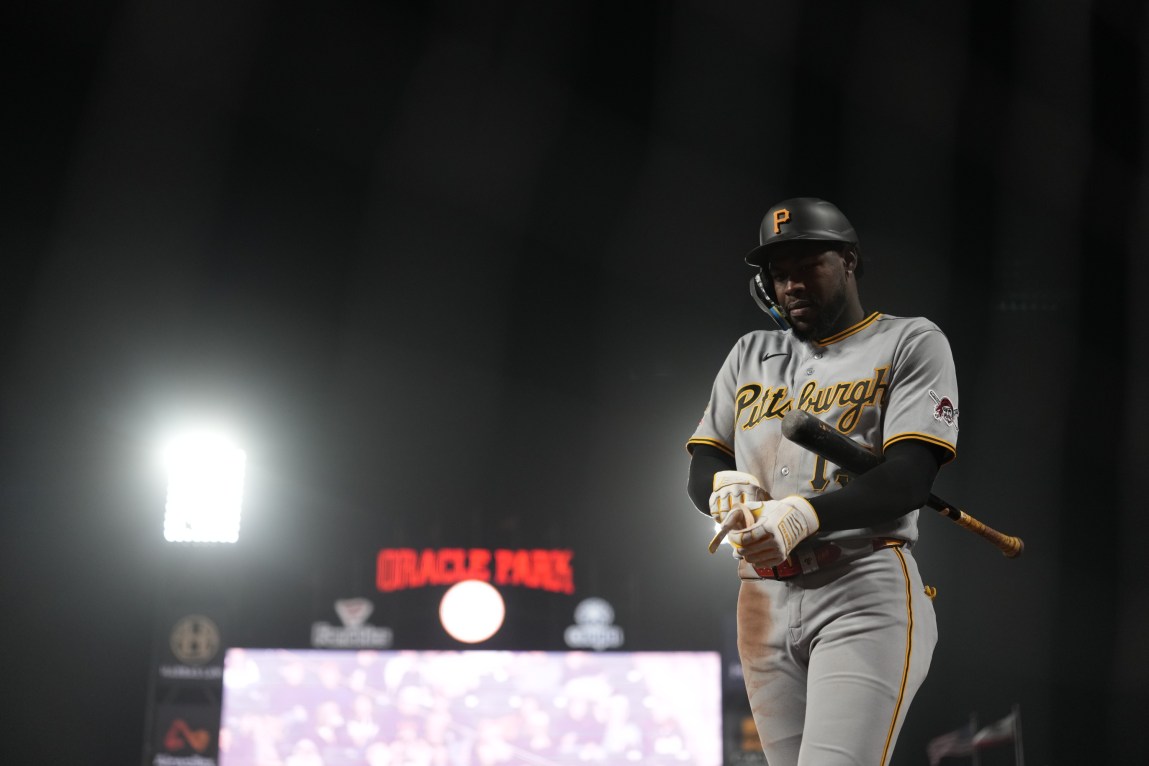
Cruz’s next court appearance was Aug. 30, 2021. Almost a year had passed since the accident, and he was in the States playing for the Altoona Curve, a Pirates minor league team. He attended virtually. Despite the families’ withdrawals, prosecutors still had the power to pursue charges against him, but their case was flimsy. The only evidence they submitted were death certificates and a police report that offered little more than the date and time of the accident and the names of Cruz and the three people he killed: Yohan Saba Mercado, Deby Beato Charles and Daniela Perez Garcia. The judge dismissed the case, ordering the return of the 2 million pesos bond.
Just over a month later, Cruz made his major league debut against the Cincinnati Reds, scorching a single that was the hardest recorded hit by a Pirate, a mark he has broken many times since. He is now a fixture of the team and will earn $3.3 million this year. He is projected to make far more once he becomes a free agent in a few seasons.
#Oneil #Cruz #Walked #Deadly #Crash #Fixers #ProPublica