wellnessfitpro
Once upon a time, scientific and technical advisers were titans in their fields. Patrick Blackett was a physicist who won the Nobel Prize before he became a key adviser to prime minister Harold Wilson, where he put British computing at the top of the government’s agenda. Chemist Henry Tizard’s work and advice allowed Britain to deploy advanced radar research into its air-defence systems. Polymath Solly Zuckerman, the first formal scientific adviser to a UK government, possessed expertise in fields ranging from zoology to systems research.
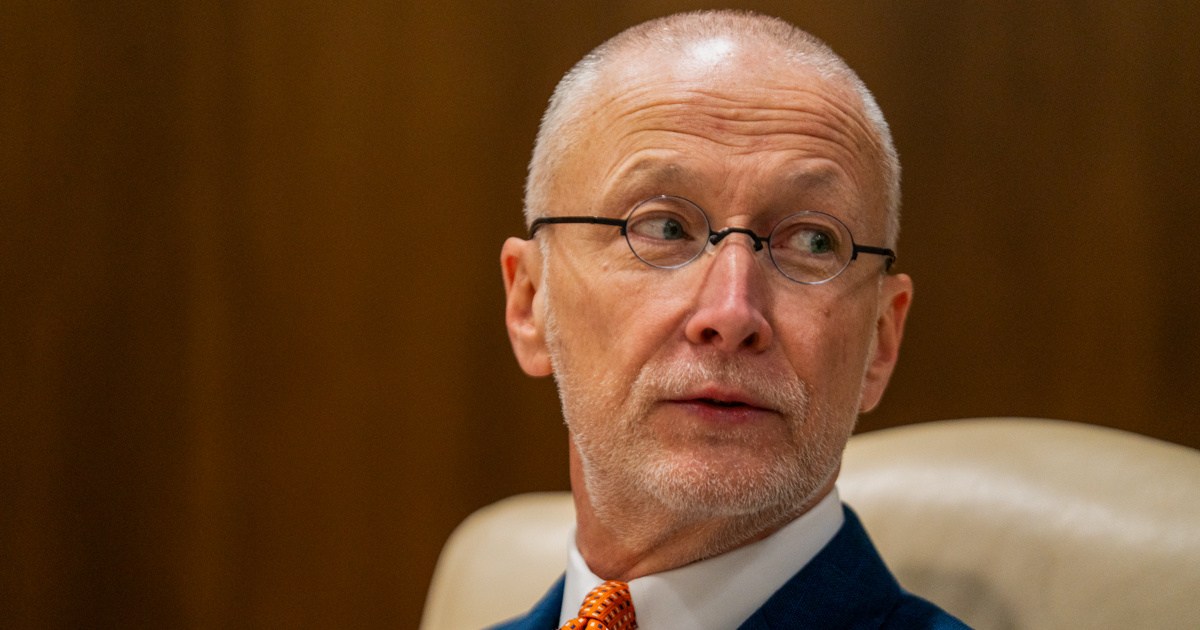
Now, policymakers look to capital instead of scientific expertise. More than anyone else, it is supposed that venture capitalists can divine a unique knowledge of the future. Which explains the extraordinary rise of Matthew Clifford, chair of the government’s AI-focussed Advanced Research and Innovation Agency (ARIA).
By contrast to his distinguished predecessors, Clifford is a former McKinsey consultant with a degree in medieval history. He rose through David Cameron’s ‘Silicon Roundabout’ scene, where he honed his legendary schmoozing skills as a networker. He created a business incubator and investment vehicle, Entrepreneurs First, in 2011. Two weeks ago, Clifford confirmed that he would join Anthropic’s international-affairs team, a position that will see him lobby governments throughout Europe on behalf of the AI firm.
However, Clifford’s cake-ism has created an obvious conflict of interest. Which politician, adviser or senior official would seek to antagonise companies that can offer them a handsome salary in the near future?
Clifford’s register of interests is perhaps the longest ever to be disclosed by a government adviser. As one of the biggest early investors in AI in Europe, there was little incentive for Clifford to say or do anything that might puncture the hype, lest it impair his personal investments. For example, do you suppose that the ‘AI Opportunities Action Plan’ that he wrote for Labour in January 2025 included the information that AI GPs get 70 per cent of their diagnoses wrong? Of course not.
Nor is what’s good for AI investors like Clifford and ‘frontier labs’, as OpenAI and Anthropic pretentiously call themselves, necessarily good for the economy as a whole. Both AI giants have attracted criticism from other tech CEOs, including Palantir’s Alex Karp and Microsoft’s Satya Nadella, for their unethical practices. Essentially, firms that use AI end up unwittingly providing the AI models with invaluable know-how, which is then sold on to all-comers, thereby destroying the firm. You don’t consume AI – AI consumes you.
On AI, the UK government has outsourced its expertise to Clifford. But his own lack of a technical hinterland has meant he has had to outsource this expertise to others. And this is where his most lasting influence will be felt.
Take the obsessive speculation about outlandish, existential risks posed by some future AI. Britain’s most distinguished tech investor, Hermann Hauser, has questioned why UK AI policy seems so focussed on this, while other nations have been far less interested. This is because, with Clifford’s help, associates of the Effective Altruism (EA) cult – a radical utilitarian social movement described as ‘The Scientology of Silicon Valley’ by one former follower – have been elevated into important advisory roles. Of all their obsessions, the existential risk of a killer or rogue AI ranks highest.
Under Clifford, EAs captured the agenda of Rishi Sunak’s 2023 AI Summit, which in turn recommended the creation of a £100million department reporting to No10, dedicated to existential AI risk. This has entrenched itself as an island of Effective Altruists in Whitehall: the AI Security Institute (AISI). Unsurprisingly, this quango has gleefully participated in the recent ‘AI gone rogue’ scare stories.
The founder of GCHQ’s National Cyber Security Centre, Ciaran Martin, spoke for many frustrated security experts when he criticised AISI’s antics in The Economist recently. AI models were ‘not going rogue’, he explained, when they carried out cyberattacks. They were simply ‘doing what humans had told them to do’. The fiction of rogue AI has been a damaging distraction when, out in the real world, hostile hackers have been penetrating Britain’s critical infrastructure, such as power plants and water facilities, with ease.
It isn’t Clifford’s fault that he stumbled on an intellectual vacuum at the heart of British policymaking. Today’s political and adviser class is bereft of scientific and technical experience. Engineers are rarer than glaciers in Whitehall. Instead, capital is assumed to have the answers.
Matthew Clifford prospered because he promised something to ministers who find the reality of governing – of securing our borders and making dysfunctional institutions work properly – messy and difficult. When senior government figures can’t assess the fairytales for themselves, then the likes of Clifford will thrive.
#Britain #lost #control #policy