wellnessfitpro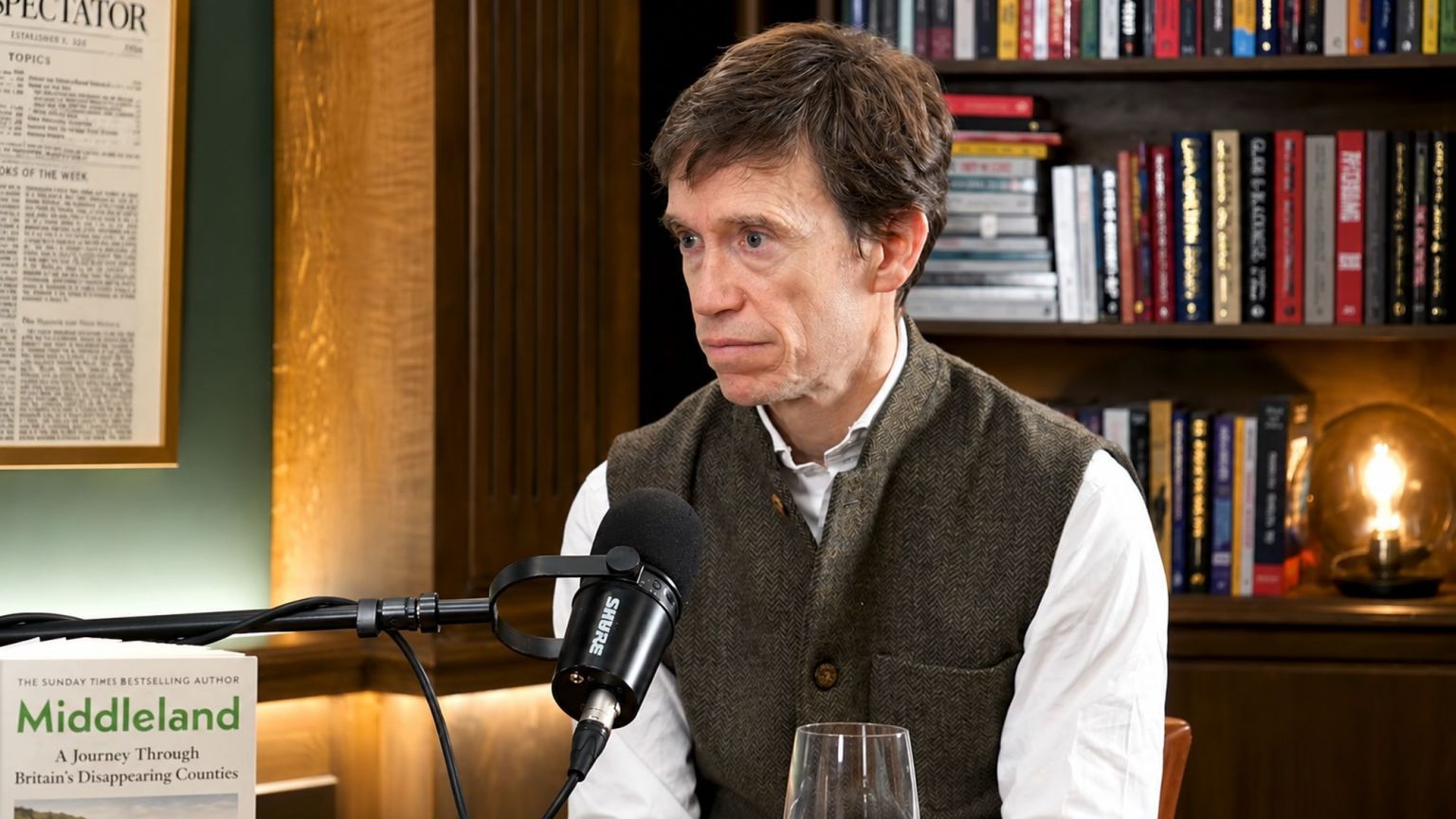
An interview conducted by Spectator editor Michael Gove with Rory Stewart on the magazine’s Quite Right! podcast this week has roused a good deal of understandable anger online.
The fury focussed on a specific soundbite, shared by the Spectator’s social-media accounts. In this filleted passage, Stewart appears to dismiss the grooming-gangs scandal as a red herring. At the very least, he minimises its importance next to matters of more urgency – a coordinated response to AI, for instance, and the country’s strategy for the coming third industrial revolution. Predictably enough, he could not resist the temptation to link the white heat emanating from this furnace of supposedly misdirected public opinion with the stoker-in-chief, as far as the left are concerned, Elon Musk.
Anyone listening to the whole thing will probably find more to agree with than they expect. Stewart states baldly that all illegal immigration is unacceptable, and that bogus asylum claims must be sternly rejected outright, and the claimants returned to France. On legal immigration, he denounces Boris Johnson in the strongest terms, which of course he enjoys doing, as he has been at odds with the Blond Buffoon since the leadership election of 2019. And, whatever else you think of Stewart, he does not have a wave named after him, except possibly of the dismissive hand-gesture variety.
At times, Stewart even sounds like my favourite sort of conservative. He muses on the virtues of his largely rural constituency and the Cumbrian way of life, the close-grained but supple timber of long-established civic traditions and customs that have evolved to serve the particularities of the region. Traditions are answers that have been discovered to enduring questions, observed Sir Roger Scruton. Stewart seems instinctively to grasp the wisdom of this.
Why, then, does he get people’s incandescent fury over the grooming gangs so wrong? I think the answer might lie in the way that Rory wants to be understood.
Gove introduced him as a ‘Renaissance Man’, but this really does not withstand even the most cursory scrutiny. Does he paint, sculpt, write poetry, study anatomy and devise siege engines and weapons of war? Has he mastered opera and surgery, as well as public discourse?
No. He talks, and he writes. He is, according to Gove’s bathetic inventory, a former soldier (very briefly, it must be noted) and then diplomat, MP, podcast host and author. All of which are just different shades and angles of light cast on the same form. What he does is muse and yak, in a variety of unremarkable contemporary modes.
Stewart’s early life is the upper-class equivalent of pawn to K4. Educated at the Dragon School (which sounds literally fabulous, but is in truth very establishment), Eton and then Balliol, Oxford, where he studied PPE – Pointing, Pontificating and Explaining. To regard any of this as rich in experience is a stretch.
His career has been saved from traditional political-aspirant boilerplate by a single diversion. This was his Grand Tour, around a quarter century ago, largely alone, across Iran, Afghanistan and South Asia.
This, as related in his book, The Places in Between (2005), was surely his greatest achievement. It is the kind of thing – cards on table – of which I generally approve, indeed envy. It is in a proud tradition not only of Arabists like Lawrence of Arabia and Wilfred Thesiger, and travel writers (albeit with a grittier war record) like Eric Newby, but also of an almost eerily familiar precursor, his namesake John ‘Walking’ Stewart.
This 19th-century long-form pedestrian was a well-known figure in Regency Britain, and highly regarded by the Romantics. John Stewart’s combination of miles trod and insights gained made him both a celebrity and an intellect taken seriously in his day – specifically, for his development of a somewhat pantheistic philosophy that impressed and influenced many of the Romantic poets, especially Wordsworth.
This, I can’t help thinking, is how Rory would like to be understood. If he could appear on platforms and podcasts clutching a staff, I think he would. He does not even aspire to be a Renaissance Man. He considers himself to be a Wise Man.
There is nothing wrong with this. I have myself expressed a desire to one day be known as The Sage of somewhere, like Mencken, Emerson or Carlyle. But it needs the Afghan hike, and encounters with actual yaks, to give it any chance of landing. Because really, Rory’s trajectory otherwise could hardly be more conventional.
It is said that, by the age of 50, we all have the faces we deserve, and Rory’s is unmistakably that of a marmoset Mick Jagger, with a hint of Yoda. In a Star Wars offshoot, he would be a former captive from another planet, another humanoid race, now freed, well assimilated, and trusted adviser to the emperor (and equally distrusted by the emperor’s other counsellors).
Whether he deserves that face or not, he can’t help it. But he has chosen to enhance this aura, this ‘otherness’ with his dress. Part of his message is invariably illustrated through this medium, specifically his adoption of a curious sleeveless, collared jerkin that I take to be part of Afghan tribal wear.
All of which is fine. But when you are talking about crimes of an almost unimaginable grimness, perpetrated by what appears to be a very strong and organised network of people in this country who have brought those tribal practices with them, this genial plurality suddenly grates like a worn-out clutch. You simply cannot begin a discussion about rape gangs by ‘acknowledging’ all the wonderful consolations that many millions of people around the world find in their Islamic faith. Neither in your rhetoric, nor in your wardrobe.
Travel may well broaden the mind, but that can be at the expense of its edge.
#Rory #Stewarts #groominggangs #howler #spiked