wellnessfitpro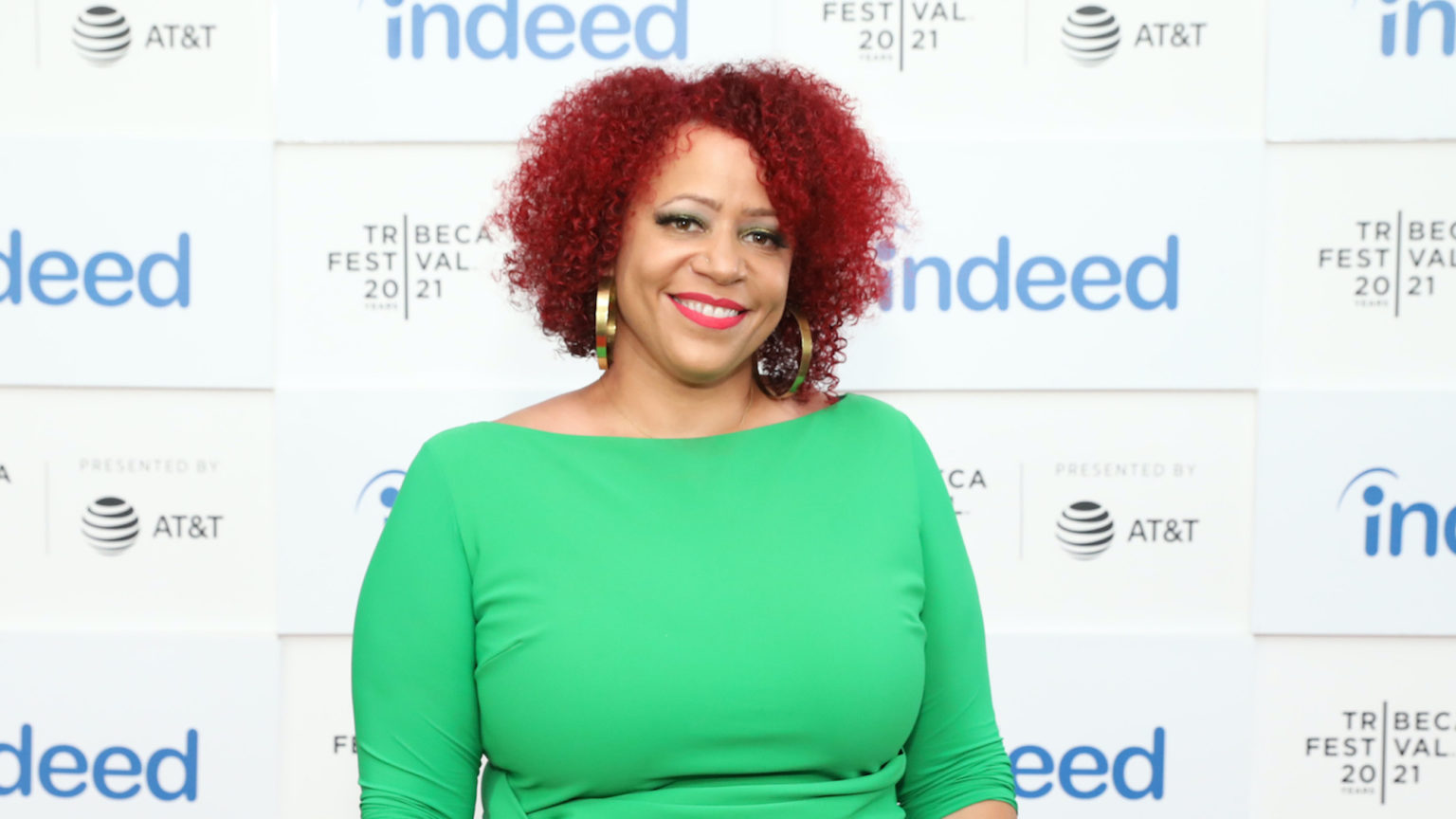
Nikole Hannah-Jones is a Pulitzer Prize-winning reporter for the New York Times, whose speciality is education and schools. She recently published a viral essay in the newspaper’s magazine describing her regret over sending her daughter to a public school in a low-income neighbourhood of Brooklyn, even though she and her husband had the wealth and influence to send her to any one of New York City’s best schools.
This was essentially an experiment – with her daughter as the subject – testing whether Hannah-Jones and her husband (an executive in the New York City school system) could use their power to transform a dysfunctional inner-city school.
Hannah-Jones claims to have started out with only the purest intentions. As she wrote: ‘When Najya was entering pre-K, my husband, Faraji, and I decided to send her to the type of school that wealthier families with choices uniformly avoid – one that is low-income and mostly black… we thought by sending Najya to a mostly low-income and black school, we could help improve it for all the children there.’
To emphasise her point, in another interview she said: ‘A New York Times reporter in a high-poverty school fucking changes the school… I can go to that school and say there is a problem and it gets fixed immediately.’
It didn’t work out the way she planned. The experiment failed abysmally. Beset by poor and absent teachers, unresponsive administrators, unruly fights in the lunchroom, no homework and general chaos, her daughter fell woefully behind for years before she was rescued by tutors and transferred to a better school.
Of the experience, her daughter admonished her mother in no uncertain terms, ‘So you had money to send me to one of the best schools, and you chose not to? Because other kids are disadvantaged, you didn’t want to put me in a great school?’
For a reporter working for a prestigious newspaper, who is supposedly trained to look at and analyse details, Hannah-Jones took an awfully long time – nearly a decade by her own admission – to grasp the enormity of what was happening to her daughter. What went on during all those parent-teacher conferences? Didn’t she question why her daughter never had any homework or why in-school assignments were graded, leaving wrong answers intact? What did she think when she visited the school and saw lunchroom fights, no teachers and indifferent administrators? It sounds like enough for a front-page New York Times exposé.
Given her own educational background, she seems blind to more obvious causes. She grew up in Iowa, a mostly rural state known for its excellent school system, which had a small minority population when she lived there. As she described it:
‘Being given access to the most resourced public schools in my hometown allowed me to flourish academically, and I am convinced that the integrated education my husband and I received set the foundation that has allowed us to become the successful upper-middle-class family that my daughter was born into… While the majority-white schools I went to provided me with the best public education my small town offered, they had often been socially isolating and rife with racial tension… I decided I would never want my child to experience being one of a small number of black kids in a school.’
After reading this, a friend of mine, an experienced journalist, sent me this email: ‘I grew up 50 miles from the public schools Ms Hannah-Jones attended. She doesn’t mention that during her primary and secondary years, teachers’ unions didn’t set school district priorities; racial grievance didn’t dominate civic discourse about schools; and she benefited enormously from a system of firm expectations and firm consequences.’
Teachers’ unions, racial-grievance concerns and a lack of accountability and consequences are indeed role players, if not the primary actors in the tragedy of America’s urban schools. But, contrary to much of the evidence, Hannah-Jones seems fixated on two villains: funding and racism.
Funding? The school her daughter attended received between $50,000 and $60,000 per student, nearly double the average of New York City schools, which are themselves at the higher end of national per-pupil spending.
Racism? Most of the adults involved in Hannah-Jones’s adopted school – from the teachers to the administrators to the higher-level bureaucrats – were black. Searching for an analogy to her daughter’s experience, Hannah-Jones cited three young girls who became the first black children to integrate into white elementary schools in the Deep South in 1960 – an invidious comparison from a lifetime ago in a totally different universe.
Responding to Hannah-Jones’s situation in the Wall Street Journal, Roland Fryer, a Harvard economics professor and bête noire to many progressives, wrote: ‘Other parents’ choices didn’t cause Najya’s teachers to leave assignments uncorrected, lower expectations, or award As for below-grade work.’
Fryer explained how his research team got remarkable results in Houston public schools: ‘We lengthened the school year, brought in hundreds of tutors, replaced 95 per cent of principals and nearly half the teachers while retraining the rest, and embedded data-driven instruction and high expectations into daily practice.’
Nikole Hannah-Jones was confronted with the decision of where to send her child to school, balancing cultural and academic factors without appearing to be a hypocrite. This is admittedly a difficult dilemma. But, as a progressive, she chose to sacrifice her daughter’s academic development on the altar of the pernicious ideology of racial grievance. It proves that if a conservative is a liberal who’s been mugged, then a progressive is a liberal who’s been mugged and refuses to press charges.
#Nikole #HannahJones #mugged #reality