wellnessfitpro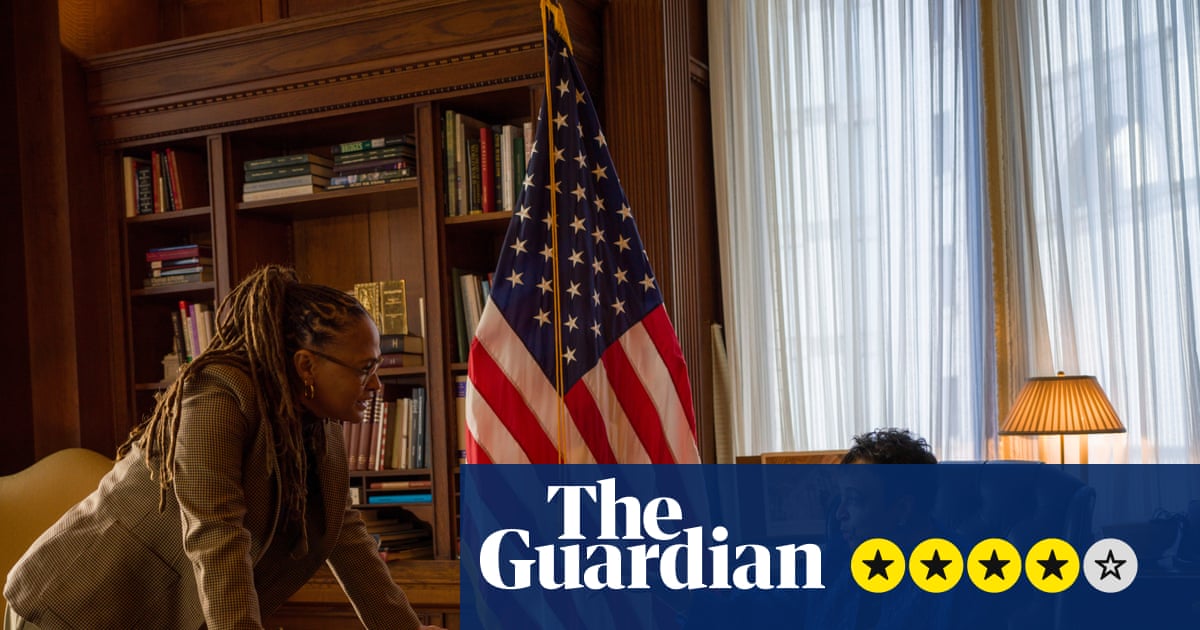
It feels at once like the blink of an eye and an eternity since Ava DuVernay’s documentary 13th arrived on Netflix, a month before the election of Donald Trump to his first term as president. The intervening decade has more or less borne out the film’s thesis on the enduring specter of white supremacy in American life: that a clause within the 13th amendment abolishing chattel slavery – that involuntary servitude could be used as punishment for a crime – was immediately and continually exploited to criminalize black people, mass incarceration thus being the modern incarnation of America’s original sin.
The Oscar-nominated film, which saw a surge in viewership during the protests of 2020, has remained both a time capsule of late Obama-era moral clarity and, arguably, the acclaimed director’s best picture. At least, until now – 14th, DuVernay’s sequel, of sorts, soon also to arrive on Netflix, is just as lucid and galvanizing as its predecessor, with an updated, more pressing urgency befitting a democracy in distress.
The new film focuses its brisk 110 minutes on the 14th amendment, adopted in the aftermath of the civil war, in a moment of profound political destabilization. The five-point statute may be lesser-known and not widely understood, but the film summarily makes the case for its status as the “workhorse amendment”, the “magnum opus of American democracy”, to quote several of the film’s illustrious figures. Once again, DuVernay marshals a murderers’ row of constitutional experts and political figures, from Stacey Abrams to Hasan Piker, Equal Justice Initiative founder Bryan Stevenson to Alexandria Ocasio-Cortez (and also, for some token Republican context, the former “Never Trumper” senator Jeff Flake and current anti-birthright citizenship Florida congresswoman Anna Paulina Luna, who gets ruthlessly factchecked by some title cards). DuVernay stages her largely persuasive cast – lawyers, politicians, civil rights organizers and more – in striking, stately tableaux, before marble and monuments, underscoring the argument for the amendment’s status as the epitome of humanist sophistication: government by the people, for all the people.
The heavy lifting in this argument is cogently provided by Sherrilyn Ifill, the former president of the NAACP Legal Defense Fund and a law professor at Howard University, where she founded the 14th Amendment Center for Law and Democracy; Ifill is a warm yet precise narrator, masterfully laying out the case that the verbose, multi-pronged amendment is actually the scaffolding upon which hang our hopes for a true multi-racial, multi-faith democracy. It is the 14th amendment that guarantees birthright citizenship as well as voting rights, that bars insurrectionists from again holding public office (you know what awful, infuriating footage is coming, though it is necessary) and, through numerous legal defenses, allowed interracial couples to marry and women to obtain credit cards.
To summarily stamp down its importance and radical historical context, DuVernay employs many of the same techniques as 13th to arguably greater effect: trenchant illustrations, blistering through the Trump years as a literal desecration of the 14th amendment’s five-pointed star; needle-drops from Kendrick Lamar to Fleetwood Mac to James Brown. And, most potently, adding dimension and movement to archival photographs of both the Black flourishing in the immediate aftermath of the civil war – formerly enslaved people in the halls of Congress, churches, universities and other institutions – as well as the swift backlash to Reconstruction in the form of terroristic vigilante violence, penal colonies and Jim Crow segregation.
It’s a bracing, riveting torrent dense with facts and figures – the 4,400 known lynchings of Black Americans between the civil war and the second world war, the 2,629 monuments to the Confederate slave republic erected in the same period, the galling visual evidence of it all – as well as some jittery timeline hopping. Some tangents, such as time with Devon Henry, the Black contractor tasked with dismantling several Confederate monuments in Virginia, are admirable but a bit afield, threatening to dilute the film’s tight, punchy focus on the amendment’s oft-challenged fortitude.
Still, it paints a damning portrait of the Trump administration and the larger Maga movement, with its explicit invocation of a different, better past, as a continuation of the “Lost Cause” mythology of the Confederacy – a false narrative of historical memory that constitutes, to quote the southern historian Karen Cox, the “most successful propaganda campaign in the history of the United States”.
The film’s final section, on the Trump administration’s all-out assault on every article of the amendment, is nothing any follower of US news doesn’t already know, but still burns with righteous anger and alarm. What was the insurrection clause if not an attempt to prevent, and then punish, the January 6 rioters who Trump wanted US taxpayers to compensate? What are masked ICE arrests and killings, played in one extremely effective if difficult montage, if not a direct violation of due process?
Quibbles aside, 14th is a rare feat, at once informative, infuriating and undeniable. That DuVernay may too often repeat the same clip or phrase is largely outweighed by the import of the statement, such as one written by Frederick Douglass and delivered by Ifill: the spirit of white supremacy will not die out in a year; it will not die out in an age. As 14th illustrates, that legacy is the one we’ve all inherited, and it is ignored or underestimated at our peril.
#14th #review #Ava #DuVernays #galvanizing #documentary #remarkable #achievement #Documentary #films