wellnessfitpro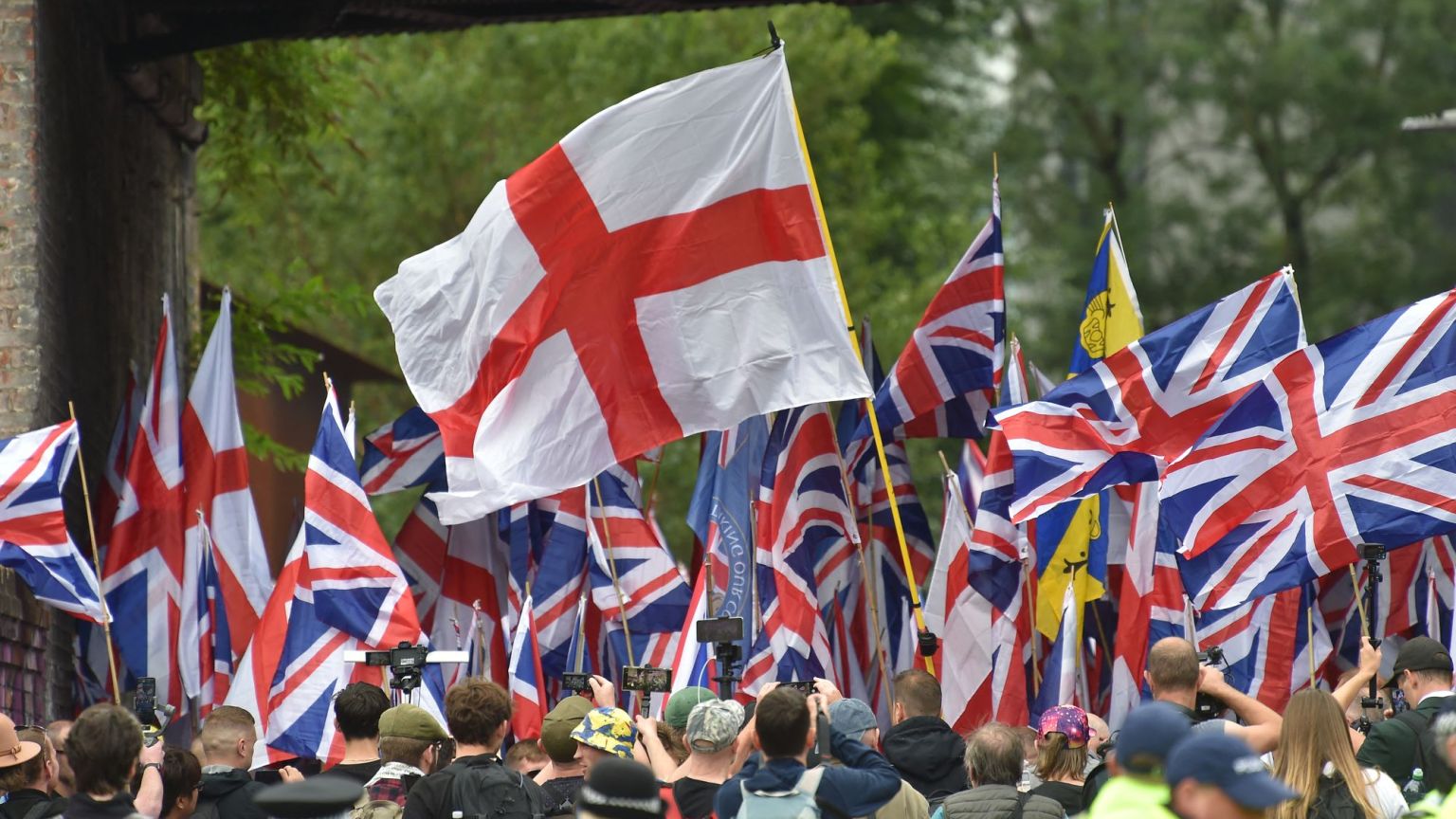
Last summer, Britain’s political and cultural elites were confronted with an alarming situation. A dangerous social contagion was spreading across the country, seemingly out of nowhere.
This terrible pox was the Raise the Colours campaign – where members of the public decorated their streets with Union Jacks and the England flag. Yet, instead of enjoying this spontaneous affirmation of national pride, the authorities really did treat it like a disease. To them, it was tainted by its association with the anti-immigration protests that had broken out across the country that summer. The flags, viewed as symbols of right-wing nationalism, were removed and local councils issued stern warnings to the public, effectively telling them to keep their patriotism to themselves.
A year on, those national flags have remained stubbornly visible. So, not content with simply removing them, an increasing number of councils have ratcheted up their response. The latest of these was Birmingham City Council, which recently sought powers in the High Court to prosecute, and even jail, anyone found to have attached a national flag to streetlights in the city. It followed the lead of Oxfordshire County Council, whose leader in April described hoisting flags as ‘an act of intimidation and division’.
We shouldn’t be surprised by the response elicited by the Raise the Colours campaign – one that the Home Office considered so concerning that it offered mental-health support to staff who claimed to have been ‘triggered’ by it. Because, if the last few years have taught us anything, it is that there are few things more taboo than being proud of being British – or worse still, English. It is not hyperbole to say that, across schools, universities and cultural institutions, Britain’s elites are waging a war on symbols and, above all, sources of patriotism.
For many British children, this anti-patriotic indoctrination begins as soon as they start school. Official curriculum guidelines produced a couple of years ago warn against teaching children that the British Empire was a mix of ‘good and bad’. Instead, the guidance states that the British Empire should be presented solely as an ‘invading and exploiting force’, treated on a par with ‘other powers that committed atrocities, eg Nazi Germany’.
Elsewhere, a chain of schools in England has been teaching pupils that the flag is a ‘provocative and exclusionary symbol… used by far-right groups to intimidate immigrants and minorities’. Last year, 12-year-old schoolgirl Courtney Wright was even sent home and reprimanded for daring to wear a Union Jack dress to her school’s Culture Day – a choice her teachers deemed ‘unacceptable’.
What we’re seeing more broadly right now is an elite attack on just about any source and symbol of national pride – an attempt to estrange British people from their cultural inheritance. Britain’s cultural custodians have certainly been at it, reducing canonical English writers to vehicles of racism and imperialism. In March 2025, the Shakespeare Birthplace Trust announced it was ‘decolonising’ the home of the world’s most famous poet and playwright in Stratford-upon-Avon. The museum has since been transformed into a melancholy shrine, apologising for the use of Shakespeare as a symbol of ‘British cultural superiority’. Visitors are told to understand him as just one ‘part of a community of equal and different writers and artists from around the world’.
Many of Britain’s greatest writers have also been similarly run down. In 2021, visitors to Jane Austen’s museum were greeted with a ‘historical interrogation’ of the Pride and Prejudice author’s distant links to slavery. Staff at the museum of Charles Dickens are now trained to re-educate visitors on the writer’s ‘prejudice’ and support for the British Empire. ‘Key texts’ for ‘white nationalists / supremacists’, the Home Office advised in 2023, included the works of Joseph Conrad, JRR Tolkien, George Orwell and CS Lewis.
This acidic self-loathing is evident in the arts sector, too. In 2023, Tate Britain removed paintings by some of England’s most loved artists – including Joshua Reynolds and William Hogarth – and replaced them with a collection it hoped would raise awareness of Britain’s racist, colonialist and slave-trading past. Admirers of Joseph van Ahen’s seemingly innocent 1720 painting, English Family at Tea, were told, ‘Tea was a bitter drink sweetened with sugar produced in British colonies’. A 1699 work by Edward Collier, featuring a globe in the background, came with the addendum that the Pacific Ocean was an area ‘Europe was actively colonising at the time’. In 2024, Cambridge’s Fitzwilliam Museum warned visitors about the ‘dark side’ of John Constable’s Hampstead Heath, claiming that it implied ‘only those with a historical tie to the land have a right to it today’.
While Britain’s cultural elites have been busy turning the nation’s art and literature into a source of shame, its political elites have been focussed on the present. In February, the UK government announced its plan to make the countryside ‘less white’. Reports produced by the Department for Environment, Food and Rural Affairs described England’s national parks as an ‘exclusive, mainly white, middle-class club’. It said its villages were plagued by ‘traditional’ pubs that ‘cater to people with a drinking culture’. It even encouraged residents of the countryside to keep their dogs on shorter leads to stop them from scaring ethnic minorities.
Not that ethnic minorities are the only ones apparently frightened by the countryside. In September, Labour MP and nature minister Jenny Riddell-Carpenter told the Labour Party conference that she was kept ‘awake at night’ by a ‘far-right fantasy’ of rural England, one of ‘warm ale, a black Labrador by your feet in a pub… and with symbolism of fox hunting all around them’. It was, she said, a ‘very far-right nostalgic vision of Britain that we don’t want to have, [and] never really existed’.
Even the Bank of England has been eager to get in on the act. In March, it announced its intention to remove historical figures from its banknotes. Jane Austen, Winston Churchill and Alan Turing are set to be replaced with moles, badgers and hedgehogs. According to the marketing agency commissioned to oversee the changes, the likes of Churchill are ‘divisive’, ‘elitist’, ‘contentious and not representative of the UK’s cultural and natural diversity’. They were also said to be relics of a ‘backward-looking vision of the UK that carries too great a risk of division and controversy’.
So-called progressives will say that this has been nothing more than a necessary corrective. That we need to be honest about Britain’s past. Yet this cloying, performative contempt for Britain’s and England’s achievements goes beyond historical honesty. It seems like a concerted attempt to demoralise – even humiliate – the nation. And it appears to be working. In August, a poll found that, for the first time, less than half of British citizens feel any pride in their country. In July 2025, a poll by YouGov revealed that just six per cent of the public would take up arms to defend Britain.
Would any other country jail its citizens for flying their national flag? Or run down its literary and artistic accomplishments? Or denigrate its own past? No country that wasn’t in the midst of a severe, some would say existential, crisis. It’s high time, Brits reclaimed their flag, along with their authors, painters and the vast sweep of this small island’s remarkable history. It’s time to reclaim the spirit of patriotism.
#elites #hate #Britain