wellnessfitpro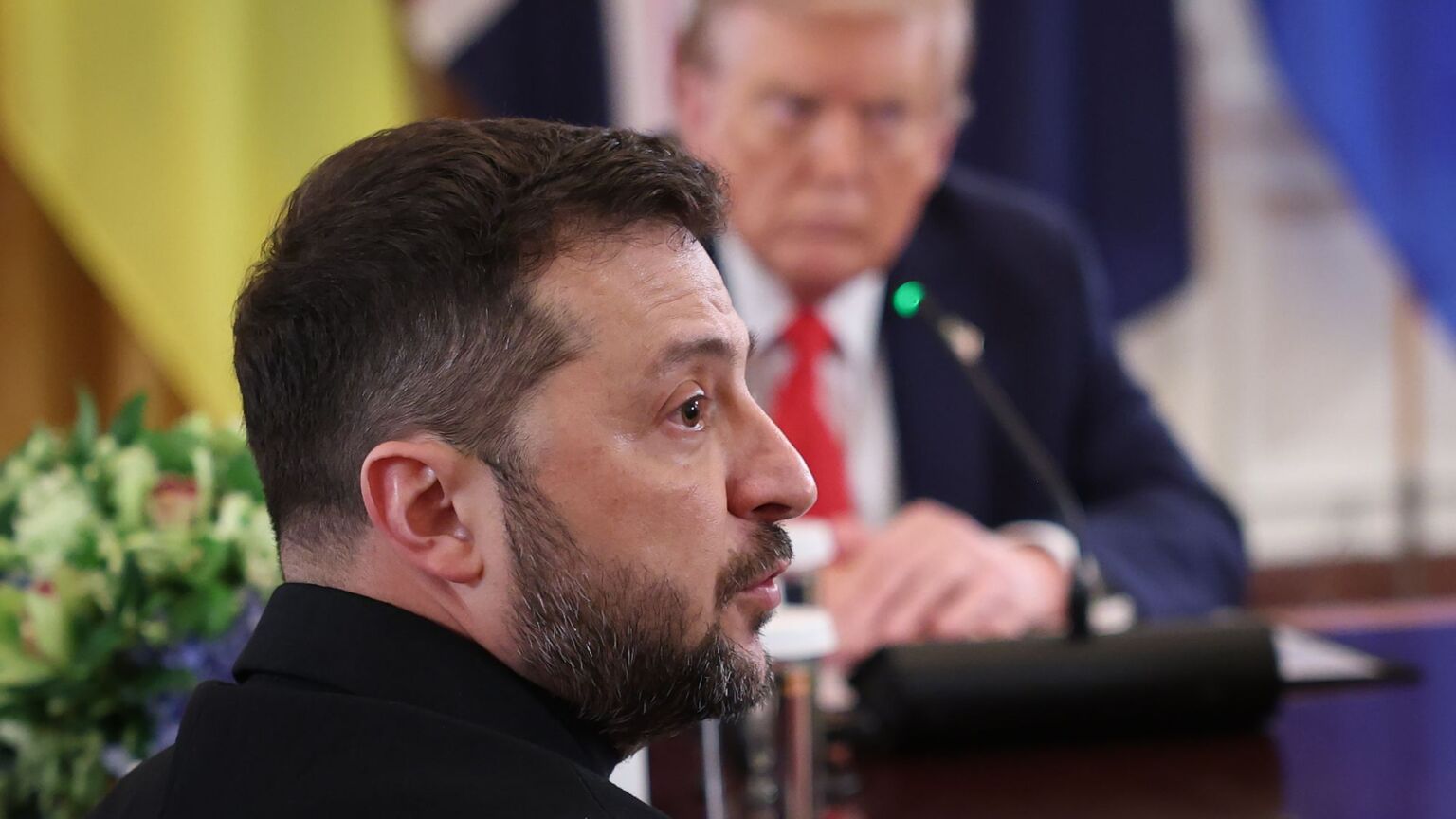
Of all the Trump administration’s many betrayals of Ukraine, its actions over the past week constitute arguably the most abhorrent.
First, the White House agreed to pay Russia billions of dollars in return for a limited supply of diesel – despite President Trump having only just signed off on a sanctions bill targeting, er, major purchasers of Russian gas and oil. Then, in response to criticism of the deal from Ukrainian president Volodymyr Zelensky, Trump announced that Ukraine needed a ‘new leader’.
The US president followed all of this up with a social-media post claiming that a mysterious ‘energy ceasefire’ had been reached, even as Russia continued to rain missiles and drones down on Ukrainian energy facilities, plunging thousands of civilians into darkness. This was clearly a ceasefire to which only the Ukrainians were expected to adhere. Little wonder that Ukrainian forces have now resumed their attacks on Russian oil refineries, much to Trump’s chagrin.
In the most shocking development of all, it emerged on Tuesday that the White House had decided to unilaterally deprive Ukrainian forces of the crucial satellite intelligence that has hitherto allowed them to fend off Russia’s aerial bombardments. The decision also affected soldiers, who had their access to Elon Musk’s Starlink satellite network temporarily limited – a move that impeded military missions and endangered lives. The US and Ukraine now say that access to satellite intelligence and support has been reinstated.
It’s hard to overstate the significance of what has happened this week. Ukrainians’ courageous, years-long defence of their national independence – indeed, of their freedom – has seemingly been sabotaged on multiple levels by their most important ally. US-Ukraine relations may have been strained at various points since Trump took office. The public dressing down of Zelensky by The Donald and his sidekick, vice-president JD Vance, was a humiliating low point. And the mooted peace deals, invariably negotiated between the US and Russia without any Ukrainian input, have amounted to Kremlin wish-lists. But the developments of the past week are far more damaging to US-Ukraine relations than anything we’ve seen so far. We’ve witnessed the White House strike deals that benefit Russia, while lashing out at Zelensky and putting Ukrainian lives at risk.
The Trump administration’s grim rationale isn’t hard to fathom. It has always viewed the war in Ukraine as an unwanted problem that it inherited from the Biden era. Its objective is to bring the conflict to an end – even if, it seems, that end is almost entirely on Moscow’s terms. This approach has been compounded by the longstanding practice of denigrating Zelensky as a ‘welfare queen’ (demanding military and financial handouts from the West) by some on the Republican right.
There is now an added electoral calculus at play. Amid rising fuel prices, Trump faces a very difficult set of Midterm elections. Indeed, since the US began its ill-fated war on Iran in February, US diesel prices have surged by almost 70 per cent. By striking a diesel agreement with Russia, Trump could, firstly, announce that ‘diesel prices for Americans and, indeed, the world, will be COMING DOWN, IN RECORD NUMBERS, AND FAST!’. Secondly, through the abortive ‘energy ceasefire’ and subsequent comments, Trump could suggest that Ukraine’s war of self-defence was the reason for fuel prices being so high in the first place. That’s right – nothing to do with a ruinous US-led war in Iran and the closure of the Strait of Hormuz, through which a fifth of the world’s oil and gas supplies are transported.
And so for an initial 300,000 tonnes of Russian diesel, which the US would use up in less than a day, plus a further 1.5million tonnes after that, the White House is prepared to sell Ukraine down the river. With allies like this, Ukraine really doesn’t need the invading force from Russia continuing to subject it to near-daily bombardments.
Predictably, the EU and the UK have been keen to show their ‘unwavering’ support for Ukraine this week. After all, if there’s one thing Europe’s domestically loathed leaders love to do it is to pose and pout on the world stage as Ukraine’s best friends. There have been photo-ops with Zelensky and European Commission president Ursula von der Leyen, big pledges of support from French president Emmanuel Macron, and no doubt a jam session with British PM Andy Burnham.
Yet while Europe’s leaders talk tough on Russia, and promise, as Burnham did, that ‘we are behind you, and that will not change’, reality on the ground tells a very different story. Without US backing, it’s clear the West lacks the military capacity to back Ukraine to the extent it requires. Europe also lacks the industrial capacity to wean itself off Russia. Indeed, the EU has been pumping billions into the Russian economy in return for energy supplies ever since the war began, which ought to put Trump’s desperate diesel deal into some perspective.
Reports emerged early last year that, in their efforts to meet Net Zero targets, EU members had spent a record amount on importing liquefied natural gas (LNG) from Russia in 2024. Further reports emerged later that year that five EU countries had increased their spending on Russian energy supplies during 2025, including France, which raised expenditure by 40 per cent and the Netherlands by over 70 per cent.
The full scale of the EU’s contribution to Russia’s war economy is now emerging. On Monday, Moscow claimed that the EU has bought more than $320 billion worth of hydrocarbons since 2022 – in brazen, loophole-exploiting defiance of its own much-hyped anti-Russia sanctions. Noting the $226 billion the EU has sent to Ukraine since 2022, Swedish foreign minister Maria Malmer Stenergard pointed out the obvious: the EU has now given far more cash to Russia than it has given in military and financial aid to Ukraine. If this is what supporting Ukraine ‘for as long as it takes’ looks like, then Russia will be in no hurry to scale back its invasion. (The EU contests these figures, but there is little doubting the existence of the disparity.)
Ukraine continues to find itself in an invidious position. It is still fighting for its national survival in the face of Russia’s neo-imperial aggression. Yet its nominal backers continue to let it down at every turn. Its most important ally is currently willing to sacrifice it for negligible short-term domestic gain, while its most vocal allies in Europe are too weak in every sense to make good on their big words.
The US stabbed Ukraine in the back this week. The EU has been doing so since the war started. Ukraine is being betrayed time and again by those claiming to support it. This is a geopolitical tragedy in the making.
#Ukraine #cursed #unreliable #allies