wellnessfitpro
The videogames industry is crashing. That diagnosis is no longer just coming from disgruntled YouTubers. Tim Sweeney, the billionaire boss of Epic Games, told Edge magazine in September that the industry is in the midst of its worst crisis since the 1980s.
There are obvious differences between then and now. The US videogame market peaked at $3.2 billion just before the 1983 crash – last year it peaked at $60.8 billion. Released in 2013, Grand Theft Auto V alone has sold more than 230million copies. So if the industry has never been bigger, why is it crashing?
Fundamentally, the trouble lies in an increasingly flawed business model. Games have become more expensive to produce and more expensive to buy. Meanwhile, their prospects of commercial success are getting slimmer.
‘AAA games’ – aka, the blockbusters – now cost between $200million and $400million each to produce. Every game must be a phenomenon, which is hard to pull off in an era where there is so much choice. So publishers reach for premium editions, extras and subscriptions. Grand Theft Auto VI (GTA VI), due on 19 November, costs $79.99 for the standard edition. But the standard version doesn’t include everything the game has to offer – if you want that, then expect to pay $99.99 for the ‘ultimate’ edition. But wait! Neither of these tiers includes access to the ‘GTA+’ subscription, which will cost a further $7.99 a month.
All this, and you won’t even own the game. GTA VI will be a digital-only release, with a download code in the box in place of a disc, meaning it could become inaccessible to players in the future should the online infrastructure to support it be terminated.
The prospect of a disc-less future has left gamers cold. Customers led a ‘no disc, no buy’ boycott against the Sony-owned PlayStation 5 in response to the company’s plans to phase out discs by 2028. Sony’s response – a reminder that ‘the software is licensed to you, not sold’ – revealed how little it cares about what its customers think. Ubisoft’s head of subscriptions put the industry’s logic plainly: it’s about ‘feeling comfortable with not owning your game’ – something that no gamers appear to be comfortable with.
Maybe consumers could see past the rising cost and lack of ownership, provided the games were worth it. However, the industry’s reliance on runaway hits has created its own version of the Hollywood problem: the bigger the budget, the smaller the appetite for risk. Endless sequels and remakes of past favourites point to the stagnation of the industry as a whole.
There’s another problem it shares with Hollywood: a tendency to engage in woke scolding. Consultancies have descended on the big studios, pressing the need for diversity, equity and inclusion in stories and characters – all in pursuit of a ‘modern audience’ that has yet to reveal itself, and never will. In an industry that demands enormous returns on enormous budgets, alienating its existing audience – which is not exactly ‘diverse’ – has yielded predictable results.
In fact, the videogame industry’s flirtation with wokery has been an abject failure. The Last of Us Part II, released in 2020, brutally killed off its popular male protagonist. Lev, a trans teenager, was the new hero of a zombie apocalypse, in which a car battery was a luxury, yet hormone replacement therapy was apparently abundant. Unsurprisingly, it sold about 10million copies in two years, compared with 18million for the original.
Concord, Sony’s $400million shooter released in 2024, was another woke bust. In the game, you played as armed mercenaries shooting each other in the face. So far, so good. Until you realised that every character’s pronouns were front and centre, as if the cardinal sin on the battlefield was misgendering your targets before killing them. The inclusion of ‘Bazz’, celebrated as the first black trans woman in an AAA game, among the list of characters also went down like a lead balloon.
Investors, chasing the mythical ‘modern audience’, reportedly believed Concord would rival Star Wars in commercial success. Yet fewer than 700 gamers tuned into its launch, and the game was pulled from stores after just two weeks. Its studio closed shortly after. Concord was the definitive proof that, when the ‘progressive’ audience doesn’t exist, neither do sales.
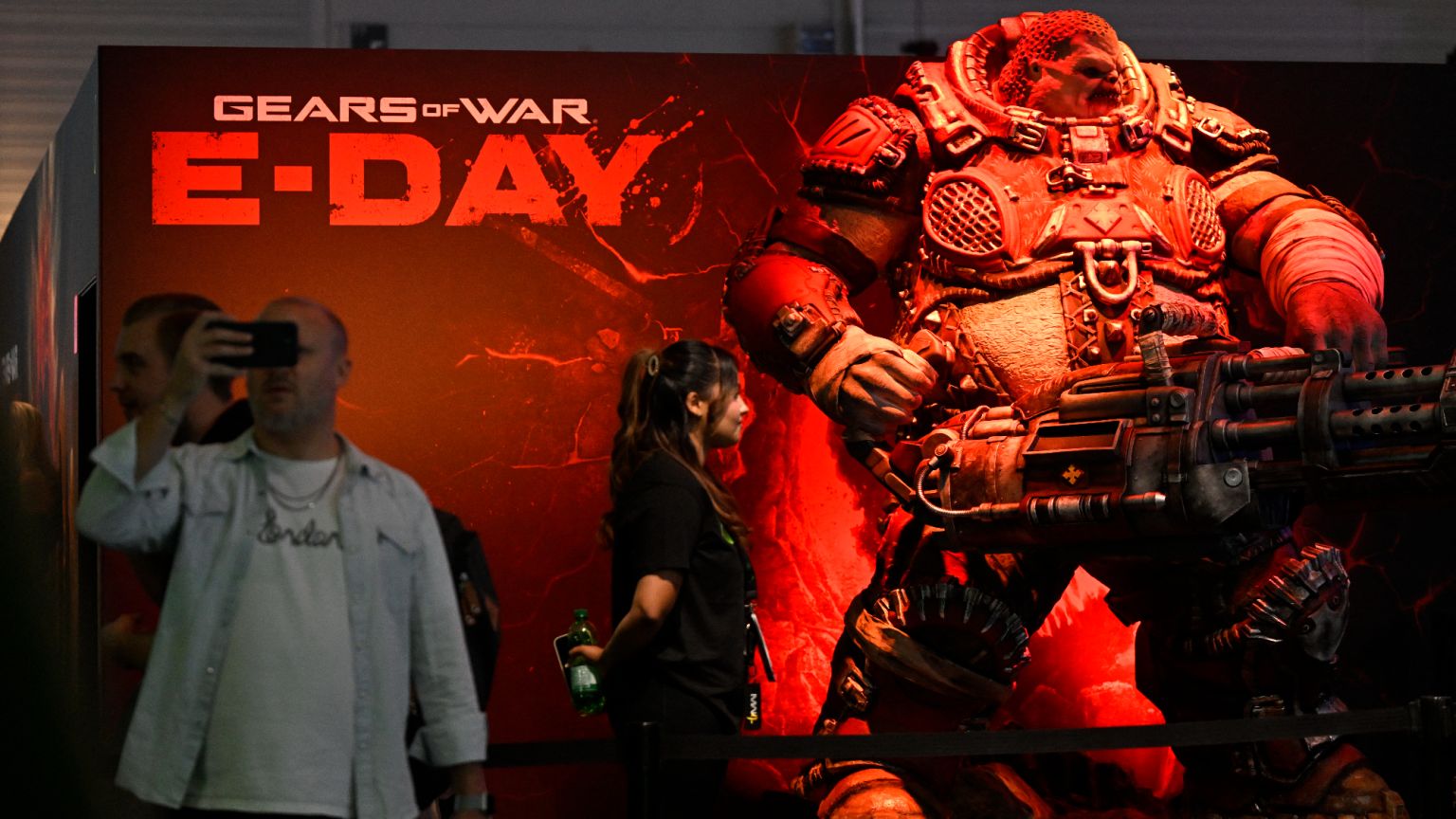
Have studios learnt their lesson? Of course not. This month, Gears of War: E-Day – a prequel to a series that helped define the Xbox – was released. The game is built on chainsaw bayonets and roid-raging commandos – all the things gamers love. What they appear to have less interest in is the visually impaired, asthmatic lesbian who has now been lumped into the subplot. Predictably, the sales aren’t looking good, while developers at the studio already fear they will soon lose their jobs.
The gaming establishment isn’t helping matters. As with Hollywood, the ideological gap between critics and the public has become a chasm. The Last of Us Part II had a critic score of 95 out of 100, but an equivalent user score of 35. Dragon Age: The Veilguard, another ‘progressive’ sequel to a well-established franchise, scored 84 from critics against an equivalent 38 from users. A former developer of Concord complained that the game’s downfall was due to an audience that gets ‘excited that something fails’. As always, it’s the customer’s fault.
So the industry is indeed crashing. It may be fun to gloat, but there is a human cost. In 2023, an estimated 10,500 people in the industry lost their jobs, growing to around 15,600 in 2024. Layoffs slowed in 2025 to 9,000, but 2026 hit this number by August. Microsoft has recently announced over 3,000 Xbox cuts. This will keep happening until the companies, not the customers, change their act.
The industry only has itself to blame. Companies have kept asking players to get comfortable with paying more and owning less – and all the while being lectured for the privilege. Players have finally given their answer: Game Over.
#Game #woke #videogames #industry