wellnessfitpro
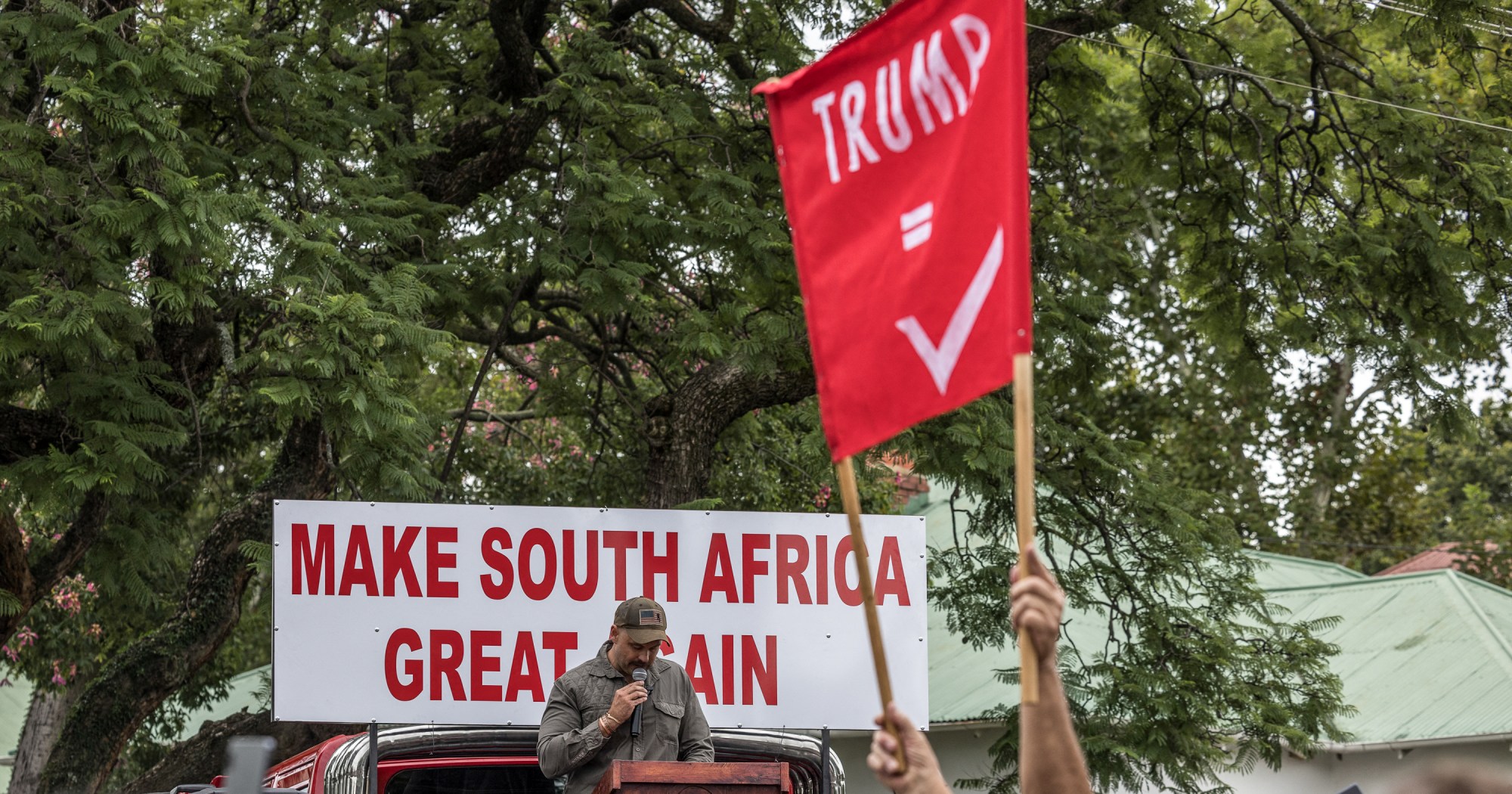
After slashing funding for programs that documented atrocities and protected human rights abroad, President Donald Trump’s State Department is now granting one of its first new human rights awards to a controversial South African organization that promotes the disputed notion that white farmers are a violently targeted, persecuted group, according to multiple sources knowledgeable about the funding.
The group expected to receive the nearly $1 million award, AfriForum, is a nonprofit that advocates on behalf of Afrikaners, a subset of South Africa’s white population. The organization says its members, who have a “God-given calling,” fight for Afrikaner interests and self-governance. The money will be used to “document hateful rhetoric and violent acts” against Afrikaners and other minority populations in the country.
The new award comes from a State Department bureau tasked with promoting democracy and human rights internationally. Until last year, those funds were mainly spent in poor and authoritarian nations — to fight corruption in the Democratic Republic of Congo, for example, or combat child exploitation and sexual abuse in Afghanistan. Since Trump returned to office, his appointees have transformed the bureau, gutting its staff, canceling programs and reorienting some of its funding toward conservative causes in Europe.
Samuel Samson, who was appointed as a deputy assistant secretary to the State Department bureau by Trump, has claimed the U.S. has a “civilizational” connection to Afrikaners, who descend primarily from Dutch migrants and predominantly speak Afrikaans. Samson, who has met with far-right leaders in Europe since joining the administration last year, has framed the U.S. government’s financial support for Afrikaners as grounded in “a common heritage, a common culture, a common way of life, shared history and ultimately a common anthropology.”
Samuel Samson Speaks at Lex Libertas Event
There’s a long shared political history between Afrikaner groups and white nationalists in the U.S., said Audie Klotz, a political science professor at Syracuse University who has studied those connections. But, she said, “There’s no heritage connection here. It’s pure scientific racism. In the history of U.S. immigration, there’s no direct connection between South Africa and the United States.”
AfriForum met with the Trump administration in February 2025 to plead for help. The group told officials that Afrikaners are subject to racial discrimination and murders that are more frequent and asked the administration to “act strongly against hate speech that incites violence” against them, according to a statement.
South Africa is plagued by high rates of violence, and some Afrikaners have been tortured and murdered. But independent researchers have found those killings represent a tiny fraction of murders across the country, whose victims are disproportionately people living in poor urban areas, where residents are predominantly Black. Official government statistics, and two formal inquiries into the matter, do not reveal a pattern of targeted violence against Afrikaners.
But Trump subscribes to the idea that white farmers face a “genocide” and has cited disproportionate violence against them as a reason for punishing Africa’s wealthiest nation. In February 2025, he issued an executive order that cut off hundreds of millions of dollars of aid to South Africa and welcomed Afrikaners to the U.S. as refugees. Since then, the administration has opened the doors to more than 16,000 white South Africans while halting virtually all other immigration. Officials recently told Congress they plan to invite as many as 17,500 Afrikaner refugees to the U.S. in 2027.
AfriForum did not respond to specific questions for this story but said that “our understanding is that the allocation has not yet been finalised. Should the allocation indeed be awarded to AfriForum, we will make a public announcement in this regard.”
The new award is the administration’s latest show of support for the Afrikaner cause. The white South African group governed the nation for decades under a brutal system of segregation known as apartheid, which kept the Black majority an impoverished underclass until the system was dismantled in 1994. Now, with Black South Africans governing the country, white people — of which Afrikaners are the majority — remain one of the wealthiest segments of the population.
The support has caused dismay among several former high-level diplomats, who spoke to ProPublica anonymously because they fear retribution from the administration.
Two former senior U.S. officials responsible for Africa policy said that they would never have met with AfriForum, let alone funded the group, because it was considered to be politically extreme and not credible. They described the organization as cherry-picking crime statistics to create a misleading narrative. “We would certainly not have funded what we would see as a racially incendiary initiative,” said one of the officials.
The decision to direct money toward the group comes after the Trump administration halted programs that advocated for the end of violence in African countries such as Sudan, where the Biden administration determined in 2025 that there was a genocide, calling it “the world’s largest humanitarian catastrophe.”
“It’s offensive to provide funding solely to this one group after we’ve cut off funding in countries undergoing real documented crises,” said David Jandura, who managed the Africa portfolio for the State Department’s human rights bureau for several years and lost his job during the mass layoffs in 2025.
Congress has also raised questions about how the award was made. A Senate aide to Democrats told ProPublica that despite repeated requests to State Department officials, they had not received a briefing outlining the recipients of funds earmarked for democracy and human rights, which they described as “highly unusual.”
“The Trump Administration proceeded with funding fringe right-wing causes internationally despite objections from Congress,” said Sen. Jeanne Shaheen, a New Hampshire Democrat and ranking member of the Senate Committee on Foreign Relations, who described the lack of transparency as “unacceptable.”
In response to a series of questions about the AfriForum funding, a senior State Department official wrote in an email that the department does not comment on funding deliberations and that they routinely keep Congress informed of their actions, consulting extensively on this year’s programming. “The Administration has been clear about its concern about the abhorrent race-based discrimination and violence in South Africa,” the unnamed official wrote. “Human rights protections do not depend on a person’s income or ethnicity.”
In July, ProPublica revealed that the State Department originally intended to give the $1 million research award to Lex Libertas, a small organization founded last year by a former AfriForum executive named Ernst Roets. Trump officials later expanded the potential awardees to a small pool of handpicked organizations. The plan drew outrage from Congress over the content of the award as well as plans to bypass the typical competitive bidding process. After ProPublica’s reporting, the State Department released an open call for the funding opportunity, offering $986,500 to a nonprofit organization to “create a comprehensive record of violence affecting Afrikaner and other South African minority populations.” It’s this grant that is now being awarded to AfriForum.
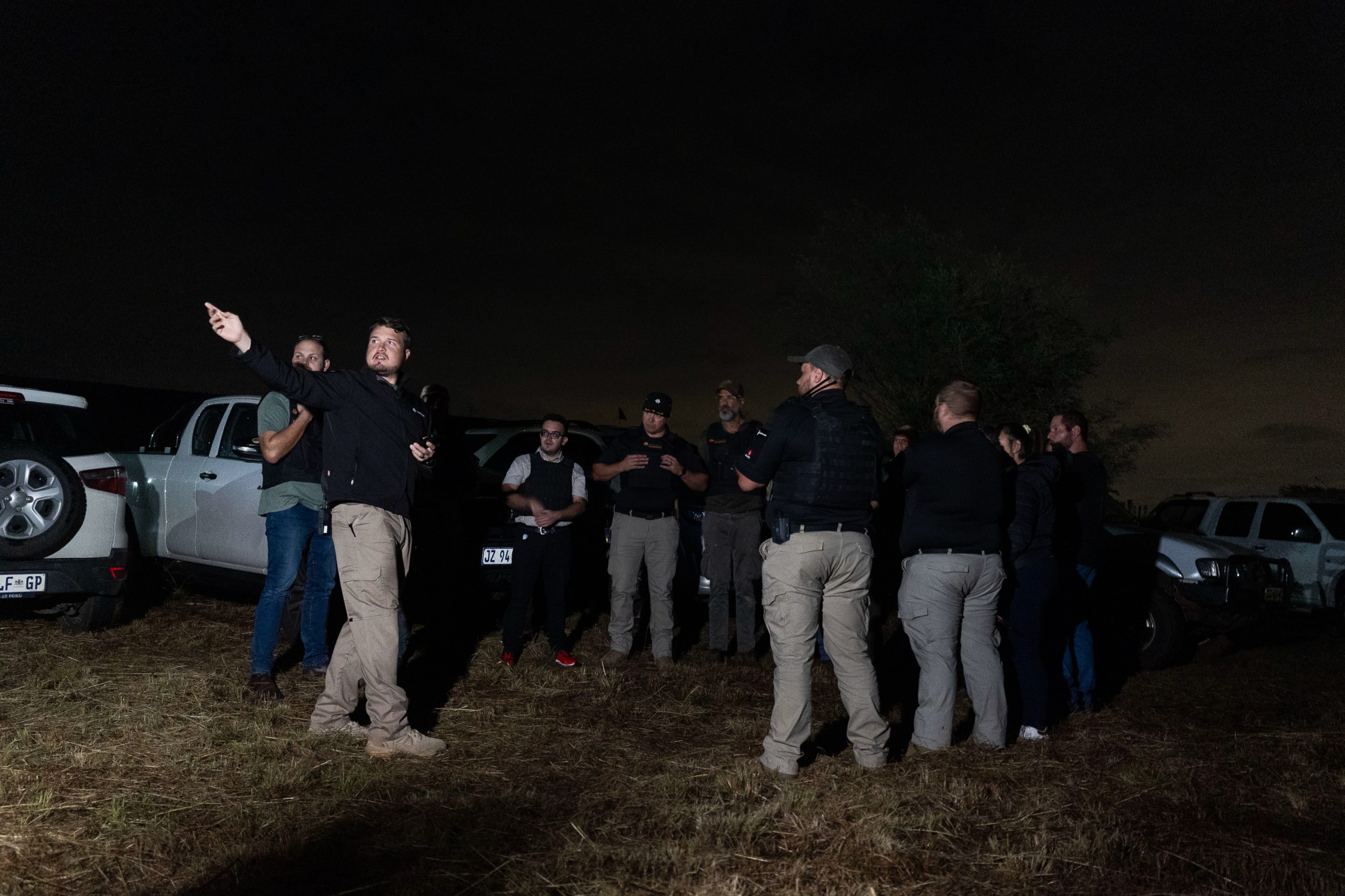
Both AfriForum and Lex Libertas advocate for Afrikaner rights and have developed relationships with the Trump administration. Trump’s ambassador to South Africa, L. Brent Bozell III, visited AfriForum’s headquarters in September, praising the organization for its neighborhood watch programs while criticizing the South African government for not enacting policies requested by the Trump administration. AfriForum has also met with Trump officials in Washington, D.C., drawing public criticism from South African President Cyril Ramaphosa. And in September, Roets met with administration officials.
AfriForum was founded 20 years ago and, with some 300,000 members, claims to be the biggest civil rights organization in South Africa. It says it aims to “establish self-dependence and growing self-governance” and provides some local civic services, such as garbage collection and systems for reporting pot holes and broken traffic lights. The group has said it distances itself from “white supremacist and extremist groups” and that it disagrees with Trump’s assertion that white South African farmers are experiencing a “white genocide.” But it has also said the South African government is “targeting the continued existence of Afrikaners” through racial legislation and the downplaying of farm murders, among other things. Academics and former U.S. diplomats have repudiated some of the ideas the group promotes as racist.
It unsuccessfully challenged a ban on the “gratuitous display” of the national flag flown during apartheid, which a South African court has found to be a form of hate speech. And while the group’s leader, Kallie Kriel, has said apartheid “was wrong,” he has also said it did not constitute “a crime against humanity” as the U.N. has determined, on the grounds that not enough people were killed during that time.
AfriForum has been focusing on farm attacks since at least 2009. In 2018, during Trump’s first presidency, Kriel and Roets, who was then his deputy, met with government officials in Washington, D.C., about the issue, and Roets spoke about it with Tucker Carlson on Fox News, as the chyron below him announced in all caps, “White farmers brutally murdered every week in SouthAfrica.”
Additional research on crimes against white South Africans is an unnecessary and confusing use of U.S. taxpayer dollars, said Carolyn Holmes, a professor at the University of Tennessee, Knoxville, who studies democracy in southern Africa. Holmes noted that AfriForum already produces annual reports on crimes against farming communities. “These data already exist,” she said. “You don’t need a new study. You don’t even need a far-right study, we have those.”
The U.S. support offers more than a financial boost to the organization. “For some time, AfriForum has been campaigning for recognition of their claim that white people face discrimination and persecution,” said Alex Dyzenhaus, a lecturer in international relations and African politics at the University of St. Andrews. “Before, they were only getting the Tucker Carlsons and the far right of the news ecosystem. Now they have the U.S. government on their side.”
The Trump administration has made the plight of white, rural South Africans a key foreign policy issue. In addition to the early executive order, Trump held a contentious meeting with Ramaphosa in the White House last year where Trump claimed white farmers were being executed. The administration has also considered an ad campaign focused on encouraging more Afrikaners to come to the U.S.
In September, Roets of Lex Libertas met with the White House to discuss what he sees as the crisis facing the Afrikaner community and, along with the New York Young Republican Club, placed 3,000 white crosses on the National Mall to commemorate South African farm murders.
Roets declined to answer specific questions from ProPublica but, in a text message, described the murders of several Afrikaners that he knew personally. He also wrote, “I see the suffering of black people in South Africa, I am deeply moved by it, and I spend every day of my life campaigning to make things better for us all.”
Appearing at a press conference for the Lex Libertas event, Samson, the State Department official, showcased the sharp shift the administration has made in U.S. relations with South Africa. While apartheid has been understood globally as a symbol of racist oppression, Samson described the current South African government as having discriminatory “race-based” policies and a cautionary tale for the rest of the world.
At the end of apartheid, in 1994, South Africa was a “flourishing, prosperous society,” Samson said. Since then, the country has gone to “ruin.” He blamed the fall on a “radical ideological leftist movement that wears human rights, that wears tolerance and inclusivity, as a skin suit to advance their Marxist communist worldview.”
Part of the Trump administration’s solution to this perceived crisis, he said, was to provide the research funding.
#Trump #Officials #Give #Controversial #Afrikaner #Advocacy #Group #ProPublica