wellnessfitpro
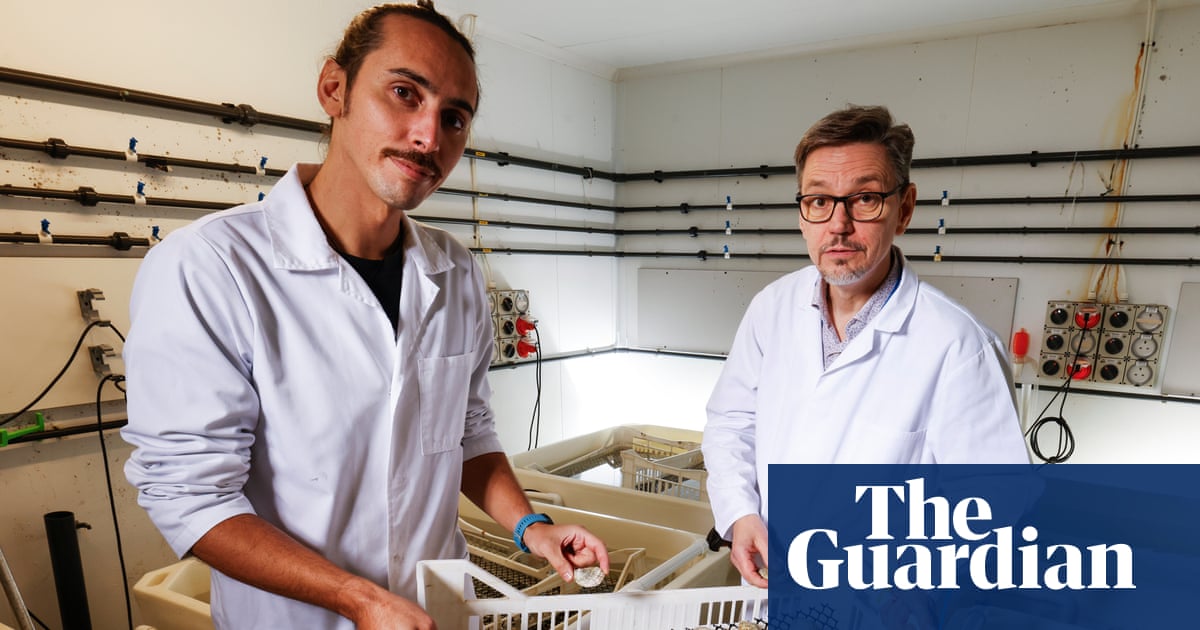
The baby oysters, with their rough cream-coloured shells and ragged edges, are about the size of a 50 pence piece. But off the north-east coast of Scotland, they are proof of a breakthrough in marine conservation.
For the first time in the UK, scientists have succeeded in breeding wild oysters at a site where they had been locally extinct for more than a century, in the Dornoch Firth north of Inverness.
The marine conservationists hope that about 4m native European flat oysters (Ostrea edulis) will soon colonise the restoration site, heralding a remarkable turnaround for the species.
Victorian maps, including a volume known as Olsen’s Piscatorial Atlas from 1883, established that billions of native oysters once crowded the seabed around Britain, forming vast reefs that supported rich, thriving marine ecosystems.
Within decades they were fished to extinction across the North Sea, the Channel and countless fisheries around the coast, shipped in bulk on Britain’s new railways to feed the country’s rapidly expanding cities.
At the peak of their popularity in the Victorian era, 30m oysters a year were being landed from the Firth of Forth near Edinburgh, where the oyster bed was once 20 miles long and 6 miles wide. It has since disappeared.
Today, only a handful of places around the British coast host substantial wild oyster beds; a pattern of decline replicated around the world. European oysters are now on lists of critically threatened species.
Prof Bill Sanderson, a professor of marine biodiversity at Heriot-Watt University in Edinburgh who leads the Dornoch Environmental Enhancement Project (Deep), said confirmation the oysters were now reproducing naturally was “a very significant milestone”.
Ecologists say oysters operate as ecosystem engineers, helping support hundreds of species of marine flora and fauna, fixing sediments on the seabed and, by filter-feeding, helping to keep the water clean.
“We know from studying oyster habitats that when you establish an oyster reef, it’s very likely that over a decade you’re going to double the diversity on the seabed,” Sanderson said.
“They’re building up these carbon stores and they’re creating these really complex habitats. They’re also filtering the water while they’re doing it.”
Launched 12 years ago and co-funded by the Glenmorangie whisky company, Heriot-Watt and the Marine Conservation Society, Deep has deposited about 140,000 adult oysters in the firth in the hope they would colonise.
Hand-cleaned first by volunteers to maintain bio-security, the oysters are harvested from one of the UK’s few surviving fisheries in Loch Ryan, near Stranraer, home to about 23.5m oysters. Protected by a royal charter, the Loch Ryan population sustains an annual oyster festival.
The collapse in native populations led to legal restrictions on taking them from the wild, with the vast majority of oysters sold in British shops and restaurants being farmed Pacific oysters, Sanderson said.
after newsletter promotion
Success for Deep, one of the first projects of its kind in Europe, has given hope to around a dozen newer projects in the UK, such as Seawilding’s, in Argyll, the Essex Oyster Restoration Initiative, the Solent Oyster Restoration Project and Restoration Forth, near Edinburgh.
Gurjameer Ramday, the Deep research associate who found the juvenile oysters, said warmer seas in the last two years had helped. “It’s brilliant. Wild oyster populations have collapsed throughout Europe, so finding baby oysters now is proof that targeted restoration can work,” he said.
Sanderson and his colleagues will keep adding oysters to the Dornoch population. By 2031, they hope it will be large enough to be self-sustaining. “We have to keep going until the rate at which the babies that are produced exceeds the rate at which they’re eaten by crabs and starfish,” he said.
It could be a decade or more before it is large enough to be fished, but meanwhile they are already enthusing armies of volunteers and supporting firms, which could set up hatcheries to feed restoration projects.
Conservationists remain anxious about overfishing and pollution, and critical of government policies to control drag-net fisheries that scour the seabed.
“There’s vulnerabilities in all of this stuff,” Sanderson said. “But there is also incredible hope.
“People want to do something that has some sort of hope attached to it in a world that’s full of negative stories. We get a lot of people who get engaged because they just want to do something positive.”
#Return #wild #oyster #conservationists #bring #shellfish #local #extinction #Scottish #coast #Marine #life