wellnessfitpro
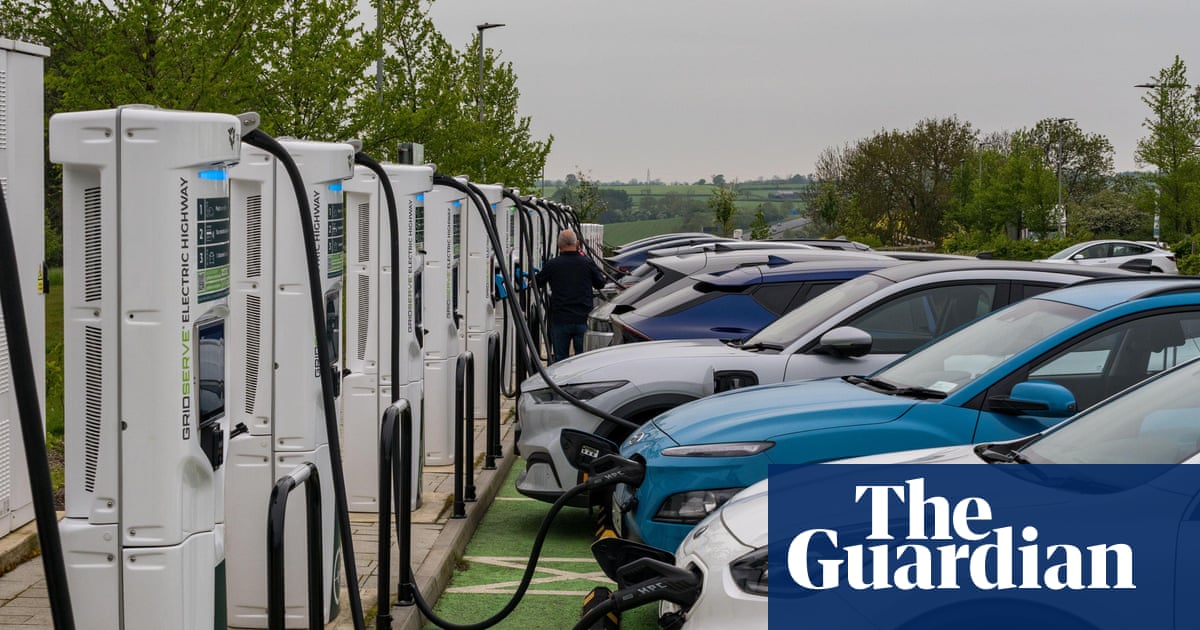
Moves to weaken the UK’s targets on electric vehicles would hurt the car industry as well as consumers, campaigners and experts have said before a key intervention from government advisers expected this week.
The climate change committee (CCC) will write to ministers on Wednesday about the effects of changing the zero emissions vehicle (ZEV) mandate on the cost of living and the UK’s net zero targets.
The current mandate stipulates that 80% of new car sales will have to be electric from 2030, and 100% from 2035, but it has been reported that Labour is poised to reduce those targets.
Campaigners said the evidence to be examined by the CCC all pointed to consumers losing out from any weakening of the targets.
The CCC has kept its deliberations under wraps, but its chair, Nigel Topping, has a long history of advocacy for electric vehicles. He was involved in the automotive sector in various roles for two decades, and has frequently urged carmakers to move faster to electric vehicles, which are more efficient and cheaper to run than their fossil-fuelled counterparts while producing less air pollution and carbon dioxide.
He has also long been a champion of UK innovation and engineering, and believes the UK’s target of net zero greenhouse gas emissions by 2050 is spurring economic growth and creating jobs. He has said: “Our leadership in decarbonisation is driving industrial leadership, which is driving competitiveness and growth.”
If the CCC letter is critical of proposals to weaken the ZEV mandate, ministers will face an uphill task to justify such a decision. Doing so would hamper efforts to reduce the cost of living, because it would slow the market for electric cars, which are much cheaper to run, analysts and campaigners say. Filling up a petrol-fuelled car can currently cost more than £100, while an electric vehicle can be fully charged for less than £10.
The head of politics at Greenpeace UK, Ami McCarthy, said: “Watering down the current sales targets for EVs would be like driving with the handbrake on. The UK has an upbeat story to tell on electrification but the car industry keeps trying to drag it backwards.
“The prime minister was absolutely right in his speech [to the Cop31 UN climate summit on Thursday] when he said we need industry to play their part. Aligning our sales targets with the EU would only slow us down.”
Carmakers say the UK’s current targets are too onerous and that they are having to heavily discount vehicles in order to sell enough to meet them. The chief executive of the Society of Motor Manufacturers and Traders, Mike Hawes, said manufacturers were investing billions in ZEV but that demand remained below the targets.
“Regulation mustn’t undermine UK competitiveness or hold back the transition,” he said. “Government must act now, with fundamental change to the targets, backed by ongoing and increased support for consumers, including incentives, affordable charging, and tackling disincentives.”.”
One expert, however, pointed out that the UK was exceeding its current sales target by a significant margin, whereas if manufacturers were struggling, the target would be barely met. “That shows it’s nonsense to say they’re discounting heavily,” they said. “EVs are so clearly the future, it is hard to understand why the car industry is not embracing them.”
after newsletter promotion
Most of the UK’s cars are sold for export, and sales of EVs are growing strongly in the EU, a major market for manufacturers. Given that Chinese competitors face EU tariffs, the UK could seize an advantage over its rivals if it pushed harder for EVs, the analyst said. Sales of battery-only electric vehicles rose by half last month compared with the same month last year.
McCarthy said sales in the UK were strong and benefitting households. “It’s great to see minister Katie White celebrating the fact that an electric vehicle is sold every 52 seconds in the UK,” they said.
“While the EU seems to be dropping into second gear, the UK has an opportunity to ensure British companies and consumers reap the rewards. Leading from the front isn’t just good for UK industry. It will help lower the cost of living, increase energy security and reach our climate goals.”
A government spokesperson said: “We remain committed to the phase out of all new cars relying solely on petrol and diesel engines by 2030, and to 100% of new car and van sales being zero emission by 2035, and our legally binding net zero targets.
“Our consultation on the mandate will not change this and will ensure we are taking a pragmatic and balanced approach to the ZEV transition.”
#Weakening #electric #vehicle #targets #hurt #car #industry #ministers #told #Electric #hybrid #lowemission #cars